













How to Make a Matcha Latte in 4 Steps
A matcha latte is one of the simplest drinks to make at home, and it takes less than five minutes. The process is not complicated, but the details matter. Water temperature, powder quality, how you whisk, which milk you use — each of these affects whether you end up with a smooth, vibrant latte or a bitter, clumpy disappointment. This guide covers every variable so you get it right the first time and every time after.

At Valley of Tea, we have been sourcing and tasting teas for over fifteen years. Part of that experience is understanding how production decisions shape the cup — things like stone mill speed. The mills used for tencha grinding run at around 40 grams per hour. Push them faster and the friction heats the powder, which damages the delicate flavour compounds before the tea ever reaches you.
The shading method matters too — traditional rice straw versus synthetic cloth produces different amino acid profiles in the leaf. These are the kinds of details that only become visible after years of visiting producers. This guide draws on that experience.
What You Need

Three things determine the quality of your matcha latte: the matcha, the milk, and the tools.
Matcha Grade
At Valley of Tea we carry three grades of matcha. Our standard Matcha is a culinary grade — well suited for lattes and desserts. Our Ceremonial Matcha is early spring harvest, finely milled, with a rich aroma designed to be drunk pure. Between those two sits the Old Style Organic, which sits closer to ceremonial in character but is more versatile in use.
For lattes specifically, a good culinary grade is the right choice — the milk will soften the flavour profile anyway, and culinary grade's stronger, more assertive character actually cuts through milk better. What matters most is that the powder is vibrant green (not yellow-green or olive), finely milled, and fresh. Stale matcha tastes flat and bitter regardless of grade.
You need 2 grams of matcha powder per serving. That is roughly one level teaspoon or two level bamboo scoops (chashaku). Do not eyeball it. Too little produces a weak, milky drink with no matcha character. Too much makes it bitter and chalky.
Milk
Any milk works, but some work better than others (more on this below). You need 200 to 240 ml of milk per latte. Have it cold from the fridge if you are steaming it, or use it straight for an iced version.
Tools
The minimum kit:
- A fine-mesh sieve or tea strainer. Non-negotiable. Matcha clumps. Sifting eliminates clumps before they become a problem.
- A bamboo whisk (chasen) or a small electric milk frother. The chasen produces a better texture, but an electric frother is faster and easier. A regular kitchen whisk does not work well — the tines are too far apart to break up matcha particles.
- A bowl or wide cup for whisking. A standard matcha bowl (chawan) is ideal because the wide base gives you room to whisk. A cereal bowl works fine.
- A way to heat milk. A saucepan, a microwave, or a steam wand if you have an espresso machine.
A kitchen scale is useful for measuring 2 grams accurately. A thermometer helps with water temperature until you develop a feel for it.
How to Make a Matcha Latte in 4 Steps

Step 1: Sift the Matcha
Place your sieve over the bowl. Measure 2 grams of matcha powder and push it through the sieve with the back of a spoon or your finger. This takes about 15 seconds.
Sifting breaks up the tiny clumps that form when matcha is stored. Skip this step and you will spend twice as long whisking, and you will still end up with small lumps in your drink. Every matcha preparation guide that is worth reading includes this step. There is no shortcut.
Step 2: Whisk with Hot Water
Add 30 to 50 ml of water at 70 to 80 degrees Celsius. Not boiling. Boiling water (100 degrees Celsius) scorches the matcha, destroying delicate flavour compounds and amplifying bitterness. If you do not have a thermometer, boil your kettle and let it sit with the lid open for three to four minutes. That brings it into the right range.
The amount of water matters. You are making a concentrated matcha paste, not a cup of tea. Thirty to fifty millilitres is enough to dissolve the powder and create a smooth base.
Whisk vigorously in a W or M motion (not circular) for 15 to 20 seconds using a bamboo whisk, or blend for 10 to 15 seconds with an electric frother. You are looking for a smooth, lump-free liquid with a thin layer of fine foam on top. The colour should be bright, saturated green.
If you see dark green clumps or streaks, keep whisking. If it looks like thin green paint with tiny bubbles, you are done.
Step 3: Steam or Heat the Milk
Heat your milk to 60 to 70 degrees Celsius. This is the range where milk tastes naturally sweet without developing a scalded flavour. Above 75 degrees, milk proteins denature and the texture becomes flat and slightly burnt-tasting.
If you are using a steam wand, froth until the milk has a glossy, microfoam texture — small, uniform bubbles, not big soapy ones. If you are using a saucepan, heat gently and use a frother or whisk to create some foam. If you are using a microwave, heat in 30-second intervals and stir between each.
For an iced latte, skip heating entirely. Use cold milk straight from the fridge.
Step 4: Combine
Pour the steamed milk into the matcha concentrate. Pour slowly to start, then faster — this creates a natural gradient effect if you care about presentation. Stir gently to integrate.
That is it. Four steps, under five minutes, and the result is a matcha latte that is better than what most cafes serve — because you control the matcha quality, the water temperature, and the milk ratio.
Hot vs Iced Matcha Latte

The process is identical for the first two steps. Where it diverges:
Hot matcha latte: Steam or heat the milk to 60 to 70 degrees Celsius. Pour over the matcha concentrate. Drink immediately — matcha oxidises and the flavour dulls within 15 to 20 minutes.
Iced matcha latte: After whisking the matcha with hot water, fill a glass with ice (150 to 200 grams). Pour the matcha concentrate over the ice. Add cold milk. Stir.
Cold-water whisking for iced lattes is one of those trends that sounds sensible but does not hold up in practice. Hot water dissolves matcha more completely — the ice cools it down almost instantly anyway, so you lose nothing by starting with a proper hot base. The texture is noticeably smoother, and the colour stays brighter. Use hot water and let the ice do its job.
Iced matcha lattes hold their flavour longer than hot ones because the cold temperature slows oxidation. They are also more forgiving of slightly lower-quality matcha — the cold mutes bitterness.
Best Milk for Matcha Lattes

Not all milks behave the same way with matcha. The differences are significant enough to affect whether you enjoy the drink or find it mediocre.
Whole Dairy Milk
Whole dairy milk is the most reliable choice. The fat content (around 3.5 percent) creates a rich, smooth latte. It froths easily and consistently. The flavour is neutral enough to let the matcha come through. If you have no particular preference, whole milk is where to start.
Oat Milk
Oat milk works very well with matcha, and it is a popular choice for good reason. Its natural sweetness complements matcha's vegetal, umami character without overpowering it. The fat content in most barista-style oat milks (around 3 percent) creates a creamy body, and it froths reasonably well.
If you prefer plant-based milk, oat is the natural pick — it pairs well with matcha. No particular brand stands out as essential; most barista-style options perform similarly.
Soy Milk
Soy milk works but requires some care. Unsweetened soy milk has a bean-like flavour that can clash with matcha's vegetal notes, creating an overly "green" taste. Lightly sweetened soy milk avoids this.
Soy froths reasonably well but can curdle if the matcha mixture is too hot or acidic. Let the matcha concentrate cool slightly before combining, or pour the matcha into the soy milk rather than the other way around.
Almond Milk
Almond milk is the most common disappointment. Standard almond milk is too thin (most brands are 1 to 2 percent fat) to create a satisfying latte texture. It does not froth well without added stabilisers, and its nutty flavour can compete with matcha rather than complement it. Barista-style almond milk with added fat performs better, but it is still the weakest option among these four for matcha specifically.
Coconut Milk
Coconut milk (the carton kind, not canned) produces a distinctly tropical latte. The coconut flavour is assertive and will dominate the drink — which is fine if that is what you are after, but you are no longer tasting the matcha. It is not a combination I find compelling for a daily latte.
Sweeteners
Matcha lattes do not need sweetener if the matcha is good quality and the milk is naturally sweet (oat milk, whole dairy). Many cafes over-sweeten matcha lattes, which masks the matcha entirely and turns the drink into flavoured milk.
If you do want sweetness, these are the best options:
Honey
Honey dissolves easily in the warm matcha concentrate. Add it during the whisking step, not after combining with milk, so it integrates fully. One teaspoon (7 grams) is enough. Honey's floral notes complement matcha well. Use a mild variety (acacia, clover) rather than a strong one (buckwheat, manuka).
Maple Syrup
Maple syrup is popular in specialty cafes for its caramel-like flavour, which pairs naturally with the earthy, vegetal character of matcha. Half a tablespoon (about 10 ml) per latte is a reasonable starting amount.
No Sweetener
The best way to appreciate the matcha itself. Good ceremonial grade matcha has a natural sweetness (from L-theanine and amino acids) that comes through clearly when paired with oat or whole dairy milk. Try it unsweetened first. You can always add sweetener afterward, but you cannot take it out.
Avoid refined white sugar. It adds sweetness without flavour and creates a one-dimensional taste. Vanilla syrup and flavoured syrups overpower the matcha entirely — if you are adding those, the matcha is just a green colouring agent.
Common Matcha Latte Mistakes
Using Boiling Water
The single most common mistake. Water above 80 degrees Celsius makes matcha taste bitter and astringent. It also destroys some of the L-theanine responsible for matcha's smooth, calming quality. Let your kettle cool for three to four minutes after boiling.
Skipping the Sift
Matcha powder is extremely fine (around 10 microns) and develops static-charged clumps during storage. These clumps do not dissolve in water — they persist as gritty lumps in your latte. Sifting takes 15 seconds and eliminates the problem entirely.
Too Much Water in the Base
The matcha concentrate should be 30 to 50 ml, not 100 or 150 ml. Too much water dilutes the matcha flavour, and the resulting latte tastes watery. You are making a concentrated shot, not a bowl of thin tea.
Using Old Matcha
In our experience, matcha degrades faster than any other tea we stock — opened tins go flat within weeks. Once opened, use it within four to six weeks. Store it in an airtight container in a cool, dark place — ideally the refrigerator. Matcha that has been open for months will be dull in colour, flat in flavour, and excessively bitter.
Overheating the Milk
Milk heated above 75 degrees Celsius loses its natural sweetness and develops a scalded, flat taste. This makes people add more sweetener, which masks the matcha further. Keep it at 60 to 70 degrees.
Using Too Little Matcha
One gram of matcha in 200 ml of milk produces a drink that tastes like slightly green milk. Use 2 grams minimum. If you want a stronger matcha flavour, go up to 3 grams — but above that, the bitterness increases faster than the flavour depth.
Ceremonial vs Culinary Grade for Lattes
This distinction matters less than matcha marketing suggests, but it is not meaningless.
Ceremonial grade matcha is made from the youngest tea leaves, stone-ground to an extremely fine powder (5 to 10 microns). It has the highest concentration of L-theanine and amino acids, producing a naturally sweet, umami-rich flavour with minimal bitterness. It is designed to be drunk straight — whisked with water and nothing else. It works beautifully in lattes, but the nuanced flavour profile is partially masked by milk.
Culinary grade matcha is made from slightly more mature leaves and may be ground to a somewhat coarser particle size. It has a stronger, more assertive flavour — more bitter, more vegetal — which actually cuts through milk better than the delicate sweetness of ceremonial grade. This is why many matcha professionals recommend culinary grade specifically for lattes.
A 2023 study published in Plant Foods for Human Nutrition found that culinary grade matcha showed higher total phenolic content and antioxidant capacity than ceremonial products — confirming that grade alone is not a reliable indicator of nutritional quality. Read the full research on PMC.
The practical recommendation: use a good culinary grade matcha for daily lattes. Save the ceremonial grade for drinking straight, or for occasions when you want to make an exceptional latte. The cost difference is significant — ceremonial grade typically costs two to three times more per gram — and the flavour difference in a milk-based drink is smaller than you might expect.
What matters more than the grade label is the actual quality. A high-quality culinary matcha from a reputable producer will outperform a mediocre ceremonial matcha from an unknown brand. Look for: vibrant green colour, fine texture, a fresh grassy aroma, and a production date within the last six to twelve months.
Matcha Latte Caffeine
A standard matcha latte made with 2 grams of powder contains approximately 50 to 70 milligrams of caffeine. For reference:
- Espresso (single shot, 30 ml): 60 to 80 mg
- Filter coffee (240 ml): 80 to 140 mg
- Black tea (240 ml): 40 to 70 mg
- Green tea brewed (240 ml): 20 to 45 mg
A matcha latte sits in the same range as a single espresso but delivers its caffeine differently. The L-theanine in matcha (20 to 30 mg per 2-gram serving) slows caffeine absorption, giving a steady rise in mental alertness rather than a sharp spike. Research published in Nutritional Neuroscience confirms that the combination of L-theanine and caffeine significantly improves sustained attention and alertness compared to either compound alone. Read the systematic review on PMC.
I can sit with matcha for hours feeling alert and focused without getting jittery. Coffee hits faster and harder but drops off. It is a different kind of energy entirely — not better or worse than espresso, but genuinely different in character.
The caffeine is not affected by milk. Whether you make your latte hot or iced, with oat milk or dairy, the caffeine content stays the same — it is determined entirely by the amount of matcha powder.
If you are caffeine-sensitive, start with 1 gram of matcha (roughly 25 to 35 mg caffeine) and increase from there. If you drink matcha lattes daily, the 2-gram standard is moderate enough for most adults.
Conclusion
Making a matcha latte at home is straightforward: sift, whisk with a small amount of hot water, heat your milk, combine. The whole process takes under five minutes and produces a better result than most cafes, because you control every variable — the matcha quality, the water temperature, the milk choice, and the sweetness level.
Start with a good culinary grade matcha and oat milk. Skip the sweetener on your first attempt. Sift the powder, use water at 70 to 80 degrees Celsius, and whisk until smooth. That foundation will give you a matcha latte worth drinking every day.
Schreiben Sie einen Kommentar
Kommentare werden vor der Veröffentlichung genehmigt.
Vollständigen Artikel anzeigen
The Complete Guide to Drinking Tea
What tea is, how the main types differ in the cup, and how to brew each one properly. Water temperature, steeping times, storage and how to get more than one cup from your leaves.
Vollständigen Artikel anzeigen
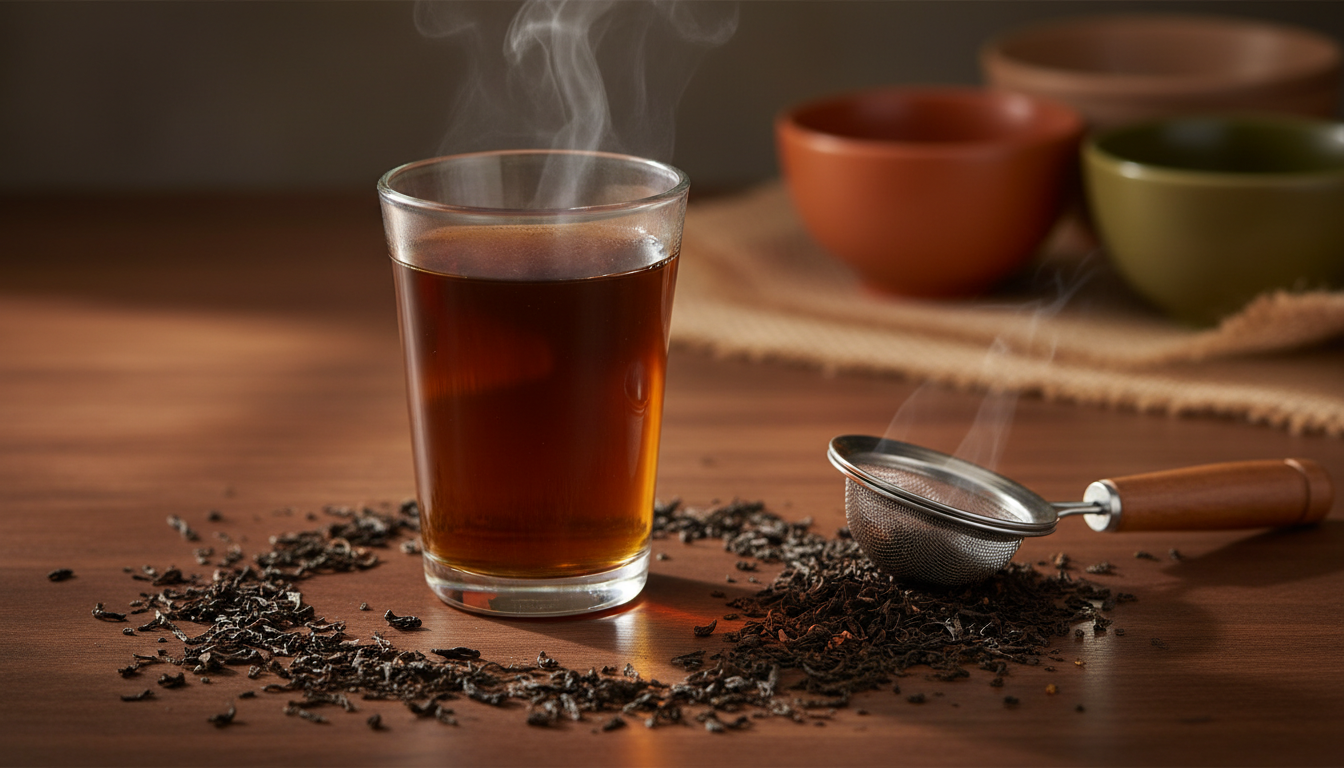

Schwarztee: Sorten, Herstellung, Zubereitung
Black tea is fully oxidized Camellia sinensis. Compare Assam, Darjeeling, Keemun, and Ceylon varieties. Learn processing, brewing, and caffeine levels.


How To Grow Black Tea
Learn how to grow black tea at home: soil, climate, and the five processing steps from fresh leaf to a finished cup of black tea.

Weisheit ist der Weg zu besserem Tee.
Unsere kostenlose Brühanleitung: das richtige Wasser, die richtige Temperatur und die passende Ziehzeit für jeden Tee, den wir führen. Neue Ernten erfahren Sie zuerst.
Kein Spam. Jederzeit abbestellbar.
Sehen Sie in Ihr Postfach.
Die Anleitung ist unterwegs.