













How to Make Milk Tea: Styles, Recipes, and Tips
Milk tea is one of the most consumed drinks on the planet, yet the term means different things depending on where you are. In Britain, it is black tea with a splash of cold milk. In Hong Kong, it is a thick, intensely brewed tea pulled through a cloth filter with evaporated milk. In Taiwan, it is a sweetened tea-and-milk combination served cold over tapioca pearls. In India, it is spiced tea simmered directly with milk on the stove.

What all these versions share is a simple discovery: fat from milk rounds out tea's tannins, softens bitterness, and creates a texture that water alone cannot produce. The casein proteins in dairy milk bind to polyphenols — the same compounds responsible for tea's astringency — and neutralize them. Research published in Foods (2024) confirms that β-casein forms strong complexes with tea polyphenols via hydrogen and hydrophobic bonds, reducing astringency and altering mouthfeel. The result is a smoother, fuller-bodied cup.
This is not a modern invention. Tibetans have been adding yak butter to tea for centuries. The Dutch and British adopted milk in tea by the late 1600s. Masala chai has roots going back generations in South Asian households.
This guide covers the major milk tea traditions, which teas work best with milk, how to make each style at home, and how plant-based milks compare to dairy. If you brew with loose leaf tea — particularly a strong Assam or Ceylon — you already have the ideal starting point.
What Is Milk Tea
Milk tea is any tea-based drink where milk or a milk alternative is a primary ingredient, not just a garnish. That distinction matters. Adding a few drops of milk to a cup of Darjeeling is flavoring a tea. Brewing a strong Assam specifically to be diluted with an equal part of hot milk is making milk tea. The tea-to-milk ratio, the type of milk, the brewing method, and whether sugar or spices are added define the style.
The broadest categories:
- Western milk tea: Tea brewed at normal strength, served with cold milk added to the cup. The UK, Ireland, and much of northern Europe drink tea this way.
- Hong Kong milk tea: Tea brewed at double or triple strength using a blend of black teas, strained through a cloth "sock" filter, combined with evaporated or condensed milk. Thick, rich, and intensely caffeinated.
- Taiwanese milk tea (boba/bubble tea): Tea brewed strong, sweetened, mixed with milk or creamer, served cold over ice with tapioca pearls or other toppings.
- Indian chai: Tea leaves (and often spices) simmered directly in a mixture of water and whole milk, then strained and sweetened.
- Japanese royal milk tea: Black tea steeped in a high proportion of hot milk with minimal water, producing a gentle, creamy drink.
Each method extracts different things from the tea leaf and interacts with the milk differently. A method that simmers tea in milk for ten minutes (chai) produces a fundamentally different drink than one where cold milk is poured into already-brewed tea (British style), even when using the same leaves.
British Milk Tea

The default tea in Britain and Ireland is black tea with milk. Over 80% of tea consumed in the UK includes milk. The method is deceptively simple but has specific parameters that matter.
Method
- Boil fresh water. Stale, re-boiled water contains less dissolved oxygen and produces a flatter cup.
- Warm the cup or pot with a splash of hot water. Discard.
- Add loose leaf tea: 3g per 200ml (roughly one heaped teaspoon of broken-leaf Assam or Ceylon).
- Pour water at 100°C directly over the leaves. Black tea needs full boiling temperature to extract properly.
- Steep 3–5 minutes. For milk tea, 4–5 minutes is better — you want a strong brew that holds up once milk dilutes it.
- Strain into the cup.
- Add cold whole milk: 20–40ml per 200ml of tea, to taste.
The Milk-First Debate
Whether to add milk before or after pouring the tea has been argued in Britain for over a century. George Orwell insisted on tea first. The Royal Society of Chemistry published a 2003 paper arguing milk first — it prevents the milk from scalding against the hot tea, preserving flavor. Practically, if you are brewing in a pot and pouring into a cup, milk first works well: the hot tea streaming into the milk heats it gently. If you are brewing in the cup with an infuser, tea first is the only option.
Tea Choice
A delicate high-grown Ceylon or a first-flush Darjeeling will taste washed out with milk. You want a full-bodied, malty tea with enough tannin structure to stand up to dairy. Assam is the classic choice — its robust, malty character was essentially built for milk. Low-grown Ceylon (Ruhuna style) also works well: full-bodied, smooth, and forgiving.
When we source Assam for milk tea, the key criterion is a full-bodied character that does not disappear when you add milk. We source from small farms and look specifically for second flush — harvested June–July — because it has more body and more malt than the first flush. Our Artisan Assam has that quality: strong enough to stand up to milk, but with enough nuance to be interesting on its own.
Hong Kong Milk Tea

Hong Kong-style milk tea (港式奶茶) is a legacy of British colonial influence filtered through Cantonese tea culture. It is sometimes called "silk stocking" milk tea because the cloth filter used to strain it, stained dark brown from repeated use, resembles a stocking.
This is not subtle tea. It is brewed aggressively strong, using a blend of several black teas — typically a mix of Ceylon dust, broken-leaf Ceylon, and sometimes Pu-erh or Keemun for depth — and combined with evaporated milk, not fresh milk. The result is thick, dark, aromatic, and slightly bitter in a way that the evaporated milk's caramel sweetness balances.
Method
- Use a blend of 3–4 black teas. A traditional mix: 50% Ceylon dust or fannings (for body and color), 30% broken-leaf Ceylon (for brightness), 20% a deeper tea like Keemun or aged Pu-erh (for complexity). Total: 20–25g of tea per 500ml of water.
- Bring water to a rolling boil.
- Add the tea blend to the boiling water. Reduce heat and simmer for 3–4 minutes — this is much more aggressive than Western brewing.
- Strain through a fine cloth filter (a muslin bag or fine-mesh sieve works at home) into a clean pot.
- Pour the strained tea back through the cloth filter into the first pot, then repeat. This "pulling" process (done 3–6 times in professional settings) aerates the tea and smooths the texture.
- Add evaporated milk: roughly 1 part evaporated milk to 3 parts tea. Adjust to taste.
- Sweeten with sugar if desired.
The liquid should be opaque, dark caramel in color, with a noticeable viscosity. Temperature matters — Hong Kong milk tea is served very hot.
You can approximate this at home using a strong broken-leaf Ceylon as your base. Brew it well beyond normal steeping time. The bitterness is intentional — the evaporated milk needs something aggressive to push against. A good starting point is our Keemun Black Tea, which adds the depth and complexity used in the traditional Hong Kong blend.
Taiwanese Bubble Tea and Boba

Bubble tea (珍珠奶茶) originated in Taiwan in the 1980s. The drink combines sweetened tea, milk or creamer, and chewy tapioca pearls (boba). As National Geographic documents, it went from a Taiwanese street drink invented by tea shop staff to a global phenomenon — the bubble tea market was valued at over $3 billion by 2023.
Classic Taiwanese milk tea uses black tea as the base, typically a robust Assam-type tea or a Sun Moon Lake black tea (a Taiwanese tea made from Assam cultivars grown at elevation). The tea is brewed strong, sweetened with sugar syrup, and mixed with milk or a non-dairy creamer.
Method for Classic Boba Milk Tea at Home
- Cook the tapioca pearls. Bring a large pot of water to a rolling boil (use at least 10 parts water to 1 part pearls — they need room). Add dried tapioca pearls, stir immediately to prevent sticking. Boil for 15–20 minutes (follow the package instructions — timing varies by pearl size). Remove from heat, cover, and let sit for another 15 minutes. Drain, then toss in a simple syrup (equal parts sugar and water, heated until dissolved) to keep them sweet and prevent sticking.
- Brew the tea. Use 5g of strong black tea per 200ml of water at 100°C. Steep for 5–6 minutes — you need the tea concentrated because ice and milk will dilute it significantly. Strain.
- Sweeten the tea while it is still hot. Add 15–30g of sugar per 200ml, or use simple syrup. Stir until dissolved. Let the tea cool to room temperature, then refrigerate until cold.
- Assemble. Add 2–3 tablespoons of cooked boba to a tall glass. Pour cold sweetened tea over the boba to fill the glass two-thirds. Add milk (50–80ml per 200ml of tea). Fill with ice. Stir or shake.
The tea base needs to be bold enough to taste through the milk, sugar, and ice. Our Artisan Assam works perfectly — its malt and strength carry through the dilution. Ceylon is another strong option for a slightly brighter version. Using a mild or delicate tea here is a waste — it will vanish.
Variations
Brown sugar boba (tiger milk tea) skips the tea entirely and uses caramelized brown sugar syrup with milk and pearls. Taro milk tea uses taro root paste or powder. Matcha and hojicha versions use Japanese tea instead of black tea.
Indian Masala Chai with Milk
Chai (the word simply means "tea" in Hindi) as prepared across South Asia is a fundamentally different brewing method from any Western approach. The tea is simmered directly in a mixture of water and milk, often with spices, producing a drink where the milk is not an addition — it is part of the extraction medium. Masala chai's origins trace back to Ayurvedic spiced brews that predate the introduction of tea leaves to India, with the modern version emerging as street vendors began adding spices to commercially grown Assam tea in the early 20th century.
Method for Masala Chai
- Crush the spices. For 2 cups: 4–5 green cardamom pods (lightly crushed to crack the shells), 2–3 whole cloves, a 2cm piece of fresh ginger (sliced or grated), half a cinnamon stick, 3–4 black peppercorns. Crush lightly in a mortar — you want them cracked open, not powdered.
- Simmer the spices. Add the spices to 200ml of water in a small saucepan. Bring to a boil, then reduce heat and simmer for 3–4 minutes to extract the volatile oils.
- Add the tea. Add 6–8g of strong black tea (Assam CTC is traditional, but any robust broken-leaf black tea works). Simmer for 2 minutes — the tea should brew aggressively in the spiced water.
- Add the milk. Pour in 200ml of whole milk (a 1:1 water-to-milk ratio is standard; adjust to preference). Increase heat and bring the mixture to a boil. Watch it carefully — milk boils over fast. As soon as it rises, reduce heat. Let it simmer for 2–3 minutes.
- Strain and sweeten. Pour through a fine strainer into cups. Add sugar to taste — chai is traditionally sweet. Start with 1–2 teaspoons per cup.
Notes on the Tea
CTC (Crush, Tear, Curl) Assam is the standard for Indian chai because its small, dense granules extract fast and produce a very strong, dark brew that holds up against the milk and spices. We sell orthodox whole leaf Assam — hand picked, not CTC. Orthodox Assam holds up well simmered with spices — just extend the simmering time by a minute or two compared to a CTC grade and you get the same aggressive extraction. Our Artisan Assam brewed this way gives a clean malt base that lets the spices come through clearly.
The ratio of water to milk defines the richness. Some households use all milk, no water — this produces an extremely rich, almost dessert-like chai. Others use mostly water with a splash of milk. The 1:1 ratio is a solid starting point.
Best Teas for Milk
Not every tea works with milk. The general rule: the tea needs enough body, tannin, and flavor intensity to remain identifiable after milk is added. Light, aromatic, or delicate teas get buried.
Assam
The single best tea for milk, full stop. Assam produces a thick, malty, deeply colored brew with substantial tannins. Those tannins are exactly what makes milk work — the casein proteins bind to them, softening the astringency while the malt flavor persists. Second flush Assam (harvested June–July) is the gold standard for milk tea: it has the most body and the strongest malt character.
For most home drinkers the difference is obvious — second flush brews noticeably darker and the malt is more pronounced, which means it holds its identity once milk is in the cup. Our Artisan Assam is a second flush, sourced from small farms for this kind of depth. It brews dark and holds its flavor through milk without turning muddy.
Ceylon (Low-Grown)
Full-bodied Ceylon from the Ruhuna or Sabaragamuwa districts handles milk well. It has enough weight and tannin structure to push through the dairy, with a slightly brighter, cleaner finish than Assam.
Mid-grown Ceylon (Dimbula, Uva) can work with a small amount of milk but may lose its nuance. High-grown Ceylon should be drunk straight. Valley of Tea's Ceylon loose leaf gives you the body needed for milk while keeping that characteristic Ceylon brightness — a good option if you want something less malty than Assam.
Rooibos
Technically not tea (Aspalathus linearis, a legume from South Africa), rooibos is a natural milk tea base for anyone avoiding caffeine. It brews to a reddish-brown color with a naturally sweet, slightly nutty flavor and zero bitterness. It has no tannins to bind with milk proteins, so the interaction is different — rooibos with milk is smooth and creamy without the astringency-softening effect you get with black tea. Brew rooibos at 100°C for 5–7 minutes for a milk-ready strength.
Our Green Rooibos is an unoxidized version with a lighter, grassier profile — try it with oat milk for a clean, caffeine-free alternative.
Hojicha
Roasted Japanese green tea with a toasty, caramel-like flavor and low caffeine. Hojicha lattes have become popular for good reason — the roast character pairs naturally with milk, similar to how roasted coffee does. Brew hojicha at 90°C, using 4g per 200ml, for 60–90 seconds. The brew will be a warm brown color. Add steamed or warm milk for a hojicha latte.
Teas to Avoid with Milk
Green tea (the vegetal, grassy notes clash with dairy), white tea (too delicate — milk obliterates it), light oolongs (same problem), and most flavored teas (the added flavorings tend to curdle or taste odd with milk).
How to Make Milk Tea at Home

Every style described above has a specific method, but here is a universal framework for a simple, excellent cup of milk tea using loose leaf black tea.
What You Need
- 3–4g of strong black tea (Assam or low-grown Ceylon) per 200ml cup
- Freshly boiled water (100°C)
- Whole milk (or plant milk — see next section)
- Sugar or sweetener (optional)
- A teapot, infuser, or strainer
Steps
- Boil fresh water. Use filtered water if your tap water is heavily chlorinated.
- Measure 3–4g of tea per cup. For milk tea, dose slightly higher than you would for straight black tea — the milk will dilute the brew.
- Pour boiling water over the leaves. Steep for 4–5 minutes. Longer steeping extracts more tannins and body, which is what you want when milk is involved. A 3-minute steep that works for straight tea will taste weak with milk.
- Strain the tea.
- Add milk: 30–50ml of whole milk per 200ml of tea. Start with less — you can always add more.
- Sweeten if desired. Stir.
For Iced Milk Tea
- Double the tea dose (6–8g per 200ml) to account for ice dilution.
- Steep 5 minutes at 100°C.
- Strain directly over a full glass of ice — the flash-chill locks in flavor and clarity.
- Add milk and sweetener. Stir.
Temperature Note
Adding cold milk to hot tea drops the temperature by 10–15°C. If you want a properly hot cup, either warm the milk beforehand (microwave for 20–30 seconds) or brew the tea slightly hotter and stronger than normal.
Ratio Guide
| Style | Tea (g/200ml) | Water temp | Steep time | Milk ratio |
|---|---|---|---|---|
| British | 3g | 100°C | 4–5 min | 15–20% of cup |
| Strong milk tea | 4g | 100°C | 5 min | 25–30% of cup |
| Iced milk tea | 6–8g | 100°C | 5 min | 25–30% of glass |
| Chai | 6–8g | simmered | 2–3 min in liquid | 50% (1:1 water:milk) |
Plant Milks: Oat, Soy, Almond, and Others
Dairy is the traditional choice for milk tea, but plant milks have become mainstream. They do not all perform equally in tea.
Oat Milk
The best all-around dairy alternative for tea. It has a neutral, slightly sweet flavor that does not overpower the tea. Its fat content (typically 2–3%) and natural starches give it a creamy mouthfeel close to semi-skimmed dairy milk. Most importantly, oat milk rarely curdles in hot tea — a problem that plagues some other plant milks.
Barista-grade oat milks (Oatly Barista, Minor Figures) contain added oils or emulsifiers that improve frothing and heat stability. For a simple cup of milk tea, any oat milk works.
Soy Milk
The original plant milk for tea and still a solid choice. It has the highest protein content of the common plant milks (3–4g per 100ml), which gives it good body. The flavor is beany — some people find this complements malty Assam well, others find it distracting.
The main issue: soy milk can curdle when added to very hot or very acidic tea. The acid in black tea (pH around 4.5–5) combined with high temperature causes the soy proteins to denature and clump. To prevent this: let the tea cool for 1–2 minutes before adding soy milk, or add the soy milk to the cup first and pour the tea in slowly.
Almond Milk
Most commercial almond milks contain only 2–3% almonds and a lot of water, resulting in a watery, low-fat liquid that does not contribute much body to tea. The flavor can be pleasant — slightly sweet and nutty — but the tea will taste diluted rather than enriched. If you use almond milk, brew the tea significantly stronger to compensate, and choose a barista-grade version with added thickeners.
Coconut Milk
Full-fat canned coconut milk adds a rich, tropical dimension to tea. It works surprisingly well in chai — the coconut fat carries spice flavors. Coconut beverage (the thinner carton version) is less useful; like almond milk, it is too thin. Full-fat coconut milk can overpower delicate teas, so pair it with strong Assam or spiced chai.
Others
Rice milk and hemp milk are generally too thin and too neutral for milk tea. They add volume without adding flavor or body.
Summary Ranking for Tea
- Oat milk — best balance of flavor, body, and heat stability
- Soy milk — good body, watch for curdling
- Full-fat coconut milk — rich but dominant flavor, best in chai
- Almond milk (barista grade) — acceptable, brew tea stronger
- Others — not recommended for milk tea
Milk Tea vs Latte
The terms "milk tea" and "tea latte" overlap but are not identical. Understanding the difference helps you order and make what you actually want.
Milk tea is tea-forward. The tea is the dominant ingredient by volume and flavor. Milk is added to modify the tea — to soften tannins, add body, and round out the flavor. In a British milk tea, milk might be 15–20% of the cup. Even in chai, where milk is 50% of the liquid, the tea and spice flavors dominate.
A tea latte is milk-forward. It follows the coffee latte model: a base of concentrated tea (a strong brew, matcha, or chai concentrate) topped with a large volume of steamed milk. In a tea latte, milk is typically 60–70% of the drink. The texture — frothy, creamy, thick — is as important as the flavor. Tea lattes are closer to the coffeehouse tradition than to the tea tradition.
Practical Differences
| Milk tea | Tea latte | |
|---|---|---|
| Tea-to-milk ratio | 4:1 to 1:1 | 1:2 to 1:3 |
| Milk temperature | Cold or warm | Steamed/frothed |
| Texture | Similar to black tea | Thick, creamy, frothy |
| Caffeine per cup | Higher (more tea) | Lower (less tea, more milk) |
| Flavor | Tea-dominant | Milk-dominant |
Neither is better. They are different drinks for different purposes. A morning Assam with milk is direct and functional — strong tea softened just enough by dairy. An afternoon hojicha latte is more indulgent — a warm, creamy, low-caffeine drink where the tea flavor is a background note.
If you are making a latte at home without an espresso machine's steam wand, heat milk to 65–70°C and froth it with a handheld milk frother or a French press (pump the plunger rapidly for 20–30 seconds). Pour the frothed milk over a small amount of very strong tea. Matcha, hojicha, and strong chai concentrate work best as latte bases because their concentrated flavors survive the high milk volume.
Conclusion
Milk tea in its many forms is one of the simplest ways to transform a cup of tea into something richer and more satisfying. The key is starting with a tea that has enough strength and character to work with milk rather than be overpowered by it.
Assam is the universal answer. Its malt, body, and tannin structure make it the default milk tea base across cultures — from British breakfast cups to Indian chai to Taiwanese boba. Ceylon, particularly the fuller-bodied low-grown grades, is a strong second choice that brings a brighter, cleaner character to the cup.
Valley of Tea's loose leaf Artisan Assam and Ceylon are sourced and graded for exactly this kind of brewing. The whole-leaf and broken-leaf grades give you more control over strength than tea bags, and the flavor complexity holds up whether you are making a simple morning cup with milk, a spiced chai, or an iced boba at home.
Start simple. Brew 3–4g of Assam at 100°C for 5 minutes, add a splash of whole milk, and taste. From there, experiment with ratios, milks, and styles. Every milk tea tradition in the world started with the same observation: tea and milk make each other better.
Schreiben Sie einen Kommentar
Kommentare werden vor der Veröffentlichung genehmigt.
Vollständigen Artikel anzeigen
The Complete Guide to Drinking Tea
What tea is, how the main types differ in the cup, and how to brew each one properly. Water temperature, steeping times, storage and how to get more than one cup from your leaves.
Vollständigen Artikel anzeigen

Schwarztee: Sorten, Herstellung, Zubereitung
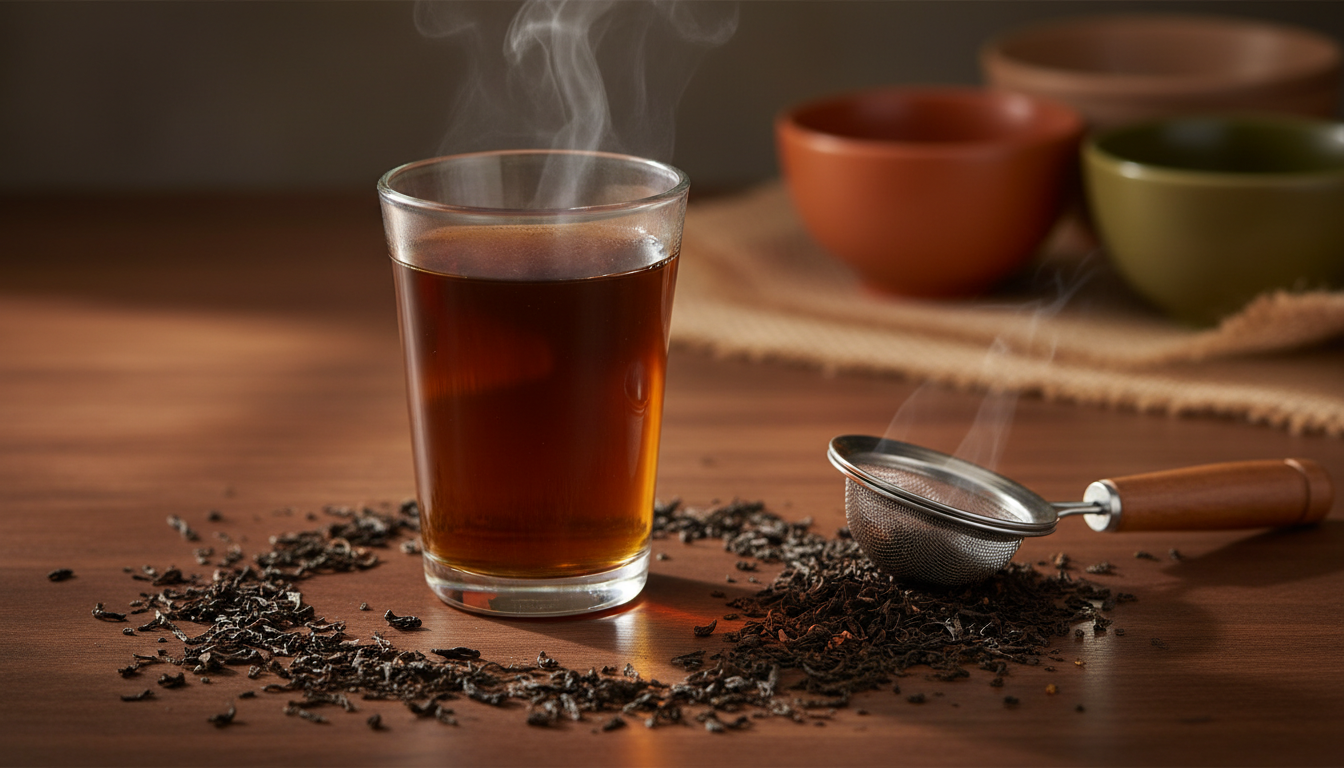
Black tea is fully oxidized Camellia sinensis. Compare Assam, Darjeeling, Keemun, and Ceylon varieties. Learn processing, brewing, and caffeine levels.


How To Grow Black Tea
Learn how to grow black tea at home: soil, climate, and the five processing steps from fresh leaf to a finished cup of black tea.

Weisheit ist der Weg zu besserem Tee.
Unsere kostenlose Brühanleitung: das richtige Wasser, die richtige Temperatur und die passende Ziehzeit für jeden Tee, den wir führen. Neue Ernten erfahren Sie zuerst.
Kein Spam. Jederzeit abbestellbar.
Sehen Sie in Ihr Postfach.
Die Anleitung ist unterwegs.