Ihr Warenkorb ist leer

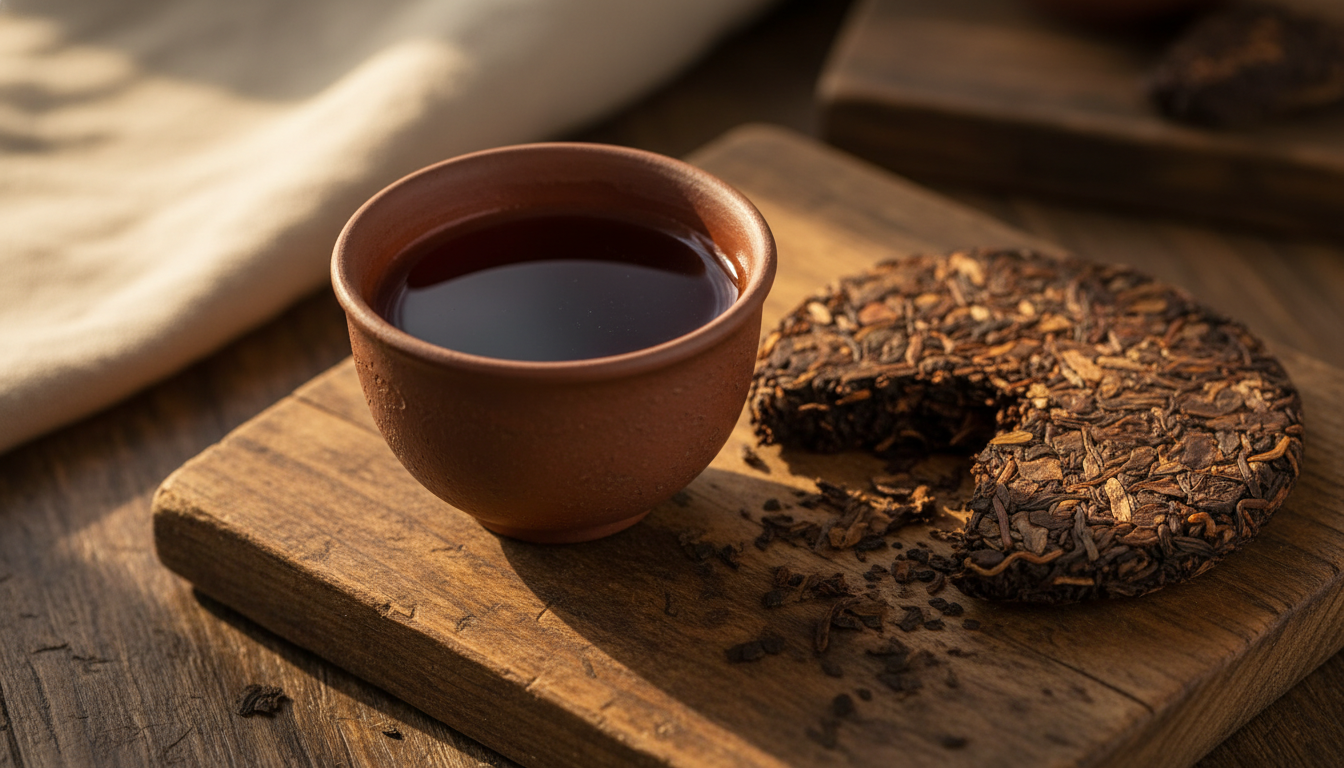

Pu-erh comes exclusively from Yunnan province in southwestern China, where it has been produced for centuries and traded along ancient horse caravan routes into Tibet, Southeast Asia, and beyond. At Valley of Tea, we source our pu-erh directly from Yunnan, where the large-leaf Camellia sinensis var. assamica trees that define this tea still grow — some of them centuries old. This guide covers pu-erh tea benefits and uses, how it is made, what it tastes like, and how to brew and buy it with confidence.

Pu-erh tea is a post-fermented tea produced in Yunnan province, China, from the large-leaf varietal of the tea plant (Camellia sinensis var. assamica). The name comes from the city of Pu'er (普洱), historically the trading hub where teas from surrounding mountains were collected and distributed.
What sets pu-erh apart from all other teas is post-fermentation. Green tea is unoxidized. Black tea is fully oxidized. Oolong is partially oxidized. In all three cases, the process is enzymatic — the tea plant's own enzymes drive the chemical changes, and heat is applied to stop the reaction.
Pu-erh is different. After initial processing, the tea undergoes microbial fermentation: colonies of bacteria and fungi break down and transform the leaf material over time. This is true fermentation in the biological sense, closer to what happens in cheese, wine, or sauerkraut than to what happens in black tea production.
This microbial activity is why pu-erh changes with age. The microorganisms continue working in the compressed cake for years, slowly altering the tea's chemistry, softening rough edges, building sweetness, and developing the earthy, complex character that aged pu-erh is known for.

Pu-erh is almost always compressed into shapes — cakes (bing, 357g being the standard), bricks (zhuan), and mushroom-shaped tuos. Compression slows the fermentation and creates a controlled aging environment inside the cake. Loose-leaf pu-erh exists but ages differently and is less common for serious storage.
There are two types of pu-erh, and the distinction matters enormously.
Sheng is the original and traditional form. The leaves are picked, withered, pan-fired at a lower temperature than green tea (to halt oxidation but preserve the enzymes needed for later fermentation), sun-dried, and then steamed and pressed into cakes. That is it. There is no accelerated fermentation step. The tea is essentially a sun-dried green tea that has been compressed, and it will ferment naturally over time through ambient microbial activity.
Young sheng (under 3-5 years) is brisk, astringent, sometimes bitter, with vegetal, floral, or fruity notes depending on the source material. It is a challenging tea for beginners. As sheng ages — 10, 20, 30 years or more — the character transforms. Bitterness fades. Sweetness deepens. The tea develops notes of dried fruit, honey, wood, camphor, and eventually a smooth, thick mouthfeel that young tea cannot achieve. The very best sheng comes from old native tea trees in Yunnan — trees over a century old — and watching a cake from that material evolve over years is something you cannot replicate with any other tea. I consider well-stored sheng from good raw material to be the pinnacle of pu-erh.

Shou pu-erh was invented in 1973 at the Kunming Tea Factory as a way to replicate the character of aged sheng in a fraction of the time. The process, called wo dui (渥堆), involves piling moistened maocha (the raw sun-dried tea), covering it, and allowing accelerated microbial fermentation to take place under controlled heat and humidity for 45-60 days. Workers turn the piles periodically to manage temperature and prevent the growth of undesirable organisms.
The result is a tea that is dark, smooth, and earthy from day one — without the decades of storage that sheng requires. Shou pu-erh tastes earthy, woody, sometimes with notes of dark chocolate, mushroom, damp forest floor, or dried dates. It lacks the brightness and evolving complexity of aged sheng, but good shou has its own appeal: a thick, smooth, comforting cup with no astringency.
Shou pu-erh also improves with age, though the changes are subtler. A shou that is 5-10 years old will have lost any residual wo dui taste (a slightly fishy or pond-like note that new shou sometimes carries) and developed a cleaner, sweeter profile.
Both types have their place. Sheng is for the experience of watching a tea evolve over years — it is a long commitment that rewards patience. Our aged pu-erh, by contrast, is smooth with a lot of sweetness, and I reach for it as a daily tea when I want that earthy depth without waiting decades. If you are new to pu-erh, shou is the more accessible starting point.

All pu-erh starts the same way. Fresh leaves are picked from large-leaf assamica trees — ideally from old trees (gushu) or at least established arbor trees rather than terrace-planted bushes. The leaves are withered to reduce moisture, then pan-fired (sha qing) in a large wok. This step is critical: the temperature must be high enough to stop enzymatic oxidation but low enough to preserve the microbial enzymes and residual moisture that allow future fermentation. If the leaves are fired too hot (as in green tea production), they become "dead" — unable to ferment and age properly.
After firing, the leaves are rolled to shape them and break cell walls, then spread on bamboo mats and dried in the sun. This sun-drying step is unique to pu-erh and non-negotiable. Oven-drying kills the microorganisms. The resulting product is called maocha — the raw material for pu-erh production.
Maocha is weighed (357g for a standard cake), steamed briefly to make the leaves pliable, placed in a cloth bag, shaped, and pressed. Traditional stone pressing uses a heavy stone cylinder — a person literally stands on it — to compress the tea gradually. Machine pressing is faster and produces tighter cakes. Stone-pressed cakes are slightly looser, which allows more air contact and potentially faster aging, though the differences are debated.
For sheng, fermentation happens naturally after pressing. Research published in Molecules (2024) confirms that ambient microorganisms — primarily Aspergillus niger, Aspergillus glaucus, Penicillium, Rhizopus, and various Bacillus bacteria — are the key drivers of pu-erh fermentation, colonizing the cake and slowly transforming the tea. Temperature, humidity, and air circulation in the storage environment determine the speed and character of this transformation. This is why storage conditions are a major topic in the pu-erh world.

For shou, the wo dui process front-loads this fermentation. The maocha is piled in heaps up to 70cm high, wetted, and covered with thermal blankets. Internal temperatures reach 50-65°C. The microbial community shifts as fermentation progresses — early stages are dominated by fungi, later stages by bacteria. Workers monitor the piles daily, turning them to prevent overheating and ensure even fermentation. After 45-60 days, the tea is dried, sorted, and pressed (or sold loose).
Pu-erh spans one of the widest flavor ranges in the tea world, because age and type create vastly different cups from the same starting material.
Bright, astringent, sometimes aggressively bitter. Notes of fresh vegetation, wildflowers, stone fruit, sometimes a distinct smoky character. The mouthfeel can be drying but should produce strong huigan — a returning sweetness that floods the mouth after swallowing. Good raw material from old trees will have a thick, oily mouthfeel even when young.
The bitterness and astringency have softened significantly. Dried fruit, honey, plum, and early woodiness emerge. The tea develops a fuller body and smoother texture while retaining some of its original brightness.

Smooth, thick, and complex. Camphor, aged wood, leather, dates, traditional Chinese medicine cabinet. The astringency is gone. The best examples have a viscous, almost syrupy mouthfeel and an aftertaste that lingers for minutes. This is what collectors are after.
Earth, dark chocolate, mushroom, wet forest floor, jujube dates, occasionally a hint of caramel or molasses. Smooth and thick with zero bitterness in a well-made example. New shou may carry a slight fermentation taste that dissipates within 1-2 years of storage. Try our aged pu-erh to experience a well-rested shou with a clean, sweet profile.
Pu-erh responds well to both gongfu and western brewing, but gongfu is the preferred method for serious tasting because it reveals how the tea evolves across multiple infusions.
Use a gaiwan or small Yixing clay teapot (100-150ml). Use 6-8g of leaf per 100ml of water. Water temperature: 95-100°C — pu-erh handles boiling water without turning bitter the way green tea does.

Rinse the leaves first. Pour boiling water over the tea, let it sit for 5-10 seconds, then discard the rinse. This opens the compressed leaves, washes off storage dust, and warms the tea. For tightly compressed cakes, you may want two rinses.
For the first few infusions, steep 10-15 seconds. Increase steep time gradually as the leaves give up their flavor — by the 6th or 7th steep you may be at 30-60 seconds. A good pu-erh will yield 10-15 infusions comfortably, and exceptional material can go beyond 20. Watch how the flavor shifts across infusions. That evolution is half the point of gongfu brewing.
Use 3-5g per 200-250ml of water at 95-100°C. Steep for 3-5 minutes. This produces a single, blended extraction rather than the sequential infusions of gongfu. It works fine for shou pu-erh and mid-aged sheng but flattens the nuance of high-quality material.
Use a pu-erh knife or letter opener. Insert the tool into the side of the cake at a slight angle and lever gently to separate layers of leaves. The goal is to pry apart intact leaves, not to chop through them — broken leaves over-extract and produce a harsh, murky cup.

Pu-erh tea contains caffeine, as do all teas from Camellia sinensis. The exact amount varies by leaf grade, tree age, and processing. Research on the chemical composition of aged and ripened pu-erh shows that ripe pu-erh contains 13-18mg of caffeine per gram of dry leaf, placing it in a moderate range — roughly comparable to black tea, typically 30-70mg per cup depending on brewing parameters.
Shou pu-erh feels less stimulating than sheng despite similar caffeine content. The fermentation process alters the caffeine's interaction with other compounds in the leaf. Many drinkers report that pu-erh produces a calmer, more sustained alertness compared to coffee or even black tea, though individual responses vary.
Gongfu brewing extracts more caffeine in early steeps and less in later ones, so the first two infusions carry most of the caffeine. If you are sensitive, discarding the first steep removes a meaningful portion.
Beyond its flavor, pu-erh tea benefits include effects on metabolism, gut health, and antioxidant activity. A peer-reviewed study published in The Journal of Nutrition found that postfermented pu-erh tea improved metabolic syndrome markers by remodeling intestinal homeostasis, with polyphenols and caffeine identified as key active compounds. The study noted improved glucose and lipid metabolism alongside reduced systemic inflammation.

These effects trace back to the unique chemistry created by fermentation. During the wo dui process and natural aging, catechin levels decrease while theabrownins — large, condensed polyphenol polymers — increase significantly. Theabrownins are largely unique to pu-erh and are the subject of ongoing research into their antioxidant and metabolic properties.
As with any food or beverage, the research base is still developing, and pu-erh is not a substitute for medical treatment. But the combination of bioactive compounds in a well-fermented pu-erh tea is genuinely distinct from other tea types.
Aging is what makes pu-erh unique in the tea world, and it is a subject with strong opinions.
Pu-erh needs moderate humidity (60-75% relative humidity), stable temperature (20-30°C), clean air, and darkness. Too dry (below 50%) and the microbial activity stalls — the tea ages extremely slowly and may develop a flat, papery character. Too wet (above 85%) and you risk mold, off-flavors, and potentially ruined tea. Ventilation matters: pu-erh absorbs odors readily, so keep it away from kitchens, perfumes, and strong-smelling substances.

This is the central debate in pu-erh aging. "Dry storage" means relatively lower humidity, typically in drier climates like Kunming or northern China. These teas age slowly but retain more of their original character and brightness. "Wet storage" or more humid conditions — Hong Kong, Guangzhou, Malaysia — accelerate aging and produce darker, earthier results faster.
Neither is inherently better. Dry-stored and wet-stored versions of the same tea will taste completely different after 20 years. Know which you prefer, and always ask about storage history when buying aged pu-erh.
Not all pu-erh is worth aging. The raw material must be good — old tree, single-origin, or at least quality blends from reputable factories. Cheap plantation-grade pu-erh will not magically become exceptional with time. Age amplifies what is already in the tea. If the starting material is thin, the aged result will be thin.
Sheng pu-erh is the primary candidate for long-term aging. Shou pu-erh benefits from a few years of rest to clean up the fermentation taste, but it does not undergo the dramatic transformation that sheng does over decades.
The pu-erh market is plagued by misrepresentation, particularly around age claims and origin. Here is what to look for.
Source transparency. Know where the tea comes from. Region, mountain, and tree type matter. Pu-erh from ancient arbor trees in areas like Yiwu, Menghai, Bulang, or Jingmai will taste different from terrace-planted material, and it will age differently. At Valley of Tea, we source directly from Yunnan and can tell you which region produced each tea.
Factory or producer. Major factories like Dayi (Menghai Tea Factory), Xiaguan, and Haiwan have long track records. Smaller artisan producers offer interesting single-origin cakes but require more trust and knowledge. A wrapper alone proves nothing — counterfeiting of famous factory labels is widespread.
Leaf quality. Examine the cake surface. Whole, intact leaves indicate careful processing. A cake made entirely of broken fannings will brew harsh and lack longevity. For sheng, the leaves should appear grey-green (young) to dark brown (aged). For shou, the leaves will be dark brown to black.
Age claims. Be skeptical of age claims on inexpensive tea. Genuinely aged pu-erh (20+ years) is not cheap. A "1990s aged sheng cake" selling for $30 is almost certainly not what the label says. If the price seems too good, it is.
Taste before committing. If possible, try a sample before buying a full cake. One tasting session tells you more than any description. This is standard practice in the pu-erh world and any reputable seller should accommodate it. You can start with our aged pu-erh — a well-rested shou sourced directly from Yunnan.
Pu-erh rewards curiosity and patience. It is a tea you can return to over years — literally, if you are aging your own cakes — and find something different each time. Start with a good shou for accessibility and a young sheng to experience the raw power of the leaf. From there, the rabbit hole goes as deep as you want it to.
Kommentare werden genehmigt, bevor sie angezeigt werden.