













Camomile Tea Bags
Camomile tea bags are the easiest way most people ever try this herb, and they're also the format where quality drops the fastest. In my fifteen years importing tea and botanicals, I've opened hundreds of camomile tea bags from dozens of suppliers, and the gap between a good one and a poor one is stark: papery, grassy dust in one cup, a genuinely floral, apple-scented infusion in the other. The difference comes down to what's actually sitting inside the bag.

Whole camomile flower heads brew at 90–95°C for 5–8 minutes and release a honeyed, apple-like scent that fills the room. Bagged camomile is almost always the broken, screened-out material left after the best flower heads get sorted out for loose-leaf sale, priced cheap because it moves fast and packs tight. Convenience and quality pull in opposite directions here, and most shoppers never realise they're choosing one over the other every time they reach for a box.
What Goes Into Camomile Tea Bags?
Most commercial camomile tea bags are filled with fannings and dust, the smallest broken grade of dried flower material left once whole flower heads are sorted out for loose tea. This grade brews fast and strong, but the fine particle size means the flowers have already shed much of their volatile aromatic oil before the bag ever reaches you.
Camomile flower heads (Matricaria chamomilla) are harvested, dried, and then run through screens that grade the material by size. Whole, intact flower heads go into loose-leaf tins. Everything that breaks apart during drying and handling, the crumbled petals and stem fragments, gets swept up and bagged. It's a similar logic to what happens with black tea, where CTC processing (crushing, tearing, curling) deliberately cuts leaves into small uniform pieces built for a fast, strong teabag brew, though camomile isn't CTC-processed in the same industrial sense. The same grading pattern shows up across herbal teas generally: our organic rooibos, for instance, is a long-needle whole-leaf cut, while supermarket rooibos is typically dust and fannings packed into bags. Camomile follows the identical split.
The problem with the dust grade isn't freshness at the point of packing: it's surface area. Chamomile's aroma comes from volatile compounds like bisabolol and chamazulene sitting in tiny oil glands on the flower head. Crushed material exposes far more of that oil to air, so it evaporates faster in storage, well before the bag reaches a shelf, let alone a cup.
Do Tea Bags Work for Camomile?
Camomile tea bags work well for convenience: they steep in minutes, need no infuser, and travel easily in a bag or desk drawer. What they don't deliver is the same aroma or depth as whole flower camomile, because the fine dust grade sheds its essential oils faster in storage and during the hot, fast steep a bag is built for.
Flavour and aroma aren't the same thing, and it's worth separating them here. On flavour, bagged camomile still delivers a recognisable, mildly sweet, apple-toned cup, just a flatter version of it. On aroma, the loss is much steeper: the floral top notes that make whole flower camomile so distinctive are largely gone by the time a fine-cut bag is a few months old.
A common mistake is oversteeping a weak-tasting bag to compensate, which mostly pulls out more tannin and bitterness rather than more flavour, since the aromatic compounds that would round out the cup have already left the material. Three to four minutes is usually plenty for a bag; pushing past five tends to make it taste flat and slightly bitter instead of floral.
Many drinkers reach for a camomile tea bag as an evening wind-down habit. That association is exactly why bag quality matters for repeat drinkers: if the aroma isn't there, the ritual falls a bit flat, even if the routine of making the cup still feels the same.
Whole Flower vs Tea Bag Comparison
Whole camomile flowers beat tea bags decisively on aroma and flavour depth, tea bags win outright on convenience, and cost per cup lands close to even once you account for the extra gram weight loose flowers need per serving. Broken down by the factors that actually matter at the kettle:
- Aroma: whole flower heads keep their apple-honey scent for months when stored properly; bagged dust loses most of it within weeks of packing.
- Flavour depth: whole flowers give a rounder, more layered cup, with the sweetness and the mild floral bitterness in better balance; bags brew flatter and turn bitter quickly if oversteeped.
- Convenience: bags win outright, no infuser to wash, no loose material to dispose of, and a fixed dose every time.
- Cost per cup: loose flower typically needs 1.5–2g per cup against a bag's roughly similar fill weight, so the price gap per serving is smaller than most people expect. You're mostly paying for what you're actually drinking, not for the format.
Camomile isn't the only herbal tea where this gap shows up, though it isn't the most extreme case either. In our own tasting, Greek mountain tea, lemon verbena, and honeybush show the widest differences we see between loose leaf and bagged versions, and camomile sits closer to the moderate end of that scale rather than the extreme end. The gap is still real and still worth caring about, just not the biggest one on our shelf. When a customer tells me they can't taste a difference between bagged and loose camomile, I usually just make them a cup of each, side by side. The difference is clear within one sip most of the time, though it's worth checking their water and brewing method first if it genuinely isn't.
Making the Switch to Loose
Switching from camomile tea bags to loose whole flowers takes one extra step: a simple mesh infuser basket or reusable filter. Brew time and temperature barely change, and the payoff is a lighter, more floral cup with visible whole flower heads instead of fine dust settling at the bottom of your mug.
The process is straightforward. Measure roughly 1.5–2g, about one to two teaspoons, of whole dried flower heads per cup. Drop them into an infuser basket or a teapot with a built-in strainer, pour water at 90–95°C, and steep for 5–8 minutes before lifting the infuser out. That's a longer steep than a bag typically needs, but it suits the coarser, intact material.
There's a visual payoff too: golden-centred white flower heads floating and slowly unfurling as they steep, which also lets you actually see the quality of what you bought, something a sealed foil bag never allows.
Storage matters just as much as brewing. We keep our own bulk botanicals, camomile included, in a cool, dry area away from direct heat and moisture, the same approach we use for bulk hibiscus, and it protects both colour and aroma the same way.
Final Thoughts
The quality gap between camomile tea bags and whole flower camomile is real, even if it isn't the widest we see across the herbal tea category, and it's still wider than most drinkers expect from something this simple. If you've only ever had the bagged version, you're missing a very different side of camomile.
We stock whole flower camomile precisely because the difference is so noticeable once it's brewed properly, with none of the flatness that comes from fine, screened-out dust. Next time you reach for a camomile tea bag out of habit, try steeping a spoonful of whole flowers instead, side by side in two mugs, with the same water and roughly the same time. The floral, honeyed cup that comes back is the reason we keep whole flower camomile in stock at all.
Teas Featured in This Article

Leave a comment
Comments will be approved before showing up.
Also in Valley of Tea Blog | Tea Guides, Origins & Brewing Tips
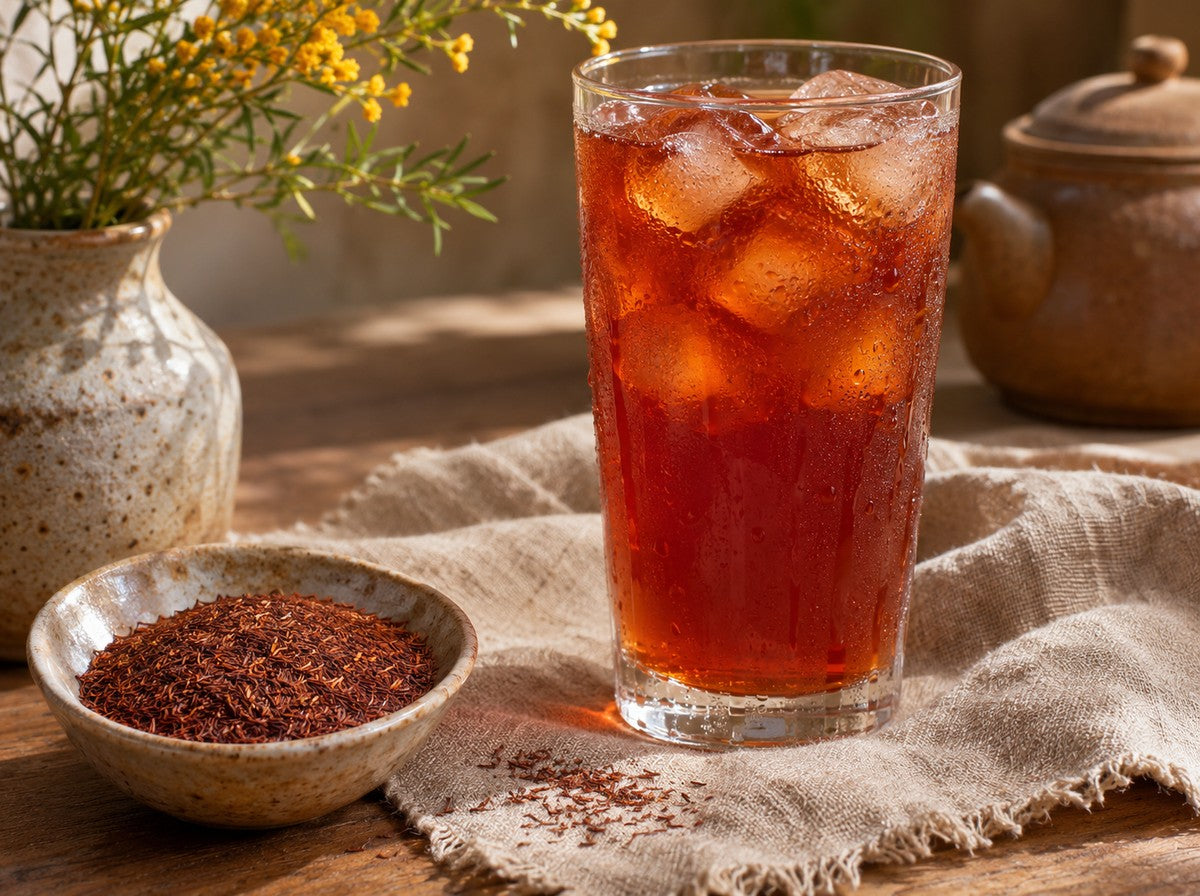

Rooibos Iced Tea: Caffeine-Free Refresher
Learn to make rooibos iced tea two ways: hot-brewed over ice in 15 minutes, or a smoother overnight cold brew, plus flavour additions and storage tips.

Spice Cabinet Organization: A Practical System That Works
Learn how to organize your spice cabinet with a practical system that keeps every jar findable and fresh. Temperature, layout, and audit tips included.

Maca or Ashwagandha for Your Daily Routine
Choosing between maca or ashwagandha? Learn how each root tastes, when to use them, and the best ways to prepare each in tea or drinks.

Wisdom is the path to better tea.
Get our free brewing guide: the right water, heat and timing for every tea we sell. You will also hear it first when new harvests arrive.
No spam. Unsubscribe any time.
Check your inbox.
The guide is on its way.