












Herbal Tea Bags: How to Choose Better Ones
Herbal tea bags hold dried herbs, flowers, or fruit, not Camellia sinensis leaf, and what actually sits inside two bags with near-identical packaging can differ enormously. I have opened enough boxes of chamomile, mullein, and hibiscus tea bags over the years to know that a photo of a wildflower on the box tells you nothing about the grade of material inside.

Most shoppers assume a herbal tea bag is a herbal tea bag: same shape, same size, same result. It is not. Some bags are filled with visible pieces of dried flower or leaf you can identify through the paper. Others are packed with what the trade calls fannings and dust, the leftover material sifted out after the better grades are sorted for loose-leaf sale. Both infuse in hot water, but only one gives you the flavour and aroma the herb is capable of.
That distinction is not cosmetic; it changes how the tea tastes and how much you are really paying for. We source herbs like mullein and hibiscus in bulk from specific growing regions rather than buying pre-bagged stock, so I see the raw material before it ever meets a filter paper. That vantage point is what this guide draws on: how to judge what is inside a herbal tea bag, what the bag itself is made from, and when you are better off skipping bags altogether. By the end, you will know how to read a box in the shop rather than trust the picture on the front.
What Is Actually Inside a Herbal Tea Bag
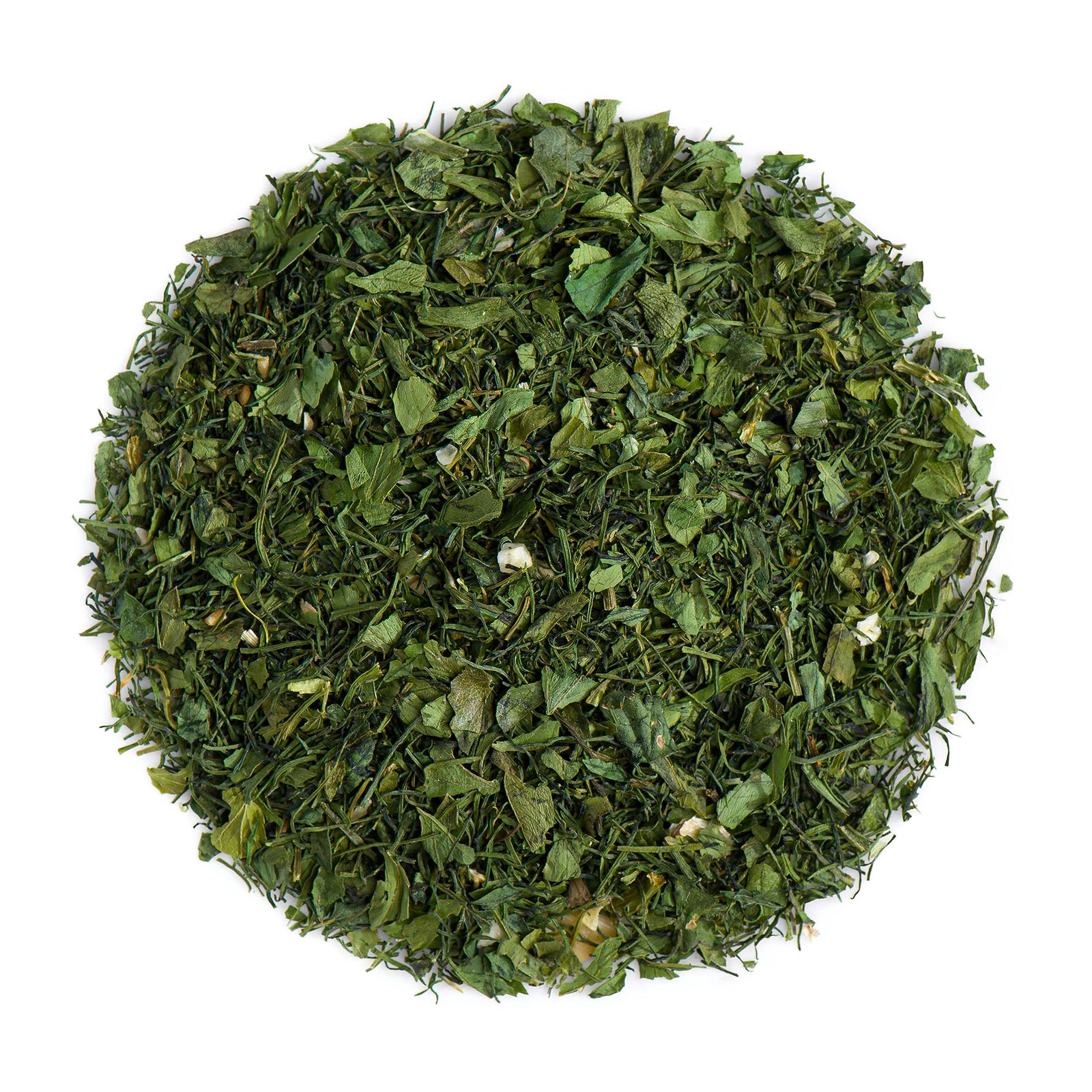
Most herbal tea bags are filled with one of two grades: fannings and dust (the smallest sifted particles left after better material is graded out) or cut-leaf and whole-flower pieces large enough to see through the bag. The grade determines how much flavour and aroma survive the drying, cutting, and bagging process.
Fannings and dust exist because processing dried plant material generates them as a byproduct. When large batches of dried herb are cut, sieved, and sorted for size, the smallest particles fall through first. They are cheap, they pack densely, and they infuse fast because of their high surface area to volume ratio, which suits a fast, three-minute supermarket steep. What that speed costs you is depth: small particles release their soluble compounds quickly but shallowly, so the cup tastes flat next to the same herb in a coarser cut.
The same sifting happens with every dried plant material we buy, herb or true tea alike, and I always ask a supplier for the cut-grade specification rather than a general description. Dust particles are a fraction of the size of a cut-leaf or whole-flower piece, often smaller than a grain of rice, which is most of why the flavour gap shows up so clearly in the cup.
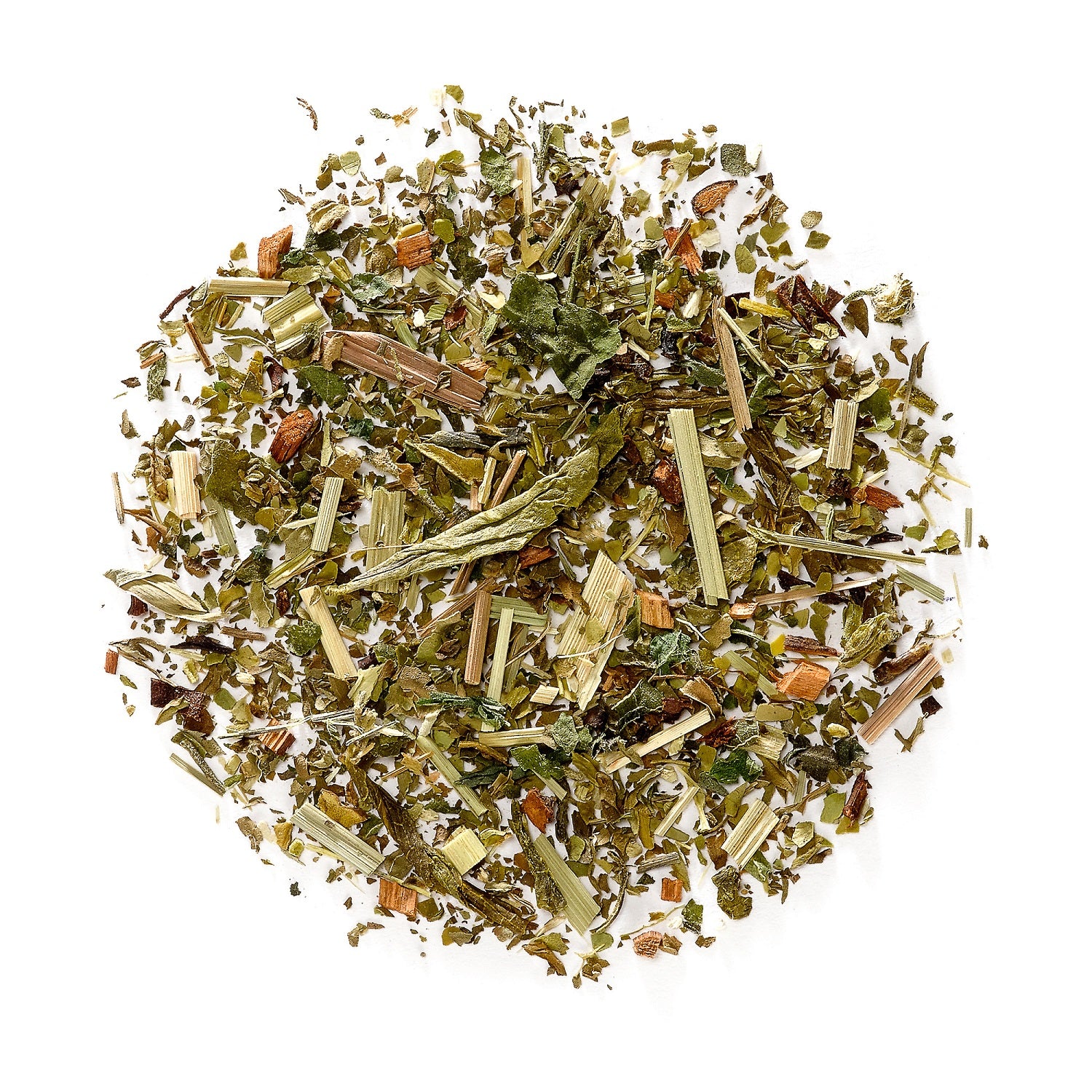
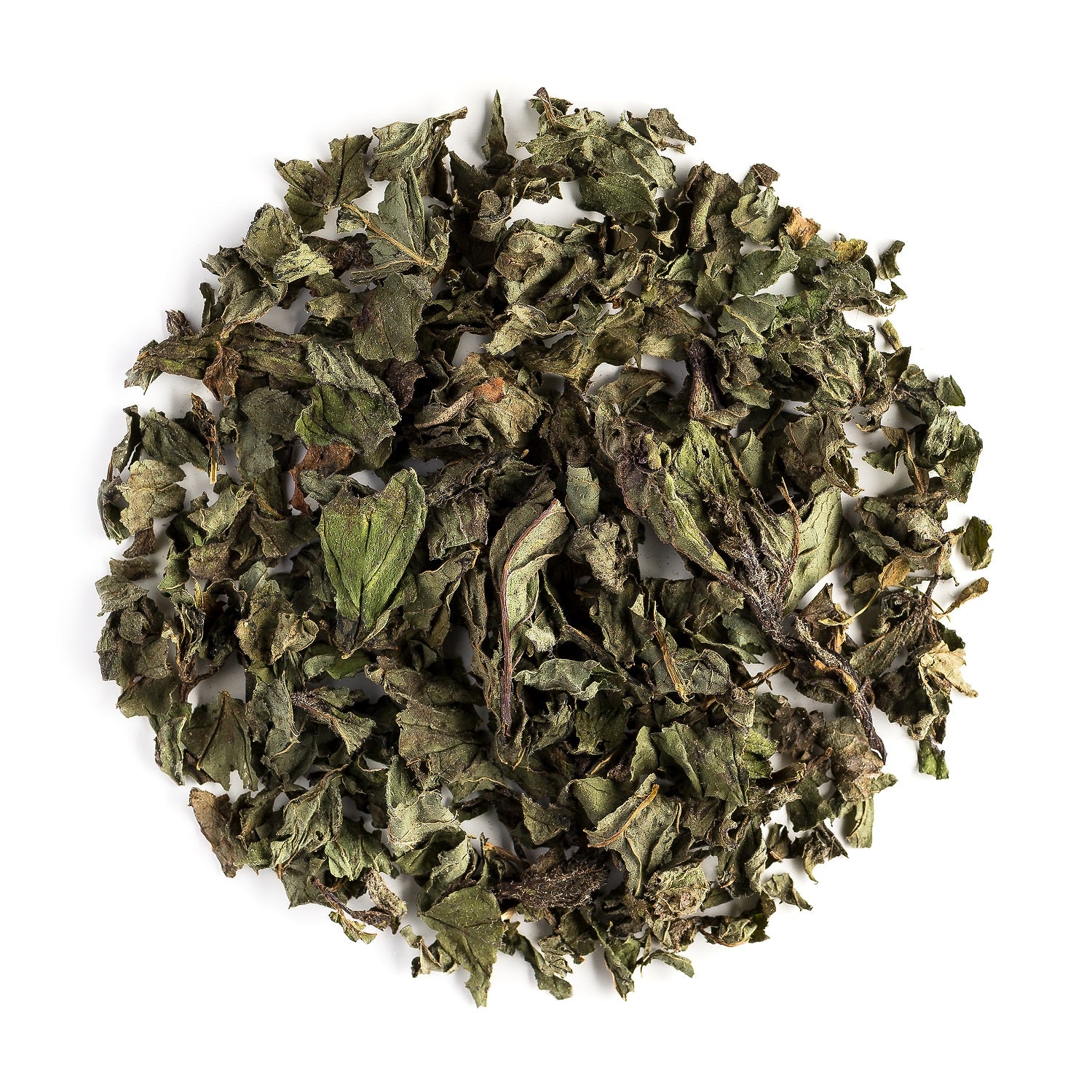
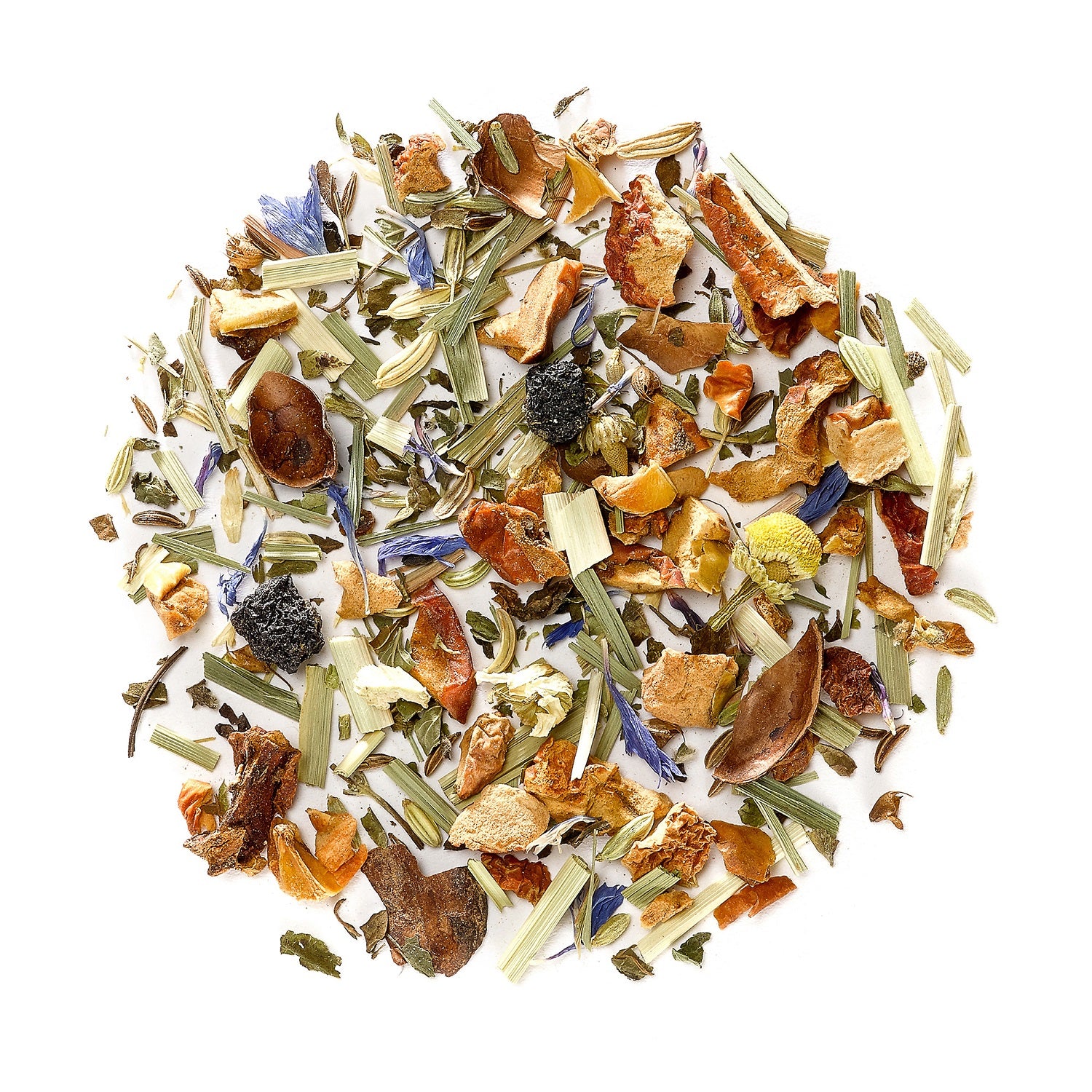
Better bags use a coarser cut, sometimes called broken leaf or C/S (cut, sifted) grade in the trade, or hold whole dried flowers such as chamomile heads or hibiscus calyces you can see and count through the mesh. Hold a herbal tea bag up to a light before you buy it: if you cannot make out individual pieces of leaf or flower, you are likely looking at dust.
Herbal tea bags also split into two categories that have nothing to do with cut size: single-herb bags, where the whole bag is one plant such as peppermint or nettle, and flavoured blends, where a base herb is mixed with dried fruit pieces, spices, or added flavouring. Neither is inherently better; a well-made single-herb bag and a well-made blend both start from decent material. Chamomile is a good example of why: it works well on its own as a single-herb tea, but it also takes to blending easily, and we carry it both ways rather than treating one form as the superior choice. The problem is not blending itself, it is flavouring used to mask a dusty, low-grade base, which is common in cheaper supermarket boxes.
Bag Materials and Plastic Concerns
Many pyramid-shaped tea bags are made from nylon or PET plastic mesh, chosen because it is transparent, heat-sealable, and holds a larger leaf cut than flat paper. Some buyers are comfortable with this; others avoid steeping any plastic in near-boiling water, and plastic-free alternatives now cover most of the same ground.
You cannot tell nylon from PLA mesh by sight or touch alone; both are clear, and both feel similar between your fingers when the bag is empty. The reliable tell is on the box, not the bag: a supplier who has moved to plastic-free mesh says so directly, in words like "plastic-free," "PLA," or a named compostability standard, rather than leaving you to guess from a picture of a leaf.
Plastic-free options fall into two main types. Unbleached paper bags, usually a blend of wood pulp and abaca fibre, are the traditional flat or pillow-shaped bag most people picture: cheap and biodegradable, but they hold less material than a pyramid and give leaf pieces less room to unfurl. PLA mesh, made from cornstarch or sugarcane-derived polylactic acid, is the plastic-free answer to the pyramid shape: see-through, heat-sealable, and industrially compostable, without the petroleum-derived nylon.
The catch: PLA is compostable, not always home-compostable. Most PLA needs the sustained heat of an industrial facility to break down within its certified window; in a home bin or landfill it behaves closer to conventional plastic and can take years. Check the box for the standard actually cited, such as EN 13432, rather than trusting the word "compostable" on its own.
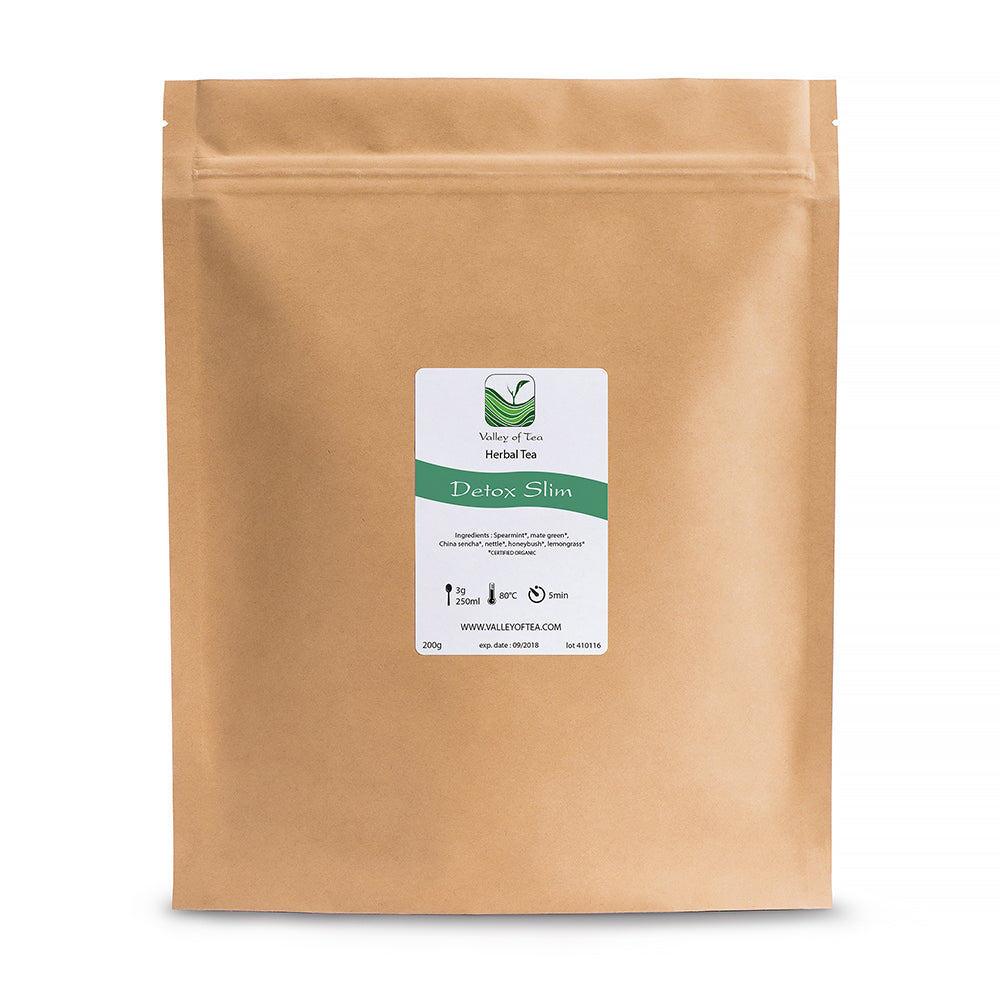
One habit from years of checking incoming shipments: a torn or resealed outer wrap, whatever the bag inside is made from, usually means compromised freshness before it reaches you. I check every batch for intact seals before it goes into stock. Look for "plastic-free" or "unbleached" printed directly on the box; a kraft-brown colour scheme alone says nothing about what the bag is actually made from.
Loose Leaf Versus Bags
Loose herbs almost always outperform bagged herbs on flavour, because the pieces are larger and have room to expand fully in the water. A bag restricts that expansion by design: dense, tightly packed material cannot swell the way loose leaf can in an open pot or infuser, so the water never fully reaches every surface of every piece.
That said, bags win on two things loose herb cannot match: convenience and portion control. A bag is pre-measured for one cup, needs no scale, no strainer, and no cleanup beyond the compost bin. For a quick cup at a desk or when travelling, that convenience is worth the flavour trade-off, and I would not tell anyone to feel guilty about reaching for a bag on a Tuesday morning.
The middle ground is a simple paper filter, either a drawstring bag you fill yourself or a small mesh basket that sits in the cup. Both let you brew loose herb with almost the same ease as a shop-bought bag, using the same coarser cut and larger pieces that give a fuller cup. It is the practical upgrade path: keep the convenience, improve the material.
If you already buy bagged chamomile or peppermint and want to test whether the upgrade is worth it, brew the same herb loose alongside a bag, side by side, same water, same time. The difference in colour and aroma is usually obvious by the first sip.
How to Brew Herbal Tea Bags Properly
Herbal tea bags need water at 95-100C, close to a full boil, and a longer steep than green or black tea: 5 to 7 minutes, covered. Roots, seeds, and tougher leaves in particular need that heat and time to release their full flavour; the gentler 80C water recommended for delicate green tea will barely extract a herbal blend at all.
Use one bag per 250ml cup. If you want a stronger cup, add a second bag rather than steeping one bag longer or reusing a spent one. A bag has a finite amount of extractable material; past a certain point, extra steeping time pulls out more bitterness and tannins without adding more flavour, and a re-steeped bag gives you mostly hot water with a memory of tea in it.
Keep the cup covered while it steeps. I brew chamomile most evenings at home, 3g to 200ml rather than the 2g I use during the day, and I always keep a saucer or lid over the cup: the aromatic compounds that make a herbal tea worth drinking are volatile, and a good share of them leave with the steam if the cup sits open. It is a small habit that makes a measurable difference in aroma.
Water quality matters more with herbal tea bags than people expect, because there is no second flush or high-grown character to hide behind. Hard, heavily chlorinated tap water will flatten a delicate flower tea; filtered water is worth the extra step for anything you actually want to taste, not just drink.
Frequently Asked Questions
Do herbal tea bags contain plastic?
Many do. Pyramid-shaped bags are frequently made from nylon or PET plastic mesh, chosen for its transparency and heat-sealing properties. If you want to avoid steeping plastic in near-boiling water, look for herbal tea bags labelled unbleached paper or PLA (cornstarch-derived) mesh, and check the box for a compostability standard such as EN 13432 rather than trusting the packaging colour alone.
Are herbal tea bags weaker than loose herbs?
Generally yes. Bagged material is usually cut smaller than loose-leaf grades, including fannings and dust in cheaper boxes, which infuse fast but shallow. The smaller the particle, the quicker it gives up what it has and the less depth the finished cup carries. Bagged doesn't have to mean weak, though: a bag filled with a coarser cut-leaf or whole-flower grade will outperform a loose herb sold as dust.
How long do herbal tea bags keep?
About 12 to 18 months, sealed and kept away from light, heat, and moisture: the general rule for dried herb of any kind, bagged or bulk. Dried herbs do not spoil in a food-safety sense much beyond that, but the aromatic oils that carry flavour fade steadily, so a bag from the back of the cupboard two years on will still be safe, just dull.
Do all herbal tea bags need the same steep time?
No. Delicate flowers like chamomile are ready in 5 minutes; tougher roots, seeds, and barks can need the full 7 minutes or more to extract properly. If a herbal tea bag tastes weak, try extending the steep time before switching brands.
Conclusion
The single thing worth remembering about herbal tea bags: the box tells you almost nothing, the contents tell you everything. Hold a bag up to the light before you buy one again. Visible pieces of leaf or flower mean a decent grade; a flat, opaque bag usually means dust.
Two habits fix most of what goes wrong with herbal tea at home. Brew hot, near boiling, for the full 5 to 7 minutes, covered, and use a second bag rather than over-steeping one. And where the option exists, choose unbleached paper or PLA mesh over nylon pyramids, especially if plastic in hot water bothers you.
We built our own herb sourcing around visible, identifiable material rather than sifted dust, because the difference shows up in the cup every time. If a herbal tea bag has left you unimpressed before, the fix is rarely the herb itself; it is usually the grade, the bag, or the brew time. Try a coarser cut or a paper filter with loose herb next time, brewed properly, before writing off the herb altogether.


Leave a comment
Comments will be approved before showing up.
Also in Valley of Tea Blog | Tea Guides, Origins & Brewing Tips

Rooibos Iced Tea: Caffeine-Free Refresher
Learn to make rooibos iced tea two ways: hot-brewed over ice in 15 minutes, or a smoother overnight cold brew, plus flavour additions and storage tips.

Spice Cabinet Organization: A Practical System That Works
Learn how to organize your spice cabinet with a practical system that keeps every jar findable and fresh. Temperature, layout, and audit tips included.

Maca or Ashwagandha for Your Daily Routine
Choosing between maca or ashwagandha? Learn how each root tastes, when to use them, and the best ways to prepare each in tea or drinks.

Wisdom is the path to better tea.
Get our free brewing guide: the right water, heat and timing for every tea we sell. You will also hear it first when new harvests arrive.
No spam. Unsubscribe any time.
Check your inbox.
The guide is on its way.