













What Is Matcha Tea
Matcha is powdered green tea made from shade-grown Camellia sinensis leaves, stone-ground into a fine powder. It is not a tea you steep and discard: you whisk the whole leaf into water and drink it entirely, which changes the flavour, caffeine profile, and nutrient concentration compared to any steeped green tea. I first encountered matcha over 20 years ago: plain foil packaging, a detailed website focused entirely on taste. That first cup, wildly aromatic, with a finish that stays with you, started a sourcing relationship with Japan that we have kept ever since.

Understanding what matcha tea is means understanding where it comes from and how it is made. The grade on the label, the growing region, and the milling method all shape what lands in your cup.
How Matcha Tea Is Made
Matcha production follows a precise sequence that separates it from every other green tea. Farmers shade the plants for 20-30 days before the spring harvest using a technique called kabuse. Blocking sunlight forces the leaves to produce more chlorophyll (the source of matcha's deep jade colour) and more L-theanine, the amino acid responsible for matcha's characteristic umami savouriness. You can taste the difference clearly in the cup: a properly shaded matcha has a smooth, savoury depth that unshaded green teas simply do not have.

After shading, only the youngest, most tender leaves are picked by hand. These leaves are steamed immediately to halt oxidation, then dried and de-stemmed to produce a material called tencha. Tencha, and not any other green tea leaf, is what gets ground into matcha.
The grinding happens on granite stone mills running at roughly 40 grams per hour. That slow pace is deliberate: faster milling generates heat that damages the volatile compounds responsible for matcha's aroma.
Origin matters. Genuine matcha comes from Japan, primarily from three regions: Uji in Kyoto Prefecture, Nishio in Aichi Prefecture, and Kagoshima in the far south. What I have observed from working directly with producers in both Uji and Kagoshima is that shading method is the clearest variable between them.
Our Uji producer uses traditional straw shading for the ceremonial grade: the old kabuse method. The Kagoshima supplier uses synthetic nets. The straw-shaded Uji has a more rounded sweetness and deeper umami in the cup; synthetic shading is more consistent season to season but the flavour ceiling is lower.
A note on Chinese matcha: much of what is marketed as matcha from China is ground Sencha or other green tea without proper shading and tencha processing. The flavour profile is different: more astringent, less umami, with a yellower-green colour. It is not the same product.
Ceremonial vs Culinary Matcha
Ceremonial grade matcha comes from the first spring harvest, uses only the youngest leaves with careful stem and vein removal before grinding, and is intended to be whisked with water and drunk pure. The colour is vibrant jade green, the flavour is smooth with pronounced umami and very little bitterness. It is produced in small quantities, which is reflected in the price: expect to pay in the range of 25-50 EUR per 30 g for a reliable ceremonial grade, though prices vary year to year and plantation to plantation much like wine.

Culinary grade uses leaves from later harvests, which carry more catechins (including EGCG) and more bitterness. This makes culinary matcha assertive enough to hold its character in a latte, in baking, or in a smoothie where milk, sweeteners, or other ingredients are present. The colour tends toward olive or yellowish-green rather than jade. Price is substantially lower: 10-20 EUR per 50-100 g is a reasonable reference point, though again quality varies.
The simplest quality check is visual. Bright jade green means younger, shaded leaves with high chlorophyll. Dull olive or brown-green signals older leaves or poor storage. If you are buying matcha to whisk in a bowl and drink straight, colour is the fastest screening tool available before you even taste it.
For straight whisked matcha, I reach for Uji ceremonial, without question. The sweetness and depth are in a different league. Kagoshima is excellent for lattes, cooking, or when you want something more robust and consistent: and it is more accessible on price. But if I am setting up a tasting to show what matcha can actually be, the Uji is what I reach for.
How to Prepare Matcha Tea at Home
The most common mistake people make when preparing matcha is using water that is too hot. I see it every time I demonstrate preparation: they use boiling water and then blame the matcha for tasting bitter or grassy. Seventy degrees Celsius is the target: not 80, not boiling.

At 70°C the powder dissolves cleanly and the umami comes through without the harsh edge that heat damage creates. You cannot rescue matcha brewed in boiling water.
The standard method for a thin matcha (usucha): the everyday style most people drink:
- Sift 1-2 g (about 1/2 teaspoon) of matcha through a fine mesh strainer into a chawan or wide bowl. Sifting breaks clumps and ensures the powder whisks evenly.
- Add approximately 70 ml of water at 70°C (adjust to taste; the typical range is 60-80 ml). Do not use boiling water.
- Whisk with a chasen (bamboo whisk) in a W-motion for 15-20 seconds until the surface is covered with fine foam. Stirring is not the same as whisking; a circular stir leaves unmixed powder at the edges.
My own daily preparation follows this approach: traditional chasen, a traditional matcha cup, a quiet spot, water slowly heated to low temperature. The process itself is as deliberate as the result.
For a thicker, more concentrated preparation (koicha, the traditional ceremonial style), use 3-4 g of matcha in 40 ml of water. Koicha is not whisked to a froth; it is pressed slowly into the water with the chasen until smooth. The taste is intense and requires ceremonial-grade matcha to be palatable without bitterness.
If you do not own a chasen, a milk frother or a shaker bottle with cold water (cold-whisk method) are functional shortcuts, particularly for culinary matcha in lattes or iced drinks.
Matcha Caffeine and Nutrition Facts
A single serving of matcha (1.5 g of powder) typically contains 60-70 mg of caffeine, similar to a standard cup of black tea. Caffeine content varies depending on cultivar, leaf age, and harvest timing: first-harvest ceremonial grades from shaded plants tend to run higher because shading increases L-theanine, which concentrates in the same young leaves that also carry more caffeine. A 2 g serving can yield 80-100 mg.
Because you consume the whole leaf rather than an infusion of it, matcha delivers measurably higher catechin concentrations, including EGCG, the most studied catechin in green tea, than steeped green tea from the same plant. The exact multiple varies by leaf quality and preparation.
Shade-growing substantially increases L-theanine concentration compared to unshaded green tea. L-theanine is an amino acid that provides the savoury, umami quality in matcha's flavour: not sweetness, which comes from the glucose and fructose concentrated in young buds.
The combination of caffeine and L-theanine is frequently described as producing a state of calm alertness: stimulating without the sharp spike and crash that straight caffeine can create. I use matcha before longer training sessions rather than espresso. The energy comes on steadily and does not drop off sharply. Whether that is L-theanine or simply slower caffeine absorption, the practical experience is consistent enough that I have kept the habit.
One important note on health research: most studies examining concentrated matcha compounds use standardised extracts, not brewed tea. The doses used in extract trials are typically 10-20 times what a cup of brewed matcha delivers. Any claim that links a specific health outcome to "drinking matcha daily" needs to be read in this context: traditional consumption and extract-study dosing are not the same thing. We do not make direct health claims at Valley of Tea, and the research should be read with this distinction in mind.
How to Store Matcha Properly
Matcha degrades faster than any other tea in the range. The combination of fine particle size, high chlorophyll content, and fragile volatile compounds means that light, oxygen, heat, and moisture all cause quality to drop quickly. Keep matcha in an opaque, airtight tin. A clear glass jar is not suitable: light degrades chlorophyll within days, turning the colour from jade to olive and flattening the flavour.
After opening, refrigerate the tin. The cold slows oxidation significantly. One detail that trips people up: always allow the tin to come back to room temperature before opening it. Taking cold matcha powder directly into a warm room causes condensation inside the tin, and moisture clumping is extremely difficult to recover from.
Use matcha within 4-6 weeks of opening. This is shorter than most tea guidelines because the surface area of powder is vastly greater than that of whole leaves: more surface area means faster oxidation. Matcha that has sat open for two months will taste noticeably flatter and more bitter regardless of how it was stored.
Unopened matcha keeps 6-12 months in the freezer. If you buy in quantity, portion into small tins before freezing and thaw only what you plan to use within the month. The advice I give customers on green tea and green oolong generally applies to matcha even more strictly: buy no more than you can consume at peak quality, and store it as carefully as you would good coffee.
The Short Answer
Matcha is shade-grown Camellia sinensis leaves, stone-ground into powder and whisked, not steeped, into water. The production process, the growing region, and the grade all determine what you taste. For pure whisked matcha, ceremonial grade from Uji is the benchmark.
For lattes or cooking, a good Kagoshima culinary grade does the job at lower cost. Store it cold, use it within a month of opening, and brew it at 70°C. The powder does the rest.
Leave a comment
Comments will be approved before showing up.
Also in Valley of Tea Blog | Tea Guides, Origins & Brewing Tips


Rooibos Iced Tea: Caffeine-Free Refresher
Learn to make rooibos iced tea two ways: hot-brewed over ice in 15 minutes, or a smoother overnight cold brew, plus flavour additions and storage tips.
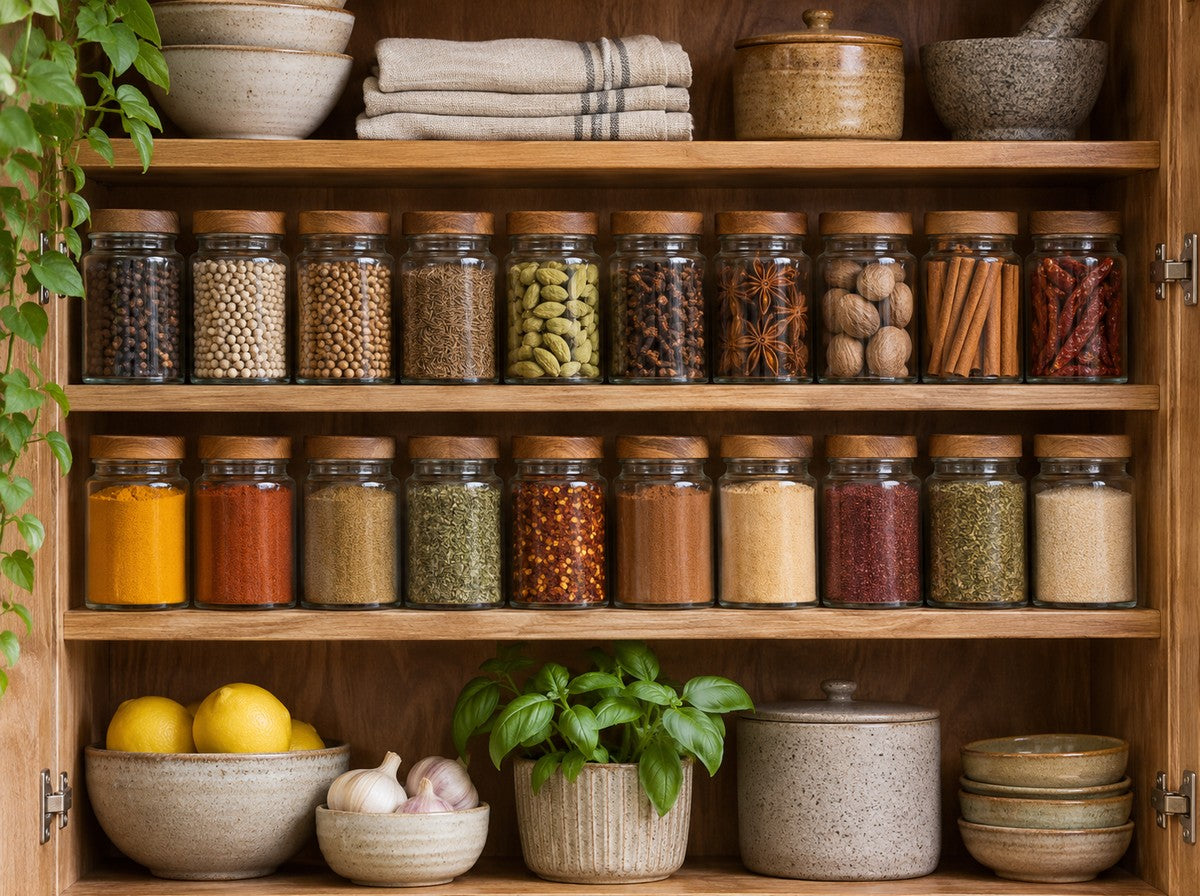

Spice Cabinet Organization: A Practical System That Works
Learn how to organize your spice cabinet with a practical system that keeps every jar findable and fresh. Temperature, layout, and audit tips included.

Maca or Ashwagandha for Your Daily Routine
Choosing between maca or ashwagandha? Learn how each root tastes, when to use them, and the best ways to prepare each in tea or drinks.

Wisdom is the path to better tea.
Get our free brewing guide: the right water, heat and timing for every tea we sell. You will also hear it first when new harvests arrive.
No spam. Unsubscribe any time.
Check your inbox.
The guide is on its way.