













Cardamom Pods: Types, Uses & How to Brew
Cardamom consistently ranks among the three most expensive spices in the world, alongside saffron and vanilla. There is a reason for that. No other spice delivers the same combination of intensity, complexity, and versatility. A single crushed cardamom pod can transform a cup of tea, a pot of rice, or a batch of pastry dough.
It is not a background flavor. It announces itself — warm, resinous, with a eucalyptus-like clarity that cuts through everything else in the cup or on the plate.

At Valley of Tea, we carry cardamom in our spice range because it is inseparable from the tea traditions we work with. Chai without cardamom is not chai. Arabic coffee without cardamom is a different drink entirely. This guide covers what cardamom pods are, how they differ, how to use them in tea and cooking, and how to buy and store them properly.
What Are Cardamom Pods
Cardamom belongs to the ginger family (Zingiberaceae). The spice comes from the seed pods of plants in the genera Elettaria and Amomum, which produce two distinctly different products: green cardamom and black cardamom. According to a comprehensive review of cardamom botany and biological activities published in the Journal of Ethnopharmacology, Elettaria cardamomum is the most commercially significant species, with documented culinary and medicinal use spanning centuries.
Green Cardamom
Green cardamom (Elettaria cardamomum) is what most people mean when they say "cardamom." It originates from the Western Ghats of southern India, where it still grows wild in the shaded understory of tropical forests. Guatemala has, in recent decades, overtaken India as the world's largest producer by volume, but Indian cardamom — particularly from Kerala and Karnataka — remains the benchmark for quality.
That said, in our experience sourcing directly from farmers, the quality gap between Indian and Guatemalan cardamom is less about origin than about the individual grower: a well-managed Guatemalan farm can outperform a careless Indian one. We source primarily from India, but we evaluate each lot on its own merits.

The pod is small, roughly the size of a fingertip, with a papery green husk that contains a cluster of sticky, dark brown to black seeds. The husk itself has a mild, grassy aroma. The seeds are where the essential oils concentrate — primarily 1,8-cineole (the compound responsible for that eucalyptus-mint note) and alpha-terpinyl acetate (which gives cardamom its sweet, floral, resinous character). Research published in Frontiers in Sustainable Food Systems confirms that oxygenated monoterpenoids — especially alpha-terpinyl acetate and 1,8-cineole — dominate the essential oil profile and account for cardamom's characteristic aroma quality.
A good green cardamom pod, when cracked open, should release an immediate, almost overwhelming burst of aroma. If it does not, the cardamom is stale.
Green cardamom is the variety used in tea, in Scandinavian baking, in Indian sweets, and in Arabic coffee. It is the default cardamom in virtually every culinary context worldwide.
Black Cardamom
Black cardamom (Amomum subulatum) is a different plant, a different pod, and a completely different flavor. The pods are large — 2 to 3 centimeters long — with a tough, wrinkled, dark brown husk. They are dried over open fire pits, which gives them a pronounced smoky character that green cardamom lacks entirely.

The flavor profile is deep, resinous, and camphoraceous, with a heavy smoke note that makes black cardamom unsuitable as a direct substitute for green. It is used primarily in savory cooking — Indian curries, biryanis, Chinese braised dishes, and Vietnamese pho. It appears in some spice blends like garam masala, where its smokiness adds depth alongside other warm spices. You will not find black cardamom in tea or desserts, and attempting the substitution is a reliable way to ruin both.
Cardamom in Tea
Cardamom's role in tea is ancient and central, not decorative. Across South Asia, the Middle East, and East Africa, cardamom is one of the defining flavors in how tea is prepared and consumed.
Masala Chai
In Indian masala chai, cardamom is the most important spice. A traditional chai uses black tea (typically CTC Assam), whole milk, sugar, and a spice blend that varies by household but almost always starts with cardamom. The pods are lightly crushed — not ground to powder — and simmered with the tea and milk. This slow extraction pulls the essential oils into the liquid without the bitterness that comes from over-processing the seeds.
A typical ratio is 3 to 4 green cardamom pods per cup. Some preparations add ginger, cinnamon, cloves, and black pepper, but cardamom is the spine. Remove it and the chai collapses into spiced milk tea without an anchor. I have my own chai recipe that I have refined over the years, but it stays off the record — what I will say is that it starts with cardamom and it always will.

For the base tea in chai, our Artisan Assam delivers the malty backbone that stands up to milk and spice without turning bitter.
Arabic Coffee (Qahwa)
In the Gulf states, cardamom is not merely added to coffee — it often outweighs the coffee itself. Traditional Saudi qahwa uses a ratio of up to 1:1 cardamom to coffee by weight, producing a pale, fragrant brew that tastes more of cardamom than of coffee. The pods are cracked and added directly to the dallah (the long-spouted coffee pot), sometimes with saffron and rosewater.
Even outside the Arabian Peninsula, adding a cracked cardamom pod to a cup of Turkish coffee or a pot of Ethiopian coffee is common practice. The cardamom softens the coffee's bitterness and adds a sweet, aromatic top note.
Standalone Cardamom Tea
Cardamom also makes an excellent standalone infusion without any actual tea leaves. Crush 4 to 5 green cardamom pods, simmer them in water for 8 to 10 minutes, and you get a caffeine-free drink with a warm, complex flavor. Some preparations add a cinnamon stick or a few slices of fresh ginger, but cardamom alone is enough. This is a common after-dinner drink in parts of the Middle East and a practical option for anyone avoiding caffeine.

What Cardamom Tea Tastes Like
Cardamom tea — whether as part of chai, paired with coffee, or brewed on its own — has a flavor that sits at an unusual intersection: simultaneously warm and cooling, sweet and sharp, herbal and resinous.
The dominant note is that eucalyptus-mint clarity from the cineole, which gives the impression of coolness even in a hot drink. Underneath that is a warm, sweet, almost floral resinousness that lingers on the palate. There is a faint citrus quality, a hint of camphor, and a subtle pepperiness that builds gently rather than hitting immediately.
In chai, these characteristics weave through the malty base of the black tea and the richness of the milk, creating a layered drink where the cardamom provides lift and brightness. On its own, without tea or milk to moderate it, the flavor is more concentrated and herbal — closer to what you smell when you crack open a fresh pod.
The quality of the cardamom determines everything. Fresh, properly stored green cardamom pods produce a vibrant, multi-dimensional tea. Stale cardamom or pre-ground cardamom powder produces a flat, one-note drink that hints at what it should be without delivering it.

How to Brew Cardamom Tea
There are two main approaches, depending on whether you want cardamom with tea or cardamom as a standalone infusion.
Cardamom Chai
Use a small saucepan, not a teapot. Chai is cooked, not steeped.
- Take 3 to 4 green cardamom pods per cup. Place them on a cutting board and press down with the flat side of a knife until the pod cracks open. You want the husk split and the seeds partially exposed, not pulverized.
- Combine equal parts water and whole milk in the saucepan (about 150ml each per cup). Add the crushed cardamom pods.
- Add 1 heaped teaspoon of strong black tea per cup — CTC Assam works best, but any robust black tea will do.
- Bring to a simmer over medium heat. Let it simmer gently for 3 to 5 minutes. The liquid should darken and the cardamom aroma should fill the kitchen.
- Add sugar to taste (chai is traditionally sweet), strain into cups, and serve immediately.
Standalone Cardamom Infusion
- Crush 4 to 5 green cardamom pods per cup.
- Bring water to a boil, add the crushed pods, and reduce to a gentle simmer.
- Simmer for 8 to 10 minutes. The water will take on a faint golden tint.
- Strain and serve. Add honey if desired, though many people prefer it plain.
The key principle in both methods is the same: crush the pods, do not grind them, and give them time over heat. Cardamom needs sustained warmth to release its essential oils fully. A quick steep in hot water, the way you would brew a green tea, extracts only a fraction of the flavor.
Cardamom in Blends and Cooking
Beyond tea and coffee, cardamom is a workhorse spice in multiple culinary traditions.

In Indian cooking, green cardamom appears in both savory and sweet contexts. It is a core component of garam masala, a finishing spice blend added at the end of cooking. It flavors rice dishes like biryani and pulao, where whole pods are fried in ghee at the start of cooking to infuse the fat. In sweets — kheer (rice pudding), gulab jamun, barfi — ground cardamom seeds are the primary flavoring.
In Scandinavian baking, cardamom is more widely used than cinnamon. Swedish kardemummabullar (cardamom buns) are the most recognizable example, but cardamom also appears in Finnish pulla bread, Danish pastries, and Norwegian holiday cookies. The Scandinavians use freshly ground green cardamom seeds, and the quantities are generous — a single batch of cardamom buns can use 2 tablespoons of ground seeds.
In Middle Eastern cuisine, cardamom flavors rice, stews, and an enormous range of sweets and pastries. It is a standard addition to baklava syrup and appears in ma'amoul (date-filled cookies) and various halva preparations.
For cooking, always buy whole pods and grind the seeds yourself as needed. Pre-ground cardamom loses its volatile oils within weeks, and what remains is a shadow of the whole spice.

Green Cardamom vs Black Cardamom
These two spices share a name but very little else. Choosing between them is not a matter of preference — it is a matter of application.
| Green Cardamom | Black Cardamom | |
|---|---|---|
| Species | Elettaria cardamomum | Amomum subulatum |
| Pod size | Small (1–1.5 cm) | Large (2–3 cm) |
| Color | Bright green (bleached white pods also exist but are inferior) | Dark brown to black |
| Flavor | Sweet, floral, eucalyptus, citrus | Smoky, camphoraceous, resinous |
| Drying method | Hot air or sun-dried | Smoke-dried over open flames |
| Use in tea | Yes — essential in chai, Arabic coffee | No |
| Use in cooking | Sweet and savory | Savory only |
| Primary regions | India (Kerala), Guatemala | India (Sikkim, Northeast), Nepal, Bhutan |
If a recipe calls for "cardamom" without further specification, it means green. Black cardamom will always be specified explicitly because of its radically different flavor profile.
One common source of confusion: bleached white cardamom pods. These are green cardamom pods that have been chemically bleached for cosmetic reasons. The bleaching process damages the essential oils and produces an inferior product. Avoid them. Green pods should be green.
Buying Quality Cardamom Pods
The difference between good and mediocre cardamom is dramatic, and the price usually reflects it.

Color. Look for bright, vivid green pods. Dull, yellowish, or brownish green indicates age or poor storage. The greener the pod, the fresher the spice.
Aroma. If you can smell the cardamom before buying, do. Good cardamom has a strong, immediate fragrance even through the husk. If you need to crack a pod open to smell anything, it has lost too much of its essential oil content.
Plumpness. The pod should feel full and firm when squeezed gently. Shriveled, flat pods contain shrunken seeds with diminished oil content.
Size. Larger pods generally indicate better quality and more mature seeds, though this varies by origin. Indian cardamom pods tend to be slightly smaller and more intensely flavored than Guatemalan.

Whole pods vs. ground. Always buy whole pods. Ground cardamom begins losing its volatile compounds immediately after grinding. Even in a sealed container, pre-ground cardamom fades significantly within a few weeks. Whole pods, stored properly, maintain their quality for months.
Valley of Tea carries green cardamom pods in our spice range, sourced primarily from India. We have worked with producers from both India and Guatemala, and our consistent preference has been for Indian-grown lots — not as a fixed rule, but because the farmers we have found there deliver the aroma intensity and seed plumpness that make the difference in the cup. The selection standard is the same we apply to our teas: if it does not perform, it does not belong on the shelf.
If you enjoy cardamom in chai, it pairs naturally with a strong black tea base — see our Artisan Assam, which we use ourselves when making a pot of masala chai.
Storing Cardamom Pods
Cardamom's flavor comes from volatile essential oils, and volatile means exactly that — they evaporate. Proper storage slows this process.
Keep whole cardamom pods in an airtight container, away from light, heat, and moisture. A glass jar with a tight seal works well. A resealable bag with the air pressed out works equally well. The enemies are oxygen, UV light, and temperature fluctuations.
Stored this way, whole green cardamom pods will maintain good quality for 8 to 12 months. They will not become unsafe after that — they will simply become progressively less aromatic and less effective.
Do not store cardamom near your stove or in a spice rack exposed to direct sunlight. Both are common mistakes that accelerate the loss of essential oils. A cool, dark cupboard is ideal.
If you grind cardamom seeds, use them immediately or within a day or two. There is no practical way to store ground cardamom without significant flavor loss. This is why every recipe recommendation in this guide specifies whole pods: the grinding happens at the moment of use, not before.
Cardamom Pods and Their Documented Benefits
Cardamom has been valued as both a culinary spice and a medicinal ingredient for centuries. Modern research has begun to substantiate some of these traditional uses. A 2022 narrative review published in Nutrients (2022) examined cardamom's effects on metabolic syndrome, noting its antioxidant, anti-inflammatory, and lipid-modifying properties observed in clinical and pre-clinical studies. The bioactive compounds behind these effects are the same essential oils — primarily 1,8-cineole and alpha-terpinyl acetate — responsible for cardamom's aroma.
This does not mean cardamom is a medicine, and we are not selling it as one. It means that the spice you are adding to your chai is the same one researchers find interesting enough to study. That is worth knowing.
Conclusion
Cardamom pods are a spice that rewards attention. Buy them whole, buy them green, store them properly, and crush them fresh for each use. The difference between fresh cardamom and stale cardamom is not subtle — it is the difference between a spice that transforms a drink and one that merely tints it.
Whether you are making masala chai, brewing a standalone cardamom infusion, or adding depth to your baking, the approach is the same: start with quality pods, give them heat and time, and let the spice do what it has been doing in kitchens across Asia and the Middle East for centuries. Cardamom is not complicated. It just demands that you take it seriously.
Teas Featured in This Article

Leave a comment
Comments will be approved before showing up.
Also in Valley of Tea Blog | Tea Guides, Origins & Brewing Tips
The Complete Guide to Drinking Tea
What tea is, how the main types differ in the cup, and how to brew each one properly. Water temperature, steeping times, storage and how to get more than one cup from your leaves.
Read More

Black Tea: Types, Processing, and How to Brew It
Black tea is fully oxidized Camellia sinensis. Compare Assam, Darjeeling, Keemun, and Ceylon varieties. Learn processing, brewing, and caffeine levels.
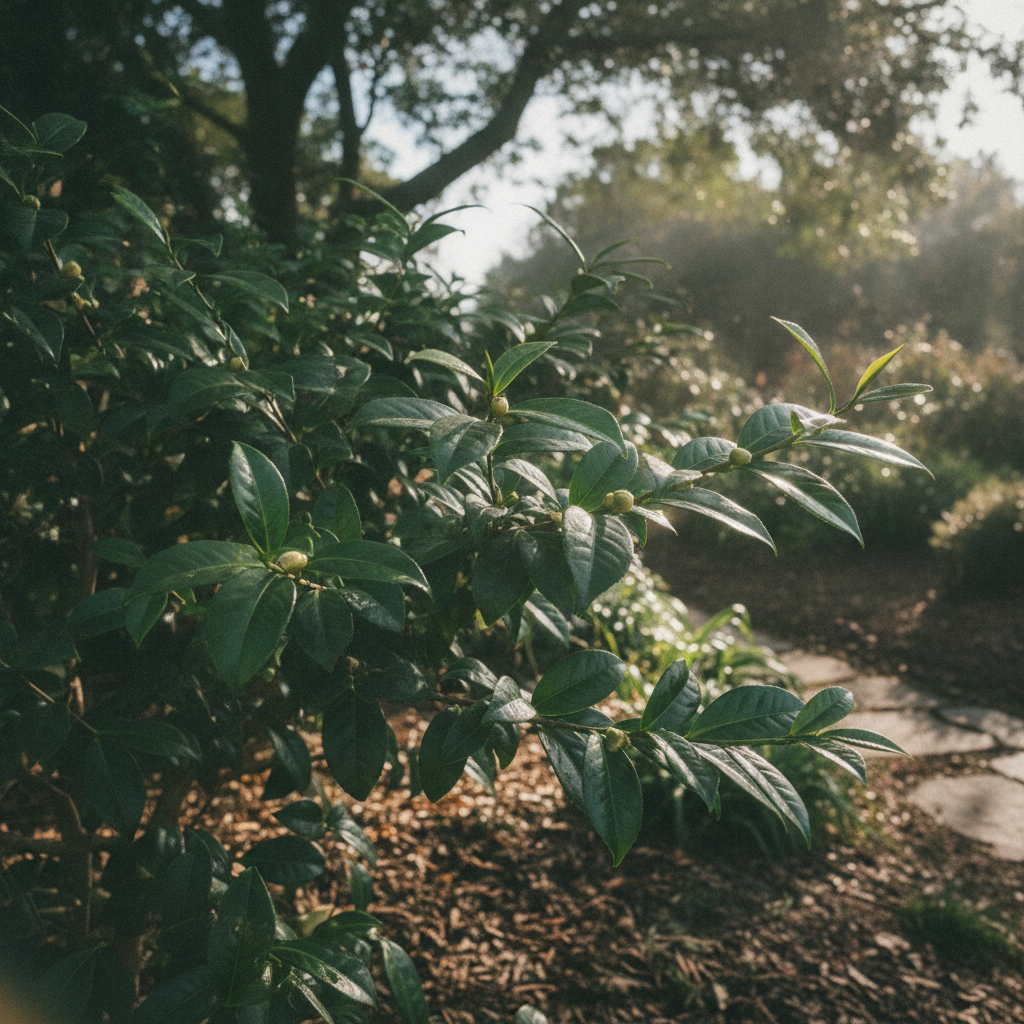

How To Grow Black Tea
Learn how to grow black tea at home: soil, climate, and the five processing steps from fresh leaf to a finished cup of black tea.

Wisdom is the path to better tea.
Get our free brewing guide: the right water, heat and timing for every tea we sell. You will also hear it first when new harvests arrive.
No spam. Unsubscribe any time.
Check your inbox.
The guide is on its way.