












Every Tea Variety Explained
Tea is one plant with hundreds of faces. Every true tea — green, white, yellow, oolong, black, and pu-erh — comes from Camellia sinensis. The staggering variety exists because of what happens after the leaves are picked: oxidation levels, heating methods, rolling techniques, fermentation, and aging all transform the same raw material into radically different drinks. Then there are herbal teas, which are not teas at all but infusions of other plants entirely — chamomile flowers, peppermint leaves, hibiscus petals, rooibos bark.

This guide covers every major tea variety across all categories, from the six traditional classifications of true tea to the most popular herbal tisanes, flavored blends, and scented teas. The goal is a single reference you can return to whenever you encounter a tea you have not tried before.
How Tea Is Classified
All true tea comes from Camellia sinensis, a subtropical evergreen plant native to the border region of China, Myanmar, and India. The six traditional categories — green, white, yellow, oolong, black, and dark (pu-erh) — are defined by how the leaves are processed, not by where they grow or what cultivar is used. The same bush can become any of these six types depending on the choices made after harvest.
The Role of Oxidation
Oxidation is the single most important variable in tea classification. When tea leaves are bruised or rolled, enzymes inside the leaf react with oxygen in the air — the same chemical process that turns a cut apple brown. Controlling this reaction is the foundation of all tea processing.
White tea allows minimal, natural oxidation. Green tea halts oxidation almost immediately through heat. Yellow tea allows a brief, sealed oxidation (yellowing). Oolong allows partial oxidation (15-85%). Black tea allows complete oxidation. Dark tea (pu-erh) introduces microbial fermentation after processing — a fundamentally different transformation.
Processing Steps Overview
Four core steps appear in various combinations across all tea types: withering (moisture reduction), rolling or shaping (cell wall damage, flavor development), oxidation (enzymatic browning), and drying or firing (halting oxidation, stabilizing the leaf). Each category uses these steps differently — green tea skips deliberate oxidation, black tea maximizes it, and oolong lands at every point in between.
Green Tea

Green tea is defined by minimal oxidation. After picking, the leaves are heated quickly — either pan-fired in a wok (Chinese tradition) or steamed (Japanese tradition) — to deactivate the enzymes that cause oxidation. This preserves the leaf's green color and produces flavors ranging from vegetal and grassy to sweet, nutty, and marine.
Chinese Green Teas
China produces the widest variety of green teas, each shaped by the specific firing method and leaf handling.
Longjing (Dragon Well) from Hangzhou is China's most famous green tea — flat-pressed leaves that brew a toasty, chestnut-sweet cup with a smooth, buttery finish. Bi Luo Chun (Green Snail Spring) from Jiangsu is tightly rolled and intensely aromatic with fruit blossom and stone fruit notes. Gunpowder tea is rolled into tight pellets that unfurl during steeping — it brews strong and slightly smoky, serving as the base for Moroccan mint tea. Huangshan Maofeng from Anhui is delicate and orchid-like, one of China's most prized green teas. Lu Shan Yun Wu (Cloud Mist) grows at high altitude and develops a smooth, sweet character from the cool mountain air.Japanese Green Teas
Japanese greens are steamed rather than pan-fired, producing a brighter, more vegetal, and distinctly marine character compared to Chinese greens.
Sencha is Japan's everyday green tea — bright, grassy, and slightly astringent with a clean finish. It accounts for roughly 80% of Japanese tea production. Gyokuro is shade-grown for three weeks before harvest, which concentrates L-theanine and produces an intensely umami, almost brothy cup — one of the most complex green teas in the world. Matcha is stone-ground shade-grown tea consumed as a powder (covered in its own section below). Hojicha is roasted green tea — brown in color with toasty, caramel notes and very low caffeine. Genmaicha blends sencha with roasted brown rice, creating a nutty, toasty tea popular as an everyday drink. Bancha is harvested later in the season, producing a milder, less refined cup that serves as Japan's budget green tea.White Tea

White tea undergoes the least processing of any tea category. The leaves — typically young buds and the top one or two leaves — are simply withered (air-dried) and then dried. No rolling, no deliberate oxidation, no firing. This minimal intervention produces a tea that is subtle, naturally sweet, and delicate.
Key White Tea Varieties
Silver Needle (Bai Hao Yin Zhen) is made exclusively from unopened buds covered in fine silvery-white down. It brews a pale, almost colorless liquor with notes of honeydew melon, cucumber, and a gentle, lingering sweetness. It is the most expensive white tea grade. White Peony (Bai Mu Dan) uses buds plus the top two leaves, producing a fuller cup with more body, slightly peachy or woody notes, and a hint of dried hay. It offers better value than Silver Needle while retaining white tea's characteristic delicacy. Shou Mei (Longevity Eyebrow) is made from older, larger leaves. It has more body and darker color than other white teas, with flavors approaching light oolong territory — dried fruit, honey, mild earthiness. Shou Mei ages well, developing complexity over years.White tea originates from Fujian province, particularly the Fuding and Zhenghe districts, though production has expanded to Yunnan, India, and beyond.
Yellow Tea

Yellow tea is the rarest of the six traditional categories. Processing is nearly identical to green tea with one crucial addition: a step called men huan (sealed yellowing). After the initial firing that halts oxidation, the warm, slightly damp leaves are wrapped in cloth or paper and left to slowly oxidize in a controlled environment for hours or days.
This gentle yellowing removes the grassy, vegetal notes characteristic of green tea and produces a smoother, mellower, slightly sweet cup. The resulting tea has a distinctive pale yellow liquor and a character that sits between green and white tea — gentle but with more body than white tea and less grassiness than green.
Notable Yellow Teas
Junshan Yinzhen (Jun Mountain Silver Needle) from Hunan is the most famous yellow tea — made exclusively from buds, it brews a soft, sweet, almost buttery cup. Meng Ding Huang Ya from Sichuan is slightly nuttier and more accessible. Huo Shan Huang Ya from Anhui is the most available of the three, with a clean, mellow sweetness.Yellow tea production is declining because the extra processing step adds cost and time for what appears to the untrained eye as a subtle difference. Finding authentic yellow tea requires seeking out specialty vendors.
Oolong Tea

Oolong is the most diverse tea category, spanning an oxidation range of 15-85%. This means oolongs can taste like anything from a floral, creamy green tea to a deeply roasted, mineral-rich near-black tea.
Light Oolongs
Taiwanese high-mountain oolongs (Ali Shan, Li Shan, Da Yu Ling) and modern green-style Tie Guan Yin sit at the light end. Oxidation is typically 15-30%. These teas are floral (lily, orchid), creamy, buttery, and sweet with a lingering finish. Jin Xuan (Milk Oolong) has a naturally creamy, milky character — quality versions achieve this without any flavoring.
Dark Oolongs
Wuyi rock oolongs — Da Hong Pao (Big Red Robe), Rou Gui (Cinnamon), Shui Xian (Water Sprite) — are heavily oxidized (60-80%) and charcoal-roasted. They produce deep mineral, caramel, and stone fruit notes with the distinctive yan yun (rock rhyme) aftertaste. Oriental Beauty from Taiwan is heavily oxidized by design, its honey-sweet character dependent on insects biting the leaves before harvest.
Taiwanese Oolongs
Beyond the light and dark extremes, Taiwan produces Dong Ding (medium roast, nutty, caramel), and Phoenix Mountain in Guangdong, China produces Dan Cong oolongs — single-bush teas that mimic specific aromas (honey orchid, almond, grapefruit) with remarkable precision.
Oolong is the king of multiple infusions. Quality oolongs yield 5-10+ steeps using gongfu brewing, each revealing different flavor dimensions.
Black Tea

Black tea is fully oxidized, producing the bold, malty, brisk character that makes it the world's most consumed tea type. The leaves are withered, rolled to break cell walls, oxidized completely (2-4 hours), and then dried.
Chinese Black Teas
China originated black tea production in the 17th century. Chinese black teas tend toward smooth, sweet, and less astringent profiles.
Keemun from Anhui is smooth and wine-like with cocoa and stone fruit notes — a key ingredient in English Breakfast blends. Lapsang Souchong from Fujian's Wuyi Mountains is dried over pinewood fires, creating an intensely smoky, campfire-like character. Authentic Zhengshan Xiaozhong from Tongmu has balanced smokiness with dried longan sweetness. Dian Hong (Yunnan Red) features golden buds and a honeyed, malty cup with chocolate notes and minimal astringency. Jin Jun Mei (Golden Beautiful Eyebrow) from Tongmu is made entirely from buds — sweet, fruity, and among the most expensive Chinese black teas.Indian Black Teas
India produces three distinctly different black tea styles.
Assam from the Brahmaputra valley is bold, malty, and full-bodied — the backbone of breakfast blends. The assamica cultivar thrives in humid lowland conditions and produces a robustly flavored tea that holds up to milk. Second-flush Assam (June-July) is the most prized. Darjeeling from the West Bengal hills is India's most refined tea. Lighter bodied than Assam with muscatel grape notes, floral aromas, and a clean finish. First flush (March-April) is light and green-leaning. Second flush develops the famous muscatel. Autumn flush is fuller and rounder. Nilgiri from southern India sits between Assam and Darjeeling — medium-bodied, fragrant, and brisk. It blends well and is widely used in commercial teas.Other Black Tea Origins
Ceylon (Sri Lanka) produces teas ranging from light and citrusy (high-grown) to full and robust (low-grown). Kenyan tea is brisk, strong, and deeply colored — mostly CTC-processed for commercial blends. English Breakfast and Irish Breakfast are not origins but blends combining teas from multiple regions for a consistent, strong cup. Earl Grey is a flavored blend scented with bergamot oil, typically on a Chinese or Sri Lankan base.Dark Tea and Pu-erh

Dark tea (hei cha) is a category defined by post-processing microbial fermentation — a fundamentally different transformation from the enzymatic oxidation in other teas. Pu-erh from Yunnan province is the most famous dark tea, but others exist.
Sheng vs Shou Pu-erh
Sheng (raw) pu-erh is processed like a green tea, then compressed into cakes and left to age naturally. Fresh sheng is bright, astringent, and vegetal. Over years and decades of slow microbial fermentation, it transforms into something earthy, smooth, sweet, and deeply complex. Well-aged sheng pu-erh (20+ years) commands prices comparable to fine wine. Shou (ripe) pu-erh was invented in the 1970s to simulate aged sheng through accelerated fermentation. The leaves undergo wet piling (wo dui) — controlled composting in warm, humid conditions for 45-60 days. This produces an earthy, smooth, dark tea with mushroom, leather, and damp forest floor notes. It is ready to drink immediately, though it can also improve with further aging.Other Dark Teas
Liu Bao from Guangxi is a basket-aged dark tea with betel nut and mineral notes. Fu Zhuan (Golden Flower) from Hunan develops visible golden fungi during fermentation that contribute a sweet, mushroomy character. Liu An from Anhui is packed in bamboo baskets and aged. These teas are less well-known internationally but deeply valued in Chinese tea culture.Brew pu-erh and dark teas with fully boiling water. Rinse the first steep. Good pu-erh yields 10-15+ infusions.
Herbal Teas and Tisanes

Herbal teas contain no Camellia sinensis. They are infusions of other plants — herbs, flowers, roots, bark, seeds, and fruits. The term "tisane" is the technically correct name, though "herbal tea" is universally understood.
Popular Herbal Teas
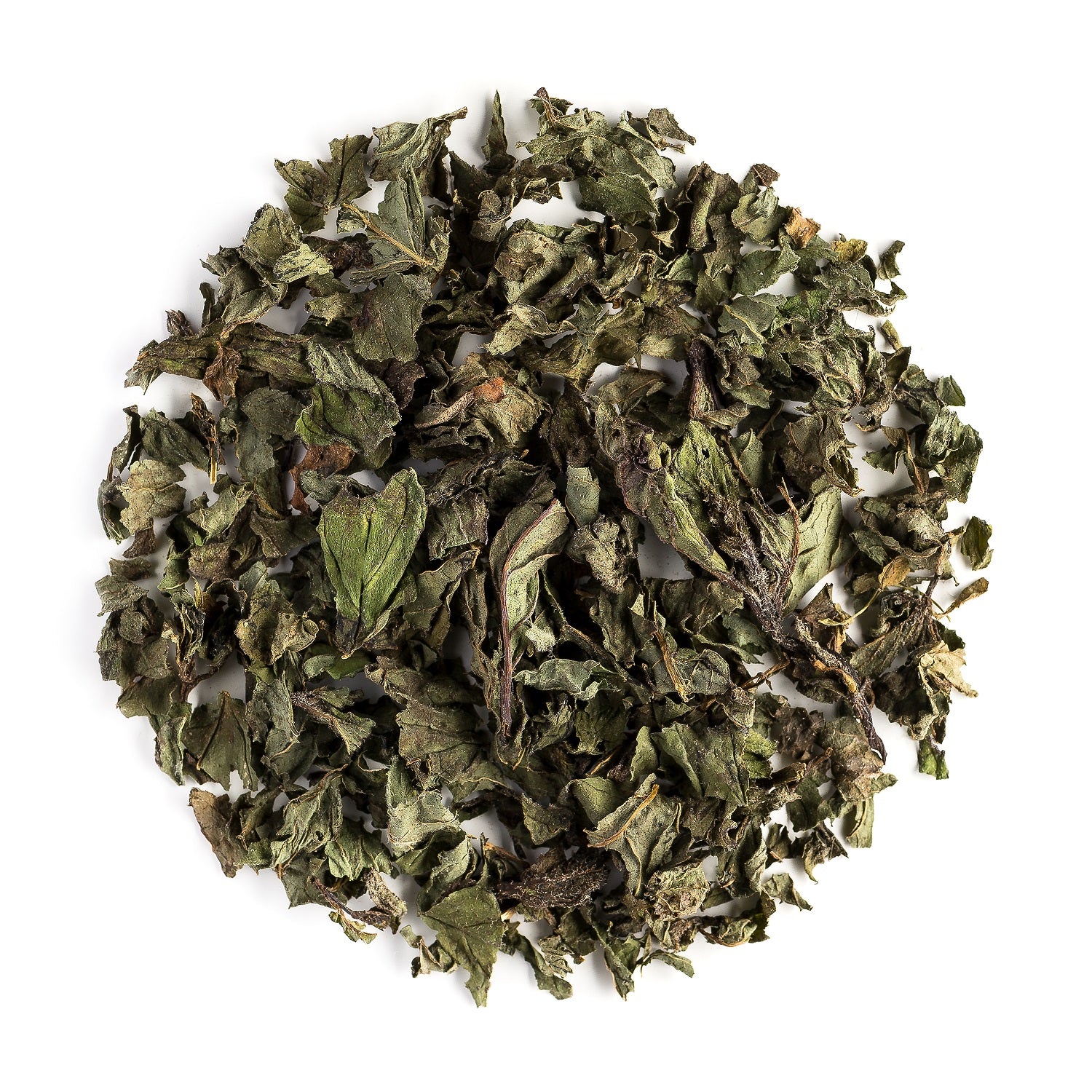
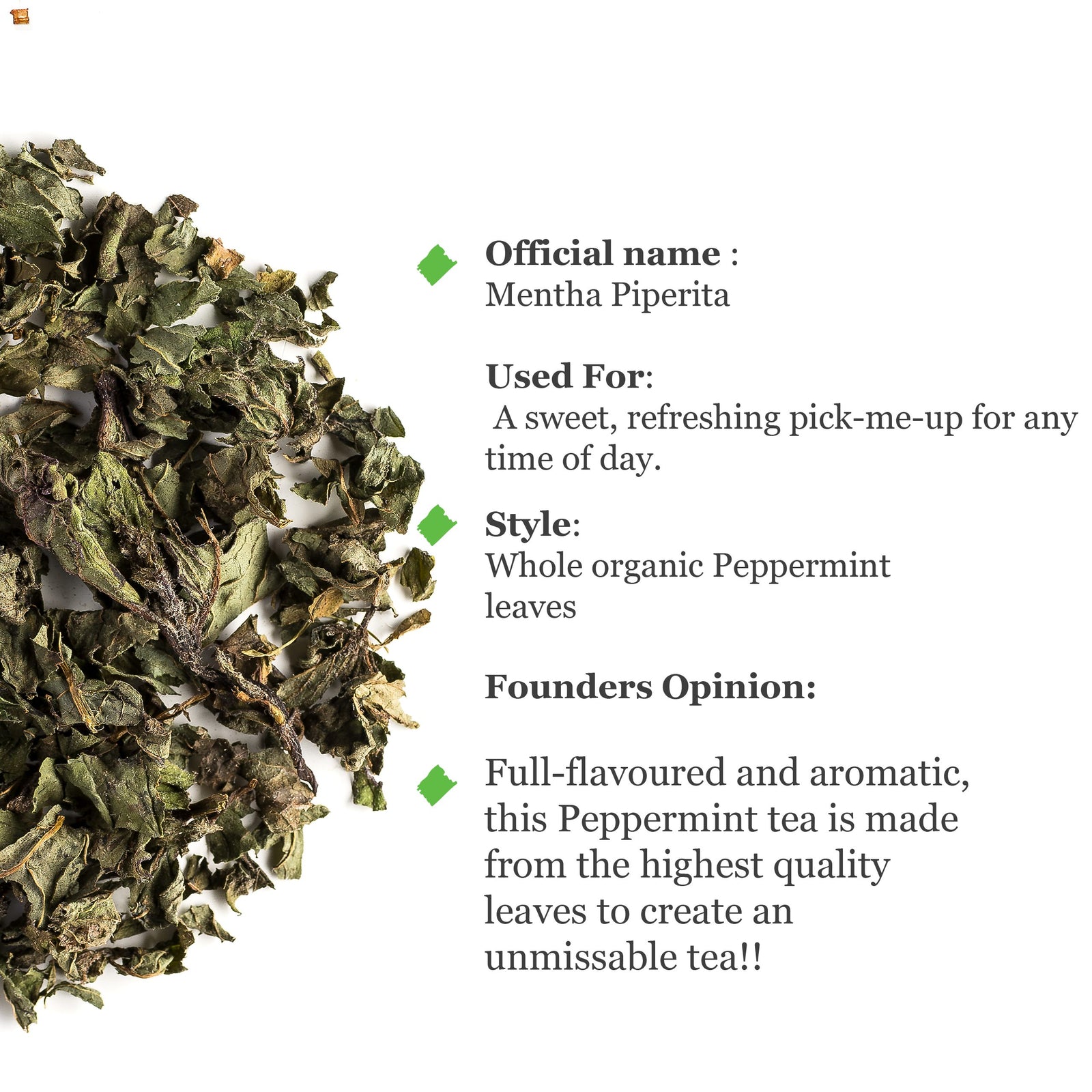
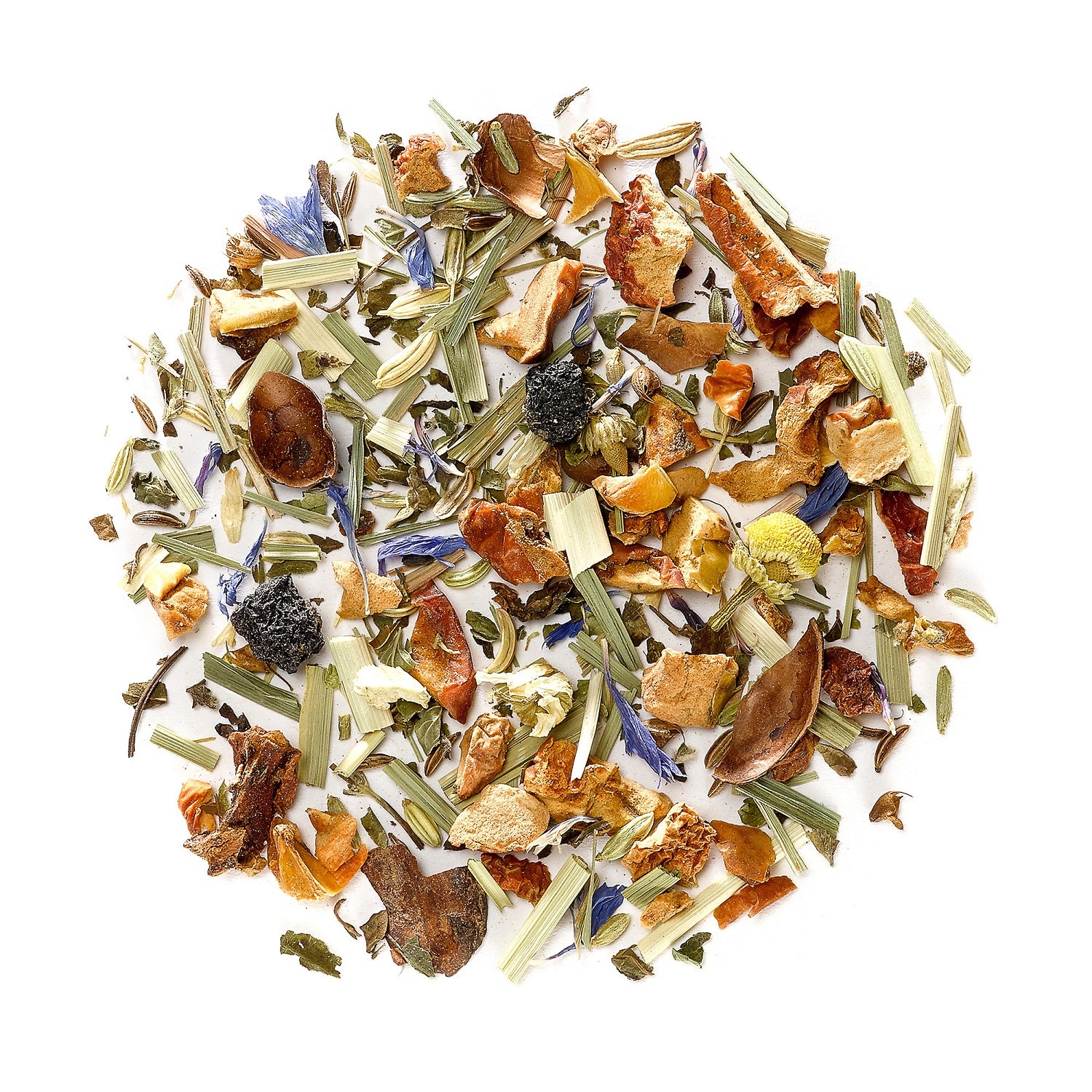
Chamomile — dried flower heads with apple-like sweetness and a calming reputation. The most consumed herbal tea worldwide. Peppermint — brisk, cooling, and clean. Works well after meals. Ginger — spicy, warming, made from fresh or dried root. Lemon balm — gentle, lemony, from the mint family. Valerian root — earthy and pungent, traditionally associated with sleep. Echinacea — slightly floral, traditionally used during cold season.Fruit and Flower Tisanes
Hibiscus — tart, cranberry-like, deep ruby-red color. High in vitamin C. Popular iced. Rose — delicate, floral, and slightly sweet. Often blended with black or green tea. Chrysanthemum — a staple in Chinese culture, light and slightly sweet. Butterfly pea flower — vivid blue color that changes to purple with acid (lemon). Mild flavor, dramatic visual. Dried fruit blends — apple, berries, citrus peel, rosehip — brew sweet, fruity, caffeine-free cups popular with children and caffeine-averse drinkers.All herbal teas are naturally caffeine-free. Brew with boiling water (100°C) for 5-10 minutes — they tolerate long steeping without bitterness.
Flavored and Blended Teas
Flavored teas start with a true tea base and add flavoring through natural or artificial means. The distinction between scented and flavored matters for quality.
Scented Teas
Jasmine tea is the most famous scented tea. Fresh jasmine blossoms are layered with green tea leaves overnight — the tea absorbs the floral fragrance. High-quality jasmine tea undergoes this process up to seven times. The result is fragrant, smooth, and gently sweet. Jasmine Dragon Pearls are hand-rolled into small spheres that unfurl beautifully during steeping. Osmanthus (gui hua) scented oolong or green tea adds a sweet, apricot-like floral note. Rose-scented teas combine dried rosebuds with black or green tea for a delicate floral character.Blended and Flavored Teas
Earl Grey — black tea with bergamot oil. Classic, widely available, and endlessly debated among tea enthusiasts. Chai (masala chai) — black tea with cardamom, cinnamon, ginger, cloves, and black pepper, simmered with milk. Genmaicha — green tea with toasted rice (covered under Japanese greens). Fruit-flavored blends use natural or artificial flavoring on a black or green base. Quality varies enormously — the best use real fruit and flower pieces, the worst use synthetic flavoring on low-grade tea.How to Choose the Right Tea for You

If you are new to tea, starting with what appeals to your existing taste preferences is more productive than following a prescribed order.
If you like coffee: Start with a strong Assam or Irish Breakfast with milk. The malty, full-bodied character translates well from coffee. Pu-erh is another option — its earthy, dark profile appeals to many coffee drinkers. If you prefer lighter drinks: Green tea (start with Longjing or Sencha) or white tea (White Peony) offers refreshing, subtle character without heaviness. If you want complexity: Oolong is the place to explore. Start with a Taiwanese high-mountain oolong for the light end or a Da Hong Pao for the dark end. If caffeine is a concern: Herbal teas and rooibos are completely caffeine-free. Among true teas, white tea and hojicha (roasted Japanese green) tend to have the lowest caffeine, though all true teas contain some. If you want something familiar but better: Try the loose-leaf version of whatever you already drink. If you drink English Breakfast bags, a loose-leaf Assam will be revelatory. The quality difference between bagged and loose-leaf tea is the single biggest upgrade available.Navigating the World of Tea
No one needs to try every tea variety to enjoy tea well. Pick a category that interests you and explore within it — the depth within any single category (green, oolong, black) exceeds what most people imagine. A Darjeeling first flush and a Kenyan CTC are both "black tea," but they have almost nothing in common in the cup.
Quality matters more than breadth. One exceptional tea teaches you more about a category than ten mediocre ones. Start with whole-leaf tea from a transparent source, pay attention to water temperature and steep time, and let your palate develop naturally. The variety within tea is not a barrier to entry — it is the reason tea remains interesting decades into the habit.
Leave a comment
Comments will be approved before showing up.
Also in Valley of Tea Blog | Tea Guides, Origins & Brewing Tips
The Complete Guide to Drinking Tea
What tea is, how the main types differ in the cup, and how to brew each one properly. Water temperature, steeping times, storage and how to get more than one cup from your leaves.
Read More

Black Tea: Types, Processing, and How to Brew It
Black tea is fully oxidized Camellia sinensis. Compare Assam, Darjeeling, Keemun, and Ceylon varieties. Learn processing, brewing, and caffeine levels.

How To Grow Black Tea
Learn how to grow black tea at home: soil, climate, and the five processing steps from fresh leaf to a finished cup of black tea.

Wisdom is the path to better tea.
Get our free brewing guide: the right water, heat and timing for every tea we sell. You will also hear it first when new harvests arrive.
No spam. Unsubscribe any time.
Check your inbox.
The guide is on its way.