












Longjing Green Tea
Longjing green tea is China's most celebrated green tea, yet the version most buyers encounter internationally is rarely the real thing. The benchmark is set by a single district: the West Lake (Xihu) area outside Hangzhou, Zhejiang Province. Authentic Xihu Longjing is produced in five specific villages, grown on terraced hillsides, and processed entirely by hand. Everything sold outside that geography under the "Longjing" or "Dragon Well" name is a different product.

This guide covers how the tea is made, how to read the grades, and how to brew it correctly.
History: 1,000 Years of Dragon Well
Longjing's written history reaches back to the Song dynasty (960-1279 CE), when teas from the West Lake hills near Hangzhou were already earning recognition among China's elite. The name "Dragon Well" (Longjing, 龙井) refers to an ancient spring in the area, believed by local legend to connect to an underground channel that, in drought, mixed fresh and salt water in a surface swirl resembling a dragon.

The tea's imperial status was cemented during the Qing dynasty by Emperor Qianlong, who visited the West Lake gardens multiple times. Local tradition holds that Emperor Qianlong personally designated 18 tea bushes as imperial tribute plants on one visit to the Shifeng area; the site is still commemorated in Longjing Village today.
That centuries-long association with imperial patronage explains part of why Longjing commands a premium, but the history is not just marketing. It reflects continuous cultivation in a specific microclimate that has defined quality standards across a thousand years. The flat-pressed shape, the pale jade liquor, the chestnut-sweet aroma: all of these have been consistent identifiers since before the modern tea trade existed.
The West Lake area itself shaped the tea's character. The hills around the lake provide consistent mist cover, acid soil with good drainage, and a moderated temperature range that slows spring growth. Slow growth concentrates amino acids in the young shoots, which directly affects the flavour character that distinguishes Xihu Longjing from teas produced in lower-altitude inland regions.
Longjing Production: Wok-Firing by Hand
Authentic Longjing is processed in two stages inside a wok heated to between 100 and 120°C. The processor uses bare hands to press and spread the leaves against the hot surface while keeping them moving to prevent scorching. The first stage (sha qing) destroys the oxidative enzymes that would turn the leaf dark, locking in the green colour and aromatic compounds. The second stage shapes the leaf flat and drives off remaining moisture.

The hand technique, a specific pressing-spreading motion called hui guo, requires years of practice. The exact pressure, angle, and timing during the second stage are what separate a master's output from a novice's. Machine-made Longjing exists: the Da Fo producing region uses automated fryers, and it is significantly cheaper, but the leaf shape is less consistent and the wok-roast character is blunter.
Harvest timing matters as much as processing. The most prized grade is picked before the Qingming festival (around April 4-5 each year), giving rise to the category called Ming Qian, meaning "before Qingming." Premium pre-Qingming Longjing is picked at the bud-and-first-leaf stage, sometimes bud-only at the very top grade, depending on the producer. At this stage, the amino acid content in the young shoots is at its peak, the leaf is tender, and the resulting tea has the most pronounced chestnut sweetness and umami depth.
We know from sourcing spring green teas that the harvest window pressure is real. In a good year, the pre-Qingming flush from Xihu might be exhausted within two to three weeks. Anything calling itself "Ming Qian" that is still available in June deserves scrutiny.
After Qingming, the subsequent Gu Yu (grain rain) harvest continues through late April. This material is good quality but not the top tier: the leaves are slightly larger, the amino acid concentration lower, and the price reflects it.
Longjing Grades: From Xihu to Generic
Longjing green tea is sold at three distinct quality tiers, and the difference between them is substantial enough to treat them as separate products.
Xihu (West Lake) Longjing is the top tier. It comes from five officially designated production villages: Longjing Village, Meijiawu, Wengjiashan, Yunqi, and Manjuelong. This area holds a Chinese Geographic Indication (GI) designation.
Authentic Xihu Longjing is genuinely limited in supply: the five designated villages cannot produce enough to meet global demand, which is why counterfeiting is rampant. Expect to pay a significant premium over commodity Longjing, and treat an accessible price for the claimed grade as a sign the tea is almost certainly not Xihu material.
Qiantang and Yuezhou Longjing come from the broader Hangzhou region and Zhejiang Province. These are legitimate, quality teas. They use the same cultivar and similar processing, but the specific terroir of the West Lake hills, its mist, soil composition, and microclimate, is absent. Qiantang and Yuezhou material is the most practical choice for everyday drinking: the chestnut-sweet profile is recognisable, quality is consistent, and pricing is accessible.
Generic "Longjing" is the problem category. Tea labelled Dragon Well or Longjing can legally originate from Sichuan or other inland provinces using different cultivars. The leaf shape may look similar, but the flavour profile is different: grassier, thinner, and sometimes bitter at higher temperatures. For buyers outside China, a large proportion of what is sold as Longjing falls into this category.
The most reliable buying heuristic is to look for the origin village, not just the province. "Zhejiang Longjing" is a step better than unlabelled, but the real assurance comes from a seller who can name the specific village and ideally the harvest date.
Brewing Longjing Correctly
The correct water temperature for longjing green tea is 75-80°C. This is not a suggestion: boiling water rapidly extracts bitter catechins and simultaneously degrades the volatile aromatic compounds responsible for the chestnut note. The bud sweetness in a good Longjing comes from glucose and fructose concentrated in the young leaves, and these are delicate; high temperatures do not improve them. The umami depth, the savoury, mouth-coating quality, comes from L-theanine, which is heat-stable but masked at high temperatures when bitterness dominates.

Customers who buy green tea and come back saying it tastes bitter are usually using boiling water without realizing it. Checking water temperature first solves most bitterness complaints.
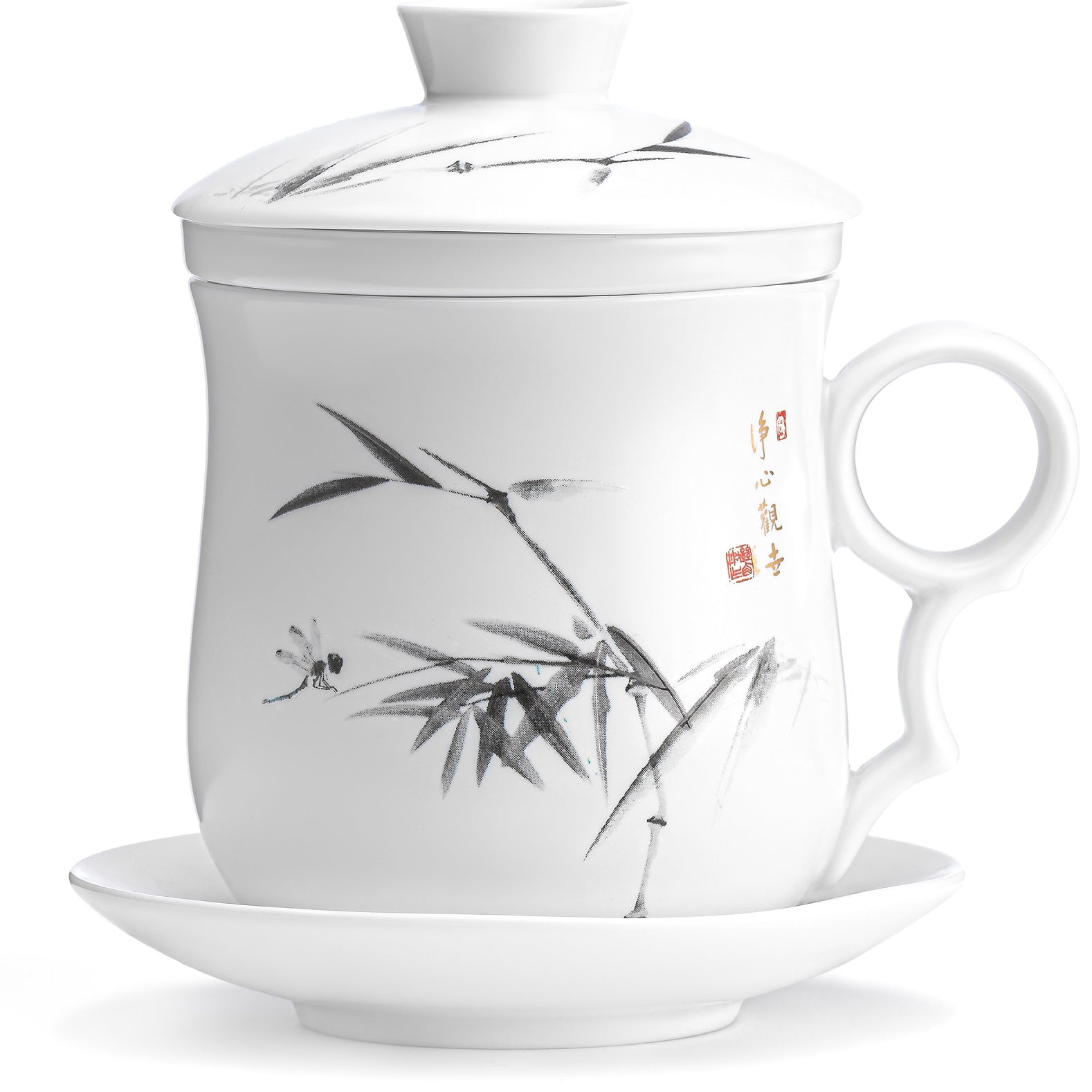
Vessel choice: A straight-sided glass cup or a white porcelain gaiwan both work well. The glass serves a practical second purpose: you can watch the leaves. With a high-grade Longjing, the leaves sink slowly and stand upright on the bottom, one of the few reliable visual quality indicators. Cheap or machine-processed leaves tend to float and clump at the surface.
Leaf ratio and steeping time: Use 3-4g per 200ml, steeped for 2-3 minutes. Longjing tolerates multiple infusions well. A good Xihu Longjing gives three or four rounds before the character fades significantly. Reduce steep time on second and third infusions to around 90 seconds to avoid over-extraction.
Storage: For green tea, buy at most enough to last until the next harvest. Longjing deteriorates quickly: keep it sealed, away from light and strong odours, and refrigerated if possible. A Ming Qian batch bought in April should not still be your primary daily tea in October.
Longjing vs Other Chinese Green Teas
Longjing occupies a specific position in the Chinese green tea category: flat-pressed leaf, pan-fired, chestnut-sweet, with a clarity and lightness in the cup. Comparing it to two other well-known Chinese green teas shows where it sits.
Longjing vs Bi Luo Chun: Bi Luo Chun (Green Snail Spring) from Dongting, Jiangsu Province, uses a spiral-rolled leaf instead of the flat press. The processing produces a fruitier, more floral profile, and the body in the cup is lighter. Where Longjing reads as nutty-sweet with good weight, Bi Luo Chun reads as floral-fruity and delicate.
Both are pre-spring harvests at the premium end, and both are frequently counterfeited. If you prefer something brighter and more delicate, Bi Luo Chun is the better choice. If you want the chestnut note and more substance in the cup, choose Longjing.
Longjing vs Gunpowder: Gunpowder green tea is pellet-rolled, often produced in Zhejiang but from a completely different cultivar and processing tradition. It brews darker, bolder, and considerably more astringent. Gunpowder was historically popular in North Africa and the Middle East because it travels well and pairs with mint and sugar in the Maghrebi tea preparation. It is a fundamentally different drinking experience: calling them similar because both originate from Zhejiang is like equating a Burgundy Pinot Noir with a Cotes du Rhone blend, since the geography overlaps but the product does not.
The key distinction for buyers is this: Longjing is a precision tea for careful brewing, while Gunpowder is a sturdy tea designed to hold up in strong preparations and blends. Neither is better in the abstract; they serve different purposes.
The Bottom Line on Longjing Green Tea
Authentic longjing green tea is worth paying for. The difference between a spring Xihu flush and a generic Dragon Well is not marginal. It is the difference between a tea with genuine complexity, sweet, nutty, clean, with leaves that stand upright in the cup, and something that happens to be flat and green.
At Valley of Tea, we source from Zhejiang, with a focus on traceable spring harvests and no blending with lower-grade material. If you are buying Longjing for the first time, prioritise provenance over price and ask for the origin village, not just the province label.
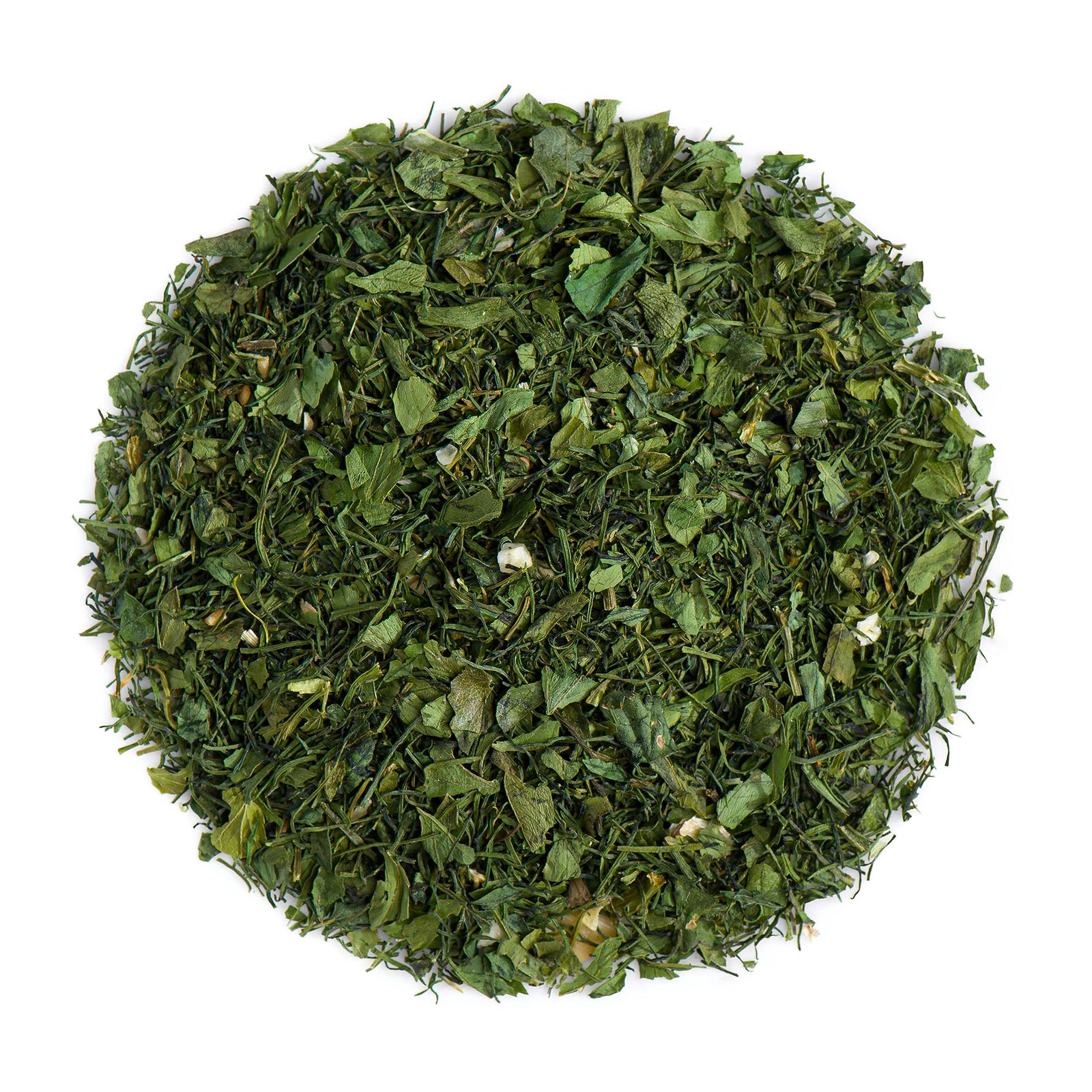
Teas Featured in This Article

Leave a comment
Comments will be approved before showing up.
Also in Valley of Tea Blog | Tea Guides, Origins & Brewing Tips

Rooibos Iced Tea: Caffeine-Free Refresher
Learn to make rooibos iced tea two ways: hot-brewed over ice in 15 minutes, or a smoother overnight cold brew, plus flavour additions and storage tips.

Spice Cabinet Organization: A Practical System That Works
Learn how to organize your spice cabinet with a practical system that keeps every jar findable and fresh. Temperature, layout, and audit tips included.

Maca or Ashwagandha for Your Daily Routine
Choosing between maca or ashwagandha? Learn how each root tastes, when to use them, and the best ways to prepare each in tea or drinks.

Wisdom is the path to better tea.
Get our free brewing guide: the right water, heat and timing for every tea we sell. You will also hear it first when new harvests arrive.
No spam. Unsubscribe any time.
Check your inbox.
The guide is on its way.