












Sencha Matcha Powder
"Sencha matcha powder" is one of those searches that suggests two different questions at once: are sencha and matcha the same thing, and does sencha come in powder form? Sencha and matcha are distinct teas processed in entirely different ways, and knowing the difference helps you choose the right one for how you actually drink tea. Both come from Camellia sinensis grown in Japan, but the similarities stop at the plant. The confusion is understandable given how both appear under "Japanese green tea" on most websites, but once you understand the production steps, the choice becomes straightforward.

What Is Sencha? Leaves vs Powder
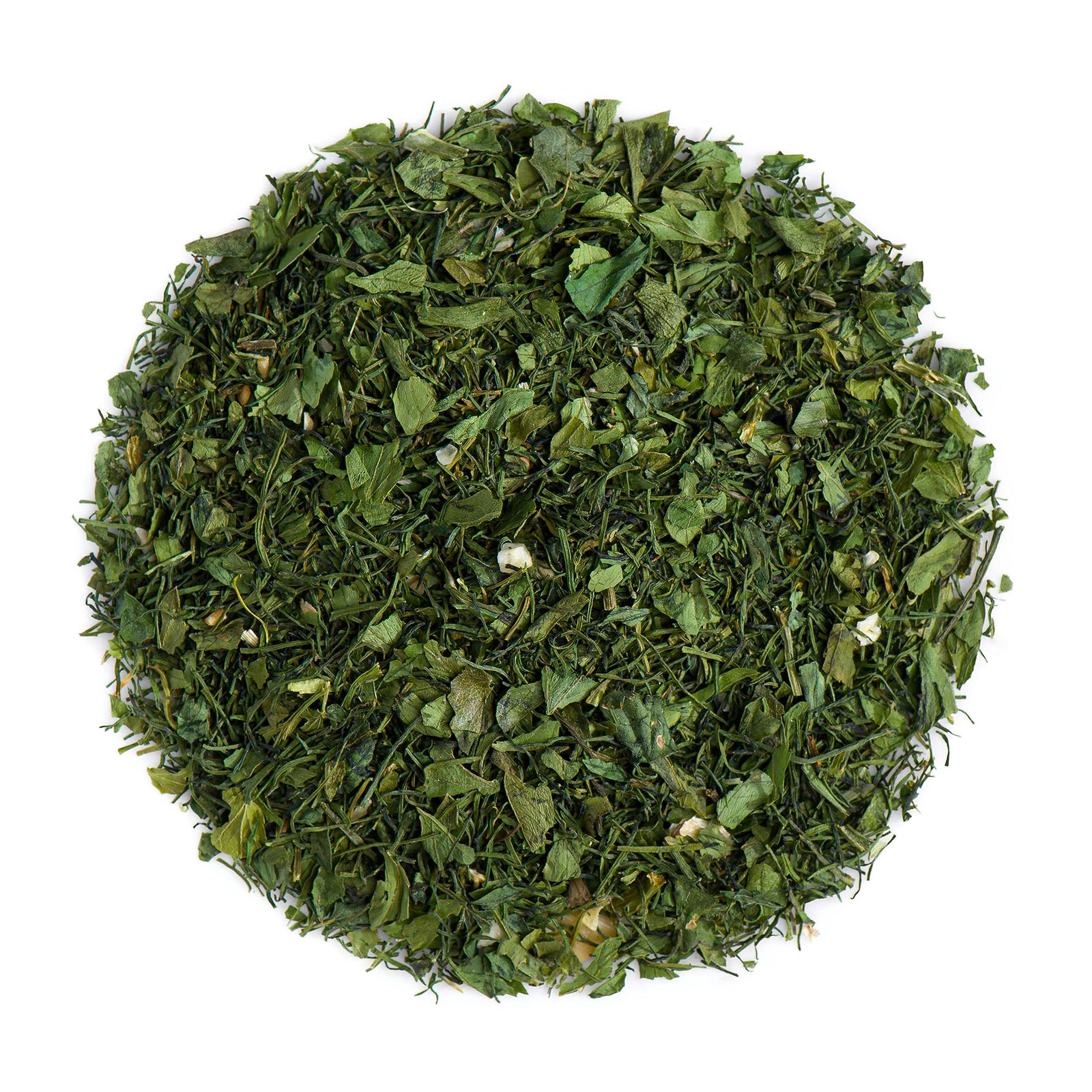
Sencha is a steamed, rolled, and dried whole-leaf green tea. After harvest, the leaves are steam-fixed to halt oxidation, then rolled into their characteristic needle shape and dried. When you brew Sencha, you steep the leaves in hot water and strain them out. You are extracting flavour and compounds into the water, not consuming the leaf itself.

The quality spectrum within Sencha is wide. Shincha, the first flush harvest in spring, yields the most delicate and sweet leaves. Bancha comes from later harvests and is a fuller, sometimes slightly astringent cup. Standard everyday Sencha falls between these extremes.
Brewing Sencha correctly matters: use water at 70-80C, steep for 1-2 minutes, and use approximately 4-6g of leaf per 200ml. Sencha handles multiple infusions well, with the second pour often showing more clarity and less astringency than the first.
Sencha does exist in powdered form. Some producers grind first-flush Sencha into a fine powder for convenience brewing. This is not matcha. The leaf used (Sencha, not tencha) and the grind fineness are both different, and the preparation style differs too. Powdered Sencha is designed to dissolve into water rather than be whisked into a froth.
What Makes Matcha Powder Different from Sencha
Matcha starts with a different leaf entirely. The plants destined for matcha are shaded for 20-30 days before harvest. Uji ceremonial producers use traditional straw shading; our Kagoshima supplier uses synthetic nets. Shading cuts direct sunlight and forces the plant to produce more chlorophyll and L-theanine. You can taste the difference in umami. Many drinkers describe the energy as calm and sustained, a quality often attributed to the higher L-theanine levels produced by shading.

After harvest, the leaves are dried without rolling into a flat leaf called tencha. The tencha is then stone-ground into fine powder. Stone grinding matters: the powder produced is typically under 10 microns for stone-ground ceremonial grade, compared to 15-30 microns for machine-milled alternatives, which causes it to blend more smoothly with liquid and delivers a noticeably sweeter, richer taste.
Because matcha is a powder fully dissolved in water, you consume the entire leaf. There is no straining. This is a meaningful practical distinction: a bowl of matcha delivers more of the leaf's compounds than a strained Sencha infusion of the same weight.
Within matcha, ceremonial grade refers to stone-ground single-origin tencha intended for drinking straight. Culinary grade is coarser and often machine-milled, suited for lattes, baking, and cooking where the matcha character needs to hold up against other ingredients but precision of flavour is less critical.
Flavor Comparison: Sencha vs Matcha Side by Side
Sencha and matcha taste genuinely different, and the preparation method amplifies that difference.

A good Sencha opens with a grassy, fresh vegetal note. First-flush Shincha adds a light sweetness from the young buds, where glucose and fructose concentrate in the growing tips. There is often a mild astringency at the finish, which some drinkers appreciate and others want to reduce by dropping the brew temperature or shortening the steep. Fukamushi (deep-steamed) Sencha pushes the flavour richer and deeper, with an almost cloudy liquor from the fine leaf particles.
Matcha, by contrast, is built around umami. The shading process accumulates L-theanine, which provides that savory, mouth-coating depth rather than sweetness. The sweetness in high-quality matcha comes from the young tencha leaves, not from the L-theanine itself. Prepared at around 70C with a chasen (bamboo whisk), a good ceremonial matcha has a creamy body, minimal bitterness, and an aromatic finish that stays on the palate.
There is one category worth naming clearly: powdered Sencha. This is not matcha, and cannot be prepared like matcha. The O-Cha FAQ puts it directly: the taste is quite different, and you cannot use powdered Sencha to prepare usucha or koicha-style preparations. The grind is coarser and the base leaf is different. Treating powdered Sencha as a budget substitute for matcha will produce a disappointing result.
Which Should You Choose: Sencha or Matcha Powder?
The decision comes down to how you plan to drink it and what equipment you have.
For a daily hot cup with minimal preparation, Sencha is simpler. You need a teapot or infuser, the right water temperature, and two minutes. The leaf does the work. A good Sencha is accessible at price points well below ceremonial matcha and rewards multiple infusions from the same leaves.
For lattes, matcha desserts, or traditional preparation, matcha is the clear choice. The powder format makes it easy to blend into hot milk, oat milk, or cold drinks. A chasen is the traditional tool for a whisked bowl; a small handheld electric frother works for most latte applications. A simple daily matcha is 5g of matcha, 250ml of water at 70C, whisked, nothing added. It is an intense morning experience. Some people find that routine once a day; others reserve it for weekends.
On budget, quality Sencha is the more accessible entry point. Ceremonial matcha varies in price considerably, from modest to extremely expensive, similar to wine. The right approach is to taste options at different price points and find the quality-to-value ratio that works for you rather than assuming the highest price is necessary.
Before exercise, matcha works better than espresso for a longer session for many drinkers: the energy feels steadier and does not drop off sharply the way a coffee spike does, though that is an individual observation rather than a general claim.
Sencha and Matcha: Different Tools for Different Moments
Sencha and matcha are not competing products. They are different formats of Japanese green tea that suit different moments and different preparation habits. The search term "sencha matcha powder" often reflects a single question: which Japanese green tea powder is right for me? The answer depends on whether you want a steeped leaf tea you can brew quickly, or a powdered tea you fully consume, whisked or blended.
We source both directly from Japan, which gives us confidence in traceability from farm to cup. For matcha specifically, we work with two regions: Uji, where traditional straw shading produces more sweetness and umami depth in the cup, and Kagoshima, where synthetic nets are standard. The straw-shaded Uji is noticeably different once you have tasted both side by side. If you are new to either tea, start with the preparation style that matches your daily routine, then explore the other once you know what you are looking for.
Leave a comment
Comments will be approved before showing up.
Also in Valley of Tea Blog | Tea Guides, Origins & Brewing Tips


Rooibos Iced Tea: Caffeine-Free Refresher
Learn to make rooibos iced tea two ways: hot-brewed over ice in 15 minutes, or a smoother overnight cold brew, plus flavour additions and storage tips.

Spice Cabinet Organization: A Practical System That Works
Learn how to organize your spice cabinet with a practical system that keeps every jar findable and fresh. Temperature, layout, and audit tips included.

Maca or Ashwagandha for Your Daily Routine
Choosing between maca or ashwagandha? Learn how each root tastes, when to use them, and the best ways to prepare each in tea or drinks.

Wisdom is the path to better tea.
Get our free brewing guide: the right water, heat and timing for every tea we sell. You will also hear it first when new harvests arrive.
No spam. Unsubscribe any time.
Check your inbox.
The guide is on its way.