













Tea and Cholesterol: What the Research Says
Cholesterol is one of those health topics where simple answers do not exist, no matter how badly we want them. Your body produces cholesterol because it needs it — for cell membranes, hormone production, vitamin D synthesis, and bile acids that help digest fat. The problem is not cholesterol itself. The problem arises when the balance tips: too much LDL (low-density lipoprotein) circulating in the blood, not enough HDL (high-density lipoprotein) clearing it away, and over time, a buildup that narrows arteries and increases cardiovascular risk.
At Valley of Tea, we have been sourcing and tasting teas for over fifteen years. This guide draws on that experience.

This is where tea enters the conversation. Not as a cure, not as a replacement for medical advice, and certainly not as a magic fix. Tea is a beverage — one that happens to contain bioactive compounds that researchers have studied extensively in relation to lipid metabolism. Some of those studies are promising. Some are preliminary. All of them deserve to be read honestly, without exaggeration.
This guide covers what the research actually says about tea and cholesterol, which teas have been studied most, how to brew them to get the most out of their active compounds, and what realistic expectations look like.
What Research Says About Tea and Cholesterol
The scientific interest in tea and cholesterol centers on a few key mechanisms. Different teas work through different pathways, which is worth understanding before jumping to any single recommendation.
Catechins and Cholesterol Absorption
Green tea catechins — particularly epigallocatechin gallate (EGCG) — have been the most studied compounds. The proposed mechanism is straightforward: catechins with gallate esters interfere with the biliary micelle system in the intestine, forming insoluble co-precipitates with cholesterol and increasing its fecal excretion. Less cholesterol absorbed means the liver upregulates LDL receptors to pull more LDL out of circulation.
 green tea" width="1184" height="888" loading="lazy" style="max-width:680px;width:100%;height:auto;display:block;margin:20px auto;">
Multiple meta-analyses support this. A 2011 systematic review of 20 randomized controlled trials (1,415 participants) found that green tea catechins reduced total cholesterol by approximately 5.5 mg/dL and LDL cholesterol by 5.3 mg/dL compared to controls. A larger 2020 meta-analysis covering 31 RCTs and 3,216 subjects (PMC) confirmed these findings: green tea consumption lowered both total cholesterol and LDL, though effects on HDL and triglycerides were inconsistent. A 2022 meta-analysis published in Frontiers in Nutrition found that longer interventions (over 12 weeks) may also reduce triglycerides and increase HDL, suggesting duration matters.
These are modest but consistent effects. In participants who started with elevated cholesterol (above 200 mg/dL), the reductions were more pronounced.
Theabrownin and Gut Microbiota
Pu-erh tea works through a completely different mechanism. A 2019 study published in Nature Communications identified theabrownin — one of the most abundant pigments in pu-erh tea — as a key compound. Theabrownin alters the gut microbiome by suppressing bacteria associated with bile-salt hydrolase activity. The downstream effect: increased conjugated bile acids in the intestine, which inhibits the FXR-FGF15 signaling pathway, leading to increased bile acid production and fecal excretion, reduced hepatic cholesterol, and decreased lipogenesis.
This gut-microbiota pathway is distinct from the catechin mechanism in green tea. It suggests that pu-erh tea's effects on cholesterol are tied specifically to its post-fermentation chemistry — the microbial processing that creates theabrownin during aging.

Human clinical trials on pu-erh remain limited compared to green tea. Existing trials in Asia have shown reductions in cholesterol and triglycerides, and a randomized placebo-controlled trial found clinically meaningful reductions in triglycerides specifically, along with modest improvements in overall lipid profiles. The research is promising but still in earlier stages.
Anthocyanins and Antioxidant Pathways
Hibiscus tea (Hibiscus sabdariffa) operates through yet another set of compounds — primarily anthocyanins. These are the same pigments responsible for the deep red color of the brew. The proposed mechanisms include inhibition of HMG-CoA reductase (the same enzyme targeted by statin medications, though at entirely different magnitudes) and inhibition of LDL oxidation, which is relevant to atherosclerosis progression.
The evidence on hibiscus is mixed. A systematic review found that over half of the reviewed RCTs showed favorable effects on lipid profiles, including reduced total cholesterol, LDL, and triglycerides. However, another review of 7 studies (362 participants) found no significant effect on total cholesterol or triglycerides, though there was a trend toward LDL reduction that approached statistical significance. The strongest results have appeared in studies of people with existing metabolic conditions such as type 2 diabetes.
Teas That Have Been Studied
Green Tea
Green tea is the most extensively researched tea in relation to cholesterol. The active compounds are catechins, with EGCG being the most abundant and most studied. A typical cup of green tea contains 50 to 100 milligrams of EGCG, depending on cultivar, growing conditions, and brewing method.

At Valley of Tea, we carry several green teas suited to daily health drinking. Gunpowder green tea is one of my personal favourites for everyday drinking: smooth and rich, with a hint of smoke. Gyokuro tends to have the highest catechin concentrations among Japanese greens, and matcha delivers substantially more per serving because you consume the entire ground leaf rather than just an infusion. Genmaicha and Kukicha are also good options if you prefer a lighter, more approachable green tea for daily use.
I brew Sencha at 70 to 80 degrees Celsius and find it holds up well across multiple infusions. For Gyokuro, I drop to 60 degrees to preserve the sweetness and avoid bitterness. If you do not have a thermometer, you can judge by the water: no movement is around 75 degrees, silent steam is roughly 80, a few rising air bubbles is 85, and active bubbling is about 90.
The consistency of the research on green tea and cholesterol is notable. Across multiple meta-analyses spanning thousands of participants, the direction of effect is always the same: modest reductions in total cholesterol and LDL. The magnitude varies by dose, duration, and baseline cholesterol levels, but the pattern holds.
Pu-erh Tea
Pu-erh is a post-fermented tea from Yunnan province in China. The microbial fermentation process creates unique compounds not found in other teas, most notably theabrownin. Research interest in pu-erh and lipid metabolism dates back to early animal studies in the 1980s.

We stock both sheng (raw) and shou (ripe) aged pu-erh. Sheng ages slowly, like fine red wine, and the best comes from old native Yunnan trees — it develops complexity over years of careful storage. Our shou brews a deep red infusion with a hearty sweet aroma, fragrant woods, and what I would describe as mild earthy depths — a forest taste. For storage, pu-erh can be exposed to open air as long as it is not too wet or humid.
Comparative animal studies have found that pu-erh tea and green tea were more efficient than oolong tea and black tea at lowering total cholesterol. Notably, pu-erh was the only tea in one study that increased HDL while simultaneously decreasing LDL — other teas decreased both.
Pu-erh's fermented character means it works through gut microbiota modulation rather than direct catechin activity. This is a fundamentally different pathway from green tea's catechin mechanism. At Valley of Tea, we carry both, and the idea that they could complement each other — addressing cholesterol through two distinct biochemical routes — is one we find genuinely interesting. No clinical trial has tested this directly, but the biochemistry makes it a reasonable area for future research.
Hibiscus Tea
Hibiscus is a caffeine-free tisane (technically not a true tea, since it does not come from Camellia sinensis, but universally referred to as tea). The deep red infusion is rich in anthocyanins, organic acids, and polyphenols.

The research on hibiscus and cholesterol is less consistent than for green tea but shows potential, particularly in people with metabolic conditions. For the general healthy population, evidence is insufficient to make strong claims. For people seeking a caffeine-free option with some preliminary cardiovascular evidence, hibiscus is a reasonable choice — just not one with the research depth of green tea.
Rooibos Tea
Rooibos (Aspalathus linearis) is another caffeine-free option that has attracted research attention. It contains unique polyphenols — aspalathin and nothofagin — not found in any other plant.
The most cited human study involved 40 adults at risk for cardiovascular disease who consumed six cups of rooibos daily for six weeks. The results showed decreases in LDL cholesterol and triglycerides alongside an increase in HDL cholesterol. These are notable effect sizes for a dietary intervention.
However, this is a single study with a small sample size. The results have not been replicated at scale, and some animal studies have found no significant lipid effects. The honest assessment: the initial data is intriguing, larger studies are needed, and our green rooibos remains a reasonable choice for people looking for a caffeine-free option with potential cardiovascular benefits.
 rooibos tea" width="1184" height="888" loading="lazy" style="max-width:680px;width:100%;height:auto;display:block;margin:20px auto;">
Oolong Tea
Oolong sits between green and black tea in terms of oxidation, and its polyphenol profile reflects this intermediate processing. A large population-based study from southern China (76,979 individuals) found that daily oolong tea consumption was associated with lower total cholesterol, LDL, and triglyceride levels. Long-term consumers showed the greatest benefits: 12% lower triglycerides and nearly 7% lower LDL compared to non-drinkers.
A clinical trial in patients with coronary artery disease found that one month of oolong tea consumption improved LDL particle size (larger particles are considered less atherogenic) and increased adiponectin levels, both favorable changes.
Oolong's proposed mechanism involves inhibition of pancreatic lipase — the enzyme that digests fats and cholesterol esters in the gut. This is a different pathway from both the catechin mechanism of green tea and the microbiota mechanism of pu-erh, adding another dimension to how different teas may influence lipid metabolism. Our Tie Guan Yin oolong is a good starting point for those new to oolong.
How to Brew for Maximum Compound Extraction
If you are drinking tea partly for its bioactive compounds, how you brew it matters. Research on brewing parameters and polyphenol extraction provides some practical guidance — and after fifteen years of brewing, I have a few methods of my own.

Green Tea
Studies have found that brewing green tea at 80 to 85 degrees Celsius (176 to 185 degrees Fahrenheit) for 3 to 5 minutes maximizes EGCG extraction while maintaining good flavor. This matches what I do in practice. I use an electric kettle with temperature selection, but I always verify with a thermometer — many kettles are not accurate, and even a 10-degree difference matters for delicate greens.
For Sencha, I aim for 70 to 80 degrees; for Gyokuro, I drop to 60 degrees to preserve the sweetness and avoid bitterness. If you do not have a thermometer, you can judge by the water: no movement is around 75 degrees, silent steam is roughly 80, a few rising air bubbles is 85, and active bubbling is about 90. I always preheat the teapot first.
Using loose-leaf tea rather than bags generally provides better extraction because the leaves have more room to expand and release compounds. However, research has also shown that tea bags can produce higher antioxidant concentrations per cup due to the finer cut of the leaf, which increases surface area.
Pu-erh Tea
Pu-erh is traditionally brewed with fully boiling water (100 degrees Celsius / 212 degrees Fahrenheit). The compressed, aged leaves require higher temperatures to open up and release their compounds, including theabrownin. A brief rinse of 5 to 10 seconds with boiling water before the first steep is standard practice — it washes the leaves and begins to hydrate them.

Pu-erh is well-suited to multiple short infusions (gongfu style), with each steep extracting different compounds. The first few steeps tend to be richest in water-soluble compounds.
Hibiscus and Rooibos
Both hibiscus and rooibos benefit from near-boiling water and longer steep times. Research on antioxidant extraction from herbal teas indicates that temperatures between 90 and 100 degrees Celsius with steep times of 5 to 10 minutes optimize polyphenol release. For hibiscus, the anthocyanins responsible for both color and potential bioactivity extract readily at these temperatures.
Cold Brewing
Cold brewing green tea at room temperature (approximately 20 degrees Celsius) for 12 hours produces exceptionally high antioxidant capacity, with higher yields of certain catechins (epicatechin and epigallocatechin) compared to hot brewing. This only works well with whole loose leaves, not powdered tea.
A Practical Note
Adding lemon or citrus to green tea has been shown to increase total polyphenol content of the beverage, likely by stabilizing catechins in the acidic environment. Milk, on the other hand, appears to reduce catechin bioavailability in green tea — though interestingly, it works together with black tea polyphenols to enhance their absorption.

Realistic Expectations: Tea Is Not Medicine
This is the section that matters most, and the one most tea content glosses over.
The cholesterol reductions seen in studies of green tea catechins are in the range of 5 to 7 mg/dL for total cholesterol and LDL. For context, statin medications typically reduce LDL by 30 to 50%. Tea is not a substitute for pharmaceutical intervention when it is medically indicated. Anyone with clinically elevated cholesterol should work with a healthcare provider, not a tea merchant.
What the research does suggest is that regular tea consumption — particularly green tea, pu-erh, and possibly oolong and rooibos — may contribute to modest improvements in lipid profiles as part of an overall healthy dietary pattern. The operative words are "contribute," "modest," and "as part of."
The studies also show that effects are dose-dependent and duration-dependent. Drinking one cup occasionally is unlikely to do much. The research that shows the most consistent effects involves daily consumption of multiple cups over periods of weeks to months. This aligns with how tea is consumed in cultures with long traditions of daily tea drinking — it is a habit, not a prescription.
Most large-scale studies on tea and cardiovascular health are observational, meaning they show association, not causation. People who drink tea regularly may also eat better, exercise more, or have other lifestyle factors that contribute to better lipid profiles. The randomized controlled trials help isolate tea's direct effects, but they tend to be smaller and shorter in duration.
A Balanced Approach
The most honest thing a tea company can tell you is this: tea is a good daily habit that may have modest health benefits, supported by real but limited research. It is not a treatment for high cholesterol or any other medical condition.
In our experience, people who come to tea for health reasons are just as consistent in their habits as those who come for the taste. That consistency is what matters — the research consistently shows that daily consumption over months, not occasional cups, is where any effect accumulates. Whether your reason for starting is cardiovascular health or simply enjoying a well-brewed Gyokuro, the routine is the thing.
Combined with a diet rich in vegetables, whole grains, and healthy fats, regular physical activity, adequate sleep, and appropriate medical care when needed, tea fits naturally into a pattern of living that supports cardiovascular health.
If you are interested in exploring teas with compounds that have been studied in relation to cholesterol, green tea and pu-erh have the strongest research backing. Oolong, rooibos, and hibiscus each have preliminary evidence worth watching as more studies emerge. All of them are worth drinking simply because they taste good and have been enjoyed by people around the world for centuries.
Start with what you enjoy. Brew it well. Drink it regularly. And talk to your doctor about your cholesterol.
Leave a comment
Comments will be approved before showing up.
Also in Valley of Tea Blog | Tea Guides, Origins & Brewing Tips
The Complete Guide to Drinking Tea
What tea is, how the main types differ in the cup, and how to brew each one properly. Water temperature, steeping times, storage and how to get more than one cup from your leaves.
Read More

Black Tea: Types, Processing, and How to Brew It
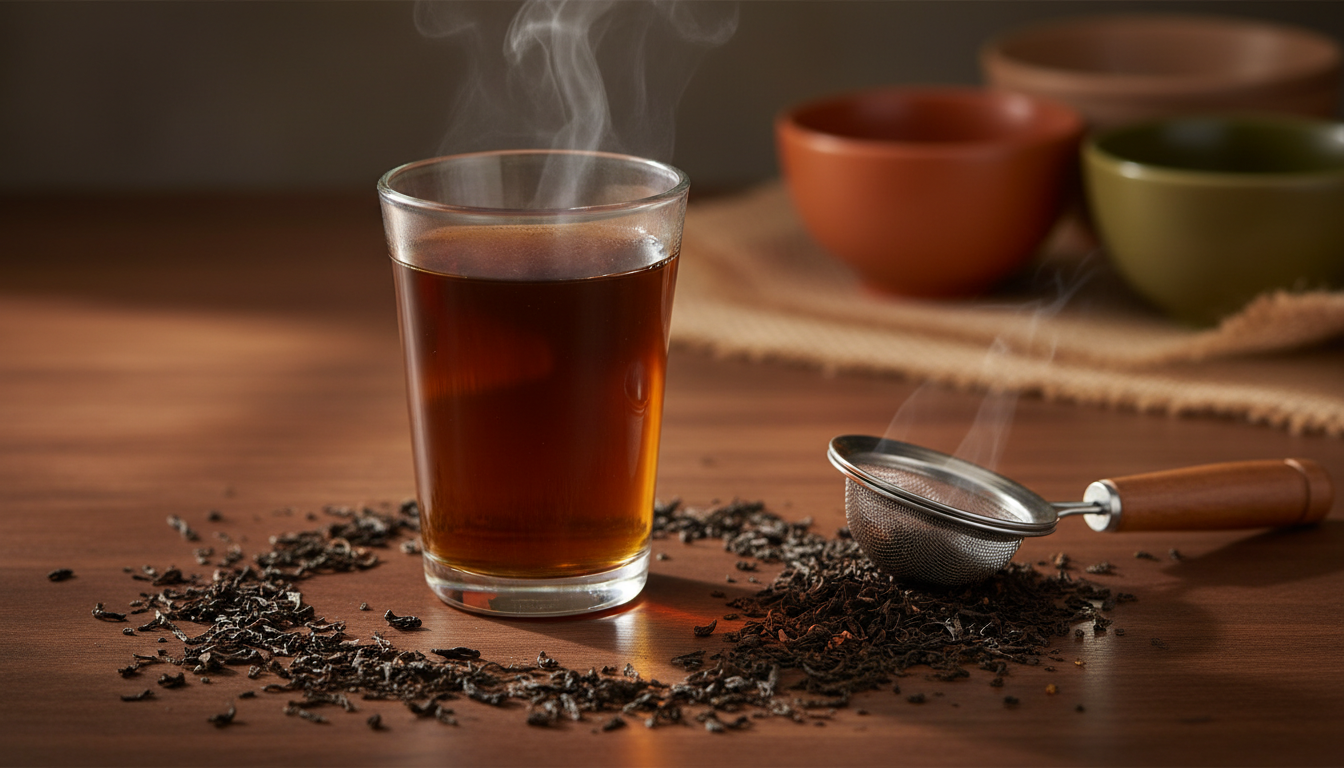
Black tea is fully oxidized Camellia sinensis. Compare Assam, Darjeeling, Keemun, and Ceylon varieties. Learn processing, brewing, and caffeine levels.


How To Grow Black Tea
Learn how to grow black tea at home: soil, climate, and the five processing steps from fresh leaf to a finished cup of black tea.

Wisdom is the path to better tea.
Get our free brewing guide: the right water, heat and timing for every tea we sell. You will also hear it first when new harvests arrive.
No spam. Unsubscribe any time.
Check your inbox.
The guide is on its way.