













How To Grow Black Tea
If you want to know how to grow black tea at home, the honest answer is this: you can grow the plant without much trouble in a temperate climate, but turning what you harvest into actual black tea is a different matter entirely. Camellia sinensis is the evergreen shrub behind every cup of black, green, white, and oolong tea, and it grows outdoors in USDA hardiness zones 7 through 9, tolerating light frost. Getting it to thrive in your garden is achievable. Getting drinkable black tea out of it takes patience, several more years, and a few processing steps that most guides gloss over.

What You Actually Need to Grow Camellia sinensis
To grow Camellia sinensis successfully, you need acidic soil with a pH between 5.5 and 6.5, reliable moisture without waterlogging, and filtered rather than intense direct sun.

Think of it as a plant with the same soil preferences as azaleas and rhododendrons. If those grow well in your garden, Camellia sinensis will too. Heavy clay that holds water will rot the roots; sandy soil that drains fast will stress the plant during summer. A loamy, well-draining soil amended with peat or pine bark to bring the pH into range is the practical starting point.
Sunlight: Partial shade or filtered morning sun suits the plant best. Intense afternoon sun in summer scorches the younger leaves, which are also the ones you want to harvest. A position on the east side of a wall or under light tree canopy works well.
Temperature: The variety matters. Camellia sinensis var. sinensis (the Chinese variety, smaller-leaved) tolerates temperatures down to around -10°C and is the choice for temperate gardens in northern Europe or the northern United States. Camellia sinensis var. assamica (the Assam variety, large-leaved) is more cold-sensitive and better suited to subtropical climates. If you are growing in a cooler zone, stick with var. sinensis.
Watering: Consistent moisture during the growing season is important. During dry spells, the plant will drop leaves and growth slows significantly. Mulching around the base helps retain moisture and keeps the soil temperature stable.
Camellia sinensis grows at 1,500-2,000 metres in the Darjeeling estates I source from — that altitude gap alone explains why replicating those teas at European sea level is more aspiration than achievable outcome.
Starting From Seed vs Cutting
The faster, more reliable way to start a Camellia sinensis plant at home is from a cutting, not from seed.

Seeds germinate slowly, typically 30 to 60 days, and the resulting plants are genetically variable. That variability matters because you will not know the flavour characteristics of the resulting leaves until the plant matures, which takes several years. Commercial tea producers almost never propagate from seed unless they are specifically breeding new cultivars.
Cuttings taken from a known parent plant give you a genetically identical copy. The cutting roots within 4 to 8 weeks in a humid propagation environment (a pot covered with a plastic bag works), and you can be more confident about what you are growing. If you can source a cutting from a var. sinensis plant with a known frost tolerance, that is the better starting point for a home garden.
Timeline: Whether you start from seed or cutting, manage your expectations on when you will have leaves worth harvesting. Most growers recommend waiting 3 to 4 years before taking any significant harvest. The plant needs that time to establish a strong root system. Picking leaves too early stresses the plant and slows long-term growth.
The first few harvests will also be small: a mature plant in a home garden might yield enough leaves for a handful of cups per season.
From Leaf to Black Tea: The Processing Steps
Growing Camellia sinensis is the easy part. What makes black tea black is a series of processing steps that must be done correctly, in order. Skip or rush any of them and you get something drinkable only in the loosest sense.

1. Plucking. For black tea, pick the top two leaves and a bud from each new growth flush. This is the "two leaves and a bud" standard used in every quality tea-growing region. Avoid older, tougher leaves further down the stem; they are higher in coarse tannins and lower in the aromatic compounds that make black tea worth drinking.
2. Withering. Spread the freshly picked leaves in a single layer on a clean cotton cloth or bamboo mat in a cool, airy spot out of direct sunlight. Leave them for 12 to 18 hours. The leaves will lose 30 to 40% of their moisture and become soft and pliable. This step is non-negotiable: rolling damp, unwithered leaves produces mushy clumps, not tea.
3. Rolling. Roll the withered leaves firmly between your palms to break down the cell walls. This releases the enzymes and sets oxidation in motion. Apply consistent pressure; you will see the leaves darken slightly and become sticky as the juices are released. Roll for 5 to 10 minutes, then form the leaves into a loose ball and let them rest for 30 minutes before rolling again.
4. Oxidation. Spread the rolled leaves on a clean surface in a room at 20 to 25°C with moderate humidity. Leave them for 2 to 3 hours. Watch the colour: leaves start green-brown, progress through copper, and reach a reddish-brown when oxidation is complete. Do not over-oxidise or you get a flat, bitter result with no bright notes.
5. Drying (firing). Spread the oxidised leaves in a thin layer on a baking sheet and dry them in an oven preheated to 90 to 100°C for 20 minutes. This stops oxidation and reduces moisture content to below 3%. The leaves will become brittle and snap cleanly when ready. Allow them to cool completely before storing in an airtight container.
What Home-Grown Black Tea Will Taste Like
Home-grown black tea will be drinkable, occasionally interesting, and almost never comparable to a quality single-origin import. That is not a reason to avoid the project; it is simply the honest frame for what you are doing.
The flavour of black tea depends heavily on terroir: the altitude, soil chemistry, temperature variation between day and night, and the specific microclimate where the plant grows. I started sourcing black teas from Darjeeling First Flush gardens specifically because of what altitude and the spring flush does to the aromatics, a clarity and floral lift that flat ground in a temperate European climate simply cannot replicate. Home-grown Camellia sinensis at sea level will not produce those characteristics.
What you can expect: a mildly astringent, earthy cup with some grassy or green notes, especially if your oxidation was uneven. The astringency is hard to control in home processing because rolling by hand applies variable pressure, leading to inconsistent oxidation across the batch. Some leaves may be overoxidised and flat; others underoxidised and vegetal.
That said, your first successful batch, however rough, teaches you more about what makes quality tea than any amount of reading. You will understand why altitude matters, why even withering is critical, why rolling pressure is a craft skill, and why the best Darjeeling and Yunnan producers are doing something genuinely difficult.
Growing Camellia sinensis at home and processing your own black tea is possible and worth attempting as a serious project. It is not a practical source of daily tea: the yield from a home garden plant is too small, the processing too labour-intensive, and the results too variable for that.
What it is, reliably, is a direct education in why origin, altitude, and skilled processing matter so much in the cup. Once you have spent 16 hours withering leaves and 2 hours watching oxidation happen in real time, you understand how to grow black tea not just as a fact, but as an experience. We know from working closely with Darjeeling and Yunnan producers that what looks simple from a distance is deeply precise in practice. That understanding changes what you look for when you buy tea, and how you read a quality description on the packet.
Laisser un commentaire
Les commentaires sont approuvés avant leur publication.
Voir l'article entier
The Complete Guide to Drinking Tea
What tea is, how the main types differ in the cup, and how to brew each one properly. Water temperature, steeping times, storage and how to get more than one cup from your leaves.
Voir l'article entier
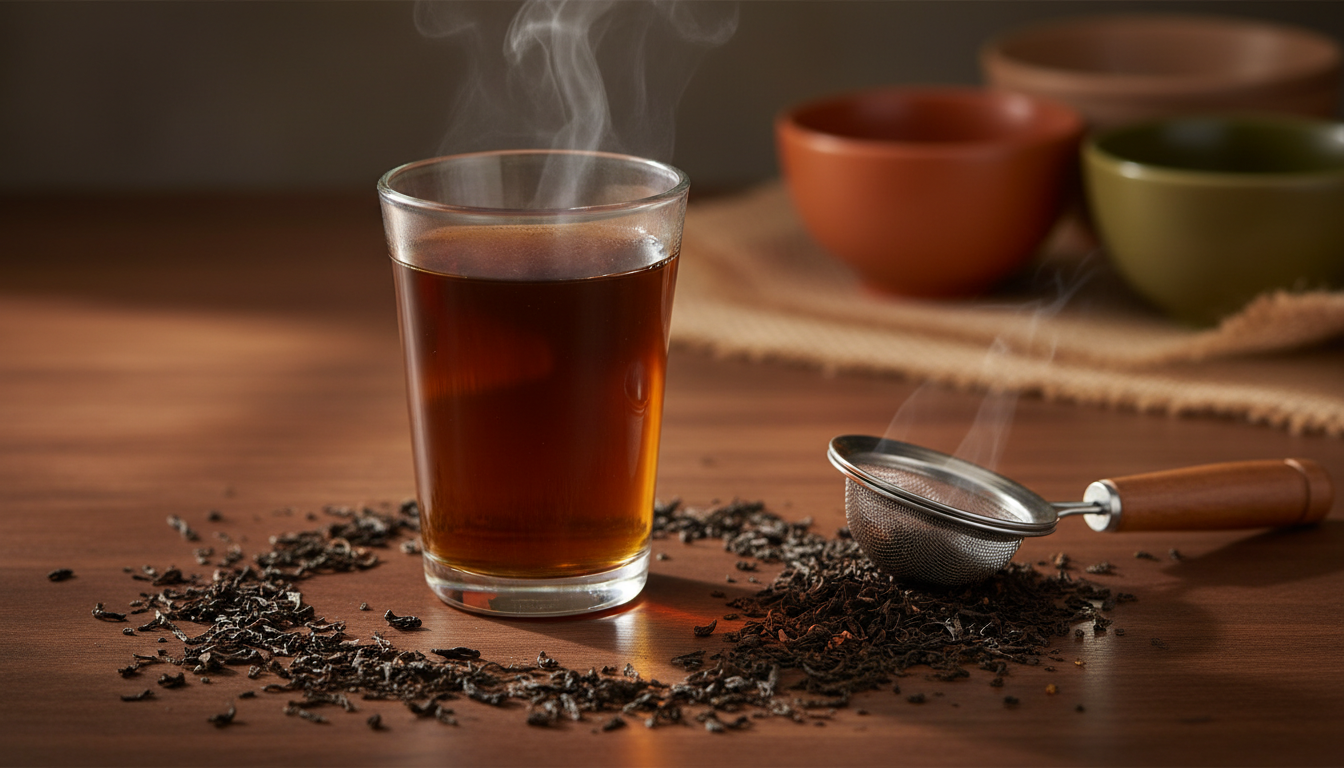

Black Tea: Types, Processing, and How to Brew It
Black tea is fully oxidized Camellia sinensis. Compare Assam, Darjeeling, Keemun, and Ceylon varieties. Learn processing, brewing, and caffeine levels.

Spearmint For Tea
Spearmint for tea brews sweeter and milder than peppermint. Learn how to brew it, blend it, and what the hormone research actually shows.

La sagesse est le chemin vers un meilleur thé.
Recevez notre guide d'infusion gratuit : la bonne eau, la bonne température et le bon temps d'infusion pour chaque thé de notre catalogue. Vous êtes aussi informé en premier des nouvelles récoltes.
Pas de spam. Désinscription à tout moment.
Consultez votre boîte mail.
Le guide est en route.