













Meilleures tisanes du soir : guide complet
Beaucoup de gens se tournent vers le thé quand la journée a été longue, et il y a une raison à cela. Pas le café, pas l'eau, pas le jus de fruits : le thé. Tenir une tasse chaude entre ses mains, respirer la vapeur, prendre la première gorgée lente : quelque chose s'opère que les autres boissons ne reproduisent pas.
Ce n'est pas de la mystique. C'est une combinaison de composés bioactifs, d'expérience sensorielle et de gestes répétés, que les buveurs de thé comprennent intuitivement depuis des siècles et que la recherche commence à étudier plus formellement.

Chez Valley of Tea, nous sourçons et goûtons des thés depuis plus de quinze ans. Ce guide s'appuie sur cette expérience. Il couvre les tisanes du soir à connaître : quelles plantes ont la plus forte association traditionnelle avec la fin de journée, comment bien infuser chacune d'elles, et comment construire une habitude du soir autour d'elles. Pas de promesses exagérées ici, seulement ce que dit la tradition, ce que rapportent les buveurs de thé, et ce qui a du sens en pratique.
Pourquoi le thé du soir a cette réputation
Trois éléments agissent ensemble quand on boit un thé du soir : les composés du thé lui-même, la chaleur du liquide, et le geste de le préparer et de le boire.
La L-théanine, un acide aminé propre au thé
La L-théanine est un acide aminé que l'on trouve presque exclusivement dans la plante Camellia sinensis, celle des vrais thés : vert, noir, blanc et oolong. Elle traverse la barrière hémato-encéphalique et a été étudiée pour son rôle dans l'activité des ondes alpha du cerveau, un type d'onde associé à un état d'éveil posé. Les buveurs de thé décrivent souvent cette sensation comme une « concentration posée » : présents et lucides, sans la nervosité que peut provoquer le café.
La teneur en L-théanine varie selon le type de thé. Les thés cultivés à l'ombre comme le matcha et le Gyokuro en contiennent le plus, car l'ombrage augmente la production d'acides aminés dans les feuilles. Une tasse standard de thé vert contient environ 20 à 30 milligrammes de L-théanine. Un bol de matcha peut en contenir nettement plus, selon le grade et la préparation.

Les tisanes (camomille, lavande, mélisse, et les autres plantes présentées plus bas) ne contiennent pas de L-théanine, car elles ne proviennent pas de la plante Camellia sinensis. Leur réputation du soir repose sur des composés entièrement différents.
La chaleur et son effet sur le corps
Boire un liquide chaud a un effet physiologique mesurable. La chaleur favorise la vasodilatation périphérique : les vaisseaux sanguins proches de la surface de la peau se dilatent. De nombreux buveurs de thé rapportent que la chaleur elle-même contribue à cette sensation du soir, indépendamment des composés présents dans la tasse. Cela correspond à ce que l'on sait de la réaction du corps à une chaleur douce.
L'effet de la préparation
Préparer le thé n'est pas instantané. On chauffe l'eau, on mesure les feuilles ou les fleurs, on laisse infuser un temps précis, on verse, puis on attend que la tasse refroidisse assez pour être bue. Cette pause imposée, même de cinq minutes seulement, interrompt le rythme dans lequel on se trouvait.
Les psychologues qui étudient la gestion de la charge mentale notent que de petites habitudes structurées peuvent servir de points de transition entre deux états d'esprit. La préparation du thé s'inscrit naturellement dans ce schéma.

Les meilleures tisanes du soir
Camomille
La camomille est la tisane du soir la plus consommée au monde, et celle à laquelle la plupart des gens pensent en premier. Elle est fabriquée à partir des fleurs séchées de Matricaria chamomilla (camomille allemande), qui contiennent de l'apigénine, un flavonoïde qui intéresse la recherche pour son interaction avec certains récepteurs du cerveau. Les buveurs de thé se tournent vers la camomille au coucher depuis des siècles, dans pratiquement toutes les cultures européennes.
Nous sourçons notre camomille allemande en Égypte et en Croatie. Les deux origines se ressemblent sans être identiques : la camomille croate est un peu plus sucrée, tandis que l'égyptienne est plus terreuse. Les deux offrent la base pomme-fleur douce que l'on attend, avec une finale miel-foin. Elle est naturellement sans caféine.
Comment infuser : Utilisez une à deux cuillères à soupe de fleurs séchées entières par tasse (250 ml). Versez de l'eau fraîchement bouillie (95 degrés Celsius) sur les fleurs et laissez infuser cinq à sept minutes, tasse couverte pour retenir les huiles volatiles. Une infusion plus longue révèle plus de profondeur : la camomille est indulgente et devient rarement amère.
Lavande
La tisane de lavande est faite à partir des boutons séchés de Lavandula angustifolia. Les composés aromatiques, linalol et acétate de linalyle, donnent à la lavande son parfum caractéristique, et ce sont aussi les composés les plus étudiés en aromathérapie. Beaucoup de buveurs de thé trouvent que l'arôme, à lui seul, change déjà l'ambiance avant même la première gorgée.

Le goût est intensément floral et légèrement parfumé. La lavande est une plante puissante : un peu suffit largement. En excès, elle devient savonneuse et envahissante.
Comment infuser : Utilisez une à deux cuillères à café de boutons de lavande séchés par tasse. Versez de l'eau à environ 95 degrés Celsius et laissez infuser quatre à cinq minutes. Goûtez à quatre minutes : la lavande s'intensifie vite, et les préférences varient beaucoup sur l'intensité florale souhaitée. Beaucoup préfèrent la lavande mélangée à la camomille ou à la mélisse plutôt que seule.
Mélisse
La mélisse (Melissa officinalis) appartient à la famille de la menthe, avec un parfum citronné vif qui la distingue immédiatement des autres plantes du soir. Elle est utilisée dans la tradition herboriste européenne depuis au moins le Moyen Âge, où on la trouvait dans les jardins des monastères aux côtés de la camomille et de la valériane. Les moines carmes l'incluaient dans leur célèbre eau de mélisse des Carmes, une préparation qui a traversé les siècles.
Les buveurs de thé décrivent la mélisse comme à la fois vive et douce, une note plus légère et plus rafraîchissante que les plantes plus lourdes de cette liste.

Comment infuser : Utilisez une cuillère à soupe de feuilles de mélisse séchées par tasse, ou une petite poignée de feuilles fraîches si vous la cultivez vous-même. Versez de l'eau à 95 degrés Celsius et laissez infuser cinq à sept minutes. La mélisse fait aussi un excellent thé glacé : infusez-la à froid toute une nuit au réfrigérateur pour un résultat net et citronné.
Fleur de la passion
La tisane de fleur de la passion (Passiflora incarnata) est moins connue que la camomille, mais elle a une longue histoire dans la pratique herboriste traditionnelle, en particulier dans les Amériques, où la plante est native. Les peuples autochtones du sud-est des États-Unis utilisaient largement des préparations de fleur de la passion. Les herboristes européens l'ont adoptée après le contact avec le Nouveau Monde, et elle est restée en usage continu depuis.
La saveur est douce et légèrement herbacée, avec une pointe de sucrosité. C'est l'une des plantes du soir au goût le plus neutre, ce qui en fait un ajout facile dans les mélanges.
Comment infuser : Utilisez une à deux cuillères à café de fleur de la passion séchée par tasse. Versez de l'eau bouillante et laissez infuser huit à dix minutes : la fleur de la passion demande une extraction plus longue que la plupart des tisanes. La tisane obtenue est claire de couleur et douce en goût.

Racine de valériane
La valériane (Valeriana officinalis) est la plante au goût le plus marqué de cette liste, et celle dont les racines dans la médecine populaire européenne sont les plus profondes, notamment le soir. Les Grecs anciens en parlaient déjà. Hippocrate en décrivait les propriétés. Elle a été utilisée si largement pendant les deux guerres mondiales comme tonique nerveux que la demande a dépassé l'offre.
Voici la vérité toute simple sur la valériane : elle n'a pas bon goût. La saveur est terreuse, tenace et un peu particulière, décrite charitablement comme « boisée » et moins charitablement comme rappelant de vieilles chaussettes. L'odeur est encore plus marquée. La plupart des buveurs de thé expérimentés utilisent la valériane en mélange plutôt que seule, associée à des plantes plus douces qui masquent son goût.
Comment infuser : Utilisez une cuillère à café de racine de valériane séchée par tasse. Versez de l'eau bouillante et laissez infuser dix à quinze minutes. La racine de valériane est dense et boisée : elle a besoin de temps et de chaleur complète pour bien s'extraire. Ajouter du miel, de la camomille ou de la menthe poivrée à la tasse peut nettement améliorer le résultat.
Rooibos
Le rooibos (Aspalathus linearis) n'est pas traditionnellement classé parmi les plantes du soir ci-dessus : c'est une tisane sud-africaine sans caféine, avec sa propre identité. Mais il mérite une place dans ce guide, car de nombreux buveurs de thé en font leur thé du soir par défaut. Il a du corps, de la profondeur et une douceur naturelle qui satisfont d'une manière que les tisanes plus légères n'offrent pas toujours.

Notre rooibos vert a un goût chaud et légèrement sucré, avec des notes de vanille, de caramel et une douceur noisetée discrète. Il a assez de structure pour accepter le lait si on le souhaite, ce qui en fait une alternative viable au thé noir en soirée, quand la caféine n'est pas envisageable.
Comment infuser : Utilisez une à deux cuillères à café de rooibos par tasse. Versez de l'eau bouillante et laissez infuser cinq à sept minutes. Le rooibos est quasiment impossible à sur-infuser : même à dix ou quinze minutes, il ne devient pas amer. Ce qui en fait un choix idéal pour une infusion distraite en soirée.
Instaurer une habitude de thé du soir
Les tisanes ci-dessus fonctionnent mieux lorsqu'elles font partie d'une transition volontaire vers la soirée, plutôt qu'une tasse prise au passage. Ma propre version est simple : je trouve mon coin préféré, un fauteuil confortable avec vue sur le jardin, je mets de la musique, et je prends le temps avec ma tasse. Pour les soirées, je choisis quelque chose de peu caféiné. Le Kukicha est l'un de mes préférés, fait principalement de tiges, très peu de caféine, une saveur douce et riche sans amertume.
Voici un cadre pratique pour construire le vôtre.

Fixez un horaire régulier. Choisissez un moment de la soirée, après le dîner, après avoir éteint les écrans, une heure avant de se coucher, et faites-en votre heure du thé. La régularité compte plus que l'heure précise. Le corps finit par associer cette habitude à la transition vers la fin de journée.
Ralentissez l'infusion. Utilisez du thé en vrac ou des fleurs séchées entières plutôt que des sachets. Mesurez les plantes. Regardez l'eau chauffer. Versez lentement. Il ne s'agit pas d'être précieux : il s'agit d'allonger la pause. Les cinq à dix minutes d'infusion active font partie du moment recherché, pas seulement un prélude à celui-ci.
Réduisez les stimulations pendant l'infusion. Mettez le téléphone dans une autre pièce. Éteignez la télévision. Le temps d'infusion est une fenêtre naturelle de silence : lire, s'asseoir, ne rien regarder de particulier. La remplir de davantage de stimulation va à l'encontre du but recherché.
Buvez sans rien faire d'autre. Asseyez-vous avec la tasse. Remarquez l'arôme, la chaleur, la saveur. C'est la forme la plus simple d'attention portée au moment présent, et cela fonctionne parce que l'expérience sensorielle du thé est réellement engageante si on la laisse l'être.

Mélanges de tisanes du soir à essayer
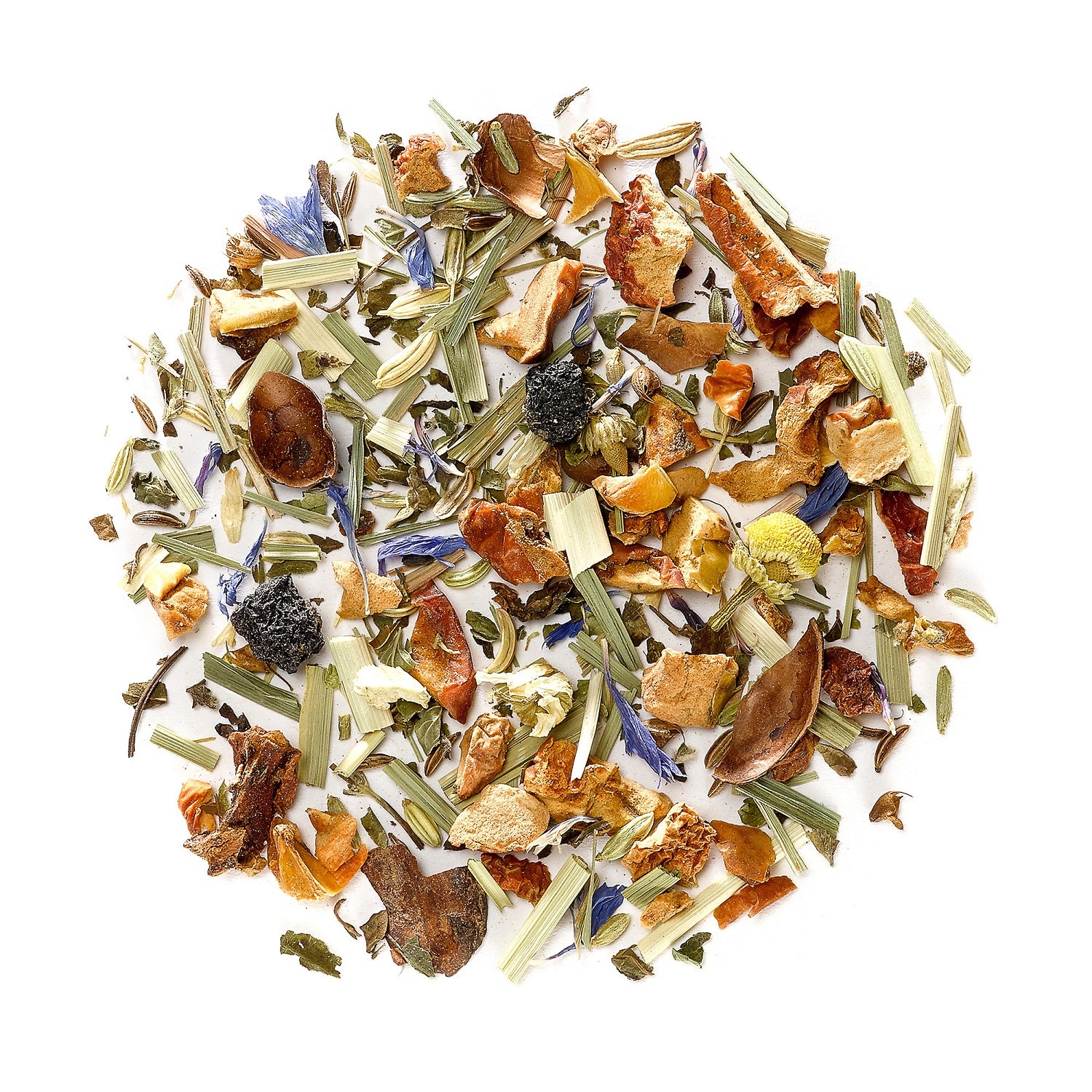
Les tisanes à base d'une seule plante ont leur place, mais le mélange permet d'équilibrer la saveur et de combiner les propriétés traditionnelles de différentes plantes. Quelques associations qui fonctionnent bien :
Camomille et lavande. L'association classique. La camomille apporte la base sucrée et pomme, tandis que la lavande ajoute une profondeur florale. Utilisez un ratio de 3 pour 1 (camomille pour lavande) pour éviter que la lavande ne domine.
Mélisse et fleur de la passion. Un mélange plus léger et rafraîchissant. La vivacité citronnée de la mélisse relève la légère note herbacée de la fleur de la passion. Des parts égales fonctionnent bien ici.
Camomille, valériane et menthe poivrée. Pour les soirs où l'on veut quelque chose de plus marqué. La menthe poivrée et la camomille masquent le goût particulier de la valériane, tandis que le mélange réunit trois plantes à la longue histoire traditionnelle en fin de journée. Utilisez deux parts de camomille, une part de menthe poivrée et une demi-part de valériane.

Rooibos et camomille. Combine le corps et la douceur du rooibos à la délicatesse florale de la camomille. Le résultat est plus riche que chaque thé pris séparément, assez satisfaisant pour remplacer un thé noir après le dîner.
Ce qu'il vaut mieux éviter en soirée
Si vous buvez du thé spécifiquement pour ralentir en fin de journée, ce que vous laissez hors de la tasse compte autant que ce que vous y mettez.
La caféine est le point évident. Les vrais thés, vert, noir, blanc, oolong, pu-erh, contiennent tous de la caféine. La quantité varie (un thé blanc léger en contient moins qu'un thé noir corsé), mais aucun n'en est totalement dépourvu. La sensibilité varie énormément d'une personne à l'autre.
Certaines personnes peuvent boire du thé vert à 20 h et dormir sans problème. D'autres ressentent encore les effets d'une caféine prise à 14 h. Connaissez votre propre seuil et respectez-le.
Le matcha mérite une mention spéciale. Il contient à la fois de la caféine et de la L-théanine, ce qui crée un état distinctif, éveillé et posé à la fois, apprécié par beaucoup en journée. En soirée, en revanche, sa teneur en caféine, plus élevée par portion que la plupart des autres thés, en fait un choix peu adapté pour la plupart des gens.
Le maté n'est pas un thé du soir. Il contient de la caféine (parfois commercialisée sous le nom de « matéine », qui est la même molécule) et est traditionnellement consommé comme boisson énergisante. Son effet stimulant est réel et bien documenté.
Attention à la caféine cachée dans les mélanges. Certains mélanges commerciaux « du soir » incluent des feuilles de thé vert ou noir aux côtés d'ingrédients végétaux. Lisez la liste des ingrédients. Si Camellia sinensis y figure sous quelque forme que ce soit, le mélange contient de la caféine.
Trouver sa tisane du soir
Il n'existe pas une tisane du soir universelle : il n'y a que celle qui convient à chacun. Commencez par la camomille si vous découvrez cette catégorie : c'est la plus accessible et la plus indulgente à infuser. Explorez la lavande ou la mélisse si vous cherchez plus de complexité aromatique. Essayez des mélanges à la valériane si vous cherchez une plante à la plus longue réputation traditionnelle en fin de journée. Utilisez le rooibos quand vous cherchez du corps et de la douceur sans caféine.
Ce que rapportent les buveurs de thé, à travers les cultures et les siècles, c'est que le geste compte autant que les ingrédients. Une tasse bien infusée de n'importe quelle plante du soir, bue lentement et sans distraction, apporte quelque chose qu'aucune gélule ne reproduit. La chaleur, l'arôme, la pause : ce ne sont pas des effets secondaires. C'est là tout l'intérêt.
Articles similaires
Laisser un commentaire
Les commentaires sont approuvés avant leur publication.
Voir l'article entier
The Complete Guide to Drinking Tea
What tea is, how the main types differ in the cup, and how to brew each one properly. Water temperature, steeping times, storage and how to get more than one cup from your leaves.
Voir l'article entier

Black Tea: Types, Processing, and How to Brew It
Black tea is fully oxidized Camellia sinensis. Compare Assam, Darjeeling, Keemun, and Ceylon varieties. Learn processing, brewing, and caffeine levels.
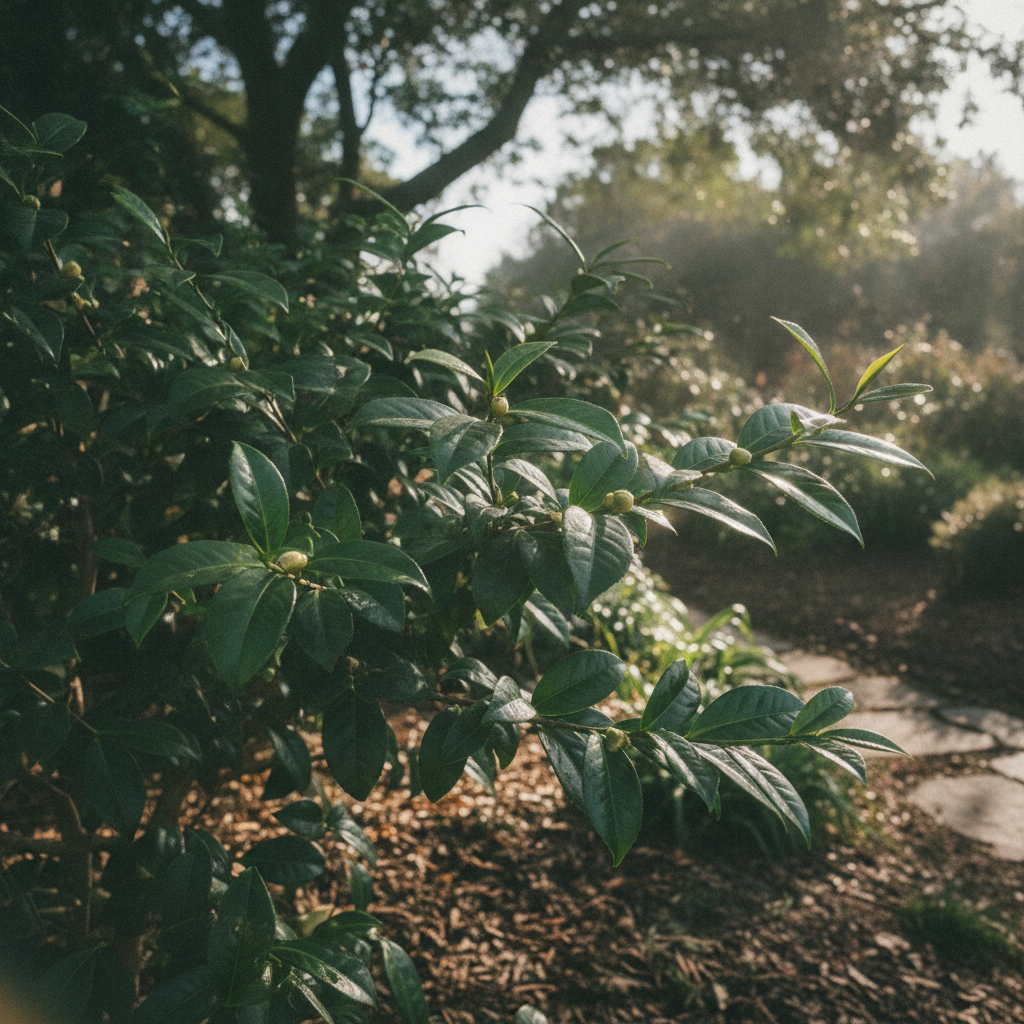

How To Grow Black Tea
Learn how to grow black tea at home: soil, climate, and the five processing steps from fresh leaf to a finished cup of black tea.

La sagesse est le chemin vers un meilleur thé.
Recevez notre guide d'infusion gratuit : la bonne eau, la bonne température et le bon temps d'infusion pour chaque thé de notre catalogue. Vous êtes aussi informé en premier des nouvelles récoltes.
Pas de spam. Désinscription à tout moment.
Consultez votre boîte mail.
Le guide est en route.