













Comment est fabriqué le thé : guide du procédé
Chaque thé — vert, noir, blanc, oolong, pu-erh — commence par une feuille fraîche issue de la même plante : Camellia sinensis. Les différences entre les types de thé sont créées entièrement par ce qui se passe après la cueillette. La séquence de flétrissage, de chauffe, de roulage, d'oxydation et de séchage détermine si un lot de feuilles fraîches devient un thé blanc délicat ou un thé noir corsé. Une fois le procédé compris, on commence à goûter ces décisions dans la tasse.
Le théier
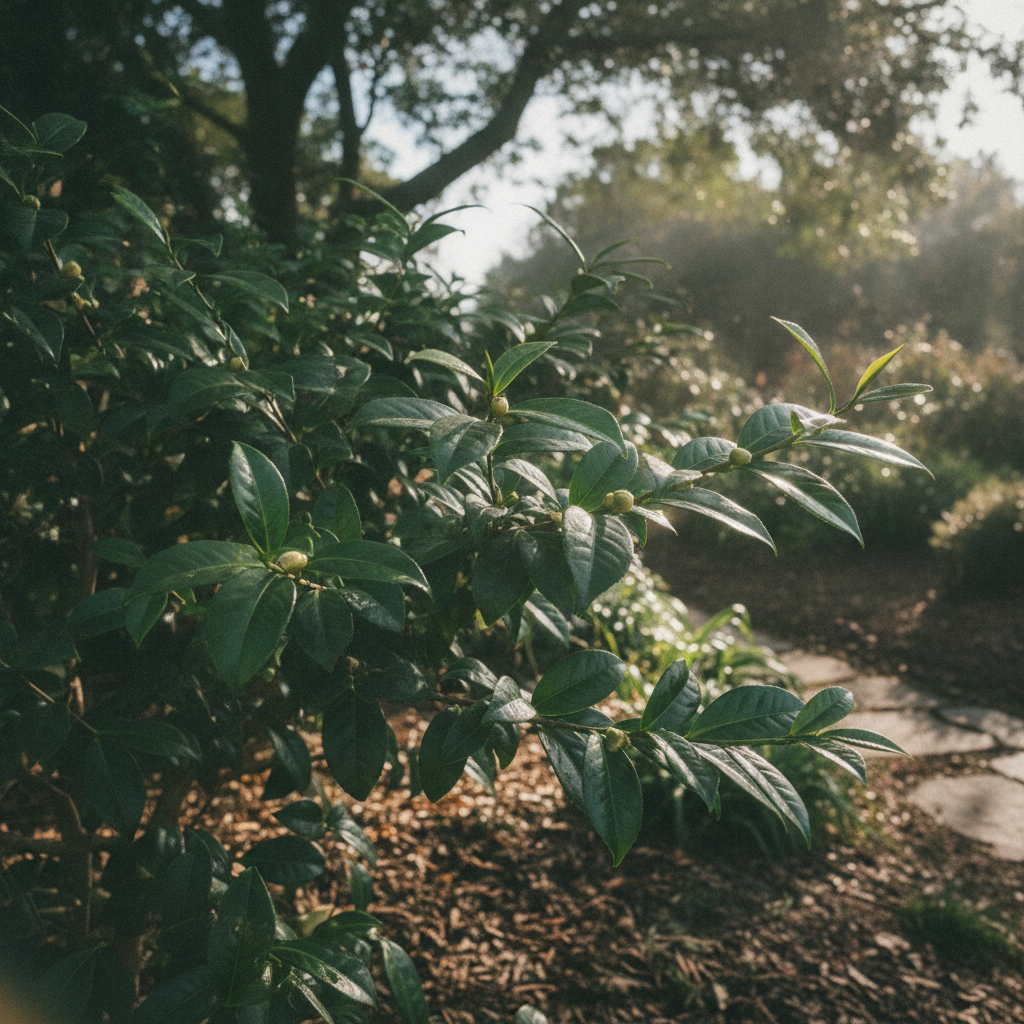
Camellia sinensis est un arbuste à feuilles persistantes originaire d'Asie de l'Est. Deux variétés principales sont cultivées dans le monde.
Camellia sinensis var. sinensis est la variété chinoise. Ses feuilles plus petites sont plus résistantes au froid et mieux adaptées à la production de thés verts, blancs et oolongs. Elle est cultivée en Chine, à Taïwan, au Japon, et en altitude dans des pays comme le Népal et l'Inde, notamment dans la région du Darjeeling.
Camellia sinensis var. assamica est la variété d'Assam. Ses feuilles plus larges sont plus vigoureuses et plus riches en tanins. Elle est principalement utilisée pour la production de thé noir et cultivée en Assam, au Sri Lanka, au Kenya et dans d'autres régions tropicales.
Les théiers sont maintenus en arbustes à hauteur de taille par une taille régulière, mais laissés libres, ils peuvent atteindre 15 mètres de haut. Les thés haut de gamme proviennent de la pousse la plus jeune — le bourgeon et les deux premières feuilles à l'extrémité de chaque rameau. Ces jeunes feuilles sont vert vif, légèrement duveteuses, et gorgées des acides aminés et des composés volatils qui rendent un grand thé possible.
Étape 1 : la cueillette
La cueillette détermine la qualité dès le départ. La norme « deux feuilles et un bourgeon » est la référence du thé haut de gamme. Le bourgeon est couvert d'un fin duvet blanc. La première feuille est tendre, légèrement enroulée ; la deuxième, un peu plus large. Des feuilles plus grandes et plus grossières donnent un thé plus rustique et moins complexe.
La cueillette manuelle permet une récolte sélective, ne prélevant que la pousse la plus jeune et la plus tendre. La récolte mécanique est plus rapide mais moins discriminante — elle ramasse tout à une hauteur uniforme, y compris les feuilles plus âgées et les tiges. Pour un thé haut de gamme, rien ne remplace des mains expertes.
La saison compte aussi. Les récoltes de printemps (première récolte) produisent les thés les plus délicats et les plus complexes, car la plante a stocké de l'énergie pendant l'hiver et la déverse dans la nouvelle pousse. Les récoltes d'été sont plus corsées. Les récoltes d'automne sont plus douces.
Étape 2 : le flétrissage
Les feuilles de thé fraîches contiennent environ 75 % d'eau. Le flétrissage réduit ce taux à 55-65 % en étalant les feuilles sur des claies ou des tables et en laissant l'humidité s'évaporer, soit naturellement (en extérieur ou dans des pièces bien ventilées), soit à l'aide de ventilateurs et d'air chaud. À mesure que l'humidité s'échappe, les feuilles s'affaissent et perdent leur cassant — on peut plier une feuille correctement flétrie sans qu'elle ne se brise.
Physiquement, le flétrissage rend les feuilles assez souples pour être roulées sans se déchirer. Chimiquement, il fait bien plus. À mesure que les cellules se déshydratent, la chlorophylle commence à se dégrader et l'odeur herbeuse et crue laisse place à quelque chose de plus floral, presque miellé selon les variétés. Les protéines se décomposent en acides aminés libres. L'activité enzymatique augmente. Les composés aromatiques jusque-là enfermés dans la structure cellulaire commencent à se concentrer et à se transformer.
La perte de poids est significative et mesurable. Les feuilles perdent typiquement 30 à 45 % de leur poids frais pendant le flétrissage. Les producteurs surveillent cela de près car le degré de flétrissage influence tout ce qui suit — la façon dont la feuille se roule, la vitesse à laquelle elle s'oxyde, et les composés aromatiques qui survivent jusqu'à la tasse finale.
Le thé blanc peut être flétri pendant 24 à 72 heures, ce qui constitue l'essentiel de sa transformation. Le flétrissage du thé noir prend généralement 12 à 18 heures, après quoi les feuilles dégagent une odeur légèrement sucrée et ont la texture d'un tissu doux et humide.
Étape 3 : la fixation (shaqing)
La fixation arrête l'oxydation en désactivant les enzymes de la feuille par la chaleur. Cette étape définit le thé vert — elle intervient immédiatement après le flétrissage (ou même à sa place pour certains thés verts japonais). L'objectif est simple : appliquer assez de chaleur, assez vite, pour dénaturer l'enzyme polyphénol oxydase avant qu'elle ne convertisse les catéchines en composés plus foncés qui colorent le thé noir.
La méthode utilisée ici a un effet durable sur la saveur. Trois approches principales existent.
La cuisson au wok est la méthode chinoise. Les feuilles sont continuellement retournées dans un wok chaud ou un tambour rotatif à 200-300°C. La chaleur sèche crée des notes grillées et torréfiées aux côtés de la base végétale. Pensez à la noisette caractéristique d'un bon Longjing — c'est la cuisson au wok. Les feuilles ressortent légèrement aplaties, avec parfois de petites taches brunes là où elles ont touché le métal.
La cuisson à la vapeur est la méthode japonaise. Les feuilles traversent une chambre de vapeur à 100°C pendant 30 à 120 secondes. La vapeur est plus douce et préserve davantage de chlorophylle, ce qui donne aux thés verts japonais leur couleur vive et leur caractère intensément végétal, proche de l'algue. Un sencha cuit 40 secondes et un autre cuit 90 secondes auront un goût sensiblement différent, avant même toute autre étape de transformation.
Le séchage au four ou à l'air chaud est utilisé moins couramment, principalement pour certains thés chinois et pour le thé blanc. Des températures plus basses sur des durées plus longues créent une fixation plus douce, préservant les notes florales délicates sans ajouter de caractère torréfié.
Le thé noir saute entièrement cette étape, ou la retarde jusqu'après l'oxydation complète. Le thé oolong l'applique en cours d'oxydation, arrêtant le processus au point choisi.
Étape 4 : le roulage
Le roulage façonne la feuille et brise les parois cellulaires, ce qui libère les sucs et les enzymes qui déclenchent l'oxydation et le développement de la saveur. Le degré de dommage cellulaire contrôle la vitesse de l'oxydation — plus les dégâts sont importants, plus l'oxydation est rapide et intense.
Le roulage manuel traditionnel est un travail lent et expert. Le transformateur roule de petits lots de feuilles sur une natte de bambou ou une surface plane avec les paumes, en appliquant une pression constante dans une direction régulière. Cela crée les spirales serrées caractéristiques des thés roulés à la main. Les feuilles sont chaudes sous la friction, et la pièce se remplit de l'odeur vive des cellules brisées qui libèrent leur contenu.
Les usines modernes utilisent des machines à rouler, qui reproduisent le mouvement mécaniquement. Une plaque de pression rotative se déplace en orbite excentrique au-dessus d'une base nervurée. La surface nervurée déchire et tord les feuilles pendant que la plaque de pression contrôle la force appliquée. Vitesse et pression sont réglables — un roulage plus doux pour les thés délicats, un roulage plus ferme pour les thés noirs corsés qui nécessitent une rupture cellulaire complète.
Pour le thé vert, le roulage après fixation ne fait que façonner la feuille — plate, enroulée ou en pastille — sans déclencher d'oxydation supplémentaire, puisque les enzymes sont déjà désactivées. Pour les thés noirs et oolongs, le roulage avant ou pendant l'oxydation est essentiel, car les dommages cellulaires sont ce qui permet au processus d'oxydation de se poursuivre.
CTC contre transformation orthodoxe
La transformation orthodoxe — la séquence étape par étape décrite ci-dessus — produit les qualités en feuille entière et en feuille brisée que connaissent la plupart des acheteurs de thé spécialisé. Les feuilles conservent une certaine intégrité structurelle après roulage, et le résultat est un thé riche en complexité, en saveur étagée, et capable de plusieurs infusions.
CTC signifie Cut, Tear, Curl (couper, déchirer, enrouler). Développé dans les années 1930 et largement adopté en Assam et au Kenya à partir des années 1950, le CTC utilise une machine à deux rouleaux contrarotatifs recouverts de dents acérées. Les feuilles passent entre eux et sont simultanément coupées, déchirées et enroulées en petites pastilles uniformes en un seul passage. La structure cellulaire est complètement détruite, et non simplement brisée avec douceur.
Le résultat est un thé qui s'oxyde très rapidement (en minutes plutôt qu'en heures), produit une liqueur très forte et uniforme, et infuse presque instantanément. Les thés CTC sont conçus pour les sachets et pour les consommateurs qui veulent une infusion constante et corsée — assez forte pour supporter le lait, prévisible d'une tasse à l'autre. Il n'y a rien d'inférieur dans le CTC en tant que catégorie de produit ; il remplit bien sa fonction. Mais c'est une philosophie de fabrication fondamentalement différente de l'orthodoxe. Ces thés ne sont pas interchangeables, et leurs profils de saveur n'ont presque rien en commun.
Les thés noirs de spécialité que nous sélectionnons — qu'il s'agisse d'un Darjeeling muscaté, d'un Assam artisanal ou d'un Keemun de Qimen — sont tous transformés selon la méthode orthodoxe. C'est ce qui leur donne la structure et la nuance qui les rendent dignes d'être bus sans lait.
Étape 5 : l'oxydation
L'oxydation est la réaction chimique entre les enzymes de la feuille et l'oxygène de l'air. C'est le processus le plus déterminant pour définir le type de thé, et sa maîtrise est la compétence centrale de la fabrication du thé noir.
Après le roulage, la masse de feuilles brisées est étalée en fines couches dans la salle d'oxydation. Température et humidité y sont soigneusement gérées. Les conditions idéales se situent généralement entre 22 et 26°C avec une humidité supérieure à 90 %. Trop chaud, et l'oxydation s'emballe — le thé devient âpre et mince. Trop frais, et elle stagne, produisant des résultats inégaux. Les feuilles doivent respirer sans se dessécher, aussi les salles d'oxydation sont-elles souvent brumisées, et la feuille n'est étalée que sur 5 à 10 cm de profondeur pour permettre la circulation de l'air.
Le changement de couleur est visible en temps réel. Les feuilles fraîchement roulées sont vert vif et sentent une odeur végétale marquée. Après 30 minutes, elles commencent à roussir sur les bords. Après une heure, la surface est brun rougeâtre. Après deux heures, la masse est brun-orangé foncé de part en part, et l'odeur est passée du vert et herbeux à quelque chose de plus profond : malté, fruité, floral selon la variété. Le transformateur vérifie périodiquement, portant une poignée à son nez, jugeant à la couleur et à l'odeur quand arrêter l'oxydation.
Thé blanc : 5-10 % d'oxydation (naturelle, non contrôlée)
Thé vert : 0-5 % d'oxydation (empêchée par la fixation)
Thé oolong : 15-85 % d'oxydation (soigneusement contrôlée et arrêtée au niveau souhaité)
Thé noir : 90-100 % d'oxydation (entièrement oxydé)
Pendant l'oxydation, les catéchines de la feuille se convertissent en théaflavines et théarubigines — des composés qui donnent au thé noir sa couleur foncée, sa saveur maltée et son corps. Plus l'oxydation est longue et complète, plus le thé est foncé et corsé.
Étape 6 : le séchage et le triage
Le séchage cuit le thé pour réduire l'humidité à 2-3 %, arrêtant tous les processus chimiques et stabilisant la feuille pour le stockage et le transport. Cette étape doit être exécutée correctement — un thé sous-séché moisit en quelques semaines ; un thé sur-séché perd son parfum et devient plat et cartonné.
Les méthodes varient. La plupart des usines modernes utilisent des séchoirs à air chaud : un tapis roulant transporte le thé à travers un tunnel à 90-120°C pendant 20 à 30 minutes. Le séchage au wok est utilisé pour les thés chinois premium, apportant une légère note torréfiée en plus de l'effet de séchage. Le séchage au soleil est utilisé pour le maocha du pu-erh — la chaleur lente et douce préserve l'environnement propice aux micro-organismes qui rend possible la fermentation future.
Certains oolongs subissent une torréfaction supplémentaire après le séchage — un processus séparé, distinct de l'étape de séchage initiale. Les feuilles retournent dans un contenant chauffé ou au-dessus de charbon de bois, à des températures plus basses (80-120°C), pendant des heures ou des jours, ce qui ajoute un caractère grillé, caramélisé ou charbonné. Un Dong Ding fortement torréfié et une version non torréfiée du même thé ont un goût entièrement différent.
Après le séchage vient le triage. Le thé séché est tamisé et trié par taille de particule à l'aide d'une série de tamis à mailles. Les qualités décrivent la forme physique de la feuille : feuille entière, brisée, fannings, poussière — de la plus grande à la plus petite. Dans les thés noirs, le triage est souvent exprimé par des codes de lettres : OP (Orange Pekoe) pour la feuille entière, BOP (Broken Orange Pekoe) pour la feuille brisée, etc. Ces qualités ne disent rien de la saveur — elles décrivent uniquement la coupe et la taille de la feuille. Une qualité Dust (poussière) d'un Darjeeling de domaine unique peut surpasser une qualité OP issue d'un assemblage industriel.
Cas particulier : le pu-erh
Le thé pu-erh ajoute une septième étape : la fermentation microbienne. Après le séchage au soleil qui produit la matière de base (maocha), les feuilles sont soit vieillies naturellement sur des années (sheng), soit fermentées en tas dans un processus contrôlé sur 45 à 60 jours (shou). Dans le processus shou, le maocha est empilé jusqu'à un mètre de profondeur, humidifié, recouvert de tissu, et laissé chauffer sous l'effet de l'activité microbienne. Le tas est retourné périodiquement pour gérer la température et éviter la surchauffe. C'est le seul type de thé où des micro-organismes vivants continuent de transformer la feuille après la production.
De la feuille à la tasse
Comprendre comment le thé est fabriqué change la façon dont on le goûte. Quand vous buvez un thé vert et remarquez sa vivacité végétale, vous goûtez l'effet de la fixation à la vapeur. Quand un thé vert chinois cuit au wok a une légère note de noisette, c'est le wok qui fait son œuvre. Quand un thé noir a une profondeur maltée et une liqueur rouge cuivré, c'est une oxydation complète qui s'est déroulée jusqu'à son terme dans une salle de fermentation bien gérée. Quand un oolong passe du floral au crémeux au fil de plusieurs infusions, vous expérimentez la complexité que crée l'oxydation partielle.
Chaque tasse de thé est le résultat de décisions prises à chaque étape de transformation — quand cueillir, combien de temps flétrir, faut-il cuire à la vapeur ou au wok, quelle force donner au roulage, quand arrêter l'oxydation, comment sécher et trier. Les thés de qualité sont ceux où chaque étape a été menée avec savoir-faire et intention, et où la personne qui prenait les décisions avait assez de connaissance et assez de respect pour la feuille pour savoir quand intervenir et quand la laisser suivre son cours.
Laisser un commentaire
Les commentaires sont approuvés avant leur publication.
Voir l'article entier
The Complete Guide to Drinking Tea
What tea is, how the main types differ in the cup, and how to brew each one properly. Water temperature, steeping times, storage and how to get more than one cup from your leaves.
Voir l'article entier

Black Tea: Types, Processing, and How to Brew It
Black tea is fully oxidized Camellia sinensis. Compare Assam, Darjeeling, Keemun, and Ceylon varieties. Learn processing, brewing, and caffeine levels.

How To Grow Black Tea
Learn how to grow black tea at home: soil, climate, and the five processing steps from fresh leaf to a finished cup of black tea.

La sagesse est le chemin vers un meilleur thé.
Recevez notre guide d'infusion gratuit : la bonne eau, la bonne température et le bon temps d'infusion pour chaque thé de notre catalogue. Vous êtes aussi informé en premier des nouvelles récoltes.
Pas de spam. Désinscription à tout moment.
Consultez votre boîte mail.
Le guide est en route.