












Nettle Tea: A Complete Guide
Nettle tea is one of the oldest herbal infusions in the European tradition, and one of the most underestimated. Made from the dried leaves of Urtica dioica — the stinging nettle that grows wild across Europe, Asia, and North America — it produces a deeply mineral, green-tasting cup that has more in common with a fine Japanese green tea than with most herbal tisanes. It is not flashy. It does not announce itself with the tartness of hibiscus or the perfume of chamomile. It is quiet, grounding, and surprisingly complex.
I have been sourcing and tasting herbal teas for over 15 years, and nettle is one of the herbs I keep returning to. It is a staple in traditional European herbalism, a foundational ingredient in countless blends, and a remarkably honest cup on its own — what you taste is exactly what the plant is. No processing tricks, no flavoring needed. This guide covers what nettle tea is, how the leaf and root differ, what it tastes like, how to brew it properly, and what to look for when buying it.

What Is Nettle Tea
Nettle tea is an herbal infusion — a tisane — made by steeping the dried leaves (and sometimes stems) of Urtica dioica in hot water. Like chamomile, peppermint, and rooibos, it contains no Camellia sinensis and is therefore not a "true tea" in the botanical sense. It is naturally and completely caffeine-free.
Urtica dioica is a perennial plant in the Urticaceae family. It grows throughout temperate regions of Europe, Asia, northern Africa, and North America, thriving in nitrogen-rich soils — along field edges, near old farmsteads, in woodland clearings, and anywhere soil has been disturbed and enriched. The plant can reach over a metre in height and is covered in fine, hollow hairs called trichomes. These trichomes act as tiny hypodermic needles: on contact with skin, they break and inject a cocktail of histamine, serotonin, and formic acid that produces the characteristic sting. This defense mechanism disappears entirely when the plant is dried or heated, which is why nettle tea is perfectly safe to handle and drink.
Nettle has been used as food and in folk preparations across Europe for centuries. In Germanic, Scandinavian, and Slavic traditions, nettle was among the first spring greens gathered after winter — valued as a potherb, cooked much like spinach. Its use as a tea or infusion is deeply embedded in Central and Eastern European folk practice, particularly in Germany, Austria, Poland, and the Balkans, where it remains a household staple to this day. In the British Isles, nettle soup and nettle beer have documented histories stretching back to at least the 17th century.
None of this is ancient mysticism. Nettle was used because it was abundant, free, nutritious, and versatile — a practical plant for practical people.

Nettle Leaf vs Nettle Root
Nettle leaf and nettle root are two different products with different traditional uses, and they should not be confused.
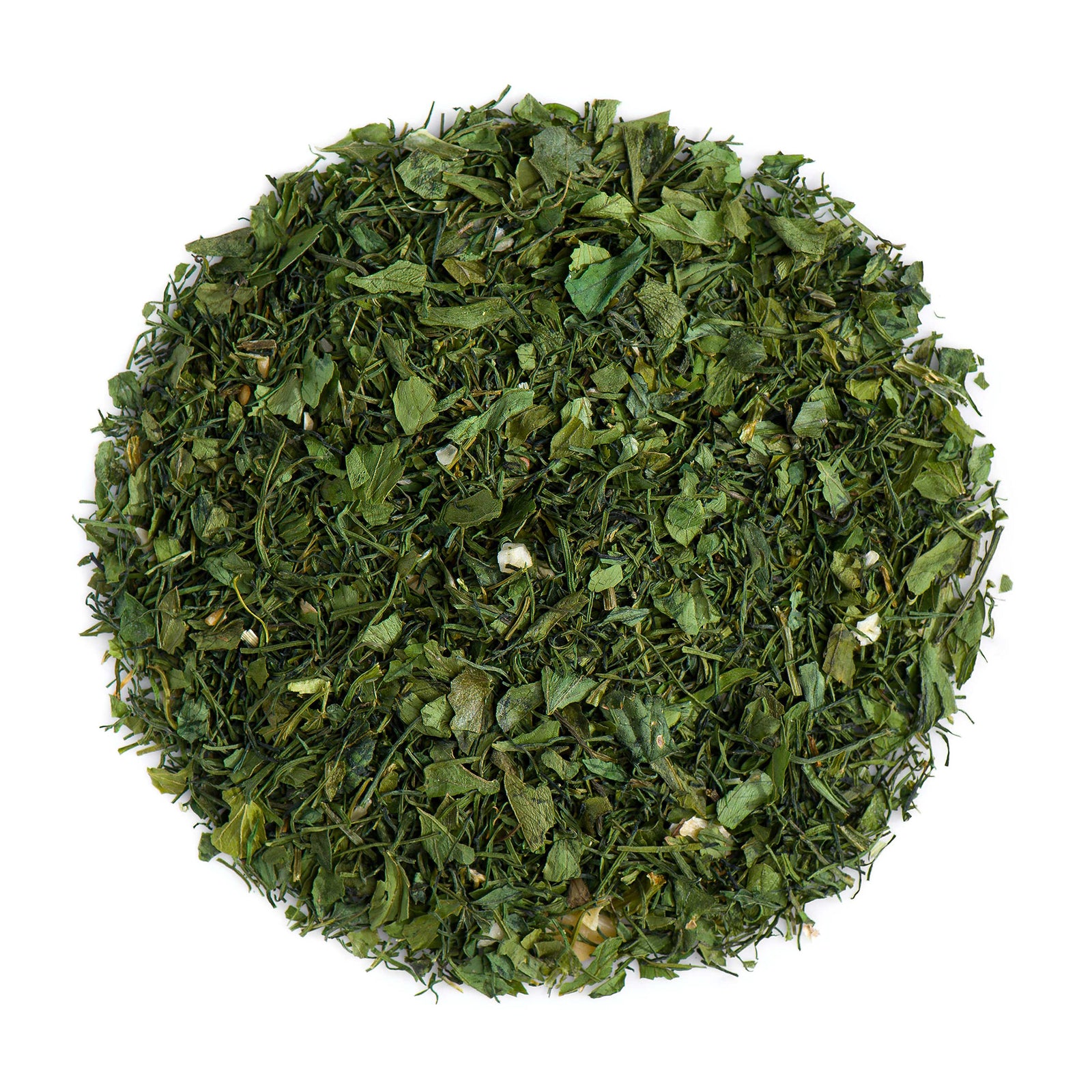
Nettle leaf is what most people mean when they say "nettle tea." The dried leaves and sometimes the upper stems are steeped in hot water to produce a green, mineral infusion. This is the part of the plant with the longest history as a daily drinking tea. Nettle leaf tea has a mild, approachable flavor and is the standard form sold by tea merchants, including us.
Nettle root is the underground rhizome of the same plant. It has a different chemical profile and a different history of use. In European herbal tradition, the root was used in preparations rather than as a pleasant daily drink. Its flavor is earthier, woodier, and less appealing as a standalone tea. Nettle root is more commonly found in capsule form or as a tincture than as a loose-leaf tea.
When buying nettle tea for drinking, look for products clearly labeled as "nettle leaf" or "Urtica dioica folium." If a product just says "nettle" without specifying, it is almost always leaf — but check the ingredients list to be sure, especially if buying from supplement-oriented brands that may blend leaf and root.

What Nettle Tea Tastes Like
Nettle tea has a flavor profile that surprises most first-time drinkers. People expecting a bland "health food" taste find something far more interesting.
The dominant impression is green and vegetal — reminiscent of steamed spinach or freshly cut hay. Behind that green note sits a pronounced mineral quality: a clean, almost briny undertone that tastes faintly of seaweed or the way rain smells on warm stone. This mineral character is nettle's signature and what sets it apart from other green-tasting herbs like lemongrass or green rooibos.
There is a mild earthiness underneath — not the deep, damp-forest earthiness of pu-erh tea, but something lighter, closer to the smell of good garden soil after rain. The body is medium — heavier than chamomile, similar to a mid-grade Sencha. There is a slight natural sweetness on the finish, especially with spring-harvested leaves.
There is no bitterness in a properly brewed cup. No astringency. No floral notes. No tartness. Nettle is savory rather than sweet or fruity, which is unusual in the herbal tea world and makes it an excellent choice for people who find most tisanes too delicate or too heavily flavored.

The color in the cup is a clear, pale to medium green — sometimes with a slight golden tint depending on the harvest and how long the leaves have been stored. Fresh-crop nettle produces a brighter, more vivid green liquor.
If you have ever tasted a mild Japanese green tea — a Bancha rather than a Gyokuro — and enjoyed that savory, mineral, umami quality, you will likely appreciate nettle tea. The flavor families overlap more than you might expect from a European weed and a Japanese tea bush.
How to Brew Nettle Tea
Nettle is a forgiving herb to brew. It tolerates a wider range of temperatures and steep times than many herbal teas without turning bitter. That said, there is still a difference between a passable cup and a good one.
Water Temperature
Use water at 95–100°C — a full or near-full boil. Unlike delicate green teas or lavender, nettle handles boiling water without developing off-flavors. The mineral and green notes extract fully at higher temperatures, and there is nothing in the leaf profile that turns harsh or soapy with heat.

Amount
Use 2 to 3 grams of dried nettle leaf per 250 ml of water. By volume, this is roughly 1 to 2 tablespoons, because dried nettle leaf is bulky and light. If you are measuring by eye rather than by scale, err toward a generous portion — nettle is not a concentrated herb, and a thin infusion loses its character.
Steep Time
Steep for 5 to 8 minutes. At 5 minutes, you get a clean, mild cup with the green and mineral notes present but restrained. At 7–8 minutes, the mineral character deepens and the body becomes fuller. Nettle does not punish you for a longer steep the way black tea or green tea can — going to 10 minutes produces a stronger cup without bitterness, though the flavor balance shifts toward the earthy end.
For a strong, traditional-style infusion, some European herbalists steep nettle for 15–20 minutes or even prepare overnight cold infusions. This produces a dark, intensely mineral brew that is more of a concentrated preparation than a pleasant drinking tea. If you are new to nettle, start at 5 minutes and adjust upward.
My own approach is less precise: I fill the teapot generously with dried leaf and keep adding hot water until there is nothing left to drink. Nettle handles repeated infusions well — each re-steep extracts a slightly different layer of the flavor, with the mineral notes holding up well across three or four pours. It is a practical herb, and it rewards being treated that way.

Iced Nettle Tea
Nettle cold-brews well. Add 3–4 grams of dried leaf to 500 ml of cold water, refrigerate for 8–12 hours, and strain. The cold extraction produces a lighter, cleaner cup with the mineral notes present but softened. A squeeze of lemon brightens the flavor considerably and adds a dimension that cold-brewed nettle responds to better than most herbs.
For a quicker iced tea, brew a double-strength hot infusion — 4–5 grams per 200 ml, steeped for 6 minutes — and pour directly over a full glass of ice.
Nettle in Blends
Nettle is one of the great blending herbs. Its mineral, green character provides body and depth without competing with louder flavors, making it an ideal base or supporting ingredient in herbal formulations.
Classic European nettle blends include:

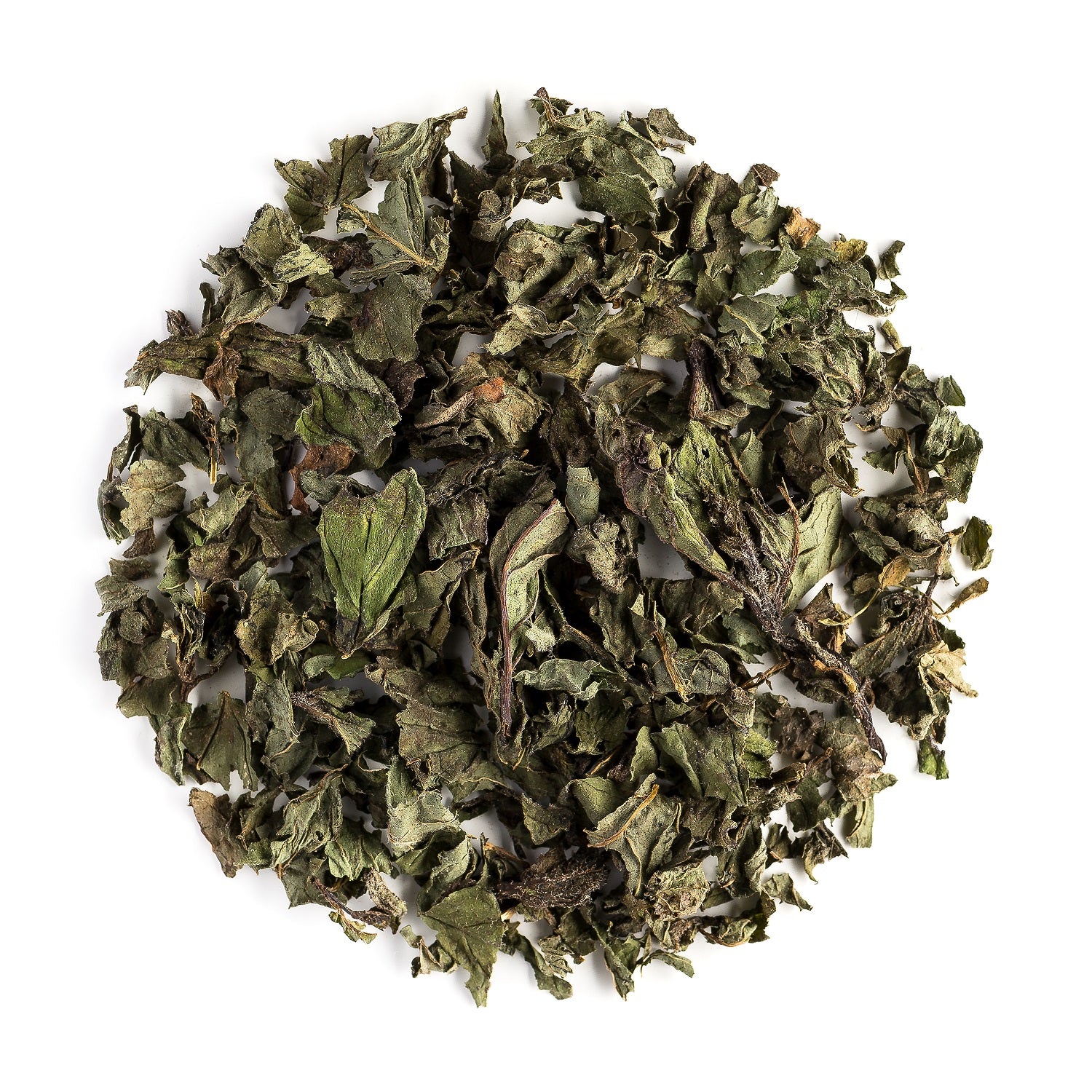
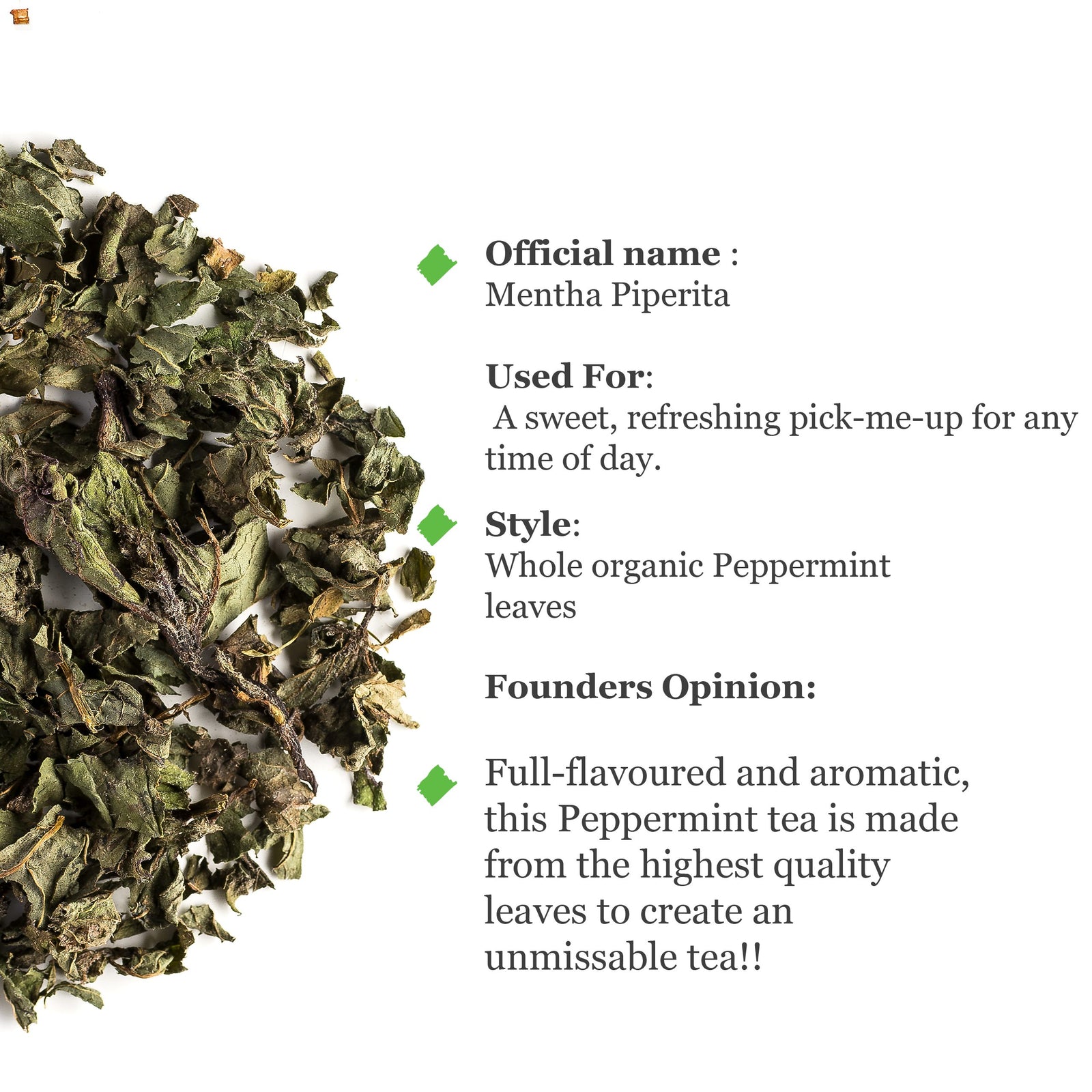
Nettle and peppermint. The most common combination in the German and Austrian tradition. Peppermint's brightness and menthol lift cut through nettle's earthy minerality, producing a balanced cup that works hot or iced. A 50/50 ratio by weight is standard, though adjusting to 60% nettle / 40% peppermint gives a more grounded cup.
Nettle and lemongrass. The citrus-forward character of lemongrass pairs naturally with nettle's green notes. This combination is popular in Scandinavian herbal blends and makes an excellent iced tea base.
Nettle, birch leaf, and dandelion. A traditional Central European spring blend — Frühjahrskur in German — that combines three foraged spring herbs. Each contributes a different mineral and green note, creating a layered, complex cup.
Nettle and green tea. Blending nettle leaf with a mild Chinese or Japanese green tea bridges the gap between herbal and true tea. The nettle adds mineral depth; the green tea adds structure and a touch of caffeine. Use a 60/40 nettle-to-green-tea ratio and brew at 80°C to accommodate the green tea.

At Valley of Tea, we use nettle in several of our herbal blends precisely because it provides a substantive base that makes the entire blend taste fuller and more complete. It is the bass note in the chord.
Caffeine Content
Nettle tea contains zero caffeine. None. This is inherent to the plant — Urtica dioica does not produce caffeine or any related stimulant compounds. Unlike decaffeinated teas, which start with caffeine and have it removed (always leaving trace amounts), nettle is caffeine-free at the molecular level.
This makes nettle tea suitable for drinking at any time of day, including the evening. It is one of the better choices for people who want a satisfying, full-bodied cup without stimulation — the savory, mineral character gives it a substance that many caffeine-free options lack.
Research on Urtica dioica confirms that the leaf is rich in flavonoids, minerals, and vitamins, and has been studied for its antioxidant and anti-inflammatory properties. A 2022 review published in Heliyon provides a thorough overview of what has been established in the literature. Read the full review on PMC (Nutritional and pharmacological importance of stinging nettle).

Foraging vs Commercial Nettle
Nettle is one of the most commonly foraged plants in Europe, and there is a long tradition of gathering your own. If you forage nettle, a few points matter.
Harvest in spring, before the plant flowers — typically April to early June depending on your latitude. Young, upper leaves from the top 10–15 cm of the plant have the best flavor and the highest concentration of the compounds that give nettle its character. Once the plant flowers and sets seed, the leaves become coarser and develop a grittier taste.
Wear thick gloves. The sting is memorable. Use scissors or a sharp knife to cut the top portion of the stem, leaves attached.
Dry the leaves out of direct sunlight in a well-ventilated space. A dehydrator set to 35–40°C works well if ambient conditions are too humid. Properly dried nettle should crumble easily and retain a vibrant green color. If the leaves turn brown or yellow during drying, airflow was insufficient or the temperature was too high.

Where you forage matters. Avoid roadsides (lead and particulate contamination), recently sprayed agricultural margins, and areas near industrial activity. Nettle is a bioaccumulator — it absorbs minerals from the soil effectively, which is part of what gives it that mineral flavor, but it also means it absorbs contaminants readily.
Commercial nettle tea from reputable suppliers offers consistency and safety. The leaf is sourced from established growing regions — Bulgaria, Poland, Albania, and Germany are major producers — where the soil is tested, the harvest is timed for optimal leaf quality, and the drying conditions are controlled. Laboratory testing for heavy metals, pesticide residues, and microbial contamination is standard practice among serious suppliers. You lose the satisfaction of foraging, but you gain reliability.
Wild-harvested commercial nettle — where the leaf is gathered from natural stands rather than cultivated fields — sits somewhere between the two: you get the flavor profile of foraged material with the safety testing and consistency of a professional supply chain. This is what we look for when sourcing. A 2022 study in Molecules covers the nutritional composition and food functional properties of stinging nettle in detail. Read the full study on PMC (Stinging Nettle: Nutritional Composition, Bioactive Compounds, and Food Functional Properties).
Buying Quality Nettle Tea
Not all dried nettle is equal. Here is what separates good nettle tea from mediocre product.
Color. Quality dried nettle leaf retains a clear, dark green color. If the leaves are predominantly brown, yellow, or grey, the material was either poorly dried, old, or harvested too late in the season. Some stem material is acceptable and unavoidable, but the ratio should be predominantly leaf.
Aroma. Open the bag and smell it. Good dried nettle smells green and faintly sweet, like dried hay with a mineral edge. It should not smell musty, stale, or like nothing at all. An absence of aroma usually means the material is old — dried nettle loses its volatile compounds within 12–18 months if not stored properly.
Cut size. Loose-leaf nettle tea comes in various cut sizes. A medium cut — pieces roughly 5–15 mm — brews best for most purposes, extracting evenly without clouding the cup or clogging strainers. Very fine cut or powder can produce a murky infusion and over-extract quickly. Whole leaves look impressive but take significantly longer to hydrate and extract.
Origin. Single-origin nettle from Eastern Europe — Bulgaria and Poland in particular — tends to be excellent. These countries have long traditions of nettle cultivation and wild-harvesting, established supply chains, and competitive pricing that does not require compromising on quality. German nettle (often from organic cultivation in Brandenburg or Mecklenburg-Vorpommern) is premium-priced but consistently good. We source our nettle from Portugal — wild-harvested, not cultivated — which produces a leaf with a noticeably clean, bright mineral character. Portugal does not appear on most buyers' radar for nettle, but the wild-harvested material from there has consistently outperformed the Eastern European cultivated stock we have tested side by side.
Organic certification. Worth seeking out, not because conventional nettle is necessarily problematic, but because the organic supply chain tends to overlap with the quality-focused supply chain. Producers who invest in organic certification are generally more attentive to harvest timing, drying conditions, and storage.
Storage. Once you have good nettle, keep it in an airtight container away from light, heat, and moisture. A sealed tin or resealable foil bag stored in a cupboard is ideal. Properly stored dried nettle maintains its quality for about 12 months. After that, it fades gradually — still drinkable, but progressively less aromatic and less interesting in the cup.
Nettle tea does not need to be complicated. It is a simple, honest herb that has been brewed across Europe for longer than anyone can document. Start with quality leaf, brew it with attention, and you will understand why it has endured. There is a reason this plant has never gone out of fashion in the places where it grows.
Laisser un commentaire
Les commentaires sont approuvés avant leur publication.
Voir l'article entier
The Complete Guide to Drinking Tea
What tea is, how the main types differ in the cup, and how to brew each one properly. Water temperature, steeping times, storage and how to get more than one cup from your leaves.
Voir l'article entier

Black Tea: Types, Processing, and How to Brew It
Black tea is fully oxidized Camellia sinensis. Compare Assam, Darjeeling, Keemun, and Ceylon varieties. Learn processing, brewing, and caffeine levels.

How To Grow Black Tea
Learn how to grow black tea at home: soil, climate, and the five processing steps from fresh leaf to a finished cup of black tea.

La sagesse est le chemin vers un meilleur thé.
Recevez notre guide d'infusion gratuit : la bonne eau, la bonne température et le bon temps d'infusion pour chaque thé de notre catalogue. Vous êtes aussi informé en premier des nouvelles récoltes.
Pas de spam. Désinscription à tout moment.
Consultez votre boîte mail.
Le guide est en route.