Votre panier est vide
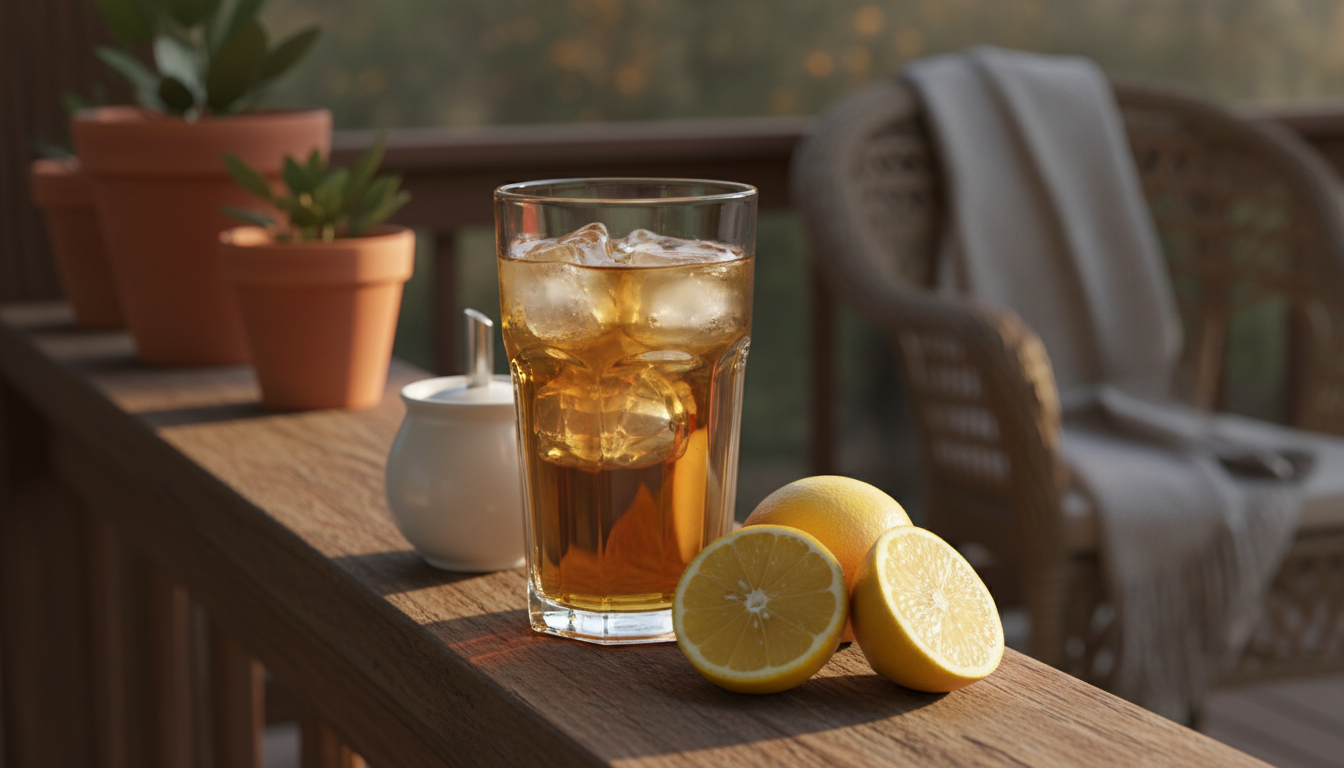


The difference between the two comes down to technique: which tea you use, when you add the sugar, how strong you brew, and how you chill it. Get these details right and you produce a sweet tea that tastes deliberate rather than like someone dumped sugar into a glass of mediocre tea.
This guide covers everything from the classic Southern recipe to international variations, with specific ratios, temperatures, and methods you can follow precisely. Whether you are making a single glass or a gallon pitcher for a cookout, the principles are the same.
Sweet tea is brewed tea that is sweetened while still hot, then chilled and served over ice. That definition sounds almost too obvious, but the "sweetened while hot" part is what separates real sweet tea from iced tea with sugar stirred in at the table.
Sugar dissolves completely in hot liquid. In cold liquid, it sinks to the bottom and forms a gritty layer no matter how vigorously you stir. Sweet tea brewed correctly has the sweetness distributed evenly through every sip from first to last. Table-sweetened iced tea starts overly sweet at the bottom and finishes watery at the top.
The standard sweet tea is made with black tea — specifically, a strong-bodied black tea that can hold its flavor against the sugar and the ice. The typical ratio in the American South, where sweet tea is a cultural institution, ranges from 1 cup of sugar per gallon on the moderate end to 2 cups per gallon at the sweeter extreme. Most recipes land around 1 to 1.5 cups per gallon.
Sweet tea is always served cold. If you sweeten hot tea and drink it hot, that is just sweetened tea. Sweet tea implies ice, a tall glass, and warm weather — though plenty of people in the Southern United States drink it year-round regardless of the temperature outside.

Sweet tea is the house wine of the American South. In states from Virginia to Texas, it is the default beverage at restaurants, church suppers, family gatherings, barbecues, and weeknight dinners. Ordering "tea" in the South means sweet tea. If you want it unsweetened, you have to specify — and you might get a look.
The drink became a Southern staple in the late 19th century, when ice became commercially available and affordable, and tea was a common pantry item. The combination of brutal summer heat and access to ice made cold sweetened tea a natural fixture. By the early 20th century, sweet tea was deeply embedded in Southern food culture. Garden & Gun's account of sweet tea's cultural roots traces this evolution well.
Regional preferences vary. In Georgia and the Carolinas, sweet tea tends toward the sweeter end — 1.5 to 2 cups of sugar per gallon. Virginia and the upper South lean lighter, around 1 cup per gallon. In Texas, sweet tea competes with iced water and Big Red, but it is still a menu staple. Cross the Mason-Dixon line heading north and sweet tea availability drops sharply. In the Midwest and Northeast, you are far more likely to encounter unsweetened iced tea or no tea at all.
The traditional Southern method is straightforward: brew strong black tea, dissolve sugar into the hot concentrate, dilute with cold water, and chill. No lemon unless requested. No fancy tea — just standard orange pekoe-grade black tea from bags. The emphasis is on the drink being cold, sweet, and available in large quantities.

This recipe makes one gallon (about 3.8 liters), which is the standard batch size. It produces a clean, balanced sweet tea — not syrupy, not weak.
Step 1: Boil the water. Bring 4 cups of water to a full rolling boil — 100 degrees Celsius (212 degrees Fahrenheit). Do not use warm or merely hot water. You need full boiling temperature to extract the tea properly in a short time.
Step 2: Steep the tea. Remove the water from heat. Add the tea bags or loose leaf tea (in an infuser) to the hot water. Steep for exactly 5 minutes.
Do not exceed 7 minutes — over-steeping extracts excessive tannins that make the tea bitter and astringent, which no amount of sugar will fix. The result should be a very dark, very strong concentrate.
Step 3: Remove the tea. Take out the bags or infuser. Do not squeeze the tea bags. Squeezing forces out bitter compounds from the leaf fragments inside the bag. Simply lift and let them drain for a few seconds.
Step 4: Dissolve the sugar. While the concentrate is still hot, add the sugar and stir until completely dissolved. This takes about 30 seconds of steady stirring. You should not see any granules settling at the bottom. The hot liquid dissolves the sugar fully — this is the critical step that defines sweet tea.
Step 5: Dilute. Pour the sweet concentrate into your gallon pitcher. Add cold water to fill to the gallon mark. Stir to combine. The cold water brings the temperature down quickly.
Step 6: Chill. Refrigerate for at least 2 hours, or until thoroughly cold. Serve over a full glass of ice.
Not all black teas perform equally in sweet tea. You want a tea with enough body and flavor intensity to stand up to the sugar and ice dilution, but without so much astringency that the bitterness fights the sweetness.
Ceylon is arguably the best all-purpose sweet tea base. Mid-grown Ceylon from regions like Kandy or Dimbula has a bright, clean flavor with medium body and a natural crispness that cuts through sugar well. The result is a sweet tea that tastes refreshing rather than heavy. If you are upgrading from tea bags to loose leaf for sweet tea, start with Ceylon.
Assam produces a malty, robust sweet tea with serious body. Orthodox Assam (rolled whole leaves, not CTC pellets) gives you that strength without harsh tannins. Assam is the choice when you want a sweet tea that reads as bold and rich. It is also the base in many commercial tea blends sold specifically for iced and sweet tea. Our Assam Golden Tips is an orthodox grade with enough natural sweetness in the leaf that it needs noticeably less added sugar to taste balanced — worth trying if you want to push sweet tea toward something with real depth rather than just sweetness.
English Breakfast is a blend typically combining Assam, Ceylon, and sometimes Kenyan or Chinese black tea. It makes a reliable sweet tea because the blend is designed for balance and strength. If you want something familiar and consistent, a good English Breakfast blend is a safe bet.
Chinese Keemun black tea produces a sweet tea with more nuance — hints of stone fruit, a faint smokiness, and a smoother mouthfeel than Indian or Sri Lankan blacks. Keemun sweet tea is less punchy but more complex. It works well for people who find standard sweet tea one-dimensional.
Green tea and white tea are generally poor choices for classic sweet tea. They lack the body to stand up to sugar and ice, and their delicate flavors get obliterated by sweetening. Darjeeling first flush is too subtle. Lapsang souchong is too smoky — the campfire notes clash with sugar. Flavored teas with artificial ingredients can turn unpredictable when sweetened.
Brewing sweet tea concentrate is not the same as brewing a normal cup of tea. You are making a double-strength or triple-strength base that will be diluted, so the extraction needs to be efficient but controlled.
Use fully boiling water: 100 degrees Celsius (212 degrees Fahrenheit). Black tea requires high temperature to extract its flavor compounds properly. Water that is merely hot — say, 80 or 85 degrees — will under-extract and produce a weak, thin concentrate that tastes watery even after you add sugar.
If you are using a kettle without a thermometer, bring it to a full rolling boil with large, vigorous bubbles. Small bubbles at the bottom of the pot are not enough.
Steep for 5 minutes. This is the sweet spot for sweet tea concentrate. Here is what happens at different times:
For a gallon batch using the hot concentrate method, use 30 grams of loose leaf tea (or 8 standard tea bags) per 4 cups (950 ml) of water. This produces a concentrate roughly 3 times normal drinking strength, which dilutes correctly when you add cold water to fill the gallon.
For a half-gallon batch, halve everything: 15 grams of tea, 2 cups of water, half a cup of sugar.
There are two schools of thought on how to get sugar into sweet tea. Both work, but they suit different situations.
This is the traditional method described in the recipe above. You add granulated sugar directly to the hot tea concentrate and stir until dissolved. It is simple, fast, and produces the cleanest flavor because there is no additional cooking involved.
Direct sweetening works best when you are making a full batch of sweet tea and sweetening it all at once. The hot concentrate has more than enough heat to dissolve the sugar completely.
Simple syrup is a 1:1 mixture of sugar and water, heated until the sugar dissolves, then cooled. You make it separately and add it to tea that is already brewed and cooled.
Simple syrup has a few advantages. It mixes into cold liquid instantly, which means you can sweeten tea that has already been chilled — useful if you cold brew your tea or if you want to offer both sweet and unsweetened tea from the same batch. It also allows each person to sweeten their own glass to taste, which avoids arguments at family dinners.
To make simple syrup: combine 1 cup of sugar with 1 cup of water in a small saucepan. Heat over medium, stirring, until the sugar dissolves completely. Remove from heat and let cool. Store in a jar in the refrigerator for up to 2 weeks. Use roughly 2 to 4 tablespoons per 350 ml glass of tea, adjusting to taste.
For a single batch of sweet tea that will all be the same sweetness level, direct sweetening is faster and easier. For situations where you need flexibility — different sweetness preferences, a mix of sweet and unsweetened — make the tea unsweetened and set out simple syrup on the side.

Classic sweet tea is just the starting point. Once you have the base recipe down, these variations expand the range considerably.
Peach sweet tea is the most popular variation in the Southern United States, particularly in Georgia, the Peach State. The fruit sweetness layers with the sugar to produce something almost dessert-like but still refreshing.
Method: Brew sweet tea using the standard recipe. While the concentrate is still hot, add 1 cup of peach nectar or puree (not peach-flavored syrup — use real fruit). Stir to combine, dilute with cold water, and chill. Alternatively, muddle 2 ripe peaches and strain the juice into the finished sweet tea. Garnish with fresh peach slices.
Lemon and sweet tea are natural partners. The acidity brightens the sweetness and adds a citrus snap that makes the drink more refreshing.
Method: Add the juice of 2 to 3 fresh lemons (about 90 ml) to a gallon of sweet tea after diluting with cold water. Do not add lemon to the hot concentrate — heat can make lemon juice taste bitter and cooked. Stir, chill, and serve with lemon wheels.
Fresh mint transforms sweet tea into something that edges toward a cocktail in complexity (without the alcohol). The menthol provides a cooling sensation that pairs with the cold tea.
Method: Add 8 to 10 fresh mint sprigs to the hot concentrate and steep them alongside the tea for the full 5 minutes. Remove the mint with the tea bags. The mint flavor integrates smoothly because it infuses during the brewing stage rather than being added as an afterthought. Garnish each glass with a fresh sprig.
Raspberry sweet tea has a beautiful color and a tart edge that balances the sugar effectively.
Method: Muddle 1 cup of fresh or thawed frozen raspberries with 2 tablespoons of sugar. Strain through a fine mesh sieve to remove seeds. Add the strained raspberry puree to the diluted sweet tea. Adjust sweetness — raspberries are tart, so you may want to add an extra 2 tablespoons of sugar.
The Arnold Palmer is half sweet tea, half lemonade. Named after the golfer who reportedly ordered this combination at every restaurant he visited. It is arguably the most refreshing warm-weather drink that exists without alcohol.
Method: Make sweet tea at your preferred sweetness. Make lemonade separately (1 cup lemon juice, 1 cup sugar, 6 cups water). Fill a glass with ice, pour half sweet tea and half lemonade. Stir once gently. The ratio is flexible — some prefer 60/40 tea to lemonade, others 40/60. Experiment with what suits you.
Not everyone agrees on what counts as "sweet" tea. The spectrum runs from completely unsweetened to what some people call "liquid candy." Here is a practical guide to where different sweetness levels land.
If you are new to sweet tea, start at the medium level (1 cup / 200 grams per gallon) and adjust from there. You can always add simple syrup to a glass to increase sweetness, but you cannot take sugar out once it is in the pitcher.
Sweet tea scales linearly. Double the batch, double everything. But there are practical considerations when you move beyond a single gallon.
Use a large stockpot for the concentrate, then transfer to two gallon pitchers or a beverage dispenser.
At this scale, use a large stock pot or clean 5-gallon bucket. A beverage dispenser with a spigot makes serving practical. Brew the concentrate in two rounds if your pot is not large enough — steep 75 grams of tea in 10 cups of water, remove, repeat, combine.
Sweet tea is served cold almost by definition, but there is a case for hot sweetened tea — it is just a different drink with different rules.
Iced sweet tea requires brewing stronger than normal because ice dilution reduces the concentration by roughly 30 to 40 percent. If you brew at normal drinking strength and pour over ice, you get weak, watery tea with a vague memory of sweetness. The concentrate-and-dilute method accounts for this.
Ice also numbs the palate slightly, which means cold drinks taste less sweet than the same drink at room temperature. This is why sweet tea recipes call for more sugar than you would ever add to a hot cup — it is not (just) Southern excess; it is physics. The cold mutes the perception of sweetness.
Hot sweetened tea is common across many cultures — from British tea with milk and sugar to Moroccan mint tea to Indian chai. The difference from sweet tea (the cold Southern American drink) is that hot sweetened tea typically uses far less sugar because heat amplifies the perception of sweetness.
A teaspoon or two of sugar in a hot cup of tea registers as sweet. The same amount in a cold glass of iced tea registers as barely sweetened. This is why sweet tea recipes seem shockingly sugary to people who only drink hot tea — they are compensating for the cold.
The American South did not invent the concept of sweet cold tea. Variations exist across multiple cultures.
Thai Iced Tea (Cha Yen): A strong brew of Ceylon tea with star anise, tamarind, and orange food coloring, sweetened with sugar and condensed milk, served over ice. It is powerfully sweet and creamy — a dessert drink that happens to be served in a glass.
Moroccan Mint Tea: Chinese gunpowder green tea brewed with large quantities of fresh spearmint and sugar. Traditionally served hot, but increasingly served cold in summer. The sugar content rivals American sweet tea — Moroccan tea is often described as sweet with a hint of tea rather than the reverse.
Indian Chai: Black tea (typically Assam CTC) boiled with milk, sugar, and spices — cardamom, ginger, cinnamon, clove. Served hot, but iced chai has become popular globally. The sweetness level varies widely from household to household.
Japanese Mugicha: Roasted barley tea served cold and typically unsweetened. Including it here because it represents the opposite end of the spectrum — a culture where cold tea is common but sugar is almost never added.
Turkish Tea (Cay): Strong black tea served in small tulip-shaped glasses with sugar cubes on the side. Always hot. The drinker controls the sweetness by dissolving as many sugar cubes as they prefer. One cube is moderate. Two is common. Three or more is for those with a serious sweet tooth.
Sweet Tea in the UK: Not traditional. The British drink hot tea with milk and perhaps a teaspoon of sugar, but iced sweet tea in the American sense is rare. Ordering sweet tea in a London restaurant will get you a confused look and possibly a cup of hot tea with a sugar packet.
Sweet tea does not last forever. Sugar and water make an inviting environment for bacteria, and brewed tea begins to degrade in flavor within a day or two.
Store sweet tea in a sealed pitcher in the refrigerator. It keeps well for 3 to 5 days. After that, the flavor starts to turn — the tea becomes flat and slightly stale, and the liquid may develop cloudiness.
Glass pitchers are better than plastic. Plastic can absorb tea stains and flavors over time, and some people report a slight off-taste when tea is stored in plastic for more than a day. Stainless steel works well too.
When in doubt, pour it out and make a fresh batch. Sweet tea is cheap and fast to make — there is no reason to drink one that has gone off.
Frozen sweet tea is technically possible, but the texture suffers. The sugar concentration changes the freezing point unevenly, and thawed sweet tea tastes dull and watery. If you want sweet tea available on short notice, just keep the dry ingredients measured and ready. A fresh batch takes 15 minutes of active time plus 2 hours of chilling.
Tea becomes cloudy when tannins bond with caffeine and precipitate out of solution as the liquid cools. This is called "tea cream" and it is harmless but visually unappealing. It happens more often with teas that are high in tannins or when the tea cools slowly.
To prevent it, chill the tea quickly — the flash-chill method (pouring hot concentrate over ice) minimizes cloudiness. Adding a tiny pinch of baking soda (about 1/8 teaspoon per gallon) to the brewing water neutralizes some tannins and helps keep the tea clear.
Yes, but the flavor changes significantly. Honey has its own strong flavor that competes with the tea rather than simply sweetening it.
Use a mild honey (clover or acacia) rather than a robust one (buckwheat or wildflower). Dissolve the honey in the hot concentrate just as you would sugar. Start with 3/4 cup of honey in place of 1 cup of sugar — honey is sweeter by volume than granulated sugar.
A gallon of standard sweet tea contains about 200 grams of sugar, but you are not drinking the entire gallon. A standard 350 ml glass contains roughly 25 grams of sugar from a batch made with 1 cup of sugar per gallon. For comparison, a 350 ml can of cola contains about 39 grams.
Sweet tea is not a health drink, but it is lower in sugar per serving than most soft drinks, and it contains beneficial compounds from the tea itself — antioxidants, polyphenols, and caffeine. Research published in Life Sciences via PMC/NIH on tea polyphenols supports the role of these compounds in supporting health. Moderation, as with most things, is the operative word.
You can make a sweet iced drink using herbal tea (which contains no caffeine), but the result will not taste like traditional sweet tea. Rooibos is the closest substitute — it has a similar body and color to black tea and takes sweetening well. Brew it the same way: strong concentrate, dissolve sugar while hot, dilute, chill. It is a good drink on its own merits, just not a precise replica of sweet tea.
A 350 ml glass of sweet tea made from black tea contains roughly 40 to 70 milligrams of caffeine. The exact amount depends on the tea variety, steep time, and concentration. For comparison, a standard cup of coffee contains 80 to 100 milligrams. According to the Mayo Clinic's caffeine reference, black tea typically delivers 40–70 mg per 8-ounce cup — consistent with the sweet tea range. Sweet tea delivers a moderate caffeine boost — enough to notice, not enough to jolt.
Most restaurants brew their sweet tea in large commercial machines that produce a consistent but generally flat result. They also tend to use the cheapest tea available and may add more sugar to compensate for the lack of tea quality. Homemade sweet tea with even a moderately good loose leaf black tea will outperform most restaurant versions because the base tea actually has flavor. The other factor is freshness — restaurants may hold their sweet tea for hours or even all day, while yours goes from pot to glass in two hours.
Sweet tea rewards attention to detail. The difference between forgettable and genuinely good sweet tea is not a secret ingredient — it is getting the fundamentals right. Good quality black tea, brewed strong but not over-extracted, sweetened while hot, chilled properly, and served fresh over plenty of ice.
Start with the basic recipe: 30 grams of loose leaf black tea, 1 cup of sugar, 4 cups of boiling water for the concentrate, cold water to make a gallon. Steep 5 minutes, dissolve the sugar, dilute, chill. That is your foundation. From there, adjust the sweetness to your taste, try the peach or mint variations, or scale up for events.
The one non-negotiable rule: dissolve the sugar in the hot tea. Everything else is preference. Whether you favor Ceylon or Assam, 1 cup of sugar or 1.5, lemon or no lemon — those are personal choices that make your sweet tea yours. But putting sugar into cold tea is not sweet tea. It is iced tea with sugar at the bottom of the glass, and it will never be the same thing.
As someone who grew up in Europe where sweet tea is not part of the culture, I find it easier to see what sweet tea is actually doing: it was designed to make average-quality tea accessible to a large group of people. The sugar and ice mask the harshness in cheap tea, which is why the traditional recipe calls for standard orange pekoe bags. But that logic also means you can improve sweet tea dramatically just by using a better leaf.
For sweet tea, I recommend going for something with a bit of punch — our breakfast tea blend, our Yunnan Dian Hong, or our Assam Golden Tips all work well. These are teas that hold their character against the sugar rather than disappearing into it. Whole leaf tea also produces a cleaner, smoother brew with less bitterness than bags, which means you need less sugar to get a balanced result.
Make a batch this weekend. Make it your way. Then make it again, because the pitcher will be empty before you expect it to be.
Les commentaires sont approuvés avant leur publication.