













Meilleures Tisanes du Soir : Options Sans Caféine
Les tisanes du soir sont des infusions sans caféine associées de longue date au moment où la journée touche à sa fin. Depuis quelques années, de plus en plus de clients nous interrogent à leur sujet, non pas comme un remède à quoi que ce soit, mais comme un geste concret pour marquer la transition vers la soirée. J'ai passé beaucoup de temps avec ces plantes, à la fois à travers ce que nous sourçons chez Valley of Tea et ce vers quoi je me tourne moi-même en fin de longue journée. Voici ce qui fonctionne réellement, et comment en tirer le meilleur parti.
Camomille
La camomille est le point de départ pour la plupart des gens, et pour de bonnes raisons. Elle est douce, largement disponible, et a un goût réellement agréable. Ce qu'il faut rechercher, ce sont des fleurs de camomille entières, pas la poudre jaune poussiéreuse que l'on trouve dans la plupart des sachets du commerce. Une bonne camomille a une douceur légère, proche de la pomme, avec une note de miel discrète en fond. Elle ne doit pas être amère — si c'est le cas, soit la qualité est médiocre, soit l'infusion a été trop longue.
La camomille est utilisée depuis des siècles dans la tradition populaire européenne comme plante du soir. Elle est suffisamment douce pour être donnée aux enfants, ce qui en dit long sur son caractère. Préparation : utilisez une eau proche de l'ébullition (90-95°C) et laissez infuser 5 à 7 minutes, à couvert. Couvrir la tasse compte, car les composés aromatiques qui rendent la camomille agréable sont volatils et s'échappent avec la vapeur si la tasse reste découverte. Un simple couvercle ou une soucoupe fait une réelle différence.
Profil gustatif : sucré, légèrement floral, proche de la pomme. L'une des plantes les plus accessibles de cette catégorie. Elle se boit pure ou se marie bien avec presque tout le reste de cette liste.
Découvrez notre collection de tisanes pour de la camomille en fleurs entières.
Lavande
La lavande divise. Certains adorent son caractère floral, presque parfumé ; d'autres la trouvent trop présente. Si vous l'appréciez, des boutons de lavande séchée de qualité culinaire constituent un bel ajout à une tasse du soir, mais avec une main légère. Une cuillère à café de lavande pour une théière de camomille suffit largement. Au-delà, on bascule très vite du plaisant au savonneux.
Utilisée depuis des générations en Provence et sur le pourtour méditerranéen, dans les tisanes comme dans les rituels de bain, la lavande porte cette association ancienne avec la fin de journée. Qu'on la boive ou qu'on respire simplement la vapeur qui s'échappe de la tasse, son parfum a quelque chose de singulier. L'odorat est l'un des sens les plus directement liés à notre perception du moment présent.
Profil gustatif : intensément floral, légèrement sucré, herbacé. Se marie mieux en note d'appoint dans un mélange qu'en plante seule. S'associe bien à la camomille et à la mélisse.
Racine de Valériane
La valériane ne plaît pas à tout le monde. Son goût est terreux, légèrement musqué, et demande un temps d'adaptation. Elle a une longue histoire d'usage comme plante du soir dans la tradition herboriste européenne, et certains y restent fidèles depuis toujours. Si vous êtes curieux, l'approche la plus courante consiste à la mélanger à quelque chose de plus sucré (camomille ou passiflore) pour équilibrer la saveur.
Laissez infuser la racine de valériane pendant 10 minutes complètes dans une eau proche de l'ébullition, à couvert. C'est une racine, pas une fleur, et elle a besoin de plus de temps et de chaleur pour libérer correctement ses composés. L'odeur à l'ouverture du bocal peut surprendre — terreuse et piquante — mais elle s'adoucit quelque peu dans la tasse.
Profil gustatif : fortement terreux, légèrement amer, musqué. Ce n'est pas une tasse que l'on boit à la légère, mais un choix pertinent pour ceux qui ne sont pas gênés de composer avec cette saveur.
Passiflore
La passiflore est sous-estimée. Elle est plus discrète que la valériane — en saveur comme en profil — ce qui la rend bien plus facile à boire. Les parties aériennes séchées (feuilles et tiges) donnent une tasse légèrement herbacée et un peu terreuse, qui se marie bien avec la camomille ou la mélisse. Elle s'intègre en arrière-plan sans chercher à dominer.
Traditionnellement utilisée en Amérique du Sud puis adoptée par l'herboristerie européenne, la passiflore est associée de longue date, dans les usages populaires, aux esprits agités en fin de journée. Je la trouve particulièrement réussie mélangée à la camomille — l'association est douce et facile à boire.
Laissez infuser 7 à 10 minutes dans une eau proche de l'ébullition, à couvert. Comme la plupart des plantes de cette catégorie, elle récompense la patience à l'infusion.
Profil gustatif : légèrement herbacé, un peu terreux, neutre. Se mélange facilement, sans jamais dominer.
Mélisse
La mélisse est l'une de mes plantes préférées dans cette catégorie. Elle a un parfum citronné vif et frais — plus proche de la feuille d'agrume que du fruit — et donne une tasse légère et agréable, sans jamais être lourde. Elle est cultivée en Europe depuis au moins le Moyen Âge et est associée de longue date, dans les traditions populaires, à la fin de journée.
Elle se boit bien seule ou mélangée à la camomille ou à la passiflore. Un point à noter : la mélisse est à son meilleur fraîche ou récemment séchée. Elle perd ses huiles volatiles plus vite que la plupart des plantes, donc si votre sachet traîne dans le placard depuis un an, il est temps d'en racheter. Le parfum doit être immédiatement perceptible à l'ouverture du sachet — s'il sent le foin plutôt que le citron, elle a perdu de sa fraîcheur.
Laissez infuser autour de 90°C pendant 5 à 7 minutes, à couvert. Ne prolongez pas trop l'infusion — elle peut devenir légèrement amère si on la pousse trop longtemps.
Profil gustatif : vif, citronné, frais, légèrement herbacé. L'une des plantes au goût le plus agréable de cette liste. Facile à boire chaque soir.
Menthe Poivrée
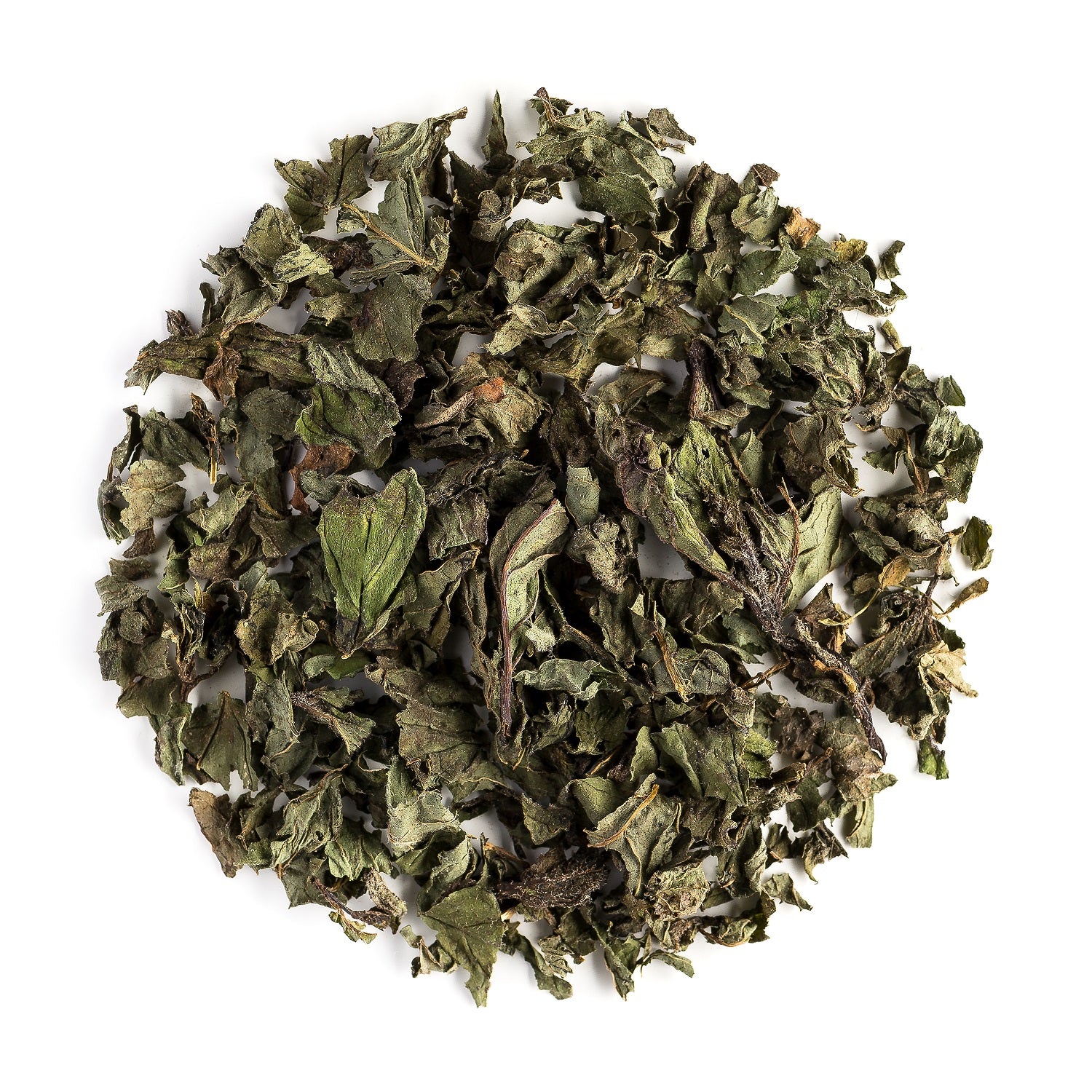
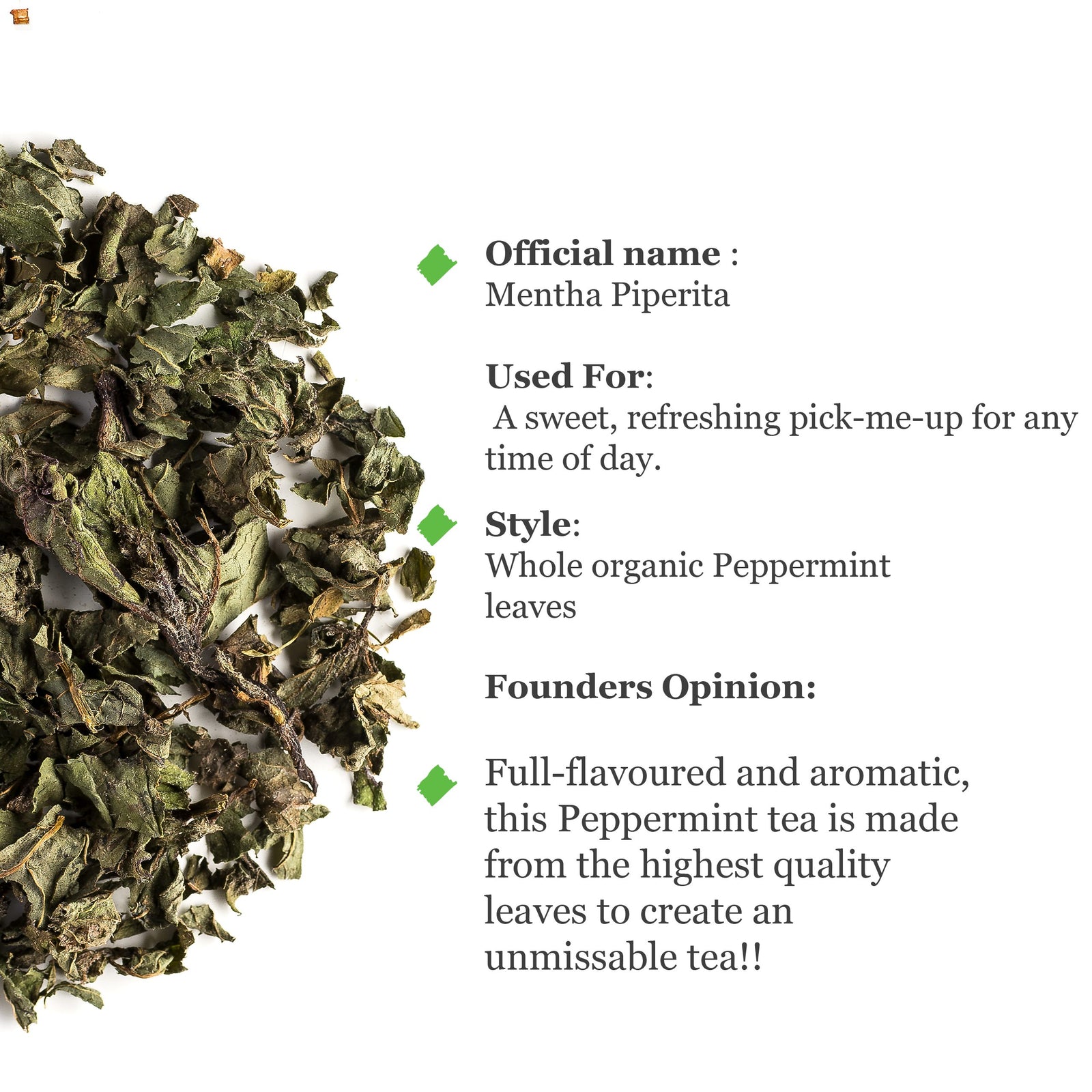
En soirée, la menthe poivrée se distingue moins par un usage lié au repos que par son association traditionnelle avec les repas copieux — beaucoup l'associent depuis longtemps à la fin d'un dîner. Elle est rafraîchissante et nette en bouche, ce qui, chez certaines personnes, tient plutôt éveillé qu'autre chose — observez comment votre organisme y réagit.
Si vous aimez la saveur mais la trouvez trop stimulante seule, essayez de la mélanger à la camomille dans une proportion d'environ 1:3 (menthe pour camomille). Vous obtenez la fraîcheur mentholée agréable, adoucie par la douceur de la camomille.
Profil gustatif : frais, vif, dominé par le menthol, net. Très marqué — on aime ou on n'aime pas. Aucune subtilité ici.
Découvrez notre sélection de tisanes à la menthe poivrée.
Rooibos
Le rooibos mérite sa place dans cette liste pour une raison simple : il est sans caféine, naturellement sucré, et véritablement satisfaisant d'une façon que les tisanes plus légères ne le sont pas toujours. Si vous avez l'habitude de boire du thé au lait et cherchez quelque chose avec cette même chaleur et ce même corps en soirée, le rooibos est la réponse. Il n'a pas l'association traditionnelle spécifique de la camomille ou de la valériane — c'est davantage un classique du soir qu'un choix ciblé.
La douceur naturelle d'un bon rooibos fait que beaucoup de gens le boivent sans aucun sucre ajouté. Il présente une légère note de miel et de vanille, qui ressort particulièrement bien après 5 à 8 minutes d'infusion dans une eau à pleine ébullition. Le rooibos est l'une des rares plantes pour lesquelles une eau à pleine ébullition n'est pas seulement acceptable, mais réellement recommandée — il est robuste et le supporte bien.
Profil gustatif : naturellement sucré, terreux, légères notes de vanille et de miel. Corsé et chaleureux. L'option la plus proche du thé dans cette liste en termes de texture en bouche.
Découvrez notre gamme de rooibos.
Des Options Moins Connues à Découvrir
Au-delà des plantes principales, quelques autres méritent d'être mentionnées pour ceux qui ont fait le tour des classiques et souhaitent explorer davantage.
Écorce de Magnolia
L'écorce de magnolia est utilisée depuis des siècles dans la médecine traditionnelle chinoise et japonaise. Sous forme de tisane, elle reste relativement méconnue en Occident, mais elle a une saveur distinctive, légèrement épicée et boisée, que certains trouvent intéressante. On la retrouve souvent comme ingrédient dans des mélanges du soir plutôt qu'en plante seule. Si vous en trouvez, elle s'associe raisonnablement bien au rooibos ou à la camomille.
Scutellaire
Scutellaria lateriflora est une plante nord-américaine avec une longue histoire dans l'herboristerie traditionnelle des Appalaches. La plante séchée donne une tasse légèrement terreuse et un peu amère. Elle figure souvent parmi les plantes les plus citées dans les traditions populaires liées à l'agitation nerveuse et à l'esprit trop actif. Sa saveur est suffisamment discrète pour bien se marier — essayez-la avec de la mélisse pour une association agréable.
Pavot de Californie
Eschscholzia californica n'a aucun lien avec le pavot à opium et ne contient aucun des mêmes composés. Les parties aériennes de la plante donnent une tisane légèrement sucrée et un peu terreuse. Elle a un usage traditionnel dans l'herboristerie occidentale comme plante douce du soir. La couleur dans la tasse est d'un jaune-orangé doux, ce qui la rend également plaisante visuellement. Côté goût, elle est douce et facile à boire, et fonctionne bien en mélange avec la camomille et la passiflore.
Température de l'Eau et Infusion : Bien Faire les Choses
La plupart des gens sous-estiment l'importance d'une préparation correcte pour les tisanes. L'erreur courante consiste à les traiter comme un thé vert — une infusion rapide de 2 ou 3 minutes avec une eau pas tout à fait bouillante, puis on passe à autre chose. Cette approche donne de l'eau aromatisée, pas une véritable infusion.
Les tisanes (fleurs, feuilles, et surtout racines) ont besoin de plus de temps et d'une température plus élevée que ce que la plupart des gens leur accordent. Voici ce que j'utilise comme référence :
- Fleurs (camomille, lavande) : 90 à 95°C, 5 à 7 minutes, à couvert.
- Feuilles et parties aériennes (mélisse, passiflore, scutellaire, pavot de Californie) : 90 à 95°C, 7 à 10 minutes, à couvert.
- Racines (valériane) : eau proche ou à pleine ébullition, 10 à 15 minutes, à couvert.
- Rooibos : à pleine ébullition, 5 à 8 minutes.
Couvrez toujours la tasse ou la théière pendant l'infusion. Cela retient les composés aromatiques volatils — une grande partie de ce qui rend ces plantes agréables s'évapore avec la vapeur. Une simple soucoupe posée sur votre tasse suffit.
Utilisez une quantité suffisante de plante. La plupart des tisanes nécessitent 2 à 3 grammes pour 250 ml — c'est une cuillère à café bombée, pas une pincée. Les sachets du commerce contiennent souvent moins d'un gramme. Quand on passe au vrac avec une quantité correcte, la différence est immédiatement perceptible.
Les Profils Gustatifs en un Coup d'Œil
L'une des choses les plus pratiques à connaître avant de choisir une plante du soir est son goût réel. Les préférences personnelles comptent — si vous n'aimez pas la tasse, vous n'en boirez pas régulièrement, et c'est la régularité qui construit une habitude.
- Camomille : sucrée, proche de la pomme, légèrement florale. La plupart des gens l'apprécient.
- Mélisse : vive, citronnée, fraîche. Facile à boire, l'une des plus agréables.
- Rooibos : naturellement sucré, légèrement terreux, note discrète de vanille. Corsé et satisfaisant.
- Passiflore : douce, herbacée, neutre. Se mélange sans jamais dominer.
- Pavot de Californie : légèrement sucré, un peu terreux. Doux et sans prétention.
- Scutellaire : légèrement terreuse, un peu amère. Se prête mieux à un mélange.
- Lavande : intensément florale, parfumée. À utiliser avec parcimonie, en note d'appoint.
- Menthe poivrée : vive, mentholée, rafraîchissante. Tonique plutôt que douce, selon les personnes.
- Valériane : fortement terreuse, musquée, piquante. Un goût qui s'apprivoise.
- Écorce de magnolia : boisée, légèrement épicée. Meilleure en mélange.
Si vous découvrez les tisanes du soir, commencez par la camomille ou la mélisse. Si vous cherchez quelque chose de plus corsé, optez pour le rooibos. Si vous êtes prêt à expérimenter des mélanges, la passiflore et la scutellaire sont de bons ajouts qui ne domineront pas la tasse.
Et les Mélanges du Soir du Commerce, Type Sleepytime ?
Vous avez probablement déjà vu Sleepytime et d'autres mélanges du soir du commerce sur les rayons du supermarché. Ce ne sont pas de mauvais produits — ils utilisent de vraies plantes, généralement de la camomille et de la menthe verte en base, avec de plus petites quantités d'autres botaniques. Le problème est la quantité et la qualité. Un sachet du commerce contient généralement 1,5 à 2 grammes de plante au total, souvent un mélange de matériel de qualité inférieure, resté des mois en entrepôt puis en rayon avant de vous parvenir.
Quand vous composez votre propre mélange à partir de plantes en vrac achetées chez un fournisseur qui renouvelle régulièrement son stock, vous contrôlez la fraîcheur, le ratio et la quantité. Vous pouvez utiliser 3 à 4 grammes par tasse au lieu de 1,5. Vous pouvez faire de la camomille la note dominante et n'ajouter qu'une touche de lavande. Vous pouvez éviter la menthe poivrée si vous la trouvez trop stimulante. Le mélange devient le vôtre.
Les mélanges du soir du commerce constituent un point de départ raisonnable si vous découvrez cette catégorie. Mais une fois que vous savez ce que vous aimez, composer son propre mélange en vrac est tout simplement meilleur — plus de saveur, plus de contrôle, et une tasse nettement plus agréable à boire.
Composer Son Mélange du Soir
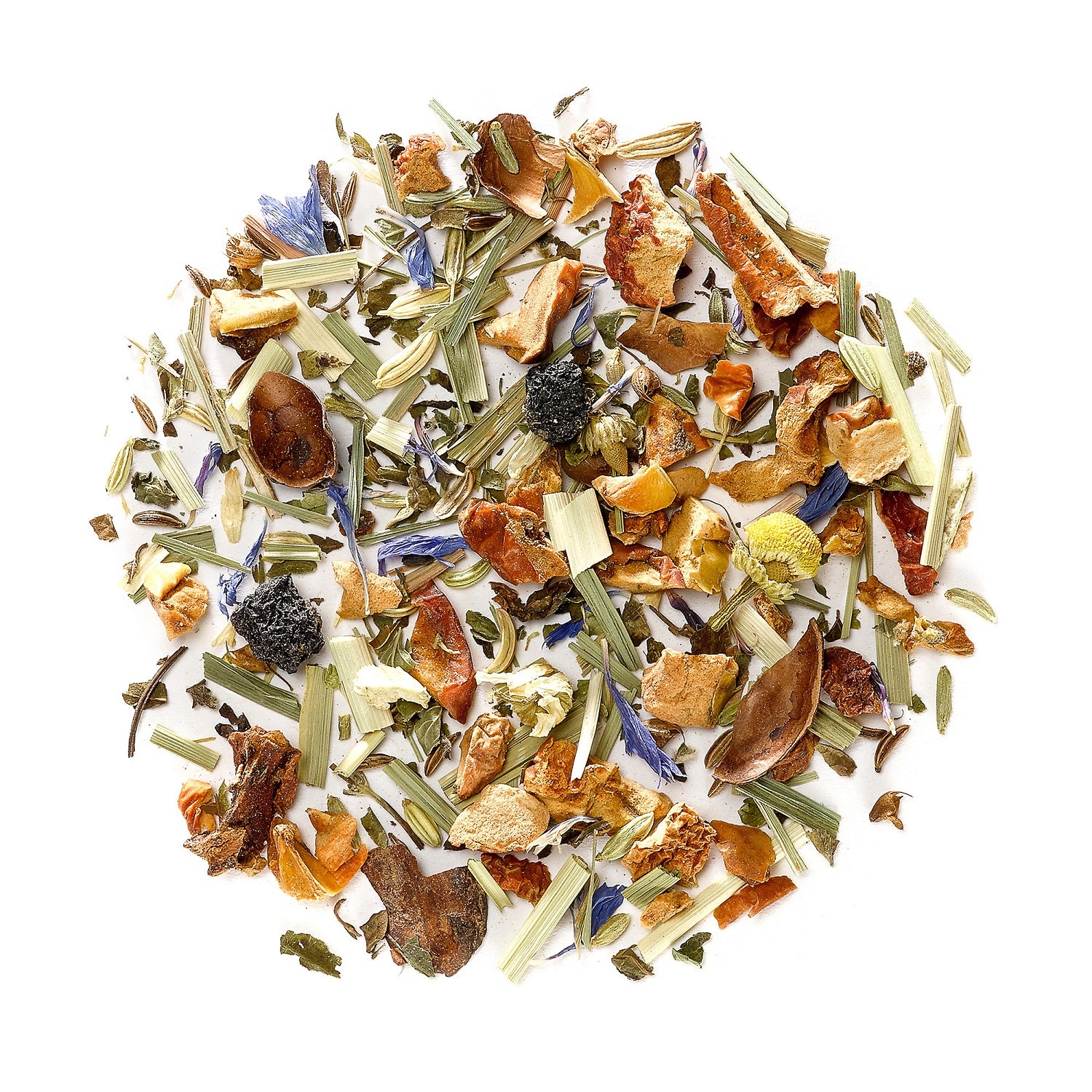
Le meilleur mélange du soir est celui que vous prenez réellement plaisir à boire. Commencez par une base (camomille ou rooibos fonctionnent bien), ajoutez une plante d'appoint (mélisse ou passiflore), et si vous le souhaitez, terminez par une petite touche (un peu de lavande ou une pincée de valériane si sa saveur ne vous dérange pas). Un ratio simple pour commencer : 60 % de base, 30 % de plante d'appoint, 10 % de touche finale.
Préparez un petit lot — 20 à 30 grammes environ — conservez-le dans un bocal hermétique, et ajustez les ratios après une semaine à le boire. C'est tout ce qu'est un mélange : une itération fondée sur ce que vous ressentez réellement dans la tasse. Cela n'a pas besoin d'être plus compliqué que ça.
Quelques associations qui fonctionnent bien :
- Camomille + mélisse (60/40) : vive, sucrée, très facile à boire.
- Camomille + passiflore + lavande (60/30/10) : florale et douce.
- Rooibos + camomille + scutellaire (50/40/10) : corsée, sucrée, légèrement terreuse.
- Mélisse + pavot de Californie + camomille (40/30/30) : fraîche et douce.
Découvrez notre gamme complète de tisanes individuelles pour composer vos mélanges — nous proposons la plupart des plantes mentionnées ici en vrac.
Le Geste Compte
Je veux dire un mot sur le geste de préparer une tisane le soir, car je pense qu'on sous-estime son importance.
Au moment où vous mettez la bouilloire en route et attrapez le bocal de plantes, quelque chose change. C'est un signal clair — pour vous-même — que la partie active de la journée est terminée. Vous ne faites pas quelque chose. Vous passez à autre chose. Et cette transition a de la valeur en soi, quel que soit le contenu de la tasse.
Préparer une tisane demande quelques minutes d'attention. On mesure, on attend l'eau, on infuse, on attend encore. C'est une activité sans écran par nature, si on la laisse l'être. La chaleur de la tasse entre les mains est un repère physique. La vapeur, le parfum, la première gorgée — ce sont des ancrages sensoriels vers un autre rythme. Plus lent. Moins tourné vers un objectif.
Je ne prétends pas qu'une tisane remplace de bonnes habitudes de fin de journée. Mais comme marqueur rituel entre la fin de la journée et le début du repos, c'est l'un des outils les plus agréables et les plus pratiques qui soient. Le fait que les plantes de la tasse portent une longue association traditionnelle avec la fin de journée rend le geste cohérent : cette tasse est faite pour ralentir, pas pour repartir.
Si possible, laissez votre téléphone dans une autre pièce pendant que vous la buvez. Installez-vous confortablement. Laissez la tisane refroidir à la bonne température plutôt que de l'avaler brûlante. Ces quinze minutes de calme volontaire comptent tout autant que les plantes elles-mêmes, et rien n'empêche de profiter des deux.
Ce Qu'il Faut Éviter en Soirée
Quelques points à garder à l'esprit :
Évitez tout ce qui contient du véritable thé si vous êtes sensible à la caféine. Thé vert, thé blanc, oolong, thé noir — tous en contiennent. Même un thé vert léger infusé trois minutes contient assez de caféine pour perturber le repos de certaines personnes, surtout si vous le buvez dans les deux à trois heures précédant le coucher. Si vous ne savez pas si vous êtes sensible à la caféine, partez du principe que vous l'êtes et privilégiez les tisanes pures en soirée.
Évitez les plantes fortement stimulantes. Certaines tisanes du soir vendues comme telles contiennent des ingrédients énergisants — le gingembre en grande quantité, le cynorrhodon (pas directement stimulant, mais très acidulé et vif), ou le zeste d'agrume peuvent, chez certaines personnes, réveiller plus qu'autre chose. Vérifiez ce que contient réellement un mélange avant de supposer qu'« à base de plantes » signifie automatiquement une tisane du soir.
Et soyez réaliste sur ce qu'une tasse peut apporter. Une tasse de camomille ne résoudra pas des troubles chroniques du repos nocturne. Mais un rituel du soir régulier, avec des plantes que vous appréciez réellement, combiné à de bonnes habitudes de fin de journée, peut faire une différence concrète dans votre façon d'aborder la fin de journée. C'est une attente raisonnable. Pour tout le reste, consultez une personne qualifiée pour un avis adapté.
Découvrez notre collection de tisanes sans caféine pour tout ce qui convient à la soirée.
Laisser un commentaire
Les commentaires sont approuvés avant leur publication.
Voir l'article entier
The Complete Guide to Drinking Tea
What tea is, how the main types differ in the cup, and how to brew each one properly. Water temperature, steeping times, storage and how to get more than one cup from your leaves.
Voir l'article entier
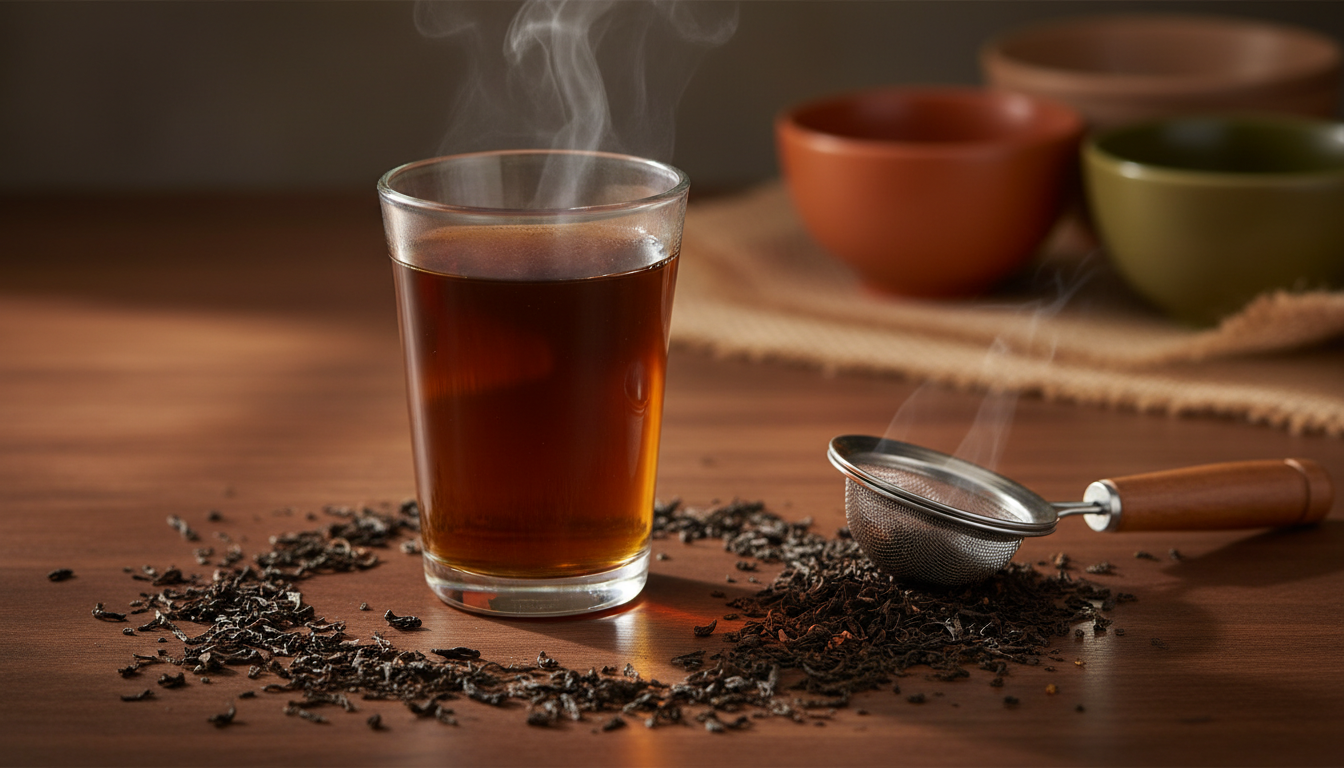

Black Tea: Types, Processing, and How to Brew It
Black tea is fully oxidized Camellia sinensis. Compare Assam, Darjeeling, Keemun, and Ceylon varieties. Learn processing, brewing, and caffeine levels.
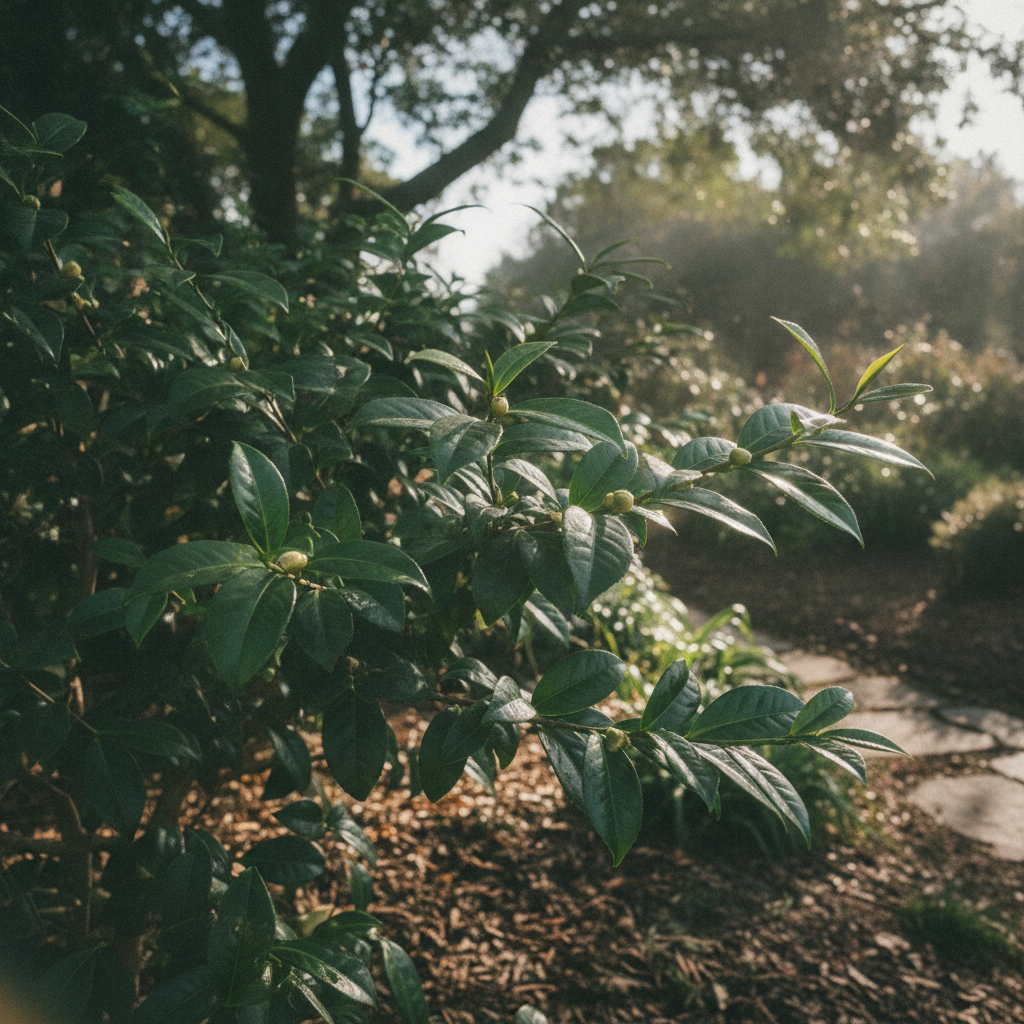

How To Grow Black Tea
Learn how to grow black tea at home: soil, climate, and the five processing steps from fresh leaf to a finished cup of black tea.

La sagesse est le chemin vers un meilleur thé.
Recevez notre guide d'infusion gratuit : la bonne eau, la bonne température et le bon temps d'infusion pour chaque thé de notre catalogue. Vous êtes aussi informé en premier des nouvelles récoltes.
Pas de spam. Désinscription à tout moment.
Consultez votre boîte mail.
Le guide est en route.