













How To Make Rooibos Tea
Rooibos is one of the most forgiving things you can brew. It has no caffeine, almost no tannins, and does not turn bitter if you steep it too long. That makes it ideal for beginners, but it also means experienced tea drinkers sometimes overlook the details that separate a decent cup from a genuinely good one. This guide covers every practical way to make rooibos tea — hot, iced, cold brewed, as a latte, and as a chai — with exact temperatures, measurements, and timings so you get consistent results every time.

What You Need
Rooibos tea. Loose leaf rooibos gives you better flavor and more control over strength than teabags. A good loose leaf rooibos should look like thin, uniform needle-like cuts in a deep reddish-brown color. Dusty or powdery rooibos indicates low grade. For all methods below, we use standard red (oxidized) rooibos unless noted otherwise.

Water. Freshly drawn, filtered water. Rooibos is not as sensitive to water quality as green or white tea, but heavily chlorinated tap water will flatten the flavor.
A way to heat water. Kettle, stovetop, or temperature-controlled electric kettle. Rooibos takes full boiling water, so precision is less critical than with delicate teas.
Something to brew in. A teapot, a mug with an infuser, or a French press all work well. Rooibos leaves are fine-cut, so use an infuser with a tight mesh — a coarse strainer will let particles through.
A scale (optional but recommended). Measuring by weight is more accurate than by volume because rooibos can vary in density depending on the cut. If you do not have a scale, use a heaping teaspoon as your baseline.
Basic Hot Rooibos
This is the standard method and the foundation for everything else.
- Boil fresh water to 100°C (212°F). Unlike green tea, rooibos handles full boiling temperature without any bitterness.
- Measure 3 grams of loose leaf rooibos per 250 ml (one cup) of water. That is roughly one heaping teaspoon.
- Place the rooibos in your infuser or teapot.
- Pour the boiling water directly over the leaves.
- Steep for 5 to 7 minutes. Five minutes gives a lighter, more delicate cup. Seven minutes gives a fuller, sweeter, more robust result. Unlike most teas, steeping rooibos longer does not produce bitterness — you can go up to 10 minutes without problems if you prefer a stronger cup.
- Remove the infuser or strain the leaves.
- Drink as is, or add honey, sugar, or a slice of lemon if you like.
Rooibos is naturally sweet, so taste it plain first before adding sweetener. Many people find they do not need any.

Rooibos with Milk

In South Africa, rooibos with milk is the default way to drink it — similar to how the British drink black tea. I saw this firsthand when visiting the Cederberg region, where rooibos is grown: farmers and locals drink it milky and often with a little sugar, from early morning onwards. The natural sweetness and vanilla notes of rooibos pair well with dairy.
- Brew a strong cup: use 4 grams of rooibos per 250 ml and steep for 7 minutes at 100°C.
- Remove the leaves.
- Add a splash of whole milk or your preferred milk alternative. Oat milk works particularly well because its natural sweetness complements rooibos. Almond milk also works but adds a nuttier profile.
- Sweeten with sugar or honey if desired — though many South Africans drink it with milk and no sugar.
The key is to brew it stronger than usual. A standard-strength rooibos becomes too diluted once you add milk.
Iced Rooibos Tea

The hot-brew-then-chill method. Best when you want iced rooibos within the hour.
- Brew a double-strength concentrate: 6 grams of rooibos per 250 ml of boiling water (100°C).
- Steep for 7 minutes.
- Remove the leaves.
- Pour the hot concentrate over a glass filled with ice. The ice will dilute it back to proper drinking strength.
- Garnish with a slice of lemon or orange, or a sprig of fresh mint.
If you do not want dilution from melting ice, brew at normal strength, let it cool to room temperature, then refrigerate for 1 to 2 hours before serving over ice.
Cold Brew Rooibos

Cold brewing produces a smoother, sweeter cup with almost no bitterness at all — not that rooibos has much to begin with. It takes longer but requires zero effort.
- Add 5 grams of rooibos per 500 ml of cold or room-temperature filtered water in a jar or pitcher.
- Cover and place in the refrigerator.
- Steep for 8 to 12 hours (overnight is perfect).
- Strain out the leaves.
- Serve over ice or drink straight from the fridge.
Cold brew rooibos keeps well in the refrigerator for up to 3 days. The flavor profile is softer and more delicate than hot-brewed rooibos, with the vanilla and honey notes more prominent and the woody undertones quieter. Research published in Food Chemistry (via PMC) confirms that hot brewing at 100°C yields the highest antioxidant capacity, while cold brewing preserves a distinct polyphenol profile — both methods produce a nutritionally worthwhile cup.
Rooibos Latte
A caffeine-free alternative to a regular latte. Works hot or iced.
Hot rooibos latte
- Brew a concentrated rooibos: 5 grams in 120 ml of boiling water, steeped for 7 minutes.
- Heat 120 ml of milk (dairy or oat milk) and froth it. A handheld milk frother, French press, or steam wand all work.
- Pour the rooibos concentrate into a mug.
- Add honey or vanilla syrup to taste (start with half a teaspoon).
- Pour the frothed milk over the rooibos.
Iced rooibos latte
- Brew the same concentrate (5 grams, 120 ml, 7 minutes) and let it cool, or brew it the night before.
- Fill a glass with ice.
- Pour in the cooled rooibos concentrate.
- Add cold milk to fill.
- Stir and sweeten if desired.
The trick to a good rooibos latte is the concentrate. A normal-strength brew will taste watery once you add milk and ice.
Rooibos Chai

Rooibos makes an excellent caffeine-free base for chai. Its natural sweetness and vanilla character complement the warm spices perfectly.
- Combine 4 grams of rooibos with the following spices in a small saucepan:
- 3 whole green cardamom pods, lightly crushed
- 1 small cinnamon stick or half a teaspoon of ground cinnamon
- 3 whole cloves
- 2 thin slices of fresh ginger (about 3 mm thick)
- 3 whole black peppercorns (optional, for a bit of heat)
- Add 250 ml of water and 125 ml of whole milk.
- Bring to a gentle simmer over medium heat. Do not boil hard — a rolling boil will scald the milk.
- Simmer for 5 minutes, stirring occasionally.
- Strain into a mug through a fine mesh strainer.
- Sweeten with honey, sugar, or jaggery to taste.
You can adjust the spice ratios to your preference. More ginger makes it spicier. More cardamom makes it more aromatic. The rooibos base is mild enough that the spices are the star — which is exactly what you want in a chai.
Common Mistakes

Rooibos is forgiving, so the list of mistakes is short.
Using water that is not hot enough
Some guides suggest 80 to 90°C for rooibos, borrowing the logic from green tea brewing. This is unnecessary. Rooibos is fully oxidized and contains different compounds than Camellia sinensis. It needs 100°C to extract properly. Lower temperatures produce a weak, thin cup.
Steeping too short
Three minutes is not enough for rooibos. The flavor compounds in rooibos extract more slowly than in black or green tea. Five minutes is the minimum for a decent cup; seven is better.
Using stale rooibos
Rooibos does not go bad quickly, but it does lose flavor over time. If your rooibos smells like dust instead of honey and wood, it is past its prime. Store it in an airtight container away from light. Use within 12 to 18 months of purchase.
Skipping the lid while steeping
Cover your cup or teapot during steeping. This keeps the water temperature stable and prevents volatile aromatic compounds from escaping with the steam.
Quick Reference Table
| Method | Rooibos | Water | Temperature | Steep Time |
|---|---|---|---|---|
| Basic hot | 3 g / 250 ml | Boiling | 100°C | 5–7 min |
| With milk | 4 g / 250 ml | Boiling | 100°C | 7 min |
| Iced (hot brew) | 6 g / 250 ml | Boiling | 100°C | 7 min |
| Cold brew | 5 g / 500 ml | Cold | Fridge | 8–12 hours |
| Latte | 5 g / 120 ml | Boiling | 100°C | 7 min |
| Chai | 4 g / 375 ml | Simmer | ~95°C | 5 min |
Conclusion
Making rooibos tea well comes down to three things: use enough leaf, use boiling water, and give it enough time. Beyond that, rooibos is almost impossible to ruin. It will not punish you for oversteeping or for getting the temperature slightly wrong. That makes it one of the best teas for experimenting — try it as a latte, steep it overnight as a cold brew, or simmer it with chai spices.
The flavor is gentle enough to work with almost anything, and the absence of caffeine means you can drink it at any hour. Aspalathus linearis — the plant behind every cup of rooibos — is endemic to the Cederberg region of South Africa's Western Cape, a growing area now protected by EU designation of origin. That geographic specificity matters: authentic rooibos from this region has a flavor profile you simply cannot replicate with substitutes.
If you are new to loose leaf rooibos, our organic rooibos is where I would start. It is whole leaf, which means it looks and brews nothing like the dust you find in most teabags — the difference is dramatic. Camomile is also worth exploring if you enjoy caffeine-free herbal teas: it is softer and more floral, and many rooibos drinkers alternate between the two depending on the season. Once you experience the difference between fresh loose leaf and a teabag, you will not go back.
Laisser un commentaire
Les commentaires sont approuvés avant leur publication.
Voir l'article entier
The Complete Guide to Drinking Tea
What tea is, how the main types differ in the cup, and how to brew each one properly. Water temperature, steeping times, storage and how to get more than one cup from your leaves.
Voir l'article entier

Black Tea: Types, Processing, and How to Brew It
Black tea is fully oxidized Camellia sinensis. Compare Assam, Darjeeling, Keemun, and Ceylon varieties. Learn processing, brewing, and caffeine levels.
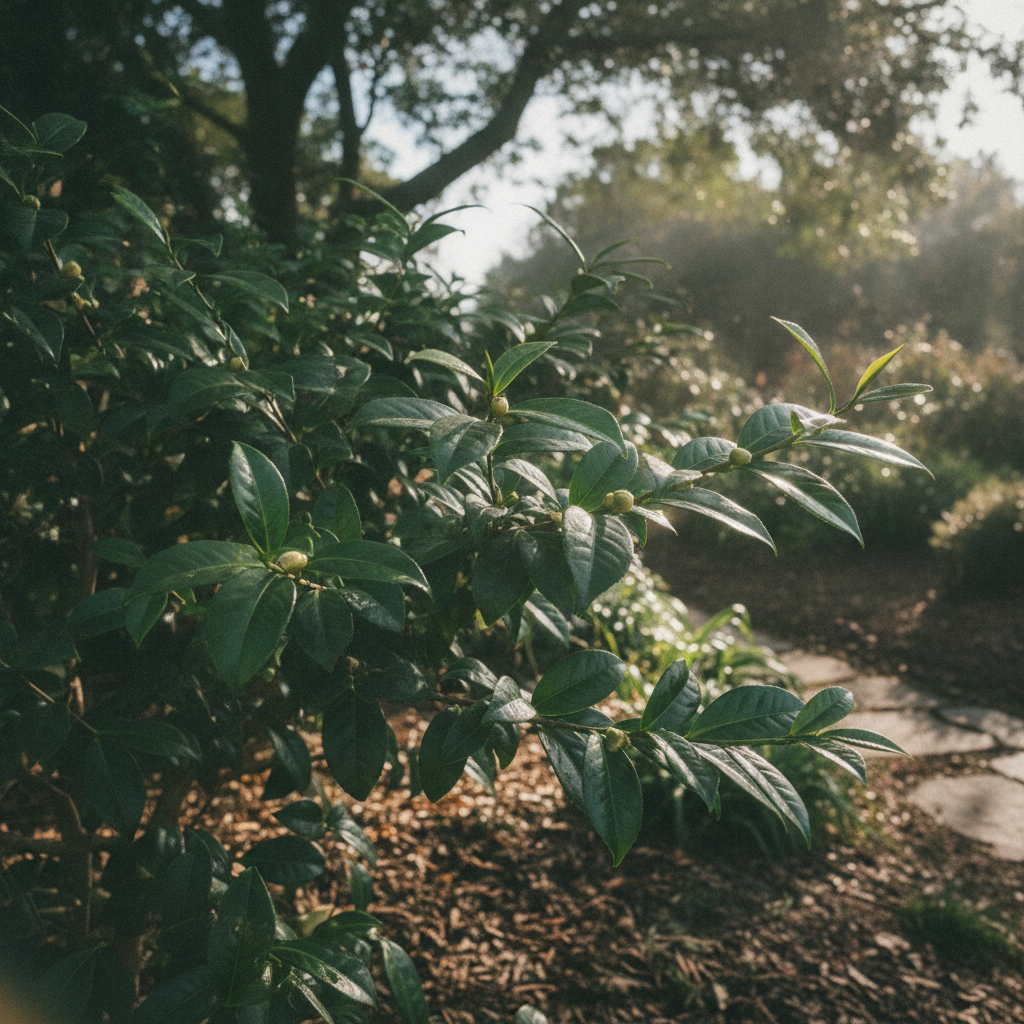

How To Grow Black Tea
Learn how to grow black tea at home: soil, climate, and the five processing steps from fresh leaf to a finished cup of black tea.

La sagesse est le chemin vers un meilleur thé.
Recevez notre guide d'infusion gratuit : la bonne eau, la bonne température et le bon temps d'infusion pour chaque thé de notre catalogue. Vous êtes aussi informé en premier des nouvelles récoltes.
Pas de spam. Désinscription à tout moment.
Consultez votre boîte mail.
Le guide est en route.