













White Tea Brewing: Gentle Guide
White tea is the least processed tea you can buy. That matters for brewing. The same qualities that make white tea prized - its downy buds, its subtle sweetness, its light body - also make it easy to ruin with boiling water and rushed steeping.
This white tea brewing guide covers temperature and time, the two variables that determine whether your cup is silky or flat. White tea has its own rules. Follow them, and you get a cup with body, sweetness, and a clean finish. Ignore them, and you get hot water that tastes like nothing.
Why White Tea Is More Forgiving Than People Think
White tea has a reputation for being fragile. That reputation is only half true. Yes, it does not want boiling water. But it tolerates a wider temperature range than most people realise - and a much wider range than green tea.
Green tea sits in a narrow window: too cool and you get flat, grassy water; too hot and you get bitterness. White tea operates differently. Brew it anywhere from 70 to 85°C and you will get a drinkable cup. The sweet spot is 75-80°C, but a few degrees either way will not wreck it the way it would wreck a Gyokuro or a Longjing.
This is because white tea's minimal processing leaves the leaf structure mostly intact. The tannins are less developed than in green tea. The compounds that turn bitter under heat are present in smaller amounts. What you are protecting is the sweetness and the floral character, and those do fade under high heat - but the window where damage happens is broader.
The lesson: stop being afraid of white tea. It rewards attention, not anxiety.
Why White Tea Needs a Different Approach
White tea undergoes minimal processing. The leaves are picked, withered, and dried. There is no rolling, no oxidation step, no roasting. This means the cell structure of the leaf stays mostly intact.
That minimal handling preserves delicate amino acids, particularly L-theanine, which gives white tea its characteristic sweetness and smooth mouthfeel. But those same compounds break down quickly when exposed to high heat. Where a full-bodied Assam black tea can absorb boiling water without flinching, white tea cannot.
Silver Needle vs White Peony: Different Leaves, Different Needs
Not all white teas behave the same way in the cup. The two you are most likely to encounter are Silver Needle and White Peony, and they have genuinely different brewing requirements.
Silver Needle is made exclusively from the first bud, before it opens. Those buds are dense, covered in fine white down, and packed with concentrated sweetness. Because the bud is closed, extraction is slow. Silver Needle needs the full 4-5 minutes - sometimes longer - to open up. The flavour is delicate: honey, cucumber, white flowers. It is subtle by design. Brew it at the lower end of the range, around 70-75°C, and give it time.
White Peony uses the bud plus the first one or two open leaves. The leaves extract faster than the bud. The result is a fuller cup - more body, more of a grassy or hay note alongside the sweetness. White Peony can handle slightly hotter water, 75-80°C, and brews up more quickly. If Silver Needle is a whisper, White Peony is a full sentence.
In practice: if your white tea looks like a mix of large leaves and closed buds, you are probably looking at White Peony. Shorten the steep slightly and you can go a touch warmer. If you have a cup full of identical silver buds, treat it gently.
Temperature: Lower Than You Think, but Not as Low as You Fear
The ideal brewing temperature for white tea is 70-80°C. This is lower than green tea (80-85°C), significantly lower than oolong (85-95°C), and far below black tea's full boil.
If you do not own a variable temperature kettle, bring your water to a boil and then let it sit with the lid off for 5-6 minutes. That will bring it into the right range.
At 70-80°C, the leaf opens slowly. The sugars and amino acids dissolve into the water without the tannins overwhelming them. Go above 85°C and you start extracting savoury bitterness that masks the tea's natural character. A bud-only white tea like our Silver Needle is especially sensitive to this.
Gongfu Brewing for White Tea
Most brewing guides for white tea assume you are using a mug or a Western style teapot. That is fine. But if you want to understand what white tea is actually capable of, brew it gongfu style.
Gongfu brewing uses a higher leaf ratio and multiple short steeps. For white tea in a gaiwan or small teapot (around 100-150ml), use 5-6 grams of leaf. That is a lot - the vessel will look nearly full of fluffy white buds. The first steep starts at 30-40 seconds, not 4-5 minutes, because the ratio is much higher and the leaf is surrounded by water from all sides.
Here is what you get across the steeps:
The first steep is the most fragrant. Floral, sweet, light on the palate. It sets the tone but rarely delivers the full character of the leaf.
The second steep is usually the best. More body, the sweetness deepens, and you start to get the honey and peach notes that good white tea hides.
The third and fourth steeps shift register. The sweetness recedes and you get something drier and more mineral - a clean, almost savoury quality that is easy to miss if you only ever brew one cup.
By the fifth or sixth steep, Silver Needle in particular becomes very gentle: soft, slightly hay-like, warm. It is not spectacular, but it is pleasant, and it tells you the leaf has given everything it had.
The total infusion count for a quality Silver Needle reaches 6-8 steeps. White Peony typically gives 4-6 good infusions before the flavour becomes thin.
Gongfu brewing is worth trying once, even if you go back to a simpler method afterwards. It shows you the full arc of the tea.
Steep Time: Patient but Not Passive
Steep white tea for 4-5 minutes on the first infusion. This is longer than most green teas but necessary because the intact leaf structure releases flavour slowly.
White tea handles multiple infusions well. The second steep goes 5-6 minutes. A third steep goes 6-8 minutes. Each infusion reveals a slightly different character - the first tends toward sweetness, the second brings more body, and the third often has a gentle hay-like quality.
A proper white tea brewing guide on temperature and time should emphasise that these two variables work together. Lower temperature requires longer steeping. If you accidentally pour water that is a bit too hot, shorten your steep by 30-60 seconds to compensate.
Cold Brew White Tea
Cold brewing works well with white tea. It extracts the sweetness and the floral notes cleanly, while leaving behind most of the compounds that could make it bitter. The result is a naturally sweet, almost effervescent cup that needs nothing added.
The method is simple: add 6-8 grams of white tea per litre of cold, filtered water. Put it in a glass jar or pitcher, seal it, and leave it in the fridge for 8-12 hours. Overnight is the easiest approach. Strain and drink within two days.
Do not rush it. Cold brew requires time instead of heat. At 4 hours it will taste thin. At 8 hours it starts to develop. At 12 hours, Silver Needle cold brew has a honeydew melon sweetness that hot brewing does not bring out.
What to expect from the cup: pale gold in colour, almost no tannin presence, clean sweetness, often a slight floral or fruity note. The body is lighter than hot-brewed white tea, but the flavour is more precise. There is nothing muddy about cold brew white tea.
Cold brew also works well for White Peony. The flavour is fuller - a little more hay and earth alongside the sweetness. Both work well cold; they just express differently.
One practical note: cold brew white tea is very low in caffeine by the time it reaches your glass. The cold extraction pulls caffeine much more slowly than hot water. If you prefer less caffeine in the evening, cold brew white tea is worth considering.
Water Quality Matters More Here Than Anywhere Else
Every tea is affected by water quality, but white tea is the most sensitive. The flavour is subtle enough that the water is not just a carrier - it is part of the cup.
Hard water kills white tea. The minerals compete directly with the delicate sweetness and flatten everything. If you live in a hard water area and your white tea tastes dull despite doing everything else right, the water is almost certainly the problem.
Use filtered water or low-mineral bottled water. The target is water with a total dissolved solids (TDS) reading below 150 ppm. Many standard filters will get you there. Some people who live in very hard water areas keep a separate bottle of still mineral water specifically for white tea and Silver Needle in particular - that is not overkill.
The difference is not subtle. With soft, clean water, good white tea is genuinely sweet without any added sweetener. With hard water, the same tea tastes flat and slightly chalky. It is the same tea. The water is doing the damage.
Leaf-to-Water Ratio: Use More Than You Think
White tea leaves are bulky. Those whole buds and large leaves take up a lot of space relative to their weight. Use 2 tablespoons (about 4-5 grams) per 250ml cup. This is roughly double what you would use for a dense rolled oolong.
If your white tea tastes thin and watery, the problem is almost always too little leaf, not too short a steep. Increase the amount before you increase the time.
Common Mistakes That Ruin White Tea
Water too hot is the most frequent error. Boiling water destroys the subtlety that makes white tea worth drinking in the first place. Always check your temperature.
Water too cool is the second. This one surprises people. Drop below 65°C and white tea goes flat - no sweetness, no body, just warm coloured water. The extraction simply does not happen properly. Cooler is not always safer with white tea.
Steeping too short is another common mistake. People treat white tea like a delicate thing that cannot handle contact with water. It can. It needs 4-5 minutes minimum to develop real flavour.
Using too little leaf is the fourth. The volume of white tea leaf is deceptive. Measure by tablespoons, not by pinches. When in doubt, add more leaf before you extend the time.
Ignoring water quality and then blaming the tea. If you have good white tea and a careful method and the cup still tastes flat, test your water. Especially for Silver Needle, this is often the silent culprit.
White tea rewards precision. A reliable white tea brewing guide for temperature and time comes down to three numbers worth remembering: 75°C, 4 minutes, 2 tablespoons.
Serving and Pairing
Serve white tea plain. No milk, no sugar - adding either defeats the purpose entirely. The sweetness in a well-brewed white tea is natural and clean, and anything added will bury it.
Use a clear glass cup or a plain white ceramic if you can. Part of the experience is the colour: pale gold to soft amber depending on the tea and the steep. Silver Needle brews almost colourless on the first infusion. There is something satisfying about watching it develop across steeps.
For food pairing, white tea is one of the easier teas to match. Its lack of tannin and its sweetness work well alongside mild, delicate flavours. Good pairings include soft fresh cheeses, mild goat cheese, white peach, lychee, honeydew melon, and light pastries like shortbread or almond cake. It also works alongside sushi - the clean flavour profile does not compete with raw fish the way a tannic black tea might.
Avoid pairing white tea with strong or spiced foods. Chili, strong cheese, smoked meat - these will overwhelm the tea completely. White tea is not built for that kind of contrast. It pairs best with things that are, like itself, quiet and precise.
Start there. Adjust to your taste. The margin for error is narrower than with other teas, but the payoff - a cup that is sweet, smooth, and quietly complex - is worth the attention.
Related Articles
Laisser un commentaire
Les commentaires sont approuvés avant leur publication.
Voir l'article entier
The Complete Guide to Drinking Tea
What tea is, how the main types differ in the cup, and how to brew each one properly. Water temperature, steeping times, storage and how to get more than one cup from your leaves.
Voir l'article entier

Black Tea: Types, Processing, and How to Brew It
Black tea is fully oxidized Camellia sinensis. Compare Assam, Darjeeling, Keemun, and Ceylon varieties. Learn processing, brewing, and caffeine levels.
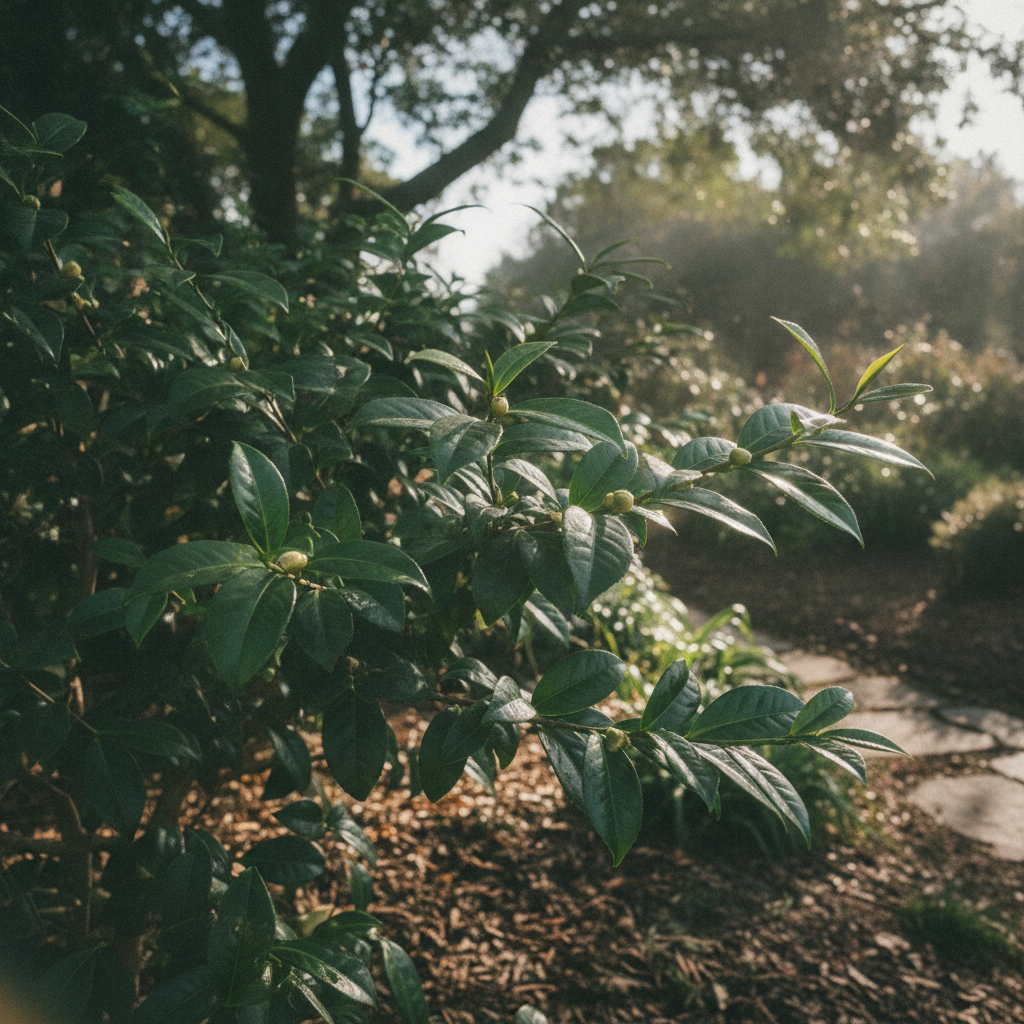

How To Grow Black Tea
Learn how to grow black tea at home: soil, climate, and the five processing steps from fresh leaf to a finished cup of black tea.

La sagesse est le chemin vers un meilleur thé.
Recevez notre guide d'infusion gratuit : la bonne eau, la bonne température et le bon temps d'infusion pour chaque thé de notre catalogue. Vous êtes aussi informé en premier des nouvelles récoltes.
Pas de spam. Désinscription à tout moment.
Consultez votre boîte mail.
Le guide est en route.