Your Cart is Empty
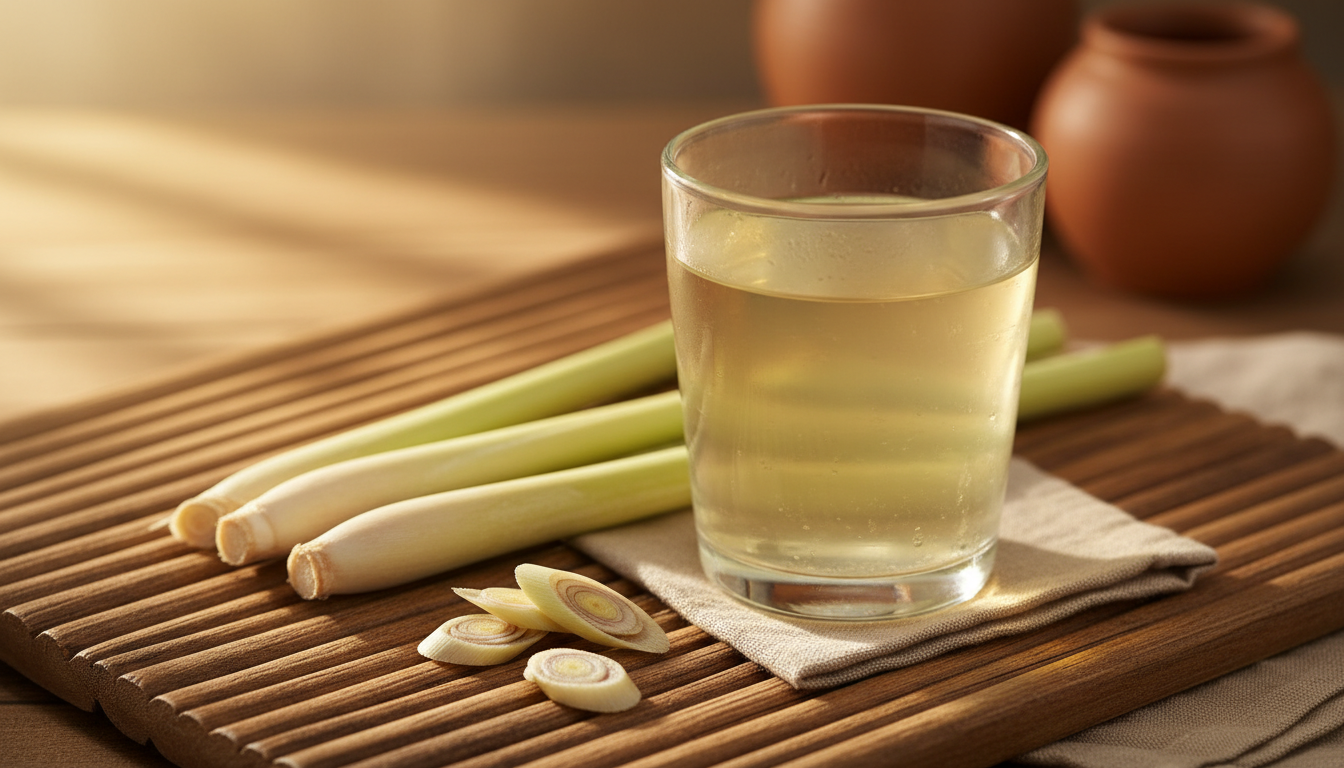

Lemongrass tea is one of the most underrated herbal infusions in the Western tea market. Made from the leaves and stalks of Cymbopogon citratus — a tall, clumping tropical grass native to South and Southeast Asia — it produces a bright, citrus-forward cup that tastes clean, refreshing, and nothing like what most people expect from a "grass." It has zero caffeine, pairs well with other herbs, and has a culinary pedigree that stretches back centuries across Thai, Vietnamese, and Indonesian kitchens.
I have been sourcing and blending teas for over 15 years, and lemongrass is one of those ingredients that consistently surprises people. Customers expecting something mild or grassy get a cup that hits with genuine citrus punch — closer to lime zest than to lawn clippings. The quality gap between good lemongrass and mediocre material is significant, and it comes down to species, freshness, and how the leaves were dried. This guide covers what lemongrass tea actually is, how it tastes, how to brew it properly, and what to look for when buying.

Lemongrass tea is an herbal infusion — a tisane — made by steeping the leaves, stalks, or both of the Cymbopogon citratus plant in hot water. Like chamomile, peppermint, and rooibos, it contains no Camellia sinensis and is therefore not a "true tea" in the botanical sense. It is naturally caffeine-free.
Cymbopogon citratus belongs to the Poaceae family — the grass family — making it a botanical relative of bamboo, sugarcane, and the grass on your lawn, though it tastes nothing like any of them. The genus Cymbopogon contains around 55 species, several of which are commercially important. C. citratus (West Indian lemongrass) is the species most commonly used for tea and cooking.
C. flexuosus (East Indian lemongrass or Cochin grass) is primarily cultivated for essential oil production and has a slightly different aromatic profile — more herbaceous, less bright.
The plant is native to maritime Southeast Asia, with its historical range centred on Sri Lanka, southern India, and the Malay Peninsula. Today it is cultivated across the tropics, with major production in India, Thailand, Guatemala, and several East African countries. It thrives in warm, humid conditions and cannot tolerate frost, which limits its cultivation in temperate climates to summer container growing.

The characteristic citrus aroma comes from citral, an aldehyde compound that makes up 65-85% of lemongrass essential oil. Citral is actually a mixture of two isomers — geranial and neral — and their ratio determines the exact character of the scent. Higher geranial content produces a brighter, more lemony note; higher neral content leans slightly more rose-like. This is why different lemongrass teas can smell noticeably different from one another, even when both are C. citratus. Research published in Journal of Advanced Pharmaceutical Technology & Research (2011) confirms that citral is the primary bioactive compound in C. citratus, accounting for the majority of its aromatic and pharmacological properties.
The plant has been used in traditional medicine systems across Southeast Asia and the Indian subcontinent for centuries, particularly in Ayurvedic and Thai traditional practices. In these traditions, lemongrass infusions were associated with digestive comfort and were served after meals. These are traditional uses rooted in cultural practice, not clinically validated health claims.
Lemongrass tea has a flavour profile that sits at the intersection of citrus and herb, with a clean finish that makes it one of the most immediately approachable herbal teas available.
The dominant impression is bright citrus — specifically lemon and lime, with an emphasis on zest rather than juice. This is not a sour or acidic flavour. It is aromatic citrus: the scent of lemon peel, the zing of lime leaf, the clean sharpness of citronella without the chemical edge. Behind the citrus, there is a subtle grassiness — a vegetal note that is pleasant rather than earthy, and that fades quickly into a slightly sweet finish.

The body is light to medium. Lighter than rooibos, comparable to chamomile, but with more flavour density per sip. There is zero astringency and no bitterness when brewed correctly. The mouthfeel is clean — no coating, no drying sensation, no lingering heaviness. This clean finish is one of the reasons lemongrass works so well iced and as a base for blends.
The aroma contributes significantly to the perceived taste. A properly brewed cup of lemongrass tea fills the room with a fragrance that is unmistakably citrus-herbal. Covering the vessel during steeping preserves the volatile aromatics that define the experience.
One thing I consistently notice in our sourcing: lemongrass that has been cut and dried quickly at the right temperature retains its bright citrus character. Material that has been dried too slowly or stored poorly develops a flat, straw-like taste that is unpleasant and one-dimensional. Freshness matters more with lemongrass than with many other dried herbs.
Lemongrass is forgiving to brew compared to green tea or white tea, but the method still matters — particularly the choice between fresh and dried material.

If you have access to fresh lemongrass stalks (available at most Asian grocery stores), this produces the most vibrant cup. Cut 2-3 stalks into 5 cm pieces and bruise them lightly with the flat side of a knife or a pestle. This breaks the cell walls and releases the citral-rich oils.
Place the bruised pieces in a pot with 500 ml of water. Bring to a gentle boil, then reduce heat and simmer for 5-7 minutes. Strain and serve. The result is a tea with a more nuanced, layered citrus profile than dried lemongrass can deliver — you get the full spectrum of volatile compounds that are partially lost during drying.
Fresh lemongrass tea benefits from a slightly longer extraction time than dried because the plant material is intact and the oils need heat and time to release fully.
Dried lemongrass is more convenient, stores well, and is what most tea blends contain. Use 1-2 teaspoons of dried, cut lemongrass per 250 ml of water. Pour water at 95-100°C — a full or near-full boil. Unlike delicate green teas, lemongrass handles boiling water without turning bitter.

Steep for 5-7 minutes. At 5 minutes, the citrus character is present and clean. At 7 minutes, the herbaceous undertones develop more fully. Beyond 10 minutes, the tea does not turn bitter but it does become less interesting — the bright top notes dissipate and you are left with a flat, one-note infusion.
Cover the cup or teapot during steeping. The citral compounds are volatile, and an open steep loses aroma to the air.
Lemongrass is one of the best herbs for cold brewing. Add 2 tablespoons of dried lemongrass to 1 litre of cold water and refrigerate for 8-12 hours. The slow extraction produces a remarkably clean, bright infusion with none of the flatness that can come from hot-brewing and then chilling. It is refreshing in a way that feels natural rather than manufactured.
For a quick iced version, brew double-strength hot (2 teaspoons per 150 ml, 5 minutes) and pour over a full glass of ice.

Lemongrass is not just a tea ingredient — it is one of the foundational aromatics of Southeast Asian cooking, and understanding its culinary role helps explain why it makes such a good infusion.
In Thai cuisine, lemongrass is one of the "holy trinity" of aromatics alongside galangal and kaffir lime leaves. It is essential in tom yum soup, where sliced stalks are simmered in the broth to provide the citrus backbone of the dish. Thai cooks use the lower, bulbous portion of the stalk for cooking (where the oils are most concentrated) and the upper leaves for tea — a practical separation that maximises the use of the entire plant.
Vietnamese cuisine uses lemongrass in marinades, particularly for grilled meats. The combination of lemongrass, fish sauce, and garlic is a flavour base that appears across dozens of Vietnamese dishes. In Indonesia, lemongrass (known as sereh) is a core ingredient in rendang, nasi goreng, and many curry pastes.
In all of these culinary traditions, lemongrass is valued for the same quality that makes it excellent in tea: its ability to provide bright citrus flavour without acidity. Unlike lemon juice, which adds sourness, lemongrass adds citrus aroma and flavour while keeping the overall taste profile neutral to slightly sweet. This is why it blends so well with other ingredients — it enhances without dominating.

We source our lemongrass from Thailand, where the plant is a primary agricultural crop rather than a byproduct. Producers growing for both cooking and tea markets treat it with corresponding care, and that shows in the material — consistent cut, vivid aroma, clean drying. The culinary tradition and the quality standard are not coincidental.
Lemongrass is one of the most versatile blending ingredients in herbal tea. Its bright citrus character and clean finish make it a natural partner for a wide range of herbs, spices, and even true teas.
Lemongrass and ginger is arguably the most popular herbal tea combination in the world, and for good reason. The citrus brightness of lemongrass balances the warm, peppery heat of ginger, creating a cup with more complexity than either ingredient achieves alone. This pairing is traditional across much of Asia and has become a global standard in wellness-oriented tea blends.
A small amount of lemongrass blended with Gunpowder green tea or other green teas adds a citrus lift without masking the tea's own character. The lemongrass provides a bright top note that plays well against the vegetal, marine qualities of Japanese green teas like Gyokuro and the toasty, nutty notes of Chinese greens.

Lemongrass and mint is a combination I find genuinely well-balanced — the citrus brightness of lemongrass and the cool edge of peppermint sit in the same register without fighting each other. Both have clean finishes that keep the blend clear rather than muddled, and it works particularly well iced.
In chai-style blends, lemongrass can replace or supplement the citrus element, pairing well with cinnamon, cardamom, and clove. Thai-inspired blends sometimes combine lemongrass with galangal and ginger for a warming, aromatic cup that echoes the flavour profile of tom kha soup.
The key to blending with lemongrass is restraint. It is a potent ingredient, and too much will dominate a blend. In our experience, lemongrass should typically make up 15-30% of a blend by weight — enough to contribute its citrus character without overshadowing the other components.
Lemongrass can be grown at home, even in temperate climates, with one important constraint: it cannot survive frost.

In tropical and subtropical regions (USDA zones 10-12), lemongrass is a perennial that grows into substantial clumps over multiple years, reaching 1-1.5 metres in height. In cooler climates, it must be treated as an annual or grown in containers that can be brought indoors during winter.
Starting lemongrass is straightforward. Fresh stalks purchased from a grocery store will often root in a glass of water within 1-2 weeks, provided the base of the stalk is intact. Once roots appear, plant in well-draining soil in full sun. The plant prefers consistently moist soil but will tolerate brief dry periods once established.
For tea purposes, harvest the outer leaves by cutting them about 5 cm above the soil line. The inner, newer leaves should be left to continue growing. Leaves harvested in the morning, after the dew has dried but before the heat of the day, will have the highest concentration of essential oils.
To dry lemongrass for tea at home, cut leaves into 2-3 cm pieces and spread them in a single layer on a drying rack or screen in a warm, well-ventilated area out of direct sunlight. Drying takes 3-7 days depending on humidity. The leaves are ready when they snap cleanly rather than bending. Store in an airtight container away from light and heat.

Container growing works well. A pot of at least 30 cm diameter will support a healthy lemongrass plant for a full growing season. Use a rich, well-draining potting mix and feed monthly with a balanced fertiliser during the growing season.
Lemongrass tea contains zero caffeine. This is not a reduced amount or a trace amount — Cymbopogon citratus does not produce caffeine at all. It is inherently caffeine-free at the cellular level, unlike decaffeinated true teas where caffeine is present in the leaf and must be removed through processing.
This makes lemongrass suitable for drinking at any time of day, including the evening. It is a practical option for anyone who is caffeine-sensitive or who wants a flavourful hot or cold drink without the stimulant effect. For context, a cup of green tea contains approximately 25-45 mg of caffeine, and a cup of black tea 40-70 mg. Lemongrass contains none.
When lemongrass is blended with true tea (green, black, oolong, white), the blend will contain caffeine from the tea component. A pure lemongrass herbal infusion — whether from dried or fresh material — will always be caffeine-free. If you enjoy the flavour profile but want the caffeine lift, try it blended with Genmaicha for a nutty, citrus-herbal cup that delivers both.
The quality range in commercially available lemongrass tea is wider than most people expect. Here is what to look for and what to avoid.
Lemongrass tea is available in three forms: loose-leaf cut pieces, tea bags, and whole dried leaves. Loose-leaf cut pieces (typically 1-3 cm lengths) offer the best balance of convenience and quality. They have enough surface area to brew efficiently while retaining aromatic compounds better than the dust and fannings found in most tea bags. Whole dried leaves look impressive but brew inconsistently because the surface area exposed to water varies.
Quality dried lemongrass should be pale green to yellow-green. Brown or grey material has been over-dried, stored too long, or both — and will produce a flat, straw-like infusion lacking the characteristic citrus brightness. Open the package and smell it: good lemongrass smells distinctly of lemon and citrus even in its dried state. If there is little or no aroma before brewing, there will be little flavour in the cup.
Evenly cut pieces indicate controlled processing. A mix of dust, fragments, and inconsistently sized pieces suggests bulk commodity processing with less attention to quality. This is not just an aesthetic concern — consistent piece size means consistent brewing.
Lemongrass from Thailand, India, and Guatemala dominates the market. Thai lemongrass has consistently been our choice at Valley of Tea — the aroma intensity is higher, the cut quality is more reliable, and the drying is cleaner than what we have seen from most other origins. We evaluate every batch primarily on scent and colour: good lemongrass smells distinctly citrus before it ever hits the water, and the colour should be pale green to yellow-green with no browning. If either of those is off, the batch goes back.
For a deeper look at the phytochemistry behind lemongrass quality, this 2024 GC-MS analysis of Thai lemongrass essential oil confirms that citral content — the key marker of aroma quality — varies significantly with growing conditions and origin.
Lemongrass is relatively pest-resistant due to its high citral content (many insects find citronella compounds repellent), which means organic cultivation is practical and widely available. If organic certification matters to you, it is readily available for lemongrass without significant quality trade-offs.
Store dried lemongrass in an airtight container away from light, heat, and moisture. Under proper conditions, it retains good flavour for 12-18 months. After that, the citral content degrades and the tea becomes progressively flatter. Unlike aged pu-erh or some oolongs, lemongrass does not improve with age — use it while it is fresh. For a comparison in how different herbal infusions age and store, the PMC review on lemongrass phytochemistry and traditional uses provides useful context on compound stability over time.
Comments will be approved before showing up.