













Matcha Plants
Matcha plants are not a separate species. Every bowl of matcha you drink comes from Camellia sinensis var. sinensis, the same plant that produces green, white, oolong, and black tea. What separates matcha from those other teas is not genetics - it is how the plant is farmed and processed. Shade cultivation, selective harvest, and stone milling are what create the vibrant green powder in your cup.
My first encounter with matcha, over 20 years ago, was a plain foil packet with a detailed description of the growing method. That explanation stuck with me because it made clear that the magic was in the farming, not some exotic plant variety.

The Camellia sinensis Plant: Botany Basics
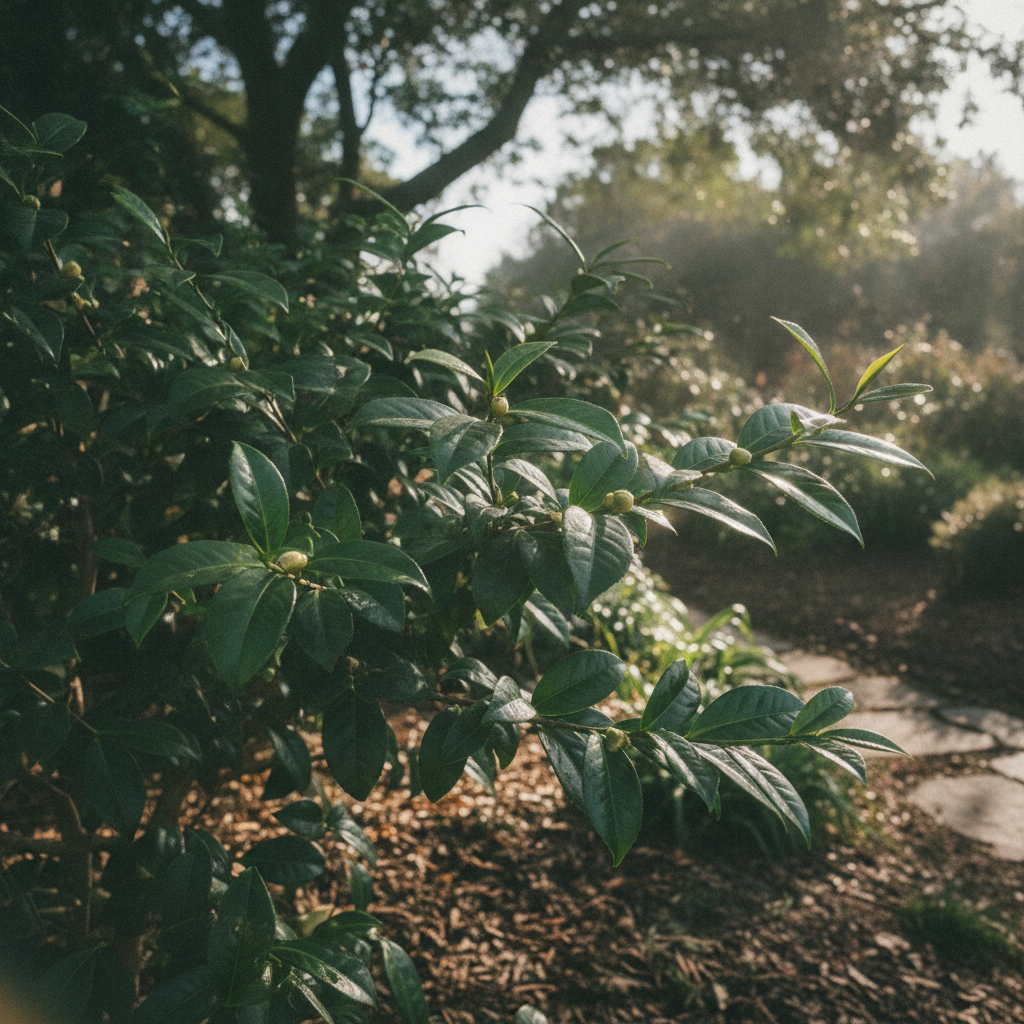
Camellia sinensis is an evergreen shrub native to subtropical Asia. Left unpruned, it can grow to 10 metres or more. On productive tea farms, it is kept to around 1 metre through regular pruning, which encourages dense, accessible new growth at the top of the canopy.

The plant's leaves, buds, and stems are all usable across different tea categories. For matcha, only the flat leaf blades from the youngest growth at the shoot tips are selected. Older leaves and stems are removed before drying because they dilute the amino acid concentration and produce an inferior powder.
Camellia sinensis thrives in subtropical climates with high humidity, acidic soil (pH 4.5-6), and temperatures between 13 and 29°C. Regions that get morning mist and afternoon sun, with well draining hillside terrain, consistently produce higher amino acid concentrations in the leaf. This is why altitude and microclimate matter as much as geography when evaluating origin.
Within the species, there are many cultivated varieties (cultivars) bred for specific traits. The Yabukita cultivar dominates Japanese production - it is frost resistant and widely adaptable. The Okumidori cultivar is prized for ceremonial matcha for its more pronounced umami character and the smooth, low-bitterness profile it produces in the cup.
Shade Growing: The Step That Changes Everything
Shading is the single agricultural intervention that makes matcha production distinct. Three to four weeks before harvest, growers cover the tea plants using bamboo screens or black cloth, blocking 70-90% of available sunlight.

The plant responds by rapidly increasing chlorophyll production to capture the reduced light. This is what gives ceremonial matcha its deep, saturated green colour. At the same time, the reduction in sunlight slows the conversion of L-theanine into catechins. The result is a leaf with more L-theanine, which contributes to the characteristic umami and smooth savouriness, and fewer of the astringent catechins that make unshaded green teas sharper on the palate.
Japanese matcha producers typically shade for 20 to 30 days. The longer and more complete the shading, the more intense the colour and umami character. Chinese matcha production often uses shorter shading periods or skips shading entirely, which is one reason why Japanese and Chinese matcha taste and look different despite coming from the same plant species.
The shading method itself also varies in ways that affect the cup. Our Uji producer uses traditional straw shading for the ceremonial grade - the straw creates a more diffuse light reduction and the material adds a subtle warmth to the growing environment. The Kagoshima supplier uses synthetic nets instead.
In the cup, the straw-shaded Uji has noticeably more sweetness and umami depth. Both are well-shaded teas, but the difference is real. The practical consequence for buyers: shading duration and method are worth asking about. A producer who can specify their shading approach and confirm 25 or more days is telling you something meaningful about the cup character you will get.
From Leaf to Powder: Harvest and Processing
The first flush harvest in May produces the leaves used for ceremonial grade matcha. These are the youngest, most shade stressed leaves, and they carry the highest concentration of amino acids and chlorophyll accumulated during the shading period.

After picking, stems and veins are removed from the leaves before drying. This intermediate product is called tencha. The removal of fibrous stems and veins is important because they contribute bitterness and uneven texture to the final powder. Tencha destined for high grade matcha is more carefully sorted at this stage.
Stone mills then grind the dried tencha into matcha. The mills run slowly, at temperatures kept below 40°C, to prevent heat-induced oxidation that would degrade the colour and aroma. Grinding 30 grams of tencha takes 30 to 60 minutes. This is why stone ground matcha is expensive: production is slow by design.
I know the difference stone grinding makes because I have tasted it directly against machine-milled alternatives. Stone ground matcha produces a much finer particle size. That finer powder blends more completely into water, giving you a smoother suspension and a noticeably richer, more rounded taste.
Machine-milled matcha feels slightly grainy by comparison and the flavour is flatter. When I prepare matcha at home with a chasen, I use water at 70°C - any hotter and the amino acids that give matcha its character start to break down.
Where the Best Matcha Plants Are Grown
Japan produces the benchmark for matcha quality, and three regions dominate: Uji in Kyoto Prefecture, Nishio in Aichi Prefecture, and Yame in Fukuoka Prefecture.
Uji is the oldest matcha-producing region and is where I source ceremonial grade matcha when I want the cleanest example to taste against. The soil mineral profile, the frequency of valley mist, and the established cultivar selection all contribute to a higher amino acid concentration in the leaves than most other origins can match. For straight whisked matcha where you are evaluating the tea on its own, Uji ceremonial is the standard.
Nishio is the largest volume producer, supplying much of the matcha used in food manufacturing and lattes. Yame in Fukuoka is smaller but produces exceptional ceremonial grades, particularly from gyokuro-style shaded plots.
China, primarily in eastern and central China, produces matcha at significantly lower cost. The quality range is wide: some Chinese tencha producers have invested in Japanese-style shading and stone milling, while others produce a powder that is paler, less umami, and ground more coarsely.
When reading product labels, "Japanese matcha" with a named region (Uji, Nishio, Yame) tells you something specific. "Premium matcha" without an origin tells you very little.
Conclusion
Matcha plants are Camellia sinensis, the universal tea plant. What creates quality is the layer of decisions made on top of that biology: cultivar selection, shading duration, harvest timing, stem removal, and the speed of stone milling.
A named Japanese origin with a long shading period and confirmed stone grinding will consistently outperform unlabelled alternatives. If you are looking at matcha and the label does not tell you where it came from or how it was processed, that absence is itself useful information.
Lämna en kommentar
Kommentarer granskas innan de visas.
Mer i Valley of Tea Blog | Tea Guides, Origins & Brewing Tips
The Complete Guide to Drinking Tea
What tea is, how the main types differ in the cup, and how to brew each one properly. Water temperature, steeping times, storage and how to get more than one cup from your leaves.
Läs mer

Black Tea: Types, Processing, and How to Brew It
Black tea is fully oxidized Camellia sinensis. Compare Assam, Darjeeling, Keemun, and Ceylon varieties. Learn processing, brewing, and caffeine levels.

How To Grow Black Tea
Learn how to grow black tea at home: soil, climate, and the five processing steps from fresh leaf to a finished cup of black tea.

Visdom är vägen till bättre te.
Få vår kostnadsfria bryggguide: rätt vatten, temperatur och dragtid för varje te vi säljer. Du får också veta först när nya skördar kommer in.
Ingen skräppost. Avsluta när du vill.
Kolla din inkorg.
Guiden är på väg.