Your Cart is Empty
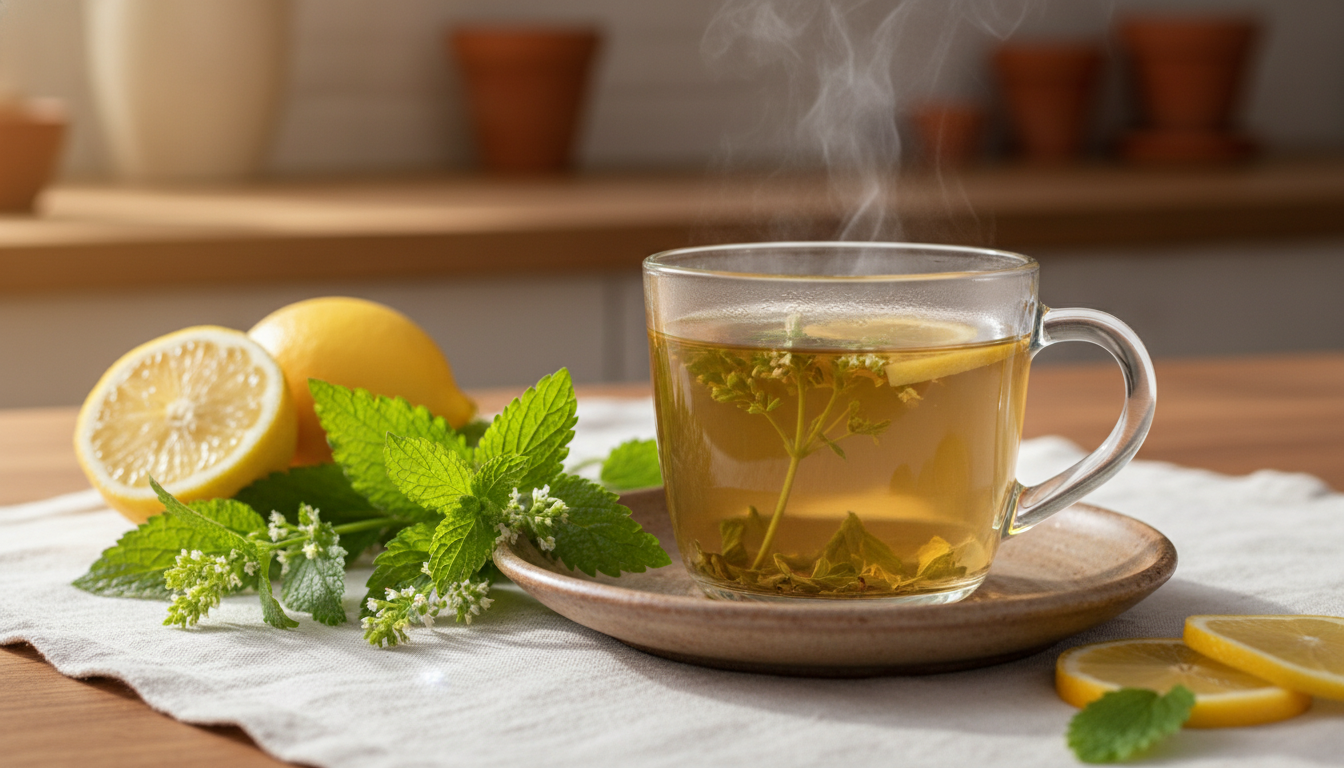

Balm tea is one of the quieter pleasures in herbal tea. Brewed from the leaves of Melissa officinalis — commonly called lemon balm — it produces a pale, citrus-scented cup that is mild enough for every day and aromatic enough to be interesting. I keep dried lemon balm stocked year-round because it blends well and holds its own as a single herb. If you searched for "balm tea" and landed here, this is what you were looking for.
Balm tea is an herbal infusion made from the leaves of Melissa officinalis, a perennial herb in the mint family (Lamiaceae). The common name "balm" is short for "lemon balm" — a reference to the plant's distinctly lemony scent, which comes from volatile compounds including citral, citronellal, and linalool.

The plant originates in the Mediterranean basin and western Asia, but it has been cultivated across Europe for over a thousand years. Medieval monastery gardens kept lemon balm as a standard herb. The German physician Paracelsus called it "the elixir of life." Today "balm tea," "lemon balm tea," and "melissa tea" all refer to the same thing.
The leaves contain rosmarinic acid and flavonoids. Lemon balm has been traditionally drunk for its calming character — it is one of those herbs where the folk reputation and the cup experience align. As a cup of tea, balm tea is best understood as a gentle, pleasant herbal — not a medicinal dose.
For dried lemon balm, use 1–2 teaspoons per 250 ml cup. Pour water at 95°C over the leaves and steep for 5–7 minutes. For fresh leaves, use roughly 8–10 large leaves per cup.

Covering during steeping is especially important with lemon balm — it is a delicate herb, and the volatile compounds including citral, citronellal, and linalool escape as steam if you leave the cup uncovered. A saucer on top is enough. Cold brewing works well: 2–3 tsp in 500 ml cold water, refrigerate 4–6 hours.
It blends well with chamomile in equal parts for a rounder cup, or 3:1 lemon balm to mint for more structure. I find it most satisfying on its own, though — there is nothing to hide behind when you brew it solo, which means the quality of the herb shows immediately. Before bedtime is when I reach for it most.
The flavor is mild and clean, with a soft herbal background. It is not sour. It pairs well with chamomile, peppermint, lavender (sparingly), and green rooibos. Sweetened with honey and served over ice, it is one of the better non-fussy summer drinks.
Lemon balm is one of the easiest herbs to grow. It spreads aggressively — use containers or root barriers. Harvest before flowering for best aroma.

Drying options: bundle drying (1–2 weeks), dehydrator (35–40°C, 2–4 hours), or oven at lowest setting. Store dried leaves whole in sealed glass jars, 12–18 months shelf life.
I do not grow it myself. We source our lemon balm from Portugal and Greece — regions where the growing conditions suit the plant well. For us the quality check is entirely in the scent: it needs to be concentrated lemony goodness, sweet and aromatic with a very nice coating aroma.
If the scent is faint or flat, we do not accept it. If you want a high-oil cultivar for growing, Quedlinburger Niederliegende is worth looking for.
Balm tea is a simple, reliable herbal. The key things to remember: 95°C water, 5–7 minutes steep time, cover during steeping to hold the aromatics, and harvest before flowering if you grow your own. We stock dried lemon balm at Valley of Tea.
Comments will be approved before showing up.