
Your Cart is Empty
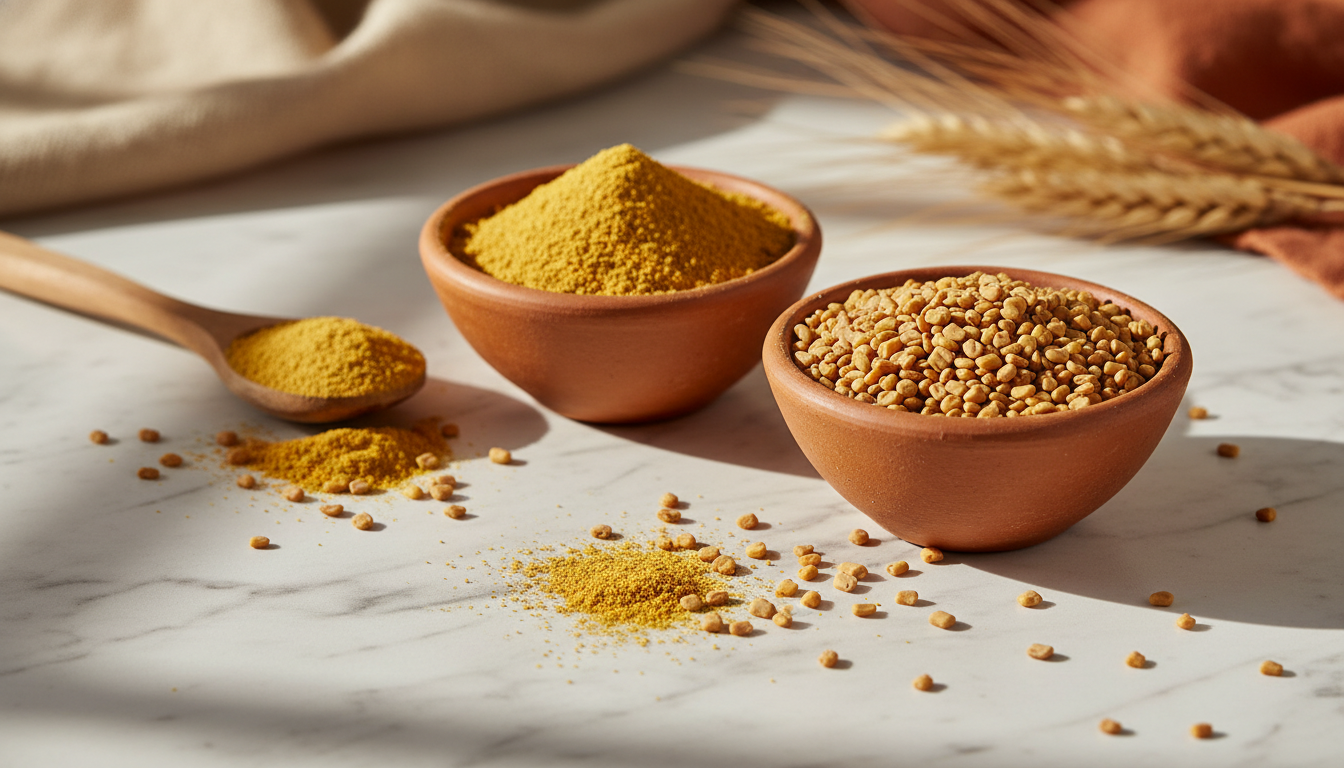

Fenugreek is one of those spices that quietly holds entire cuisines together. You may not always notice it by name, but you have almost certainly tasted it. That warm, maple-adjacent note in a curry powder blend or the slight bitterness running through a slow-cooked dal is fenugreek at work. Known as methi across South Asia, this plant has been a kitchen staple for thousands of years.


This guide covers everything you need to know about fenugreek methi powder: where it comes from, how each form differs, how it tastes, how to work with it in the kitchen, and what to look for when buying.
Fenugreek, or Trigonella foenum-graecum, is an annual plant in the legume family. It grows across a wide belt from the Mediterranean through the Middle East and into South Asia, with significant cultivation also in Ethiopia and parts of East Africa. The plant is compact, clover-like, and produces clusters of small pods. Each pod holds a handful of hard, pale yellow-brown seeds - those seeds are fenugreek as a spice.
The spice has been cultivated for millennia. Ancient Egyptians used it medicinally and in embalming preparations. Greek and Roman physicians recorded it extensively. That long history of use across many cultures is reflected in the names: methi in Hindi and across much of India, hilbe in Yemen and the Arabian Peninsula, abish in Amharic, and bockshornklee in German - each name rooted in a different culture's long relationship with the plant.
India is by far the largest producer and consumer of fenugreek. The state of Rajasthan accounts for the bulk of Indian production, with the Nagaur district particularly well known for seed quality. Indian fenugreek reaches every corner of the country and underpins the spice blends of multiple regional cuisines.
In the Mediterranean, fenugreek has a continuous history stretching back to antiquity. Egypt, Morocco, and Turkey all grow it, and it features in traditional cooking there - typically in bread, in spiced condiments, and as an infusion. The flavors tend to be used more sparingly than in South Asian cooking, but the plant is deeply embedded in the food culture of the region.
Ethiopia is the third major pole of fenugreek culture. There it appears in berbere, the complex spice blend that forms the backbone of Ethiopian cuisine, and in other preparations. Ethiopian fenugreek is slightly different in character from Indian varieties - the seeds tend to be a touch more bitter, which works well in the bold, layered spice blends Ethiopian cooks build.
The plant thrives in well-drained soil with a dry climate during seed maturation. It does not need much water, which is one reason it does so well in the semi-arid regions of Rajasthan and the Horn of Africa. Harvest happens once a year, and the seeds are dried and cleaned before being sold whole or processed into powder.

Fenugreek appears in multiple forms in the kitchen, and they are not interchangeable. Understanding the differences helps you use each one correctly.
The whole seeds are extremely hard - harder than most other spices. You cannot bite into one comfortably. They need heat to unlock their flavor. The standard technique in Indian cooking is tadka, or tempering: seeds are dropped into very hot oil or ghee at the start of cooking, where they sizzle, darken slightly, and release a deep, nutty aroma into the fat. That flavored fat then becomes the base for the rest of the dish. Whole seeds are also soaked overnight and added to doughs, fermented batters, or sprouted.
Fresh fenugreek leaves are sold in bunches in Indian grocery stores and are treated as a leafy vegetable, not just an herb. The flavor is bitter and green, more assertive than spinach, with that characteristic fenugreek warmth underneath. Methi paratha - flatbread made with chopped fresh methi worked into the dough - is one of the best-known ways to use them. Fresh leaves also go into methi dal, methi chicken, and methi matar malai. If you find them, use them within a few days. They wilt quickly.
Kasuri methi is the dried version of the fresh leaves. The name comes from Kasur, a city in Punjab (now Pakistan) historically associated with the dried product. These dried leaves have a more concentrated, slightly different flavor than fresh - still bitter and aromatic, but with a dried-herb quality. They are crumbled into dishes toward the end of cooking. A tablespoon of kasuri methi stirred into a butter chicken or a dal in the last few minutes adds a herbal note that transforms the dish. This is different from fenugreek seed powder and not a substitute for it.
The powder is ground from dried whole seeds. It is ready to use immediately, distributes evenly through sauces and batters, and delivers a consistent intensity of flavor. Use it when you want fenugreek flavor woven through a dish rather than concentrated in whole seeds. It is the most versatile form for home cooks who are not cooking Indian food daily. A general conversion: one teaspoon of whole seeds yields roughly three-quarters of a teaspoon of powder.
Fenugreek has a distinctive taste that sits at the intersection of bitter, sweet, and earthy. The most common comparison is maple syrup, and it is not a coincidence - fenugreek contains sotolone, the same compound responsible for maple's characteristic aroma. This is why fenugreek seed powder is occasionally used as a natural maple flavoring in food production.

But the sweet note does not stand alone. Raw fenugreek powder is noticeably bitter, with a slightly rough finish. This bitterness comes from compounds called saponins that are present in the seeds. It is not unpleasant in context - it provides balance in rich, fatty dishes - but it is too forward if you add too much or use it raw without cooking it.
The two main techniques are toasting and soaking.
Toasting: dry-roast whole seeds or the powder briefly in a hot pan before using. Stir constantly and pull off the heat as soon as you smell the aroma change - nutty and caramelized rather than raw. Thirty to forty-five seconds in a hot dry pan is often enough. Toasting reduces the saponin bitterness and pushes the sweet, nutty notes forward. Overtoasted fenugreek turns acrid, so stay with it.
Soaking: whole seeds soaked overnight in cold water become significantly less bitter. The water draws out some of the saponins. Drain, rinse, and use soaked seeds in doughs or as a tempering ingredient. Soaked seeds are softer and easier to grind if you are making fresh powder.
Starting with less than you think you need is also sound practice. Half a teaspoon of powder goes further than most recipes suggest. The flavor develops as it cooks. Taste, then adjust.

Fenugreek is a component of several foundational spice blends. In panch phoron - the Bengali five-spice mix of fenugreek, nigella, cumin, fennel, and mustard seeds - whole fenugreek seeds are used along with the others. The blend is typically tempered whole in oil or ghee at the start of cooking. South Indian sambar powder contains ground fenugreek as a key note, balancing the heat of dried chilies. Ethiopian berbere includes ground fenugreek alongside coriander, black pepper, ginger, and a range of other spices - the fenugreek contributes body and that slightly sweet depth. Yemeni hawayij is another example: a spice blend built around fenugreek, turmeric, and black pepper, used in coffee, stews, and rice dishes.
Tadka is one of the most important techniques in Indian cooking, and fenugreek is a frequent part of it. The idea is simple: whole spices are bloomed in hot fat to release their volatile aromatics into the oil, which then coats every ingredient in the dish. For fenugreek seeds, the fat needs to be genuinely hot before the seeds go in. They should sizzle immediately. Watch for them to turn a shade darker - pale golden to light brown - then add your next ingredient or pour the flavored oil over the finished dish. Too cool, and nothing happens. Too hot for too long, and the seeds turn bitter.
Methi dal is a classic preparation: lentils simmered with onion, tomato, and ginger, finished with a tadka that includes fenugreek seeds and cumin. The fenugreek plays off the earthiness of the lentils well. If you are working with powdered fenugreek rather than seeds, stir a quarter to half a teaspoon into the simmering dal five to ten minutes before serving. That gives it enough time to cook through without losing the aromatic notes.
Methi paratha is flatbread with chopped fenugreek leaves worked into whole wheat dough. Fresh leaves are ideal, but kasuri methi works when fresh is not available. The leaves add a slightly bitter, herbal character to the bread that pairs well with yogurt, pickles, or simply butter. The dough is rolled out and cooked on a dry tawa or cast iron pan. This is one of the clearest expressions of fenugreek flavor in a single simple food.
Aloo methi - potatoes cooked with fenugreek leaves - is one of the most popular vegetarian dishes in North Indian home cooking. The slight bitterness of the methi cuts through the starchiness of the potato. You can achieve a similar effect using a small amount of fenugreek powder in potato-based dishes, though the flavor will be different from fresh leaves. Fenugreek powder also works well with cauliflower, carrots, and root vegetables.
Fenugreek powder adds depth to slow-cooked meat dishes. It pairs naturally with lamb and goat, where its slightly bitter, earthy character stands up to the richness of the meat. In North Indian cooking, it appears in dishes like methi gosht - lamb cooked with fresh or dried fenugreek leaves. For home cooks without access to fresh methi, a small amount of powder works as a starting point, with kasuri methi stirred in near the end.
Fenugreek seeds have been used as an infusion for generations across India, the Middle East, and North Africa. The preparation is simple: take one teaspoon of whole fenugreek seeds, lightly crush them if you want a stronger infusion, and steep them in 250ml of hot water for five to ten minutes. Strain and drink. The flavor is earthy, slightly bitter, and warming - closer to a grain tea or herbal infusion than to black tea.
Some people lightly toast the seeds first before brewing, which rounds the flavor and reduces the sharpness. Others soak the seeds overnight and then simmer them briefly in water to make a more concentrated preparation. Adding a small amount of honey, a slice of ginger, or a pinch of cinnamon makes the flavor more approachable if you find it too austere on its own.
Fenugreek seed tea has a long history of traditional use in kitchens across South Asia and the Mediterranean. It is drunk as a warming infusion, particularly in cooler months, and is part of everyday food culture in many households. This is traditional use, not a medical claim.
Whole seeds should be uniformly pale yellow-brown with a slight sheen. They should be hard and intact, not cracked or shriveled. Avoid bags with visible dust, broken seeds, or mixed debris. The smell should be clean and distinctive - that warm, slightly sweet, faintly bitter aroma. If seeds smell flat or stale, they are too old.
For powder, color matters: good fenugreek powder is a warm golden to light amber tone. Pale yellowish-white powder has likely been cut or is very old. Brown or grey tones suggest overroasting or improper storage. The smell test applies here too - the powder should have an immediately recognizable aroma when you open the jar. Smell it before you use it each time. If the scent has faded, so has the flavor.
Buying from a supplier with reasonable turnover is more reliable than buying from a supermarket shelf where the jar may have sat for two years. Specialty grocery stores, Indian grocery shops, and direct importers all tend to have better turnover than general supermarkets for these kinds of spices.

Ground fenugreek loses potency faster than whole seeds. Store the powder in an airtight container, away from heat and direct light. Under good conditions, fenugreek powder holds its flavor for about six to eight months. After that, it fades rather than spoils - the bitterness persists longer than the sweeter aromatic notes, which means old powder makes a dish taste flat and astringent.
Whole seeds last considerably longer - up to two to three years in proper storage. If you cook Indian food regularly and go through fenugreek at a reasonable pace, buying whole seeds and grinding small batches as needed gives you better flavor. If fenugreek is something you use occasionally, powder is more practical.
If you grind your own, a spice grinder handles fenugreek well. The seeds are hard, but most blade grinders and burr grinders manage them without issue. Dry-toast the seeds before grinding for easier processing and better flavor in the finished powder.
Our Fenugreek Powder is ground from whole seeds and works in any of these applications straight from the jar. A small jar lasts a long time because a little goes far. Add it to your next curry powder blend. Stir a quarter teaspoon into a pot of lentils. Toast it lightly and fold it into bread dough. Try brewing the seeds as an infusion. The best way to understand fenugreek is simply to cook with it regularly - once you recognize the flavor, you will start noticing it everywhere.
Comments will be approved before showing up.