
Your Cart is Empty
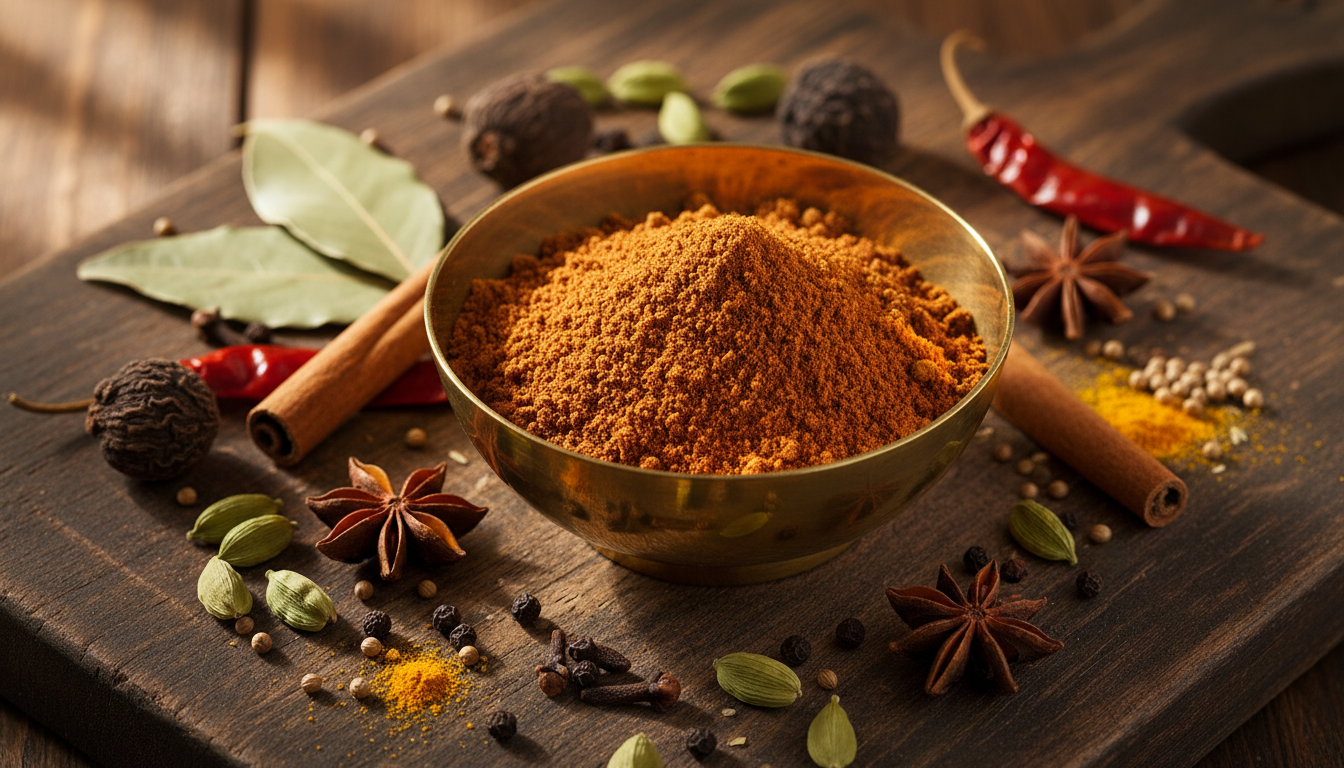

Garam masala is the most important spice blend in Indian cooking. The name translates literally from Hindi as "hot spices" — not hot as in chili heat, but hot in the Ayurvedic sense: spices believed to raise body temperature and stimulate metabolism. Unlike curry powder, which is a British colonial invention designed to approximate Indian flavor in a single jar, garam masala is an authentic blend with deep roots in the subcontinent's culinary and medicinal traditions.

Every region, every household, every cook has a version. There is no single recipe, but there is a logic to it — a balance of warm, aromatic, sweet, and pungent spices that, when combined correctly, produces something greater than the sum of its parts.
At Valley of Tea, we work with many of the individual spices that make up garam masala — cardamom, cinnamon, cloves, black pepper — because these same spices form the backbone of chai and other spiced tea traditions. Understanding garam masala means understanding the spices themselves. This guide covers the blend's composition, its regional variations, how to make it from scratch, how it intersects with tea, and how to judge quality when buying it.
Garam masala is a ground spice blend used primarily in South Asian cooking. It functions as a finishing spice, added in the final minutes of cooking or sprinkled over a completed dish to add a layer of warmth and aromatic complexity. This distinguishes it from most spice blends worldwide, which are added at the beginning of cooking to build a flavor base.
Garam masala works differently. It sits on top of the dish, adding fragrance and warmth without disappearing into the sauce.
The blend has no fixed formula. What defines garam masala is not a specific recipe but a category of flavor: warm, aromatic, and complex, without chili heat. The spices used are those classified in Ayurveda as "warming" — spices that generate internal heat and aid digestion. This is why garam masala is more heavily used in northern India, where winters are cold, than in the tropical south, where cooling spices like curry leaves and mustard seed take precedence. The Encyclopaedia Britannica notes that the composition of garam masala varies widely by region, with each version reflecting local climate and culinary tradition — read more at Britannica.
Historically, garam masala predates written recipes. It evolved in domestic kitchens across the Indian subcontinent, passed down through families as a proprietary blend. The ratio of spices often reflects local climate, available ingredients, and family preference.
A Punjabi household's garam masala will differ from a Kashmiri one, which will differ again from a Hyderabadi version. All are garam masala. None is more "correct" than another.

While recipes vary, most garam masala blends draw from a core set of six spices. These form the foundation, with additional spices added or subtracted depending on regional tradition and personal taste.
Elettaria cardamomum) is the aromatic anchor of garam masala. It contributes a sweet, resinous, eucalyptus-like top note that lifts the blend and keeps it from becoming heavy. The seeds inside the pod contain the essential oils — primarily 1,8-cineole and alpha-terpinyl acetate — that give cardamom its distinctive character. In garam masala, the seeds are used without the green husk, as the husk adds a papery, vegetal note that muddies the blend.
Black cardamom (Amomum subulatum) also appears in many garam masala recipes, particularly in northern India. It is a completely different spice — large, wrinkled, smoke-dried pods with a deep, camphoraceous flavor. When both green and black cardamom are used together, the blend gains both brightness and depth. Research published in 2024 found that the bioactive compounds in cardamom may support cardiovascular health through anti-inflammatory effects — see the meta-analysis on PMC.
True cinnamon (Cinnamomum verum, also called Ceylon cinnamon) and cassia (Cinnamomum cassia) both appear in garam masala, depending on the region. Indian recipes most commonly use cassia bark, which is thicker, harder, and more pungent than true cinnamon. It provides a warm, woody sweetness that forms the backbone of the blend. Ceylon cinnamon, thinner and more delicate, produces a subtler result. For garam masala, cassia's assertiveness is generally preferred — it holds its own against the other strong spices in the mix.
Cloves (Syzygium aromaticum) are the most potent spice in garam masala by concentration of essential oil. A single clove contains roughly 15 to 20 percent eugenol, the compound responsible for that intense, almost numbing, sweet-sharp flavor. In garam masala, cloves must be used with restraint. Too many and they overwhelm everything else. The correct amount adds a penetrating warmth and a faint sweetness that deepens the cinnamon and supports the cardamom. Most recipes call for 6 to 10 cloves per batch — a fraction of the amount used for other spices.
Black pepper (Piper nigrum) provides the "heat" in garam masala, though it is a different kind of heat than chili. Piperine, the active compound, creates a sharp, clean bite that stimulates the palate without the lingering burn of capsaicin. In garam masala, black pepper adds pungency and a slight sharpness that balances the sweetness of cinnamon and cardamom. Tellicherry peppercorns — large, mature berries from the Malabar coast of India — are considered the best grade for spice blends due to their complex flavor and higher piperine content.
Cumin (Cuminum cyminum) brings an earthy, slightly nutty, warm flavor that grounds the blend. Where cardamom and cinnamon provide aromatic lift, cumin provides weight and savory depth. It is one of the most widely used spices in the world and a staple across Indian, Middle Eastern, Mexican, and North African cooking. In garam masala, cumin often makes up a significant proportion of the total volume — sometimes as much as a quarter of the blend. Its flavor intensifies dramatically when the seeds are toasted before grinding, which is why the toast-and-grind method matters so much for garam masala.
Coriandrum sativum) add a bright, citrusy, slightly floral note that lightens the blend. The flavor of coriander seed bears almost no resemblance to fresh coriander leaf (cilantro) — the seed is warm and lemony where the leaf is sharp and green. In garam masala, coriander functions as a bridge between the heavy, earthy spices (cumin, pepper) and the sweet, aromatic ones (cardamom, cinnamon). Not all garam masala recipes include coriander — some purists consider it a curry powder ingredient rather than a garam masala one — but many North Indian blends use it freely.
The most widely recognized version. North Indian garam masala is heavy on the classic six: cardamom, cinnamon (cassia), cloves, black pepper, cumin, and coriander, with black cardamom as a common addition. The blend is robust and warm, designed to complement the rich, cream- and ghee-based dishes of Punjabi and Mughlai cooking — butter chicken, dal makhani, lamb rogan josh, biryani.
Bay leaves (Indian bay, Cinnamomum tamala, which is different from European bay laurel) sometimes appear. The blend is typically dark brown and deeply aromatic, with cumin and cassia dominating the nose.
Less common than in the north, but it exists. South Indian versions tend to use more black pepper, fennel seed, and sometimes star anise, reflecting the spice trade history of the Malabar coast. Coconut-based curries and tamarind-soured dishes of Kerala and Tamil Nadu call for a lighter, more peppery blend.
Some South Indian cooks skip garam masala entirely in favor of freshly ground spice pastes tailored to each dish. When a blend is used, it is often simpler — three or four spices rather than six or eight.
Kashmiri garam masala is distinctive and immediately recognizable. It includes all the standard warm spices but adds dried rose petals, saffron, and sometimes mace and nutmeg. The result is a more fragrant, almost perfumed blend that reflects Kashmir's position at the crossroads of South and Central Asian trade routes. Kashmiri cuisine uses this blend in dishes like rogan josh (the original Kashmiri version, which is milder and more aromatic than the Punjabi adaptation), yakhni (yogurt-based lamb stew), and dum aloo.
The floral notes from rose petals and the musky warmth of mace give Kashmiri garam masala a sophistication that sets it apart.
Not technically garam masala, but worth mentioning as an eastern Indian counterpart. Bengali panch phoron ("five spices") uses whole seeds — fenugreek, nigella, cumin, black mustard, and fennel — tempered in hot oil. It demonstrates how dramatically Indian spice blending varies by region. Where garam masala is dry-roasted and ground, panch phoron is used whole and fried.
The difference between freshly made garam masala and pre-ground commercial powder is not subtle. It is the difference between a vibrant, multi-layered spice blend and a flat, one-dimensional dust. The essential oils in whole spices begin to dissipate the moment the spice is ground. A jar of pre-ground garam masala that has sat on a shelf for months has lost most of what makes it worth using.
I have made my own blend from scratch — sourcing each spice individually and adjusting ratios by taste. The result was something noticeably more nuanced than any commercial version, but also more subtle. In my experience, a carefully calibrated homemade batch can be too refined for most palates accustomed to the assertive, clove-forward character of typical garam masala.
The blend we use at Valley of Tea is intentionally more mainstream for this reason — it works across a wide range of dishes without requiring people to recalibrate their expectations. If you want to experiment with something more delicate, making your own is the way to get there.
This is the standard method used in Indian kitchens. It involves two steps: dry-toasting whole spices to activate their essential oils, then grinding them to a powder.
What you need:
Step 1: Toast the spices. Place a heavy-bottomed skillet or cast iron pan over medium heat. Add the cumin, coriander, peppercorns, cardamom seeds, cinnamon pieces, cloves, and fennel seeds if using. No oil. Shake the pan frequently or stir with a wooden spoon.
Toast for 3 to 4 minutes until the spices darken slightly and become intensely fragrant. You will smell the cumin first — it becomes nutty and almost smoky. The cardamom follows with its resinous sweetness. Pull the pan off the heat the moment you detect any hint of burning. Burnt spices are bitter and will ruin the batch.
Step 2: Cool. Transfer the toasted spices immediately to a plate or bowl to stop the cooking. Let them cool completely — at least 10 minutes. Grinding warm spices releases steam, which introduces moisture and shortens shelf life.
Step 3: Grind. Use a dedicated spice grinder (a small electric coffee grinder works well) or a mortar and pestle. Grind in short bursts to a fine powder. If using a mortar and pestle, crush the larger spices first (cinnamon, peppercorns), then add the smaller seeds.
Sift through a fine mesh strainer if you want a uniform powder — any large fragments that do not pass through can go back into the grinder. Stir in the grated nutmeg at this stage if using.
Step 4: Store. Transfer immediately to an airtight glass jar. Label it with the date. Use within 3 months for peak flavor, though it will remain usable for up to 6 months.
The entire process takes about 20 minutes and produces roughly 80 to 100 grams of fresh garam masala — enough for weeks of regular cooking.

The overlap between garam masala spices and chai spices is nearly complete. Traditional masala chai uses cardamom, cinnamon, cloves, black pepper, and ginger — four of the six core garam masala ingredients. This is not a coincidence. Both garam masala and masala chai emerged from the same Ayurvedic understanding of warming spices and their effects on the body.
Some Indian households use a pinch of their garam masala directly in chai, particularly during winter. This is not standard practice — most chai preparations use whole spices rather than pre-ground blends — but it works. A quarter teaspoon of freshly ground garam masala added to a pot of simmering chai produces a complex, warming cup with more depth than a single-spice chai. The cumin and coriander in the blend add earthy and citrus undertones that you will not get from a cardamom-cinnamon-only chai.
If you want to try this, the key is restraint. Garam masala is concentrated. Too much will make the tea taste like liquid curry rather than a spiced beverage. Start with a quarter teaspoon per two cups of chai and adjust upward. Use the blend in conjunction with simmering — stir it in during the cooking phase, not after, so the spices have time to infuse into the milk and water.
The connection between garam masala and tea extends beyond chai. Many of the warming herbal infusions popular across Central Asia and the Middle East use combinations of the same spices. A simple winter tea of cinnamon, cardamom, cloves, and black pepper, simmered in water with honey, is essentially a liquid garam masala. Whether you call it tea or spice broth depends on your perspective.
Garam masala is a finishing spice. This is the most important thing to understand about how it is used, and it is the thing most Western cooks get wrong. Adding garam masala at the beginning of cooking alongside the base spices (cumin, turmeric, chili) wastes its aromatic compounds, which are volatile and break down under sustained heat. The correct method is to add garam masala in the last 5 minutes of cooking, or to sprinkle it over the finished dish.
Garam masala appears in virtually every category of North Indian cooking:
Curries and gravies. Stir half a teaspoon to a teaspoon into the sauce during the last few minutes of simmering. The spices bloom in the residual heat and perfume the dish without cooking out.
Rice dishes. In biryani and pulao, garam masala is layered between the rice and meat during the dum (slow steaming) phase. It scents the steam that cooks the rice from above.
Lentil dishes. Dal tadka — the technique of finishing a pot of cooked lentils with spiced, tempered ghee — often includes a pinch of garam masala in the tadka (the fried spice mixture).
Grilled and roasted meats. Garam masala is rubbed into lamb, chicken, or paneer before grilling or roasting. The dry heat activates the spices differently than wet cooking, producing a more intense, slightly smoky flavor.
Snacks and street food. Chaat masala (the tangy spice blend used on Indian street food) often contains garam masala as a sub-component, combined with dried mango powder, black salt, and dried mint.
Garam masala is potent. For a dish serving 4 people, half a teaspoon to one teaspoon is usually sufficient. Overuse results in a bitter, clove-heavy flavor that dominates instead of enhancing. The blend should be perceptible but not identifiable — a guest should taste warmth and complexity, not be able to pick out individual cloves or peppercorns.
The commercial garam masala sold in supermarkets ranges from adequate to poor. The fundamental problem is freshness. Whole spices retain their essential oils for a year or more. Ground spices begin losing volatiles immediately, and after 3 to 6 months on a shelf, much of the aromatic complexity is gone.
A jar of store-bought garam masala has typically been ground weeks or months before it reaches the shelf, then sits for additional months before purchase.
Filler spices. Commercial blends often pad the mix with cheap spices like turmeric, dried ginger, or excessive coriander to reduce cost. These are not traditional garam masala ingredients (turmeric especially — it is a base spice, not a finishing one).
Inconsistent quality. Without knowing the grade of the individual spices, you cannot know what you are getting. A jar that lists "cinnamon" may contain low-grade cassia bark with minimal essential oil content.
Stale aromatics. Open a jar of store-bought garam masala and sniff it. If the aroma is faint or flat, the blend has lost most of its value. Compare this to freshly toasted and ground spices, where the aroma is immediate and intense.
For everyday cooking where garam masala is one of many flavors in a complex dish, a decent commercial blend will do. Look for brands that list specific spice varieties, have a recent production date, and sell in small quantities. Indian grocery stores generally stock fresher, more authentic blends than mainstream supermarkets. Spice specialists — including online retailers — offer a middle ground between commercial powder and grinding your own.
At Valley of Tea, we source the component spices individually — cardamom, cinnamon, cloves, black pepper — and blend them ourselves. This gives us control over the grade of each spice and the ratio in the final mix. For anyone wanting to blend their own, sourcing the individual spices from a specialist gives you a significantly better starting point than splitting open commercial tea bags or buying pre-ground components. The individual spice route costs more upfront but produces a clearly better result.
For dishes where garam masala is the star — a simple dal, a finishing sprinkle on yogurt-based raita, or a spiced chai — homemade is worth the effort every time. A 2023 scoping review in PMC covering 142 clinical studies confirmed that culinary doses of herbs and spices, including the core garam masala ingredients, show meaningful benefits for metabolic health — read the review on PMC.
Whether you are buying whole spices to grind yourself or evaluating a pre-made blend, here is what to look for.
Cardamom pods should be bright green (not faded or bleached), plump, and firmly closed. Crack one open — the seeds inside should be dark, sticky, and intensely aromatic. Dry, pale seeds indicate age or poor storage.
Cinnamon sticks (cassia) should be thick, hard, and reddish-brown with a strong, sweet aroma when snapped. Thin, pale, or odorless sticks are low grade. If using true Ceylon cinnamon, look for thin, layered quills that crumble easily.
Cloves should be dark brown, oily to the touch, and release aroma when pressed between fingers. A simple test: drop a clove in water. Fresh cloves float vertically or sink due to their high oil content. Stale cloves float horizontally on the surface.
Black peppercorns should be uniformly dark, hard, and wrinkled, with a sharp, immediate bite when crushed. Gray, lightweight, or crumbly peppercorns have lost their piperine.
Cumin seeds should be ridged, olive-brown, and fragrant when rubbed between fingers. They should not be dusty or powdery.
Coriander seeds should be round, pale brown, and smell distinctly citrusy-floral when crushed. Flat or dark seeds are old.
A good garam masala powder should be dark brown (not yellow — that suggests turmeric padding), fine-textured, and intensely aromatic the moment you open the container. The smell should be warm, complex, and multi-layered. If it smells like a single spice (usually clove or cinnamon), the blend is either poorly proportioned or dominated by whatever spice was cheapest.
Understanding each component spice helps you adjust the blend to your preference.
| Spice | Flavor Profile | Role in Garam Masala | Dominance |
|---|---|---|---|
| Green cardamom | Sweet, resinous, eucalyptus | Aromatic top note, lifts the blend | Medium-high |
| Cassia/cinnamon | Warm, woody, sweet | Backbone warmth and sweetness | High |
| Cloves | Intense, sweet-sharp, numbing | Penetrating warmth and depth | Low (use sparingly) |
| Black pepper | Sharp, clean bite | Pungency and heat | Medium |
| Cumin | Earthy, nutty, warm | Savory base and weight | High |
| Coriander | Citrusy, floral, light | Bridge between heavy and light spices | Medium |
| Black cardamom | Smoky, camphoraceous, deep | Adds depth and smokiness | Low-medium |
| Nutmeg | Warm, sweet, slightly hallucinogenic at high doses | Background warmth | Low |
| Mace | Similar to nutmeg but lighter and more refined | Aromatic complexity | Low |
| Bay leaf (Indian) | Warm, cinnamon-like (different from European bay) | Subtle background | Low |
The beauty of making your own blend is that you control these ratios. Prefer a more aromatic, cardamom-forward garam masala for tea and light dishes? Double the cardamom, halve the cumin. Want something heavier and earthier for winter stews? Increase the cumin, pepper, and black cardamom. The standard recipe is a starting point, not a law.
Proper storage is the difference between a garam masala that stays vibrant for months and one that fades within weeks.
Whole spices should be stored in airtight containers away from heat, light, and moisture. A cool, dark cupboard is ideal. Do not store spices above the stove or near windows — heat and UV light accelerate the breakdown of essential oils. Whole spices stored properly last 12 to 18 months with minimal quality loss.
Ground garam masala has a much shorter window. In an airtight glass jar (not plastic, which can absorb and transfer odors), stored in a cool, dark place, freshly ground garam masala retains peak flavor for 2 to 3 months. It remains usable for up to 6 months but with diminishing returns. After 6 months, you are better off making a fresh batch.
Do not refrigerate or freeze. While cold temperatures slow oxidation, the moisture introduced by repeated opening and closing of cold containers does more damage than the cold prevents. Room temperature storage in a good container is the right approach.
Grind in small batches. The most practical strategy is to keep your whole spices in bulk and grind garam masala in small amounts — enough for 2 to 4 weeks of cooking. This way you always have a fresh blend without waste.
No. Curry powder is a British invention, a standardized blend designed to approximate Indian flavors for a Western audience. It typically contains turmeric (which gives it its yellow color), cumin, coriander, fenugreek, chili, and sometimes garam masala spices. Garam masala contains no turmeric, no chili, and no fenugreek. It is used as a finishing spice, not a base. The two serve different functions and are not interchangeable.
Not in the chili sense. Garam masala contains no capsaicin-producing ingredients. The "heat" comes from black pepper (piperine) and the warming sensation of spices like cinnamon, cloves, and cardamom. It is aromatic and warming, not hot and burning.
In a pinch, you can add garam masala to a dish that calls for curry powder, but you will be missing the turmeric, chili, and fenugreek. The result will be less colorful and less hot. A better approach is to add garam masala along with individual turmeric, chili, and cumin to approximate curry powder's range.
For a dish serving 4: half a teaspoon to one teaspoon, added in the final minutes of cooking. For chai: a quarter teaspoon per two cups. Start conservative and adjust upward. The blend is concentrated and clove-heavy garam masala can turn bitter if overused.
Pure garam masala is naturally gluten-free, dairy-free, and vegan. It is simply ground whole spices. However, some commercial blends may be processed in facilities that handle allergens. Check the label if this is a concern.
Yes. A mortar and pestle works well and gives you more control over texture. Some cooks prefer a slightly coarse grind that retains more textural interest. You can also use a rolling pin on spices sealed in a zip-lock bag, though this produces a less uniform result.
There is no perfect single-ingredient substitute. The closest approximation is a combination of equal parts ground cinnamon, ground cumin, and ground coriander, with a pinch each of ground cloves and black pepper. It will lack the complexity of a proper blend but will get you in the right neighborhood.
Whole spices do not expire in the safety sense — they do not become harmful — but they lose potency over time. Ground garam masala is past its prime after 6 months. If your blend has little to no aroma when you open the jar, it is time to make a new batch or buy a fresh one.
Comments will be approved before showing up.