
Your Cart is Empty
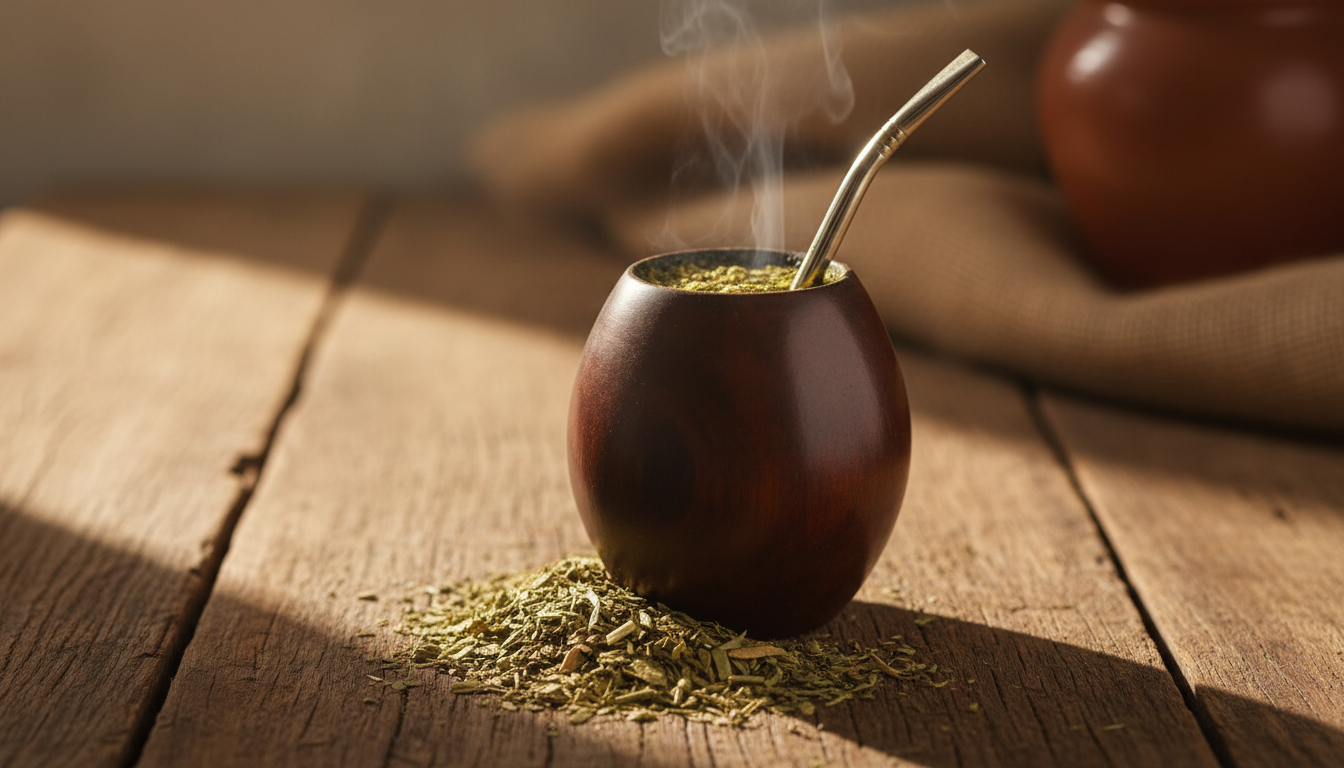

Yerba mate is forgiving compared to some teas, but technique still matters. Prepare it wrong and you get a bitter, washed-out drink that barely resembles what South Americans have been enjoying for centuries. Prepare it right and you get a smooth, earthy, sustained-energy experience that lasts through multiple infusions.
At Valley of Tea, we have been sourcing and tasting teas for over fifteen years. I brew mate in a gourd almost daily, and the method in this guide is what I actually use.
 yerba mate varieties compared" width="1184" height="888" loading="lazy" style="max-width:680px;width:100%;height:auto;display:block;margin:20px auto;">
This guide covers three ways to prepare yerba mate — the traditional gourd method, a simplified Western approach, and cold-brewed terere. Each one has specific steps, temperatures, and ratios. No guesswork needed.
This is how mate has been drunk in Argentina, Uruguay, Paraguay, and southern Brazil for hundreds of years. The gourd-and-bombilla setup is not just tradition for the sake of it — the design is functional. The gourd holds the yerba in place while the bombilla filters out the leaf particles, allowing you to refill with water many times from the same serving.
Mate gourd (calabaza). The classic vessel, traditionally made from a hollowed, dried calabash gourd. Ceramic and wood versions work well too. The gourd should hold roughly 200 to 300 ml.
Before first use, a natural gourd needs curing — fill it with used yerba mate and hot water, let it sit overnight, then scrape out the inside and let it dry completely. Repeat once more. This seals the gourd and removes any raw flavour from the wood.

Bombilla. A metal straw with a filtered end that sits in the yerba. The filter keeps leaf particles out of your mouth. Stainless steel bombillas are the most durable and easiest to clean. Make sure the filter end has fine perforations — larger holes let too much sediment through.
Thermos or kettle with temperature control. You will be refilling the gourd many times. A thermos keeps water at the right temperature throughout the session.
Step 1: Fill the gourd two-thirds full with yerba mate. This sounds like a lot, and it is. Mate uses a high leaf-to-water ratio. The amount of yerba relative to the small volume of water per pour is what gives mate its characteristic strength across many refills.
Step 2: Tilt and shake. Cover the opening of the gourd with your palm, turn it upside down, and shake gently for a few seconds. This moves the finer dust particles to the top (now under your palm) and away from the bombilla filter. Turn the gourd back upright at an angle, so the yerba sits on one side in a slope — roughly 45 degrees. One side of the gourd should have a mound of yerba, the other side a small empty well.

Step 3: Add a small pour of cool water to the lower side. Pour cool water into the empty well at the base of the slope — not over the mound. Let it absorb for 30 seconds to a minute. I always add cool water first specifically to protect the leaves from the initial heat shock. The yerba will swell slightly before you pour anything hot.
Step 4: Insert the bombilla. Place the bombilla into the wet well, angling it against the slope of yerba. Push it down gently until the filter end rests at the bottom of the gourd. Once placed, do not move the bombilla. Moving it disturbs the yerba and clogs the filter.
Step 5: Add hot water at 70 to 80 degrees Celsius. Pour the hot water slowly into the same well where the bombilla sits. Do not pour over the dry mound of yerba on the other side — keeping some yerba dry extends the number of infusions you can get. Fill only to just below the rim. Never use boiling water: boiling water scorches the leaves and makes it bitter from the first sip.
Step 6: Drink and refill. Sip through the bombilla until you hear air. Refill with more hot water in the same spot. In my experience with the yerba we carry, a well-prepared gourd gives 10 to 20 refills before the flavour washes out. When the yerba loses its taste, it is said to be "lavado" — washed. Time to start fresh.

Yerba mate contains caffeine, theobromine, and a range of polyphenols. At 70 to 80 degrees Celsius, you extract the stimulating compounds and the grassy, slightly sweet flavour profile without pulling out excessive bitterness. Research published in Molecules (2024) confirms that infusions prepared at 70°C yield significantly higher total polyphenol content and antioxidant activity than those brewed at higher temperatures — see the full study on PubMed Central.
In my tastings, boiling water does not just nudge the bitterness — it tips the cup sharply: the first sip is harsh, and the subsequent refills degrade faster. Staying below 80 degrees Celsius keeps the leaf intact and the flavour clean across the whole session.
If you do not have a thermometer, boil your kettle and let it cool for four to five minutes with the lid off before pouring.
Not everyone wants to invest in a gourd and bombilla. A French press or a large tea infuser works well for yerba mate and produces a clean, straightforward cup.

Use 3 to 5 grams of yerba mate per 250 ml of water. Start with 4 grams if you are unsure. Heat water to 75 to 80 degrees Celsius — the same principle applies here. No boiling water.
Add the yerba to the French press, pour the heated water over it, and let it steep for 3 to 5 minutes. Three minutes gives a lighter, more delicate cup. Five minutes gives full body and stronger flavour. Press the plunger down slowly and pour. You can resteep the same yerba once or twice with slightly hotter water and a longer steep time.
Place the yerba in a large basket infuser or a fine-mesh strainer set in your mug. Pour the water through, let it steep for 3 to 5 minutes, then remove the infuser. If your infuser is small, use the lower end of the leaf quantity — packed-in yerba does not circulate well and under-extracts in the centre.
The Western method gives you one to three servings per batch of leaves, compared to the 10 to 20 refills of the traditional method. The trade-off is simplicity and no special equipment.


Terere is the Paraguayan way of drinking yerba mate — cold, refreshing, and perfect in warm weather. The preparation is almost identical to the traditional gourd method, with one difference: you use ice-cold water or juice instead of hot water.
Fill the gourd two-thirds with yerba mate. Tilt and shake as described above. Insert the bombilla.
Instead of hot water, pour in cold water, ice water, or cold fruit juice. Citrus juice — lime, orange, grapefruit — is traditional and works particularly well. Some people add fresh mint or lemon slices directly into the gourd.
Drink and refill with more cold liquid. Terere typically lasts for fewer refills than hot mate because cold water extracts compounds more slowly and less completely, but it remains flavourful for a solid 5 to 10 pours.

No temperature precision needed here. The colder, the better.
This is the single most frequent error. Boiling water burns yerba mate, releasing harsh tannins and creating an aggressively bitter drink. Always stay in the 70 to 80 degrees Celsius range for hot mate.
Once you insert the bombilla, leave it in place. Stirring or repositioning it disturbs the yerba, clogs the filter, and breaks the structure you built with the tilt.
The yerba needs some room for water to flow through it. If you press it down or overfill the gourd, water cannot circulate and extraction is uneven.

In the traditional method, always pour into the well beside the mound. Keeping part of the yerba dry is what allows so many refills.
Two-thirds full is the standard for good reason. Less yerba means fewer refills and weaker flavour from the start.

| Item | Purpose | Material Options |
|---|---|---|
| Mate gourd | Holds the yerba | Calabash, ceramic, wood, silicone |
| Bombilla | Filtered straw for drinking | Stainless steel, alpaca silver, bamboo |
| Thermos | Keeps water at serving temperature | Stainless steel vacuum flask |
| French press | Western-style brewing | Glass with stainless steel filter |
| Basket infuser | Single-cup Western brewing | Stainless steel mesh |
For beginners, a ceramic gourd and a stainless steel bombilla are the most practical starting point. Ceramic does not need curing, cleans easily, and does not absorb flavours between sessions. Valley of Tea sells the yerba itself — four varieties (organic, green, aged, and roasted) — but not gourds or bombillas. For equipment, a good kitchen shop or specialist tea retailer will have what you need.
Yerba mate has been cultivated and enjoyed in South America for centuries. For a detailed overview of Ilex paraguariensis history, cultivation, and chemical composition, the PMC review "Yerba Mate — A Long but Current History" is the most thorough source available. For cultural context on traditional preparation in Argentina and Uruguay, Britannica's entry on mate provides a reliable overview.
Traditional method: Fill gourd two-thirds, tilt to slope, pre-wet with cool water, insert bombilla, pour 70 to 80 degrees Celsius water into the well, drink, refill 10 to 20 times.
Western method: 3 to 5 grams per 250 ml, 75 to 80 degrees Celsius water, steep 3 to 5 minutes in French press or infuser.
Terere: Same gourd setup as traditional, use ice-cold water or juice instead of hot water.
Universal rule: Never use boiling water on yerba mate. Stay at 70 to 80 degrees Celsius for hot preparations.
Yerba mate rewards consistency. Once you dial in the temperature and the gourd technique, the ritual becomes second nature — and each session gives you a dozen or more pours from a single fill.
Comments will be approved before showing up.