












Lemon Balm and Herpes: A Look at the Research
Health notice: This article is informational only and does not constitute medical advice. Herpes simplex virus (HSV-1 and HSV-2) are medical conditions. Consult a qualified healthcare provider before making changes to your treatment plan.
Melissa officinalis, commonly known as lemon balm, has been studied for antiviral properties specifically against herpes simplex viruses. The research exists and it is specific enough to take seriously, but the gap between a laboratory finding and what a cup of tea can deliver matters. I keep lemon balm in our herb range because it is one of the most studied medicinal herbs in European phytotherapy, and understanding what that research actually covers is the starting point. This post focuses on lemon balm for herpes: what the evidence shows, where it stops, and how to use the tea practically.
What Research Shows on Lemon Balm and Herpes Viruses
Multiple in vitro studies have found that lemon balm extract inhibits HSV-1 and HSV-2 replication in cell cultures. These are laboratory findings. They demonstrate that compounds in Melissa officinalis have antiviral activity against herpes simplex virus, but they do not confirm that drinking lemon balm tea produces equivalent concentrations or effects in the human body.
The most relevant human trial is Koytchev et al. (1999), a randomised controlled trial published in Phytomedicine. Participants applied a topical 1% lemon balm cream to active cold sores. Results showed shortened healing time and, in a subset followed over six months, reduced recurrence frequency. This is meaningful clinical evidence. It is also evidence for topical application at a defined concentration, not for oral tea.
The proposed mechanism involves rosmarinic acid, a polyphenol concentrated in lemon balm leaves. Some research suggests rosmarinic acid may interfere with viral attachment proteins, reducing the virus's ability to enter host cells. This is a hypothesis with in vitro support, not a confirmed effect at the concentrations a cup of tea delivers.

The distinction between topical evidence and systemic (oral) evidence is not a minor caveat. It is the central question anyone using lemon balm for herpes should understand before starting.
HSV-1 (Oral) vs HSV-2 (Genital): Different Considerations
Almost all clinical work on lemon balm and herpes targets HSV-1, the strain responsible for oral cold sores. The Koytchev trial used topical cream on oral lesions. Extrapolating those results to HSV-2 (genital herpes) is theoretical: no well-designed clinical trial has specifically tested lemon balm against HSV-2.
Both viruses belong to the same family and share replication mechanisms, which is why the in vitro inhibitory activity found in cell studies often covers both strains. But "plausible mechanism" and "clinical evidence" are different categories, and being clear about which applies matters.
For HSV-1 cold sores, topical lemon balm application has the strongest evidence. A strong brewed tea used as a topical compress is a lower-concentration adaptation of this approach, not equivalent to the standardised cream used in Koytchev, but more targeted than drinking tea alone.
For HSV-2, prescription antiviral medication is the standard of care. Aciclovir and valaciclovir have strong clinical evidence for reducing outbreak frequency and duration. Lemon balm tea may offer mild complementary support, particularly for stress reduction given that stress is a documented HSV reactivation trigger, but it should not replace or delay antiviral therapy.
I find lemon balm noticeably calming, the herb I reach for on a quiet winter evening, a simple cup to close the day. That calming character is also the most plausible oral use case in the context of herpes management: not an antiviral effect from drinking tea, but genuine stress reduction at a time when the body needs it.

Practical Ways to Use Lemon Balm Tea for Herpes Support
The practical use differs depending on whether you are in an active outbreak or maintaining a routine between outbreaks.
During an outbreak: 2-3 cups daily of well-steeped tea. Use approximately 1.5 teaspoons (around 2 g) of dried lemon balm per 250 ml cup. Steep for 8-10 minutes and always cover the cup while it steeps, as lemon balm is delicate and the volatile lemon compounds (citral, citronellal) escape as steam if left uncovered. Drink across the day rather than all at once.
Between outbreaks: 1 cup daily as a longer-term supportive habit. Some limited evidence and traditional use patterns suggest this may reduce recurrence frequency over time, though the data is thin. It is a low-risk habit with a reasonable rationale.
Topical compress for HSV-1 cold sores: Brew a strong tea, using double the usual quantity of herb and the same 8-10 minute steep time. Allow it to cool completely before applying. Use a clean cotton pad or cloth and hold it on the affected area for several minutes. Do not reuse the applicator on the same brewed liquid, and discard the remainder after use.
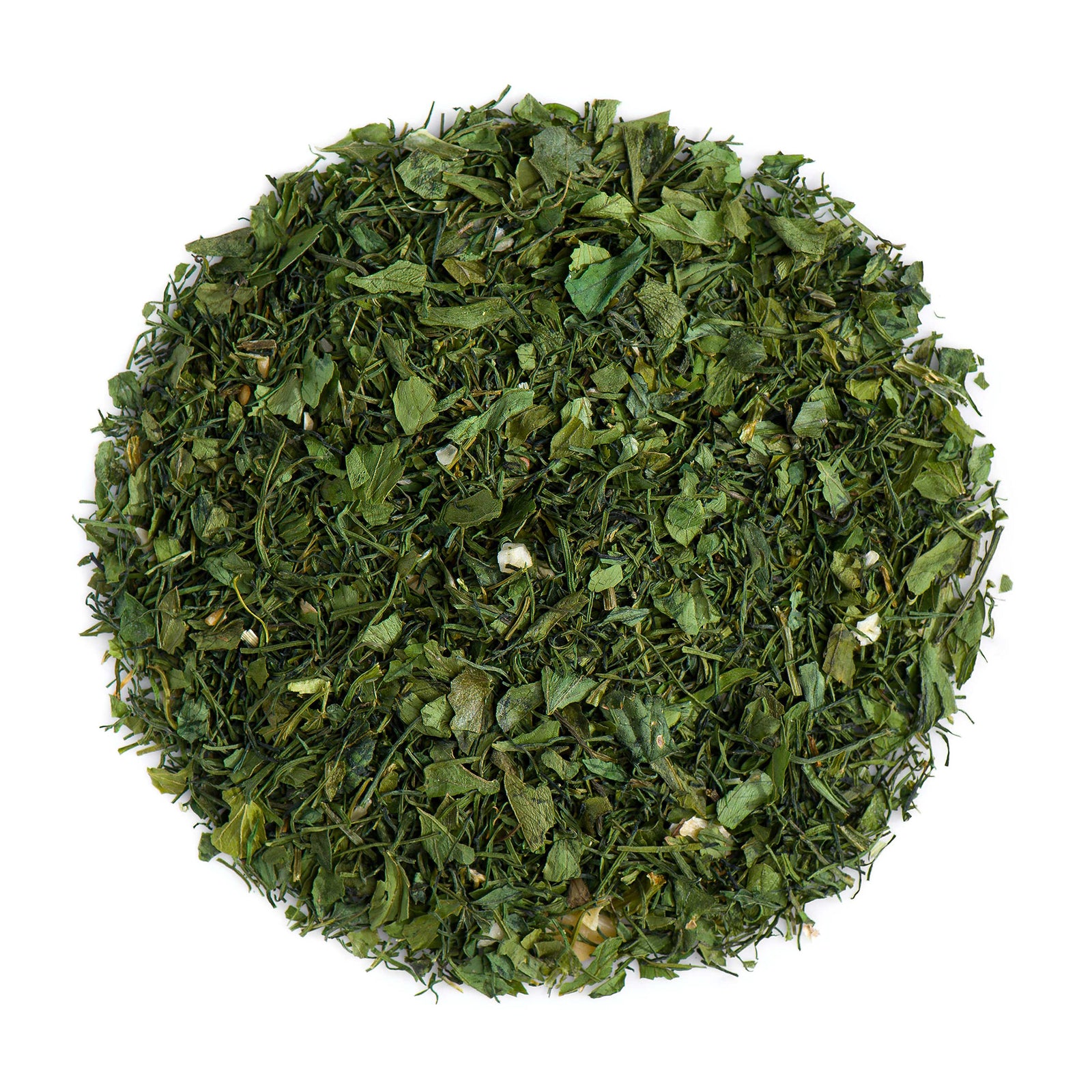
We source our lemon balm as dried Melissa officinalis leaf, whole leaves, certified organic, from Portugal and Greece. The quality check is simple: it needs a concentrated, intensely lemony scent, sweet and coating, with an aroma that lingers. Anything dull or flat does not make it through. The citral content that gives it this character also degrades with poor storage, as does the polyphenol profile. For any specific herbal purpose, quality of the starting material matters. You can find our lemon balm in the herb range.
Conclusion
Lemon balm for herpes has a real but narrow research base. For HSV-1 cold sores, topical application of a concentrated lemon balm preparation has clinical support (Koytchev, 1999, Phytomedicine). Drinking the tea provides these compounds systemically at a lower concentration and works best as a complementary habit rather than a primary intervention. For HSV-2, antiviral prescription treatment is not optional, and lemon balm sits alongside it, not in place of it. If you have not yet spoken to a doctor about managing your HSV infections, that is the more important first step.

Leave a comment
Comments will be approved before showing up.
Also in Valley of Tea Blog | Tea Guides, Origins & Brewing Tips
The Complete Guide to Drinking Tea
What tea is, how the main types differ in the cup, and how to brew each one properly. Water temperature, steeping times, storage and how to get more than one cup from your leaves.
Read More

Black Tea: Types, Processing, and How to Brew It
Black tea is fully oxidized Camellia sinensis. Compare Assam, Darjeeling, Keemun, and Ceylon varieties. Learn processing, brewing, and caffeine levels.

How To Grow Black Tea
Learn how to grow black tea at home: soil, climate, and the five processing steps from fresh leaf to a finished cup of black tea.

Wisdom is the path to better tea.
Get our free brewing guide: the right water, heat and timing for every tea we sell. You will also hear it first when new harvests arrive.
No spam. Unsubscribe any time.
Check your inbox.
The guide is on its way.