













Best Tea for Winter: Warming Blends & Recipes
Winter is the season when tea for winter stops being a habit and becomes a necessity. Cold air, shorter days, and the pull toward something hot and substantive make this the time of year to reach for the most flavourful, spice-forward teas in the collection. A properly chosen winter cup is not just warm - it is grounding, aromatic, and worth sitting still for.

This guide covers the spices and teas that deliver genuine warmth, five picks worth keeping stocked from October to March, four recipes you can make at home today, and a practical list of what belongs on every winter tea shelf.
What Makes a Tea Warming?
The best winter teas deliver warmth through aromatic spices with a warm, rounded flavour - not just through temperature.

Ginger is the anchor spice of most winter blends. The warmth is real - whether from direct compound activity (gingerols and shogaols, the compounds responsible for ginger's bite) or the combination of heat and volatile oils in a brewed cup is hard to say, but a slice of fresh ginger in hot water produces a lasting, spreading heat that persists after you finish the cup. Fresh ginger is sharper; dried ginger is more concentrated. Both work well in tea.
Cinnamon adds a different dimension. Its main aroma compound, cinnamaldehyde, is what gives a cinnamon-heavy chai its sweet, woody warmth on the palate. The doses in a brewed cup are modest compared to extract studies, but the effect is noticeable in practice. Ceylon cinnamon (Cinnamomum verum) is milder and more complex than Cassia; either works in a winter blend.
Black pepper is less obvious but important. Piperine, the alkaloid that gives pepper its heat, amplifies the perceived intensity of any spice it is combined with. In masala chai, black pepper does not stand out on its own - but remove it and the blend loses its depth and lingering heat.
Cardamom provides aromatic warmth rather than heat: a eucalyptus-camphor quality that gives a cold-weather cup a cool, bright note on the nose. Green cardamom (freshly cracked) is far more expressive than pre-ground.
Cloves round out the cold-weather spice rack. Sri Lanka produces the finest - India is a close second - and whole cloves are worth the extra step over ground: the colour is richer, the smell more vibrant, and a single clove dropped into a black tea is enough to change the character of the whole cup entirely. Cloves work as a single-ingredient tea or as part of an English-style spiced blend.
Together, these four spices form the backbone of most effective winter tea blends. The base tea underneath them matters too: a full-bodied Assam or Yunnan black tea can stand up to spice; a delicate Darjeeling cannot.
5 Best Winter Teas
The right tea for winter depends on when you are drinking it, how much caffeine you want, and whether you prefer a spiced blend or something darker and more elemental.

1. Masala Chai
Masala chai is the benchmark winter drink. A strong Assam or CTC black tea base steeped with cinnamon, ginger, cardamom, black pepper, and cloves delivers everything a cold day requires: heat, body, spice, and enough caffeine to function. Loose spices work better than pre-mixed chai blends wherever possible because the freshness difference is significant - pre-ground spice powders flatten out quickly. Valley of Tea carries a chai blend, heavier on cardamom than most commercial blends and lighter on sugar, closer to a home recipe than a standard mix. Brew masala chai at a full rolling boil (100 °C) for 3-5 minutes with milk if you use it, or water-only for something cleaner.
2. Ginger Turmeric Tea
Ginger and turmeric together produce a golden brew that is both spicy and earthy. Our turmeric is sourced from India and carries a curcuminoid content typical of high-quality lots. Black pepper belongs in the cup too: its bite balances turmeric's earthy bitterness, and the flavour is better with it. A basic ratio: 1 teaspoon dried ginger, half a teaspoon turmeric, a pinch of black pepper, steep at 95 °C for 5-7 minutes. This blend is naturally caffeine free, which makes it a good afternoon or evening option.
3. Roasted Oolong
A heavily roasted Taiwanese oolong - Dong Ding or a classic high-fire Wuyi style - delivers a toasted, nutty warmth that feels unlike any other tea. The roasting drives off moisture, concentrates the flavour, and produces caramel and roasted grain notes alongside the underlying oolong character. Brew at 95-100 °C for 2-3 minutes, rinsing the leaves first if the roast is very heavy. These teas can be steeped multiple times; the later steeps are often warmer and softer than the first.
4. Shou Pu-erh
Shou (ripe) pu-erh is the ideal morning tea on cold winter days. The earthy, warming character - dark wood, wet earth, sometimes a note of dried fruit in aged material - suits a cold morning. Rinse the leaves first at 95-98 °C for about 10 seconds and discard that water, then brew 6-8 steeps starting at around 20 seconds. By steeps 3 and 4, a sweetness comes through underneath the earthiness that makes aged shou genuinely pleasant rather than challenging. It has a grounding quality that coffee does not.
5. Cinnamon Rooibos
Rooibos with cinnamon is the evening option. In winter, rooibos often takes over from chamomile - it feels more warming and substantial, closer in body to a light black tea but with no caffeine. The natural sweetness of rooibos pairs well with cinnamon without needing added sugar. Brew at 95-100 °C for 5-7 minutes; rooibos is forgiving with steep time and does not turn bitter. A good rooibos will have a clean, slightly sweet, woody character - if it tastes thin or flat, the batch is old.
Winter Tea Recipes
These four recipes cover the main styles of winter tea: spiced chai, a simple ginger infusion, a golden milk riff, and a warming black tea latte.

Spiced Apple Chai
This is a stovetop recipe that fills the kitchen with the right smell on a cold afternoon.
- 500ml water
- 1 cinnamon stick (broken)
- 4 green cardamom pods (cracked)
- 4 black peppercorns
- 2cm fresh ginger (sliced thin)
- 150ml fresh apple juice (not from concentrate)
- 2 teaspoons Assam black tea (loose leaf)
- Honey to taste
Bring water, cinnamon, cardamom, pepper, and ginger to a gentle simmer for 5 minutes. Add black tea and steep for 3 minutes. Remove from heat, add apple juice, strain into cups. Sweeten with honey. The apple juice adds a soft tartness that makes this feel lighter than a standard chai; it is also good cold the next day.
Hot Ginger Honey Tea
This is the simplest winter recipe and the one to reach for most often on cold, dark mornings.
- 500ml water (95 °C)
- 3cm fresh ginger (grated or sliced)
- Juice of half a lemon
- 1 tablespoon honey (add after brewing, not during)
Steep ginger in hot water for 8-10 minutes. Strain, add lemon juice and honey. Honey loses some of its aromatic character above 60 °C, so wait until the cup is no longer scalding before adding it.
Turmeric Golden Milk (Tea Version)
A tea-based golden milk that is lighter than the full-fat dairy version but keeps the warmth.
- 300ml water
- 200ml oat milk (or dairy)
- 1 teaspoon ground turmeric
- 1 teaspoon ground ginger
- Half a teaspoon cinnamon
- Small pinch of black pepper
- 1 teaspoon coconut sugar or honey
Warm water and milk together (do not boil). Whisk in turmeric, ginger, cinnamon, and pepper until smooth. Sweeten to taste. For a stronger cup, add a teaspoon of loose-leaf rooibos and strain before serving - the rooibos adds body without caffeine or bitterness.
Cinnamon Black Tea Latte
- 2 teaspoons Assam or Yunnan black tea
- 200ml water (100 °C)
- 150ml steamed oat milk
- Half a teaspoon cinnamon
- Pinch of nutmeg
- Honey or maple syrup to taste
Brew black tea strong in 200ml water for 4 minutes. Froth or steam milk separately. Pour tea into a mug, add milk, stir in cinnamon and nutmeg. The Yunnan version gives a natural sweetness and cocoa note underneath the spice; Assam is maltier and more full-bodied. Both work.
Stocking Your Winter Tea Shelf
A well-stocked winter tea shelf does not need twenty different teas. It needs the right five or six, plus a few whole spices.
Whole spices over pre-ground. Cinnamon sticks, green cardamom pods, fresh or dried ginger root, and black peppercorns all keep far longer than ground versions and produce more aromatic brews. Buy in small quantities - a season's worth at most - and store in airtight containers away from light. Spices degrade faster than most people expect.
A strong black tea base. Assam CTC or leaf is the default for anything blended with spices - it has the body and tannin to stand up to ginger and cinnamon without disappearing. A good Yunnan black is a more complex alternative with natural chocolate and sweetness. Avoid delicate teas (Darjeeling first flush, light Chinese greens) in spiced blends; they are overwhelmed before the spices bloom.
Caffeine-free evening options. Rooibos and ginger-turmeric are the two most versatile caffeine-free winter teas. Rooibos is forgiving to brew and naturally sweet; ginger-turmeric is spicy and warming in flavour without caffeine. Having both means there is always a caffeine-free option for the evening.
Honey. A good wildflower or raw honey is better than refined sugar for winter teas: it adds flavour alongside sweetness rather than just sweetness alone. Add it after the cup has cooled slightly rather than stirring it into scalding water.
Storage. Green tea and light oolongs bought now should be finished before the next harvest (spring), as they deteriorate with age. Shou pu-erh, dark oolongs, and rooibos can sit for a season without quality loss if stored away from moisture and odours.
Final Thoughts
The right tea for winter is the one that makes you want to sit down and stay there. For most people that means something spiced, something dark, or something earthy - not the delicate spring greens better suited to a lighter season. Masala chai and shou pu-erh are the most warming in the literal sense; cinnamon rooibos is the most forgiving; ginger turmeric is the most practical for daily use.
Build your winter shelf around a strong black tea base, a handful of whole spices, and a couple of caffeine-free options for evenings. From there, the four recipes above give you a starting point for moving from brewed tea into proper winter drinks.
Teas Featured in This Article

Leave a comment
Comments will be approved before showing up.
Also in Valley of Tea Blog | Tea Guides, Origins & Brewing Tips
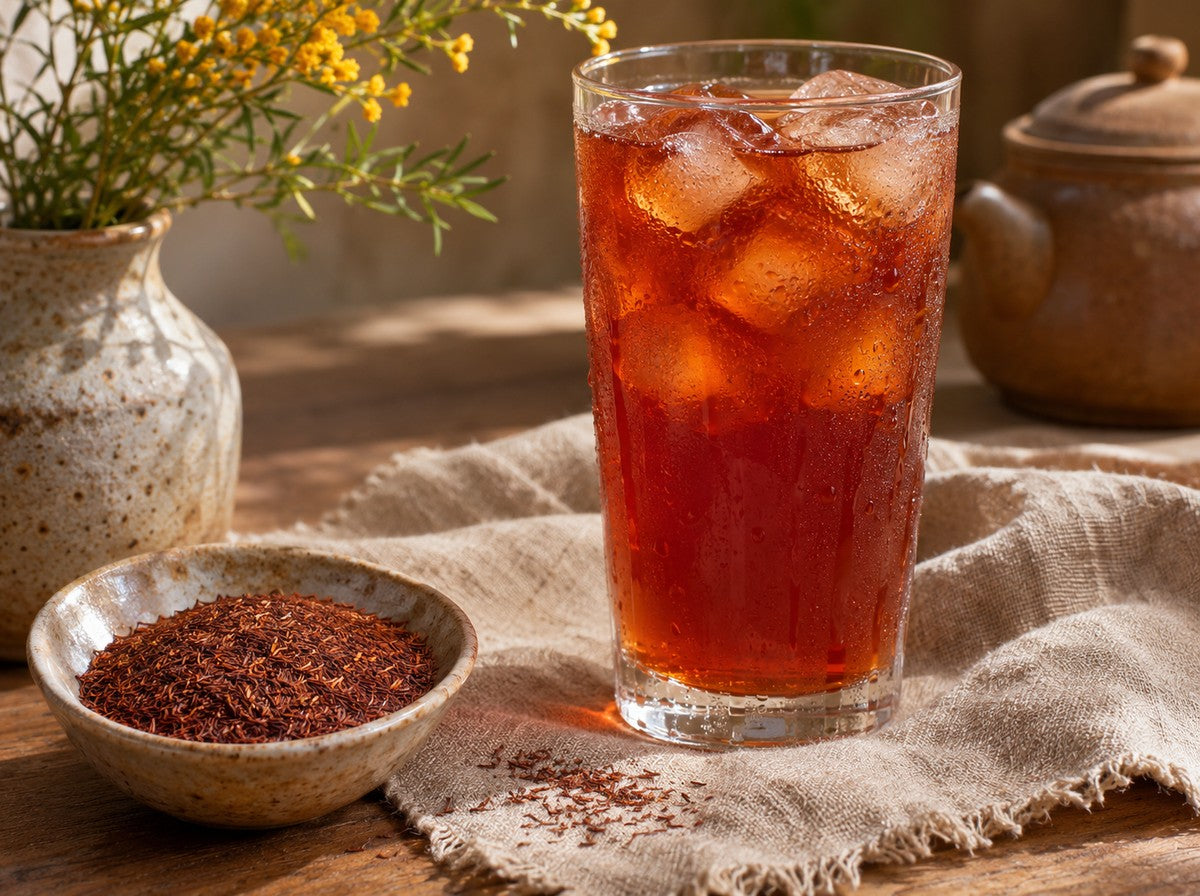

Rooibos Iced Tea: Caffeine-Free Refresher
Learn to make rooibos iced tea two ways: hot-brewed over ice in 15 minutes, or a smoother overnight cold brew, plus flavour additions and storage tips.

Spice Cabinet Organization: A Practical System That Works
Learn how to organize your spice cabinet with a practical system that keeps every jar findable and fresh. Temperature, layout, and audit tips included.

Maca or Ashwagandha for Your Daily Routine
Choosing between maca or ashwagandha? Learn how each root tastes, when to use them, and the best ways to prepare each in tea or drinks.

Wisdom is the path to better tea.
Get our free brewing guide: the right water, heat and timing for every tea we sell. You will also hear it first when new harvests arrive.
No spam. Unsubscribe any time.
Check your inbox.
The guide is on its way.