













Masala Chai Tea Powder: What to Look For
Masala chai tea powder is a pre-ground mix of black tea and warming spices, most commonly cardamom, ginger, cloves, black pepper and cinnamon, milled fine enough to dissolve straight into hot water or milk. It occupies a different niche from a loose chai blend: where loose leaf and whole spice need time to steep and strain, powder dissolves in seconds, which is why it shows up behind café counters, in bakery kitchens and in home cupboards that want speed over ceremony.

I've sourced Indian spices for Valley of Tea for over fifteen years, and the quality gap between chai powders on the market is wider than most buyers expect. A good masala chai tea powder tastes like the spice list on the tin. A cheap one tastes like sugar and cinnamon dust.
This guide covers what actually goes into a decent blend, how powder compares to loose chai, how to brew and cook with it, and what organic and single-origin mean when they're printed on a chai tin.
What Goes Into a Masala Chai Powder Blend
A masala chai tea powder blend combines a strong black tea base, ground fine, with five core spices: green cardamom, dried ginger, cinnamon, cloves and black pepper. Ratios shift by region and maker, but a good blend still tastes like tea first, with the spices layered on top, not like spice dust with tea as an afterthought.
Most commercial masala chai powders use CTC (crush-tear-curl) Assam because the small, uniform granules dissolve evenly and don't go flat when hit with hot milk. It's a practical choice for a product built to mix instantly rather than steep. I take a different route with our own blend: VoT's Assam is orthodox, hand-picked whole leaf rather than CTC, because the industrial CTC process strips out a layer of flavour that orthodox leaf keeps.
Orthodox Assam holds up well simmered with spices, so we grind it fine for the chai powder without losing what makes that tea worth drinking on its own.
On the spice side, Sri Lankan cinnamon (true cinnamon, not cassia) makes a real difference. I favour it because it's more aromatically layered than cassia's blunt heat, and it earns its place as one of the more versatile spices in the blend rather than a single hot, woody note. Fresh ginger, dehydrated and ground, brings sharper heat than pre-ground powdered ginger. Cloves and black pepper round out the back of the palate.
One quality signal worth checking before you buy: star anise and fennel used as cheap bulk fillers. Both leave a sweet, liquorice-like aftertaste that has nothing to do with a traditional masala chai profile. If a powder finishes sweet and aniseed instead of warm and peppery, the spice list is worth a second look before the price tag.
Powder vs Loose Chai Blend: Which Works Better
Powder wins on speed and consistency; loose chai blend wins on aroma and visible spice quality. Which is better depends on whether you're pouring one cup slowly at home or forty cups an hour behind a counter.
A masala chai tea powder dissolves in seconds and delivers the same cup strength every time, which is exactly why cafés and bakeries default to it. There's no steeping, no straining, no batch-to-batch variation from how long the spices sat in the pot. For high-volume service that consistency matters more than a slightly richer aroma.
A loose chai blend, whole spice and whole leaf, gives you more control and, in my experience, a rounder aroma: you can see the cardamom pods, the cinnamon bark, the actual size of the clove, and judge freshness by smell before you brew. It rewards someone who has ten minutes and wants the kitchen to smell like it.
There's a middle path I'd recommend to anyone who wants both: simmer a loose chai blend properly, then strain it into a thermos or a bottle for the week. You get the fuller flavour of whole spice with the same grab-and-pour convenience as powder once it's made. It's more effort up front and worth it if you drink chai daily rather than occasionally.
How to Make Masala Chai with Tea Powder
Use one heaped teaspoon of masala chai tea powder per 200ml of liquid, and simmer rather than boil: a gentle 3-4 minute simmer with milk opens up the spice oils in a way a quick steep never does. Adjust the milk-to-water ratio to taste, from all water to roughly half milk.
Stovetop method: Bring 100ml water to a simmer, stir in the teaspoon of chai powder, and let it simmer uncovered for a minute so the tea colour develops. Add 100ml milk (any milk works; whole milk carries the spice better than plant milk), bring back to a gentle simmer, and hold it there for 3-4 minutes. Don't let it boil hard: a rolling boil scalds the milk and pushes bitterness out of the tea faster than the spices can balance it. Strain into a cup.
Quick-brew method: For a single mug, whisk a heaped teaspoon of powder into 50ml just-off-the-boil water to form a paste, then top with hot milk. It's less rounded than the simmered version but takes under two minutes.
For sweetener, I'd reach for jaggery over refined sugar; it carries a mineral, slightly caramelised note closer to how masala chai is actually served in India than white sugar does. I still lean on the version I learned from my own family more than any café recipe, and it comes out stronger and spicier than most people expect: the exact ratio is one I keep for home rather than print on a label, but it's proof that the right spice mix is ultimately the one you keep coming back to.
One common mistake: adding the powder to cold milk and hoping it dissolves. It clumps instead. Always bloom it in hot water first, then add milk.
Masala Chai Powder in Baking and Cooking
Masala chai tea powder isn't only for drinking: because it's already a balanced, ground spice-and-tea mix, it swaps directly into recipes that call for a single warm spice, adding a tea note most spice blends don't have.
Chai spice cake: Replace the cinnamon in a standard spice cake recipe with masala chai powder at a 1:1 ratio. The tea component adds a faint tannic backbone under the cardamom and clove that keeps the cake from tasting one-note sweet.
Chai overnight oats: Try stirring around one teaspoon of chai powder into 150ml warm milk before combining with the oats and refrigerating overnight. The warm milk helps bloom the spices and tea rather than leaving them gritty in a cold mix; adjust the amount up or down to taste once you've tried it once.
Chai butter: Blend half a teaspoon of chai powder into 100g of softened butter. It's a fast compound butter that works well on banana bread, spread warm on toast, or melted into porridge. Because the tea component in the powder brings a light bitterness, it balances sweeter bakes better than a straight cinnamon-sugar butter would. It also works stirred into pancake batter or spooned into a quick spice syrup for lattes.
The one thing to watch in all three: masala chai powder is finer and more potent by volume than a single ground spice, so start at the stated ratio rather than eyeballing it the way you might with plain cinnamon. Too much, and the tea's tannins turn the bake astringent rather than warm.
Organic and Single-Origin Chai Powders
EU organic rules generally require every agricultural ingredient in a masala chai tea powder blend, both the tea and the spices, to be certified for the product to carry the organic label. It's worth checking that the certification statement covers the whole product rather than assuming one ingredient's status applies to all of it.
Single-origin also matters more here than it sounds. Indian tea on a label could be almost anything; a stated origin such as Assam gives you something to check against, and it usually signals the seller actually knows their supply chain rather than buying blended stock from a broker.
Our own masala chai uses certified organic Assam, orthodox and hand-picked rather than CTC, paired with spices we source directly from India rather than through a generic spice broker. I'd rather pay more for traceable cardamom and Sri Lankan cinnamon than cut costs on filler spices nobody can trace back to a farm. That's the difference between a chai powder that tastes like the ingredient list and one that tastes like sugar and cinnamon dust.
Conclusion
The single biggest variable in masala chai tea powder is what's actually in the tin: a strong Assam base and five real spices, or a diluted mix padded out with star anise and fennel. Read the ingredient list before the marketing copy, and treat a sweet, aniseed aftertaste as a sign the blend was cut to save money.
I've spent over fifteen years sourcing Indian spices for Valley of Tea, and the gap between a well-made masala chai tea powder and a generic one shows up in the first sip, not on the label. We grind our own orthodox Assam and direct-sourced Sri Lankan cinnamon, cardamom, ginger, cloves and pepper into a powder that dissolves as fast as any other but still tastes like a real cup of chai underneath the spice.
If you're deciding between powder and loose blend, start with how you actually drink chai: daily and fast, or occasionally and slow. Either way, check the spice list first, and if you're trying a new masala chai tea powder for the first time, brew it the slow way once before you judge it: three to four minutes simmered with milk shows what the blend is actually capable of.
Leave a comment
Comments will be approved before showing up.
Also in Valley of Tea Blog | Tea Guides, Origins & Brewing Tips
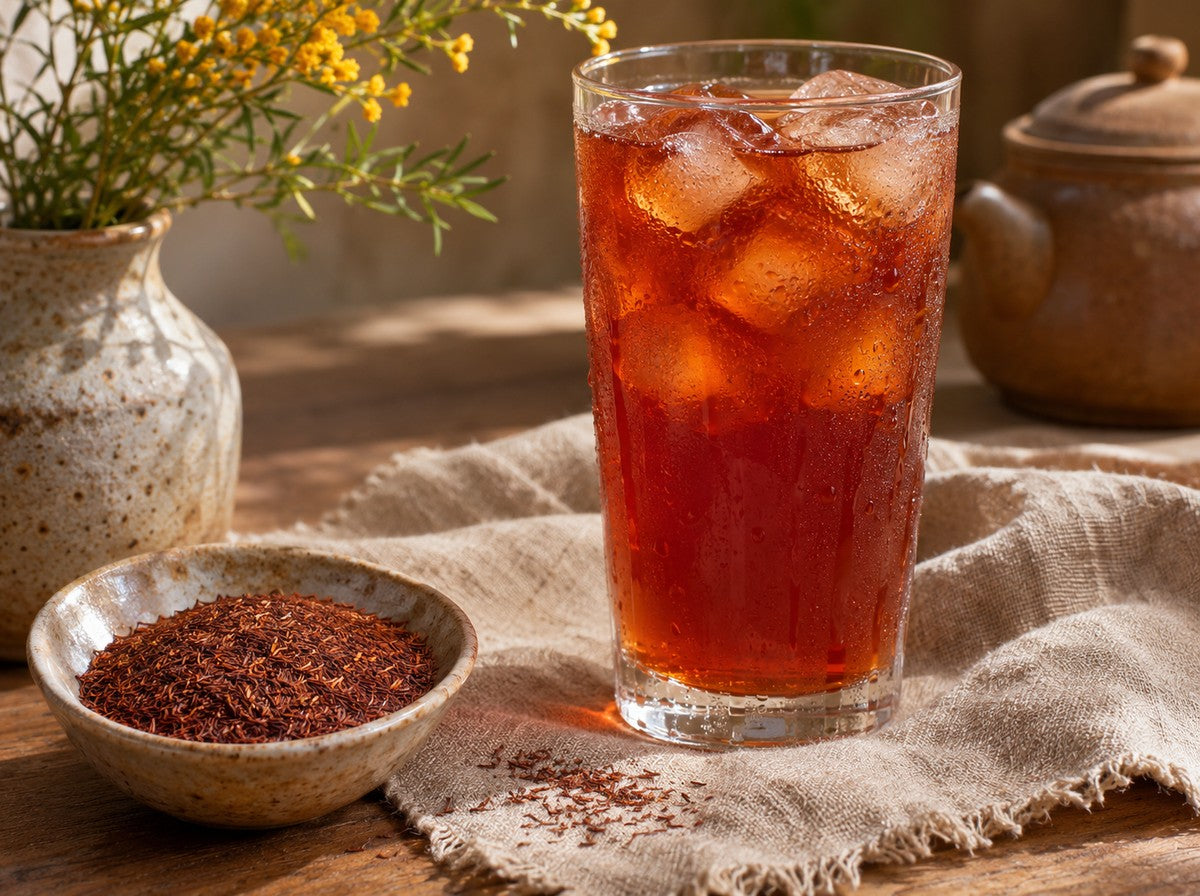

Rooibos Iced Tea: Caffeine-Free Refresher
Learn to make rooibos iced tea two ways: hot-brewed over ice in 15 minutes, or a smoother overnight cold brew, plus flavour additions and storage tips.

Spice Cabinet Organization: A Practical System That Works
Learn how to organize your spice cabinet with a practical system that keeps every jar findable and fresh. Temperature, layout, and audit tips included.

Maca or Ashwagandha for Your Daily Routine
Choosing between maca or ashwagandha? Learn how each root tastes, when to use them, and the best ways to prepare each in tea or drinks.

Wisdom is the path to better tea.
Get our free brewing guide: the right water, heat and timing for every tea we sell. You will also hear it first when new harvests arrive.
No spam. Unsubscribe any time.
Check your inbox.
The guide is on its way.