Tu carrito está vacío

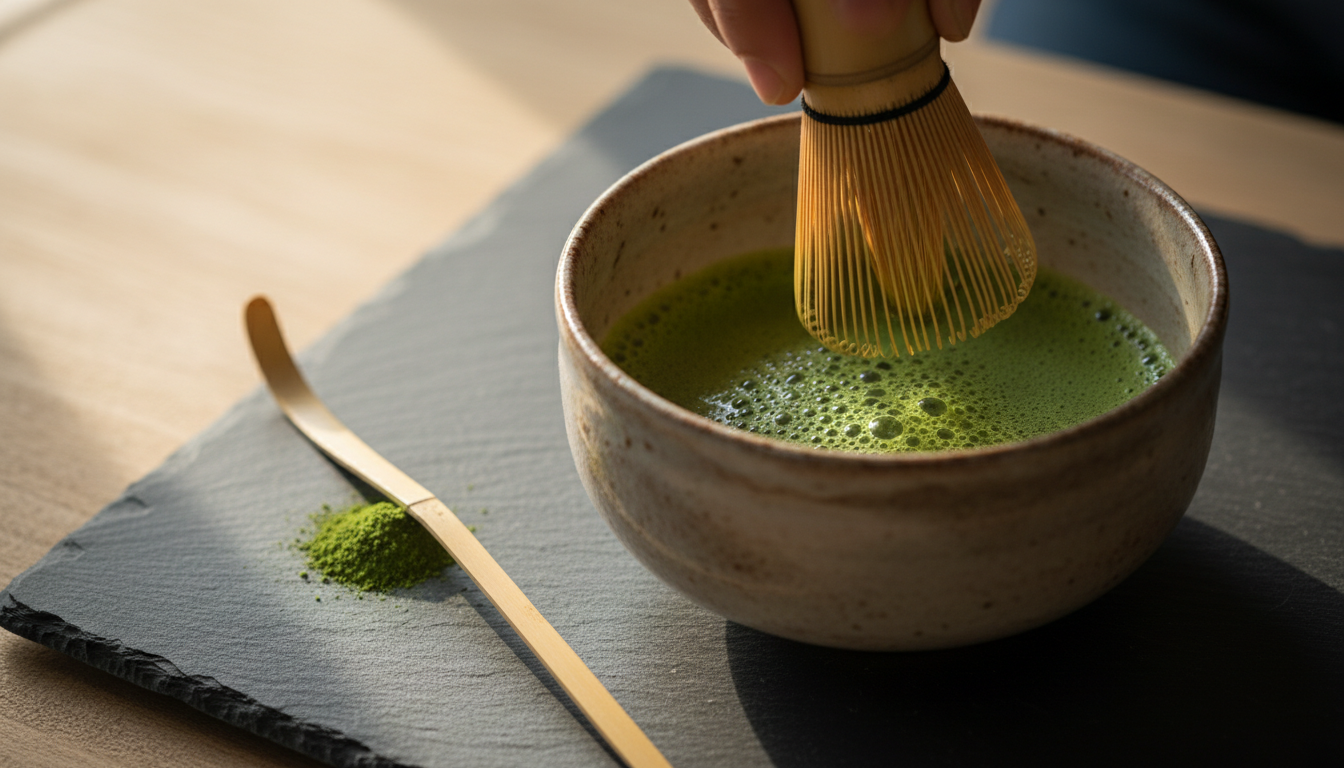

Matcha is not just another green tea. It is a stone-ground powder made from shade-grown Camellia sinensis leaves, and preparing it properly makes the difference between a smooth, vibrant bowl and a bitter, clumpy disappointment. This guide walks you through exactly how to make matcha tea at home, covering the traditional method, a latte variation, and an iced version — plus the mistakes that trip up most beginners.
At Valley of Tea, we have been sourcing and tasting teas for over fifteen years. This guide draws on that experience.

Before you start whisking, gather your tools. You do not need a full Japanese tea ceremony setup, but a few specific items make a real difference in the result.
Use ceremonial-grade matcha for drinking. Culinary grade works for baking and smoothies, but it is more bitter and less vibrant when prepared as a straight tea. Good matcha should be a bright, vivid green. If it looks dull or yellowish, it is either old or low quality.
The difference between the two grades goes deeper than bitterness. Ceremonial matcha is made exclusively from early-harvest Tencha leaves that have been shade-grown for around four weeks before picking. That shading drives amino acid development — the result is a pronounced umami and a clean, rounded aroma with no sharp edges.
Culinary grade comes from later, larger leaves and has a stronger, more aggressive green flavour but far less of that umami depth. For drinking as tea, ceremonial is the right choice. For cooking, baking, or lattes where you want a matcha note without worrying about subtlety, culinary grade is perfectly suited and costs considerably less.
You need about 2 grams per serving, which is roughly one level teaspoon or two bamboo scoop (chashaku) measures. Browse our ceremonial-grade Japanese green teas if you are looking for reference-quality shade-grown tea.

A chasen is a bamboo whisk with dozens of fine tines, specifically designed to break up matcha clumps and create a smooth, frothy surface. A regular kitchen whisk or fork will not produce the same result. The fine tines of a chasen aerate the tea in a way that nothing else replicates.
Before first use, soak your chasen in warm water for a minute or two to soften the tines. Do this every time you prepare matcha — it prevents breakage and helps the whisk perform better.
A chawan is a wide, open bowl that gives you room to whisk vigorously. The wide shape is functional, not just traditional: it allows for the fast side-to-side motion needed to froth the matcha. If you do not have a chawan, any wide-mouthed bowl with a flat bottom works.
This is the single most overlooked tool. Matcha powder clumps easily, even high-quality matcha. Sifting before whisking eliminates those clumps and produces a noticeably smoother cup. A small fine-mesh tea strainer works perfectly.
You need water heated to 75–80 degrees Celsius (167–176 degrees Fahrenheit). This is well below boiling. If you do not have a temperature-controlled kettle, bring water to a boil and let it cool for two to three minutes, or add a splash of cold water to your kettle.

This is the standard preparation method, known as usucha (thin tea). It is what most people mean when they talk about making matcha.
Place your fine mesh sifter over the chawan. Measure 2 grams (1 level teaspoon) of matcha powder and push it through the sifter using the back of a spoon or a chashaku. You will see the difference immediately — the powder becomes light and fluffy instead of dense and clumpy.
Pour 70–80 ml of water heated to 75–80 degrees Celsius into the bowl. This is not much water — about a third of a standard cup. The concentrated ratio is what gives matcha its characteristic body and intensity.
Hold the chasen vertically and whisk briskly using a W-shaped or M-shaped motion (not circular). Use your wrist, not your arm. Go fast — 15 to 20 seconds of vigorous whisking is all it takes. You are aiming for a uniform, frothy surface with no visible clumps or dry powder.
Good matcha should have a fine, even layer of microfoam on top with no large bubbles. The colour should be a consistent bright green throughout. If you see clumps or streaks, whisk for a few more seconds.

Matcha settles quickly. Drink it within a minute or two of preparation for the best flavour and texture. Once the powder starts settling to the bottom, the experience changes.
A matcha latte combines the intensity of matcha with the creaminess of steamed milk. It is the most popular matcha preparation in Western cafes, and it is straightforward to make at home. This is also where culinary-grade matcha earns its place: the milk carries the flavour, so the subtle umami of ceremonial grade is largely lost anyway. Save your ceremonial matcha for the bowl.
Sift 2 grams of matcha into your bowl. Add just 30–40 ml of hot water (75–80 degrees Celsius) and whisk until smooth and frothy. You want a more concentrated base than standard matcha because the milk will dilute it.
Warm 200–250 ml of milk to around 65 degrees Celsius. Any milk works — whole dairy milk produces the creamiest result, but oat milk is a popular alternative that froths well. If you have a milk frother or steam wand, use it. Otherwise, heat the milk in a saucepan and whisk vigorously by hand.
Pour the frothed milk over the matcha concentrate. You can stir gently to integrate, or leave it layered for presentation. Taste before sweetening — good ceremonial-grade matcha with quality milk often needs nothing added.

Sweetener (optional): If you prefer it sweet, add honey, agave, or a small amount of sugar to the matcha concentrate before adding milk. This dissolves better than adding sweetener after.
Iced matcha is refreshing and simple. The key is dissolving the matcha properly before adding ice, because cold water alone will not break up the powder.
Sift 2 grams of matcha into a bowl or glass. Add 30–40 ml of hot water (75–80 degrees Celsius) and whisk or stir vigorously until completely dissolved. This small amount of hot water is essential — it does the work that cold water cannot.
Fill a glass with ice. Pour the matcha concentrate over the ice, then top up with 150–200 ml of cold water or cold milk. Stir well.
Taste and adjust. You can add more water for a lighter drink or a splash of milk for creaminess. A squeeze of lemon or a small amount of honey works well in iced matcha during warmer months.

For a shaken iced matcha, combine the concentrate, cold water, and ice in a cocktail shaker or jar with a tight lid. Shake hard for 10 seconds. This produces a lighter, frothier iced matcha.

Most matcha problems come down to a handful of easily fixed errors.
This is the number one mistake. Boiling water (100 degrees Celsius) scorches matcha and brings out harsh, bitter compounds. Always let your water cool to 75–80 degrees Celsius. If your matcha tastes aggressively bitter despite being good quality, temperature is almost certainly the issue.
It takes 20 seconds and makes a dramatic difference. Unsifted matcha clumps in hot water, and those clumps do not dissolve with whisking alone. You end up with an uneven cup that has pockets of concentrated, bitter powder. Sift every time.
Matcha is more perishable than most teas. Once opened, it oxidises quickly, losing colour, flavour, and nutritional value. Use opened matcha within four to six weeks. According to a review of matcha's chemical composition published in Molecules (PMC), the shade-grown cultivation method that gives matcha its high L-theanine and chlorophyll content also makes it more susceptible to oxidation after opening.

Store it in an airtight container in a cool, dark place — or in the refrigerator if you will not finish it quickly. If your matcha has turned from bright green to olive or yellowish, it is past its best.
A circular whisking motion does not aerate the tea properly. The W-pattern or M-pattern creates the friction and air incorporation needed for a smooth froth. Whisk from your wrist with quick, short strokes.
Too little water makes an overly intense, thick preparation (closer to koicha, thick tea, which uses a different technique). Too much water makes it watery and thin. Stick to 70–80 ml for standard usucha.

The reason preparation matters so much with matcha comes down to its chemistry. Because you are consuming the entire leaf in powdered form — not just an infusion — every variable affects how the compounds interact. Research published in a 2022 critical review on matcha's therapeutic potential (PMC) confirms that shade-grown matcha contains significantly higher concentrations of L-theanine and EGCG compared to conventionally grown green tea. L-theanine is the amino acid responsible for matcha's characteristic umami and smooth mouthfeel; EGCG is its primary antioxidant catechin.
Water temperature directly affects which of these compounds are extracted and which are destroyed. At 75–80 degrees Celsius, you preserve the delicate amino acids and avoid extracting the harsher tannins that boiling water releases. This is the scientific basis for the traditional temperature guideline — it is not ceremony for its own sake.

| Parameter | Standard Matcha | Matcha Latte | Iced Matcha |
|---|---|---|---|
| Matcha amount | 2 g (1 tsp) | 2 g (1 tsp) | 2 g (1 tsp) |
| Hot water | 70–80 ml | 30–40 ml (concentrate) | 30–40 ml (concentrate) |
| Water temperature | 75–80 C | 75–80 C | 75–80 C |
| Milk | None | 200–250 ml (steamed) | Optional, cold |
| Cold water/ice | None | None | 150–200 ml + ice |
| Whisking time | 15–20 seconds | 15–20 seconds | 15–20 seconds |
| Sweetener | Not traditional | Optional | Optional |
Making matcha well comes down to three things: good powder, correct water temperature, and proper whisking technique. Once you have those down, a bowl of matcha tea takes under two minutes from start to finish. It is one of the most efficient and rewarding tea preparations you can learn.
From what we see at Valley of Tea, the most common beginner problem is not technique — it is grade mismatch. Customers buy culinary or latte-grade matcha expecting the taste of ceremonial, and are disappointed when the result is flat or bitter. If your first bowl of matcha did not impress you, the powder is likely the explanation, not your method. Start with ceremonial grade and a correct temperature, and the technique quickly takes care of itself.
Start with the standard usucha method. Once you are comfortable with that, the latte and iced variations are simple adaptations of the same core technique. The tools are a small investment.
If you want to explore the broader world of Japanese green tea alongside matcha, our premium gyokuro and gunpowder green tea are good starting points — each grown with distinct methods that shape the flavour in ways worth comparing.
Los comentarios se aprobarán antes de mostrarse.