












Lemon Balm Tea vs Capsules: Calming
The debate around lemon balm tea vs capsules is not as straightforward as supplement marketing would suggest. Both forms contain the same active compounds, primarily rosmarinic acid and related hydroxycinnamic derivatives. The real question is whether dose and absorption make a meaningful difference in practice. For some people, the calming effect of a warm cup ritual is genuinely inseparable from the herb's pharmacological action. This post maps out the actual numbers and use cases so you can make a clear decision for your situation.
Dose Comparison: What You Get From Each Form
A standard lemon balm capsule delivers 250-500mg of standardised extract, typically at 3-5% rosmarinic acid. That translates to roughly 7.5-25mg of rosmarinic acid per capsule. One cup of tea brewed from 2 teaspoons of good dried leaf steeped for 10 minutes can yield approximately 30-80mg of rosmarinic acid, depending on leaf quality and brew strength.
That range surprises most people comparing lemon balm supplement vs tea. The assumption is that a concentrated extract must deliver more of the active compound than a simple infusion. In practice, a well-brewed cup from quality dried leaf can match or exceed a single capsule for rosmarinic acid content.
The critical variable is the extract standardisation percentage on the label: a 250mg capsule at 3% rosmarinic acid delivers just 7.5mg, while a cup of strong tea from fresh, high-quality leaf can deliver four to ten times that amount.
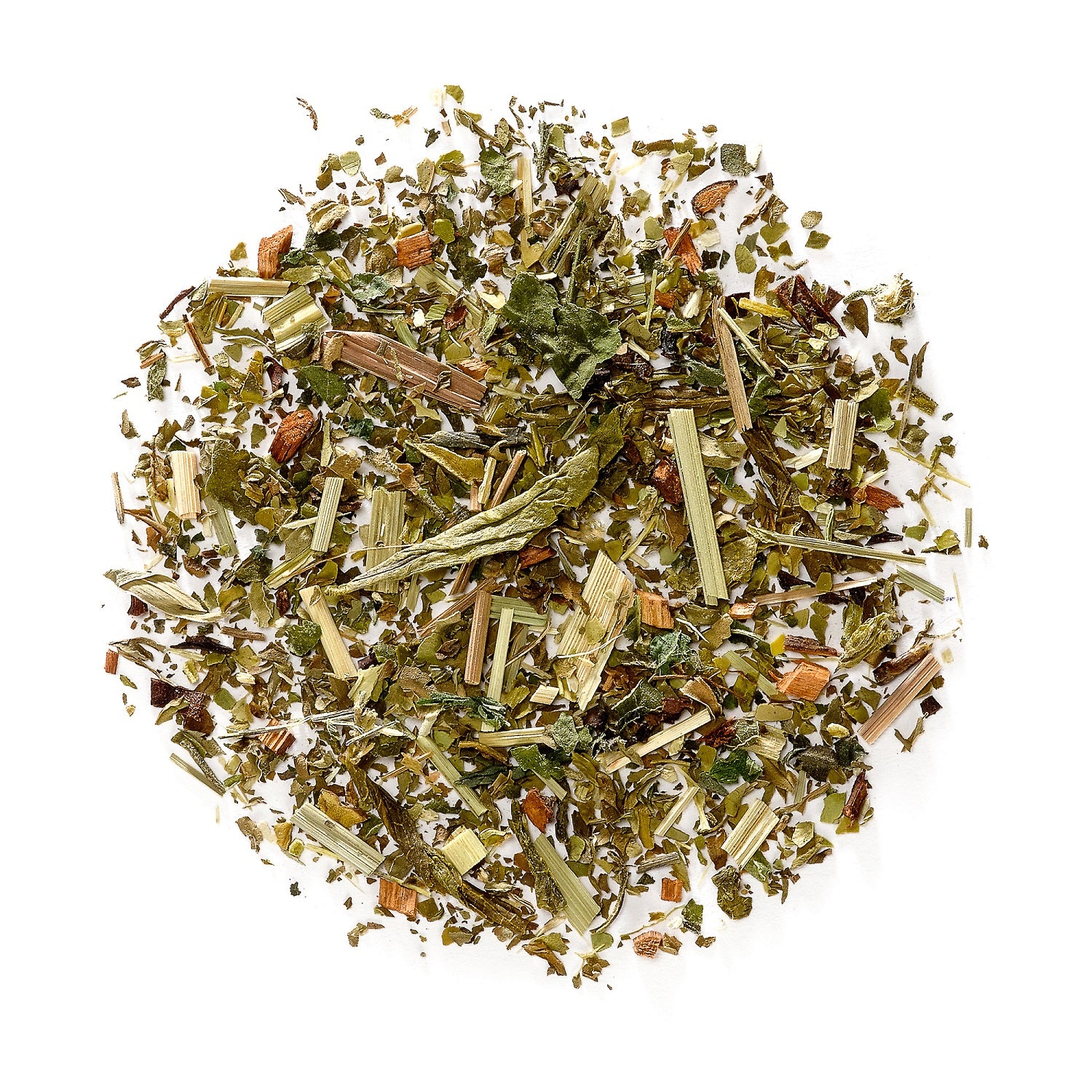
I source our lemon balm as certified organic dried loose leaf from Europe. The citral content, which gives it the characteristic lemon aroma, is a reasonable proxy for overall leaf freshness and potency. Quality drops fast with poor storage. A stale, poorly stored dried leaf will underperform regardless of the delivery format.

When Capsules Make More Sense
Capsules are the better choice when precise, consistent dosing is the priority. If you are following a protocol from a practitioner or working from the parameters of a clinical trial, capsule standardisation gives you a fixed mg value per dose. A cup of tea does not.
Travel and convenience are genuine advantages too. Capsules need no equipment, no hot water, no waiting. If your schedule involves irregular hours, commuting, or frequent travel, a capsule is simpler to take consistently at the same time each day.
The other clear use case is people who dislike the taste of lemon balm but want the functional benefit. The flavour is citrusy and mildly minty with a soft floral finish. Most people find it pleasant and easy to drink without sweetening, but not everyone does. If the taste is a barrier, a capsule solves that without compromise.
Lemon balm extract vs tea also plays out differently if clinical-strength dosing is the goal. Some standardised products specify the exact hydroxycinnamic acid derivative content alongside rosmarinic acid. Tea cannot replicate that specificity. My focus is entirely on dried loose leaf, and what I can say from working with the bulk herb supply chain is that quality variation is substantial. I would expect the supplement supply chain to have the same problems, likely more acute, because you cannot smell a capsule to check it.
When Tea Is the Better Choice
For sleep support, the tea form has a practical edge capsules cannot replicate. The warm liquid, the pre-bed brewing ritual, and the heat from the cup all contribute to the wind-down process. Some research suggests the combination of warmth, scent, and the deliberate act of slowing down to brew may work alongside the herb's pharmacological effect. Lemon balm has traditionally been used for calming and sleep support in European herbal practice, and the ritual dimension is part of why the tea format has remained the dominant use case for centuries.

Liquid form has a clear advantage for digestive applications: it reaches the gut mucosa directly. Absorption for GI-targeted effects is faster from a hot infusion than from a capsule that must dissolve before the active compounds are available. Lemon balm has traditionally been used for digestive discomfort, bloating, and spasm, and the tea route makes anatomical sense for those applications.
For daily stress management, tea is also more cost-effective and builds a more sustainable habit than a supplement regimen. Quality loose leaf herb costs a fraction per cup compared to capsule products, and the act of brewing becomes part of the habit structure. An evening cup becomes a cue in its own right, not just another item on a supplement schedule.
I reach for our organic lemon balm loose leaf most evenings. It feels lighter and crisper than chamomile, which sounds counterintuitive for an evening herb but works in practice. The difference is real enough that I keep both and switch depending on the mood.
Which Form Is Right for You?
Neither lemon balm tea nor capsules is objectively superior. The right choice depends on your use case and how you actually live day to day. If consistent precise dosing matters, for a clinical protocol or a practitioner recommendation, capsules deliver reliability that tea cannot match. If you are using lemon balm for sleep support, daily stress management, or digestive comfort, the tea form has practical advantages that extend beyond the active compound alone.
High-quality dried leaf tea from a reliable source can match or exceed single-capsule rosmarinic acid content. The key variable is quality: fresh, properly stored, certified organic leaf brewed correctly delivers more active compound than the numbers on a mid-range capsule label suggest. When comparing lemon balm extract vs tea, extraction method and leaf freshness matter more than the delivery format alone.

Dejar un comentario
Los comentarios se aprobarán antes de mostrarse.
Ver artículo completo
The Complete Guide to Drinking Tea
What tea is, how the main types differ in the cup, and how to brew each one properly. Water temperature, steeping times, storage and how to get more than one cup from your leaves.
Ver artículo completo

Black Tea: Types, Processing, and How to Brew It
Black tea is fully oxidized Camellia sinensis. Compare Assam, Darjeeling, Keemun, and Ceylon varieties. Learn processing, brewing, and caffeine levels.

How To Grow Black Tea
Learn how to grow black tea at home: soil, climate, and the five processing steps from fresh leaf to a finished cup of black tea.

La sabiduría es el camino hacia un té mejor.
Reciba nuestra guía gratuita de preparación: el agua, la temperatura y el tiempo de infusión adecuados para cada té que vendemos. Además, será el primero en conocer las nuevas cosechas.
Sin spam. Cancele cuando quiera.
Revise su bandeja de entrada.
La guía está en camino.