












Nettle Tea Guide: Buying, Brewing, and Safety
Nettle tea is made from Urtica dioica, the stinging nettle, a plant that has been harvested, eaten, and brewed across Europe for thousands of years. What keeps it relevant today is straightforward: nettle leaf carries a mineral density that is genuinely rare among common herbal teas. Iron, calcium, magnesium, potassium, and vitamins K and C in a single cup. That is not marketing copy. It is why we carry it, and why it keeps selling to people who care about what is actually in their cup.

What Is Nettle Tea? Botanical Identity
Nettle tea is an herbal infusion made from the dried leaves of Urtica dioica, commonly called stinging nettle or nettle leaf. The plant grows wild across Europe, Asia, and North America, thriving in nitrogen-rich soil near hedgerows, waterways, and disturbed ground. It is not cultivated in the same careful way as a Darjeeling first flush, but the best-quality dried nettle is harvested with real attention to timing and handling.

The "stinging" part comes from hollow silica-tipped hairs on the leaves and stems that inject a cocktail of chemicals, including formic acid, histamine, and serotonin, when touched. Drying completely deactivates these hairs. A properly dried leaf is inert, safe to handle, and produces a clean infusion without any irritant compounds surviving into the cup.
Harvest timing is the most important quality variable. Leaves picked before the plant flowers, typically in early spring, carry the highest mineral density and the cleanest flavour. Post-flowering growth is coarser, yellower, and lower in nutritional content. A good supplier can tell you when and where the leaf was picked.
Mineral Content: What Makes Nettle Stand Out
Nettle leaf contains a notably broad mineral profile, including iron, calcium, magnesium, potassium, vitamin K, and vitamin C. The iron content per 100g dry weight is higher than many common vegetables, which is why nettle has traditionally been used as a food crop in spring, not just brewed as a tea.
One thing worth stating clearly: the mineral content in the dry leaf and the mineral content extracted into a brewed cup are not the same figure. An infusion extracts less of each mineral than the whole leaf contains. Some minerals dissolve readily into hot water; others are bound to plant fibre and stay there. This matters if you are reading a headline that says "one cup of nettle tea contains X% of your daily iron." The amount that actually ends up in the cup depends on the mineral, the infusion time, and the water temperature.
That said, nettle tea is still among the more mineral-dense herbal infusions available. Beta-carotene, vitamin A, and chlorophyll all contribute to its notably dark green colour in the cup when freshly brewed from quality whole leaf. Nettle leaves are also known to contain meaningful concentrations of beta-carotene.
The practical implication: nettle tea is worth drinking for its flavour and mineral profile. Treat it as a mineral-rich herbal infusion, enjoyed for its taste.
How to Brew Nettle Tea Correctly
Use 2-3g of dried nettle leaf per 200ml of water, at 95-100°C, steeped for 5-7 minutes. That is the standard method and it works well. The longer you steep, the more minerals you extract, but you also get more tannins and a more pronounced bitterness. Find the balance that works for your palate: 5 minutes gives a cleaner, milder cup; 7 minutes gives more body and a stronger earthy flavour.

Whole dried leaf brews more evenly and produces better clarity than cut-and-sift or powdered nettle. If you are using a teapot without a built-in strainer, use a fine mesh infuser. Nettle leaf fragments are small enough to get through a coarse strainer, so the finer the mesh, the cleaner the cup.
For summer, cold infusion is an excellent option. Add 2-3g of nettle leaf to 200ml of cold water and leave it in the fridge for 4-8 hours. The result is milder in flavour, less bitter, and still mineral-rich because water-soluble minerals extract reasonably well even at low temperatures. It works particularly well when mixed with a slice of lemon or a few mint leaves.
Some people add honey to balance the earthy, slightly grassy flavour. That is a matter of taste. Straight nettle brewed at 5 minutes with quality whole leaf has a clean, savory, slightly buttery character that does not need sweetening once you are used to it.
Nettle Tea Safety: Who Should Be Cautious
Nettle tea is safe for most adults when consumed in normal quantities, meaning 1-3 cups per day from properly dried leaf. There are, however, three groups who should take specific care.
Blood thinners (warfarin and similar): Nettle leaf is high in vitamin K, which interacts directly with anticoagulant medication. If you are on anticoagulant medication, your dosage is calibrated around your current vitamin K intake. Adding a daily cup of high-vitamin-K tea changes that input. Consult your doctor before making nettle a regular habit.
Diuretics: Nettle can interact with diuretic medication. If you are already taking diuretic medication, this is worth monitoring. Flag it with your prescribing doctor if you drink nettle daily.
Pregnancy: Current medical guidance on nettle during pregnancy is cautious. Some traditional use guidance recommends caution during pregnancy. Medical consultation before regular use is the appropriate recommendation.
For most healthy adults with no medication interactions, nettle tea at 1-2 cups per day poses no established safety concern. Allergic reactions are rare but possible, particularly in people with known grass or pollen sensitivities. Start with a single cup and observe before making it a daily drink.
How to Choose Quality Nettle Tea
Whole dried leaf is the correct format for brewing. Cut-and-sift (the standard content of most supermarket tea bags) extracts faster but produces a cloudier, less clean infusion with less room to adjust steeping time. Powder is unsuitable for loose-leaf brewing and cannot be strained effectively.

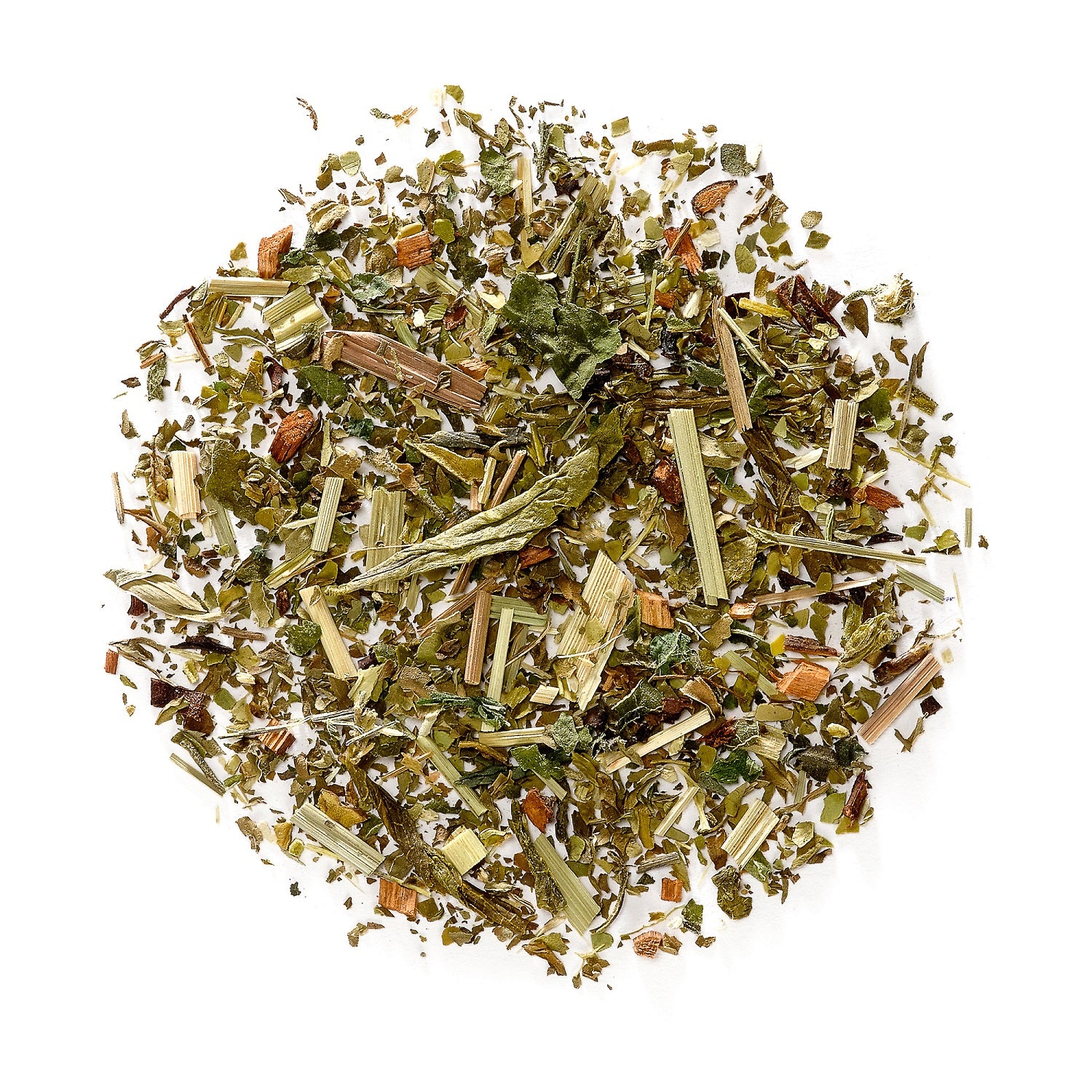
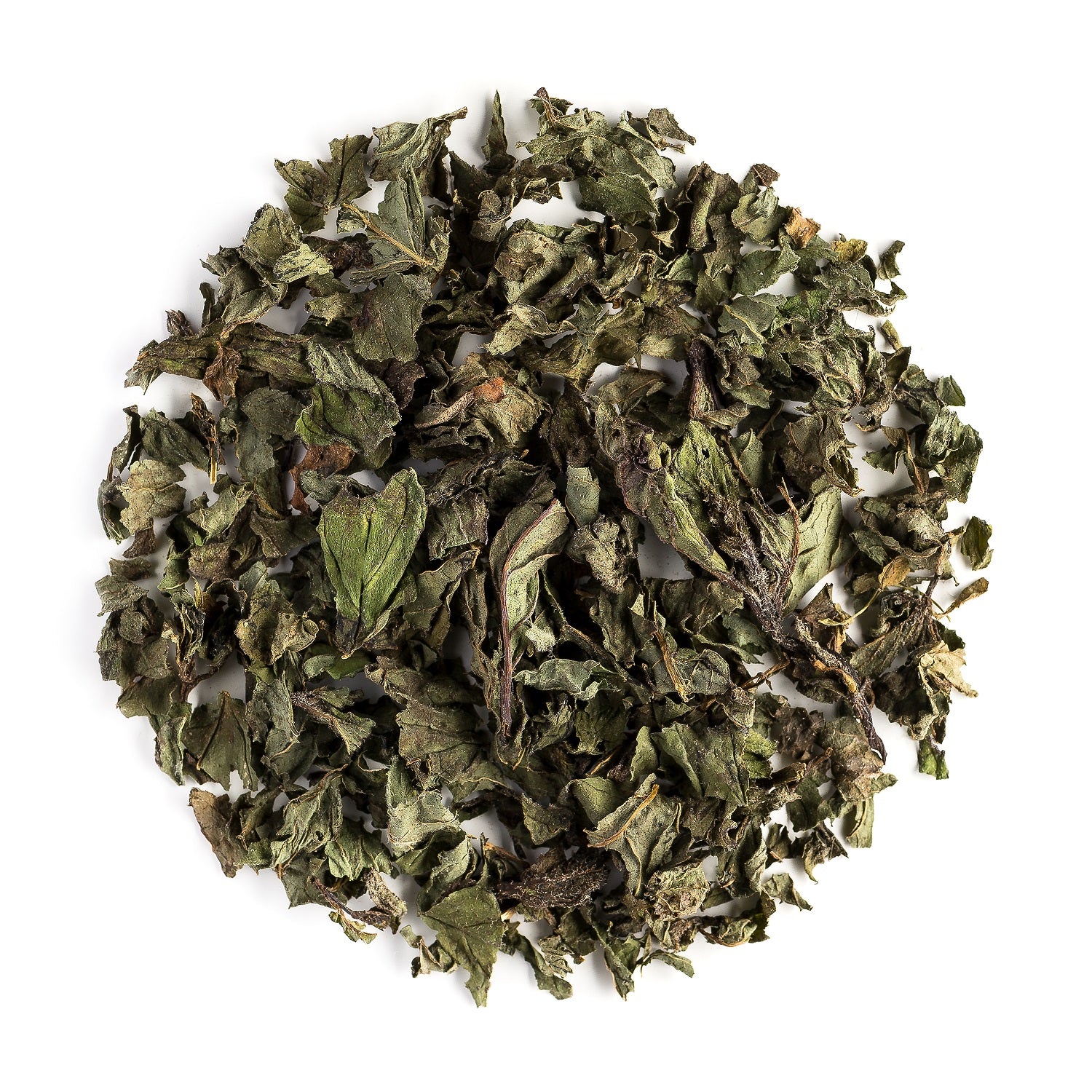
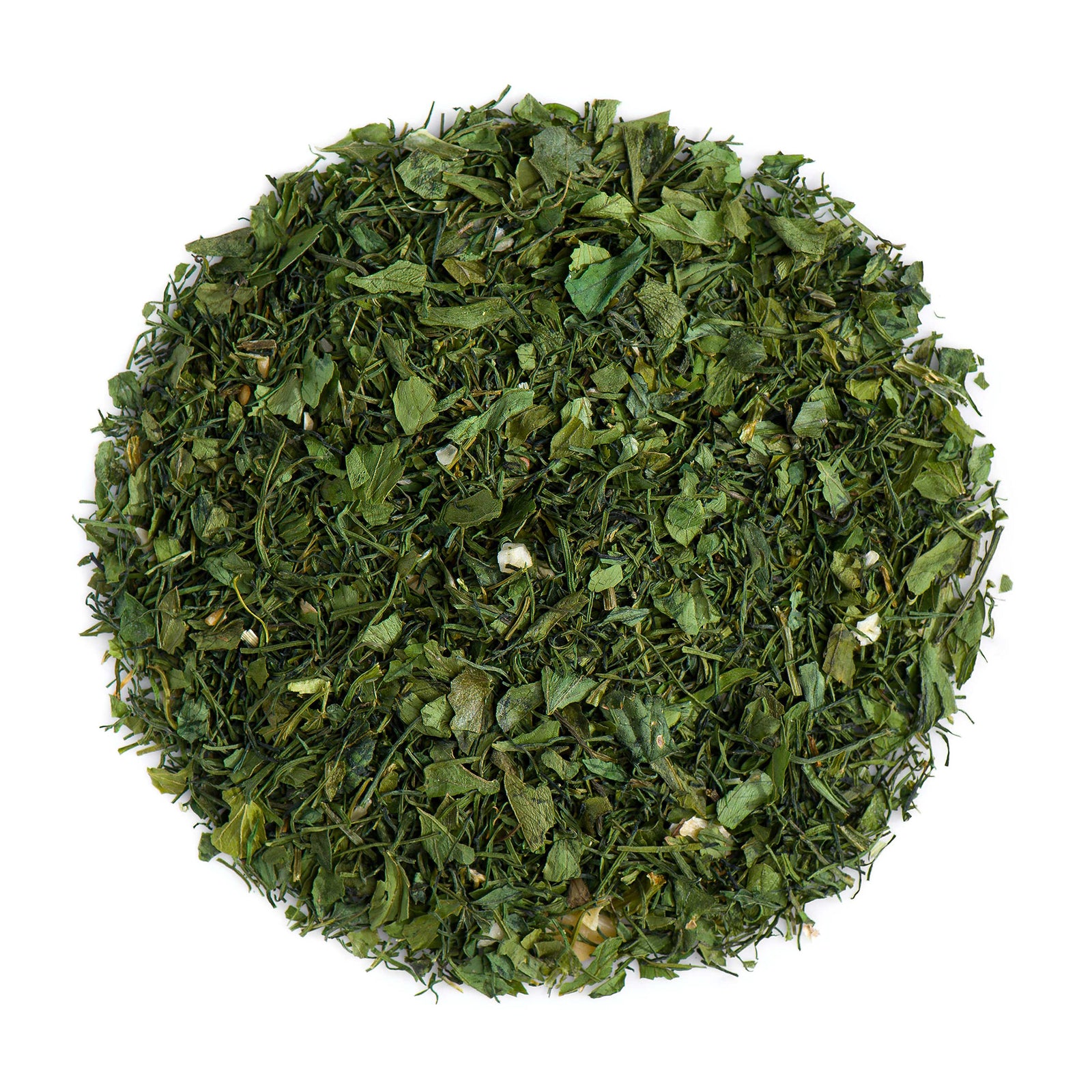
Colour tells you a great deal about freshness. Good nettle leaf is green to golden-green, with a strong earthy, hay-like aroma when you open the bag. Brown or greyish leaf, or leaf that smells flat and dusty, has aged past its useful window. For a mineral-rich herb, freshness is a direct proxy for nutrient density.
Origin makes a real difference. Eastern European and Balkan nettles are the most common commercial source, and quality varies considerably. Turkish nettles are also widely traded. UK Highland nettles, available from some specialist suppliers, carry a cleaner, more delicate flavour profile. The best way to assess any specific lot is by the colour, aroma, and the taste of a test brew.
One factor is critical for nettle sourcing: heavy metal testing. Nettle is a bioaccumulator, meaning it concentrates whatever is in the soil it grows in. This includes lead, cadmium, and other heavy metals if the growing area is contaminated. When evaluating a new nettle lot, the heavy metal test report comes before anything else. An organic certification tells you about pesticide practice; it does not automatically guarantee clean soil. We know that this distinction matters, and we will not stock a lot without the data.
Conclusion
Nettle tea earns its place not because of trend or marketing, but because the mineral profile is genuinely broad and the history of use across European food and tea traditions is substantial. Urtica dioica harvested at peak timing, dried well, and stored correctly delivers a cup that is grassy, earthy, and quietly satisfying as a daily herbal option.
Buy whole dried leaf, not tea bags with cut-and-sift content. Check the colour and smell before you brew. If you are on medication, particularly blood thinners or diuretics, have a conversation with your doctor first. For everyone else, nettle tea is a practical, well-grounded choice in any herbal rotation.
Our nettle at Valley of Tea comes as whole dried leaf with origin and batch traceability. If you want to know where your leaf was grown and when it was harvested, we can tell you. That is the level of sourcing detail that a mineral-dense herb like nettle deserves.
Dejar un comentario
Los comentarios se aprobarán antes de mostrarse.
Ver artículo completo
The Complete Guide to Drinking Tea
What tea is, how the main types differ in the cup, and how to brew each one properly. Water temperature, steeping times, storage and how to get more than one cup from your leaves.
Ver artículo completo

Black Tea: Types, Processing, and How to Brew It
Black tea is fully oxidized Camellia sinensis. Compare Assam, Darjeeling, Keemun, and Ceylon varieties. Learn processing, brewing, and caffeine levels.

How To Grow Black Tea
Learn how to grow black tea at home: soil, climate, and the five processing steps from fresh leaf to a finished cup of black tea.

La sabiduría es el camino hacia un té mejor.
Reciba nuestra guía gratuita de preparación: el agua, la temperatura y el tiempo de infusión adecuados para cada té que vendemos. Además, será el primero en conocer las nuevas cosechas.
Sin spam. Cancele cuando quiera.
Revise su bandeja de entrada.
La guía está en camino.