













Le Guide Complet du Thé en Vrac
Le thé en vrac désigne des feuilles de thé entières ou en gros morceaux, vendues sans sachet — la manière dont le thé a été produit et consommé pendant des siècles avant l'invention du sachet de thé en
-
1908. Les feuilles sont libres de se déployer, de circuler et de libérer toute leur saveur pendant l'infusion, ce qui explique pourquoi le thé en vrac donne systématiquement une tasse meilleure que le thé en sachet. Ce n'est pas une question de snobisme. C'est de la physique : des feuilles plus grandes s'extraient plus uniformément et libèrent moins de tanins amers que la poussière et les fannings écrasés que l'on trouve dans la plupart des sachets de thé.

Qu'est-ce que le thé en vrac

Le thé en vrac est un thé vendu sous forme de feuilles entières ou partiellement brisées, non confinées dans un sachet. Le terme englobe tous les types de thé — noir, vert, blanc, oolong, pu-erh, et infusions aux plantes — tant que les feuilles sont en vrac plutôt que préconditionnées en sachets.
La caractéristique déterminante est la liberté. Lorsque vous infusez du thé en vrac, les feuilles ont de la place pour se déployer — certains thés (comme les oolongs roulés en boules ou les thés verts étroitement torsadés) peuvent atteindre jusqu'à cinq fois leur volume sec. Cette expansion est essentielle pour une extraction homogène et un développement complet de la saveur. Une feuille piégée dans un petit sachet de thé ne peut pas faire cela.
Thé en vrac contre sachets de thé
Les sachets de thé contiennent généralement des fannings et de la poussière — les plus petites particules restant après le calibrage et le tri du thé en feuilles entières. Ces minuscules fragments ont une surface énorme par rapport à leur masse, ce qui signifie qu'ils s'extraient très rapidement. Une extraction rapide peut sembler être un avantage, mais ce n'en est pas un : elle libère les tanins et les composés amers plus vite que les composés aromatiques recherchés, produisant une tasse à une seule dimension, forte mais plate.
Le thé en vrac utilise des feuilles plus grandes et plus intactes qui s'extraient progressivement. Les composés aromatiques — acides aminés, sucres, huiles essentielles — se libèrent sur une période plus longue, créant une tasse avec plus de profondeur, de complexité et de nuance. La différence n'est pas subtile. Infuser le même thé en vrac ou en sachet produit des résultats nettement différents.
Il existe un compromis : les sachets pyramidaux haut de gamme et les sachets à grandes feuilles utilisent des morceaux de feuilles plus gros disposant de plus de place pour se déployer. Ils comblent en partie l'écart de commodité, mais ne peuvent toujours pas égaler un thé en vrac correctement infusé.
Ce qui est considéré comme du thé en vrac
Le spectre va des feuilles entières et intactes (comme le thé blanc Silver Needle ou l'oolong roulé à la main) jusqu'aux morceaux brisés plus grands (comme le thé noir de grade BOP). Le critère clé est que les feuilles ne soient pas contraintes — elles doivent avoir de la place pour bouger dans l'eau. Même les grades « brisés » sont considérés comme du thé en vrac, tant que les morceaux sont nettement plus grands que la poussière contenue dans les sachets de thé standards.
Les granulés CTC (Crush, Tear, Curl — broyé, déchiré, roulé) sont techniquement en vrac lorsqu'ils sont vendus sans sachet, mais la petite taille de leurs particules fait qu'ils se comportent plutôt comme un thé en sachet à l'extraction. La plupart des amateurs de thé en vrac privilégient les thés à traitement orthodoxe, dont la structure de la feuille reste visible.
Pourquoi le thé en vrac a meilleur goût

L'avantage gustatif du thé en vrac tient à la taille des feuilles, à la dynamique d'extraction et à la fraîcheur — trois facteurs qui se combinent entre eux.
Taille des feuilles et extraction de la saveur
Les particules plus petites s'extraient plus vite et plus complètement. Cela semble positif jusqu'à ce que l'on comprenne ce que « plus complètement » signifie : cela inclut les tanins amers, une astringence dure et une saveur plate, à une seule note. Les feuilles entières libèrent leur saveur progressivement — d'abord la douceur et l'umami, puis le corps et la complexité, l'amertume arrivant en dernier. En contrôlant le temps d'infusion avec le thé en vrac, on peut arrêter l'extraction au point idéal. Avec la poussière des sachets de thé, ce point idéal est dépassé en moins d'une minute.
L'explication chimique : les acides aminés (qui apportent la douceur et l'umami) sont solubles dans l'eau et s'extraient rapidement. Les polyphénols (qui apportent l'astringence) s'extraient plus lentement. Les feuilles entières offrent une fenêtre où les acides aminés sont élevés et les polyphénols modérés. La poussière des sachets de thé fait disparaître cette fenêtre, car tout s'extrait simultanément.
Quand des clients me disent ne pas percevoir de différence entre le sachet et le vrac, la première chose que je vérifie est leur eau et leur méthode d'infusion. Mais souvent, la réponse la plus simple est la meilleure — je leur prépare une tasse. Côte à côte, la différence est évidente, sans qu'aucune explication ne soit nécessaire.
Infusions multiples
Un thé en vrac de qualité peut être infusé plusieurs fois. Les oolongs donnent 5 à 10 infusions, voire plus. Les thés verts et blancs chinois en donnent 3-
-
5. Même les thés noirs peuvent tenir 2 à 3 infusions. Chaque infusion révèle un aspect différent du thé — la première est vive et immédiate, les infusions du milieu montrent de la profondeur, et les dernières deviennent douces et rondes.
Fraîcheur et conservation
Le thé en vrac a tendance à être plus frais au moment de la vente, car il transite par des circuits spécialisés aux chaînes d'approvisionnement plus courtes. Les sachets de thé de grande distribution peuvent rester des mois en entrepôt. La plus grande surface des feuilles en vrac se dégrade également plus lentement que celle des particules écrasées, qui perdent rapidement leurs composés aromatiques volatils en raison de leur surface exposée.
Les types de thé en vrac

Le thé en vrac est disponible dans toutes les catégories de thé. L'aspect des feuilles varie considérablement — des bourgeons argentés du thé blanc aux billes vertes bien roulées du gunpowder, en passant par les lanières sombres et torsadées de l'oolong Wuyi.
Thé noir, thé vert et thé blanc
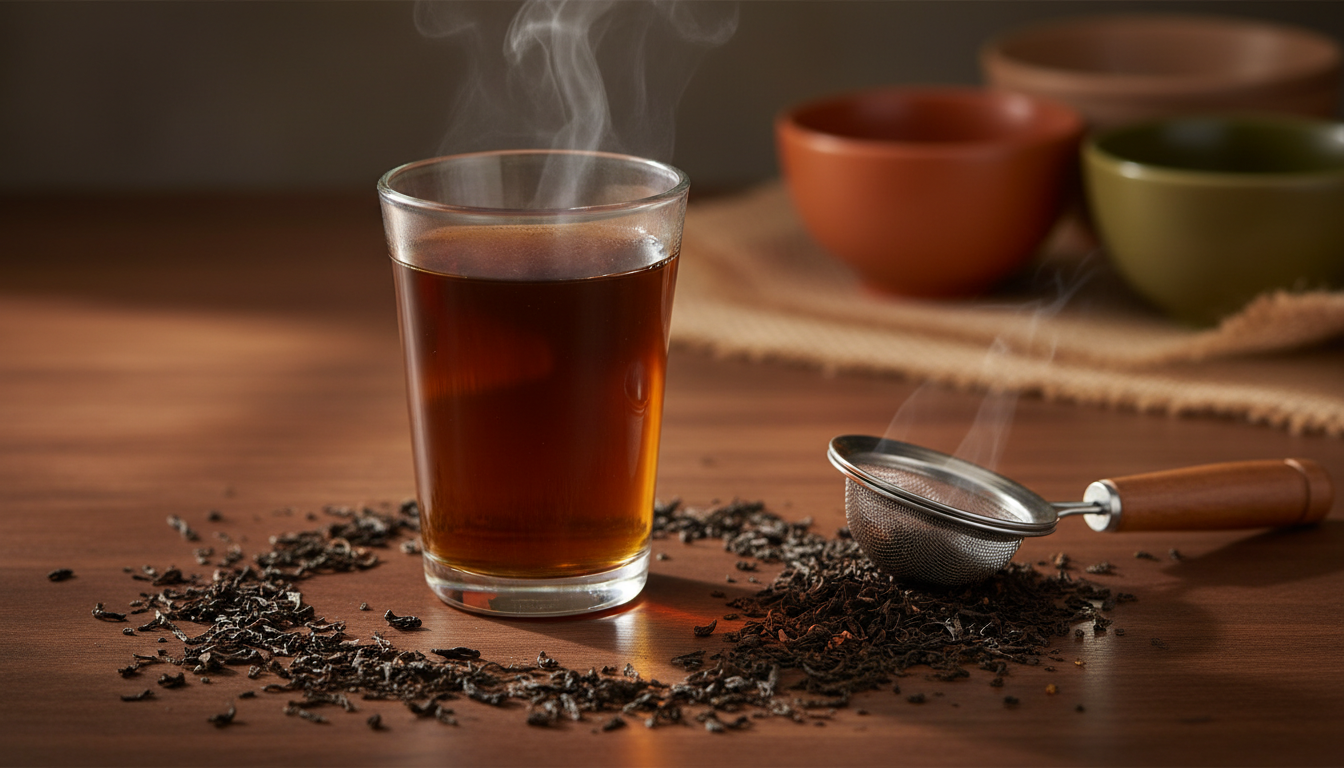
Le thé noir en vrac va des feuilles entières aux pointes dorées du Darjeeling FTGFOP aux grandes feuilles sombres de l'Assam orthodoxe. Le thé noir en vrac donne une tasse plus nuancée que les versions en sachet — on y goûte le terroir et le traitement plutôt qu'une saveur générique de « thé noir ». Le thé vert en vrac révèle l'énorme diversité de cette catégorie — le Longjing pressé à plat n'a rien à voir avec le Gunpowder roulé ou l'Anji Bai Cha en forme d'aiguille. Chaque forme en dit long sur la façon dont le thé infusera et sur son goût. Les thés verts japonais en vrac (Sencha, Gyokuro) sont particulièrement transformés par rapport à leurs versions en sachet. Le thé blanc n'est presque disponible qu'en vrac. Les bourgeons de Silver Needle sont trop grands et délicats pour les sachets de thé. C'est l'une des catégories où le vrac n'est pas une simple amélioration — c'est la seule option pour obtenir le produit authentique.Thé oolong et thé pu-erh
L'oolong profite peut-être plus que toute autre catégorie de l'infusion en vrac. Les oolongs taïwanais roulés en boules ont besoin d'espace pour se déployer sur plusieurs infusions — les enfermer dans une boule à thé ou un sachet va à l'encontre du but recherché. Les oolongs Wuyi roulés en lanières ont eux aussi besoin de place pour circuler. La nature multi-infusions de l'oolong en fait un mauvais candidat pour les sachets à usage unique. Le pu-erh est généralement vendu sous forme de galettes compressées, de briques ou de tuos. On en détache un morceau pour l'infusion — ce qui en fait, de fait, un thé en vrac au moment où il arrive dans la théière. Le pu-erh en vrac (mao cha) existe également. Comme l'oolong, le pu-erh récompense les infusions multiples que les sachets de thé ne peuvent pas offrir.Infusions aux plantes et thés aromatisés
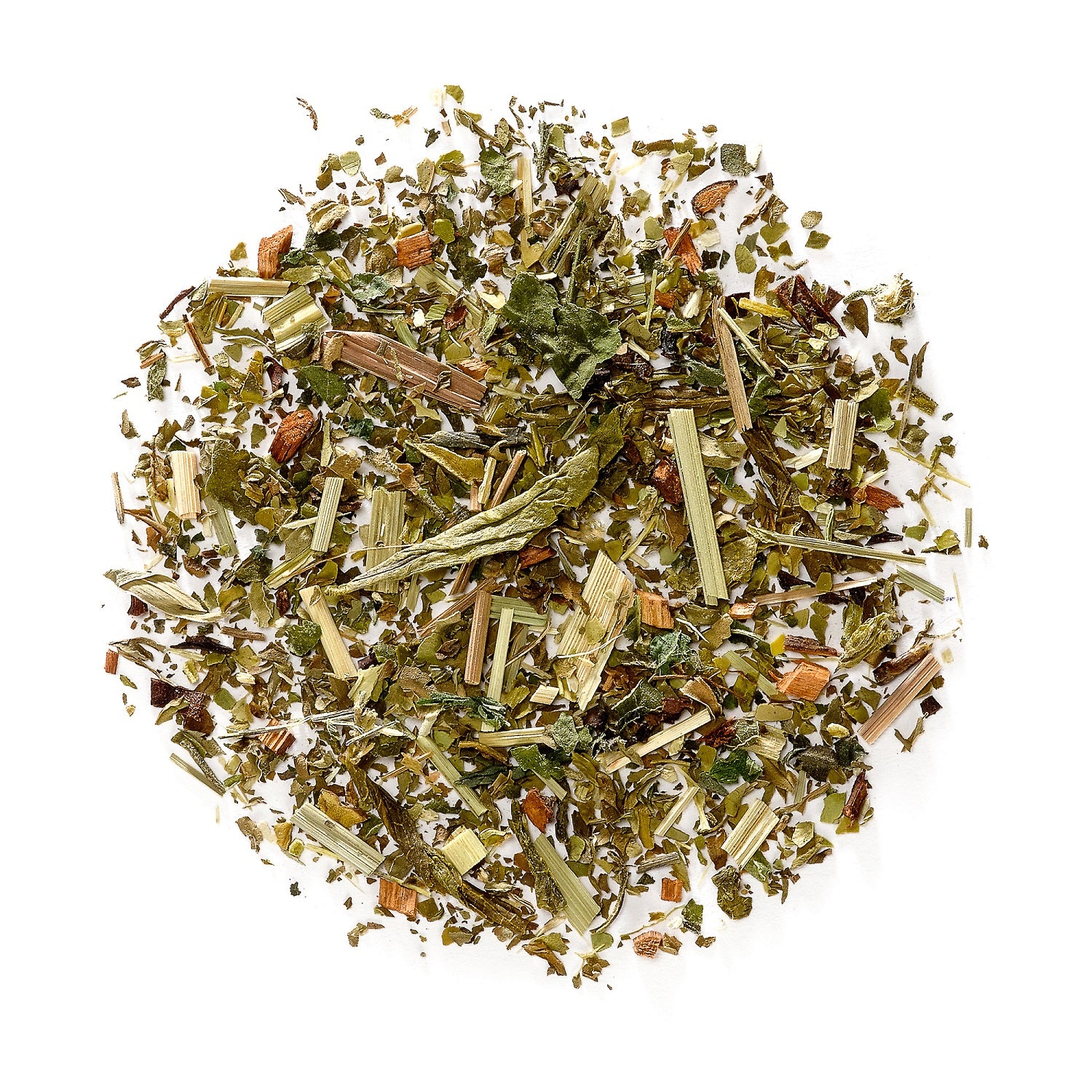
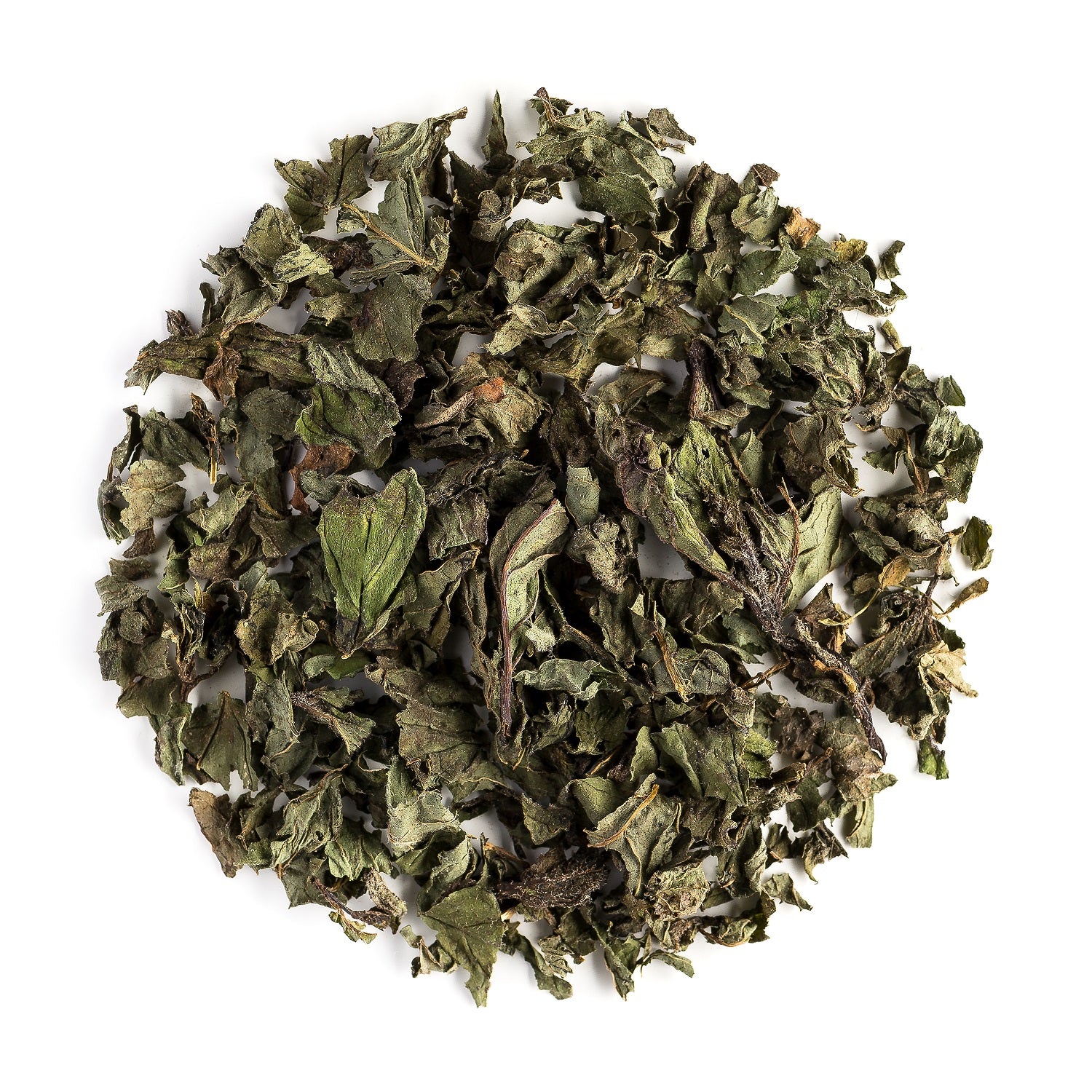
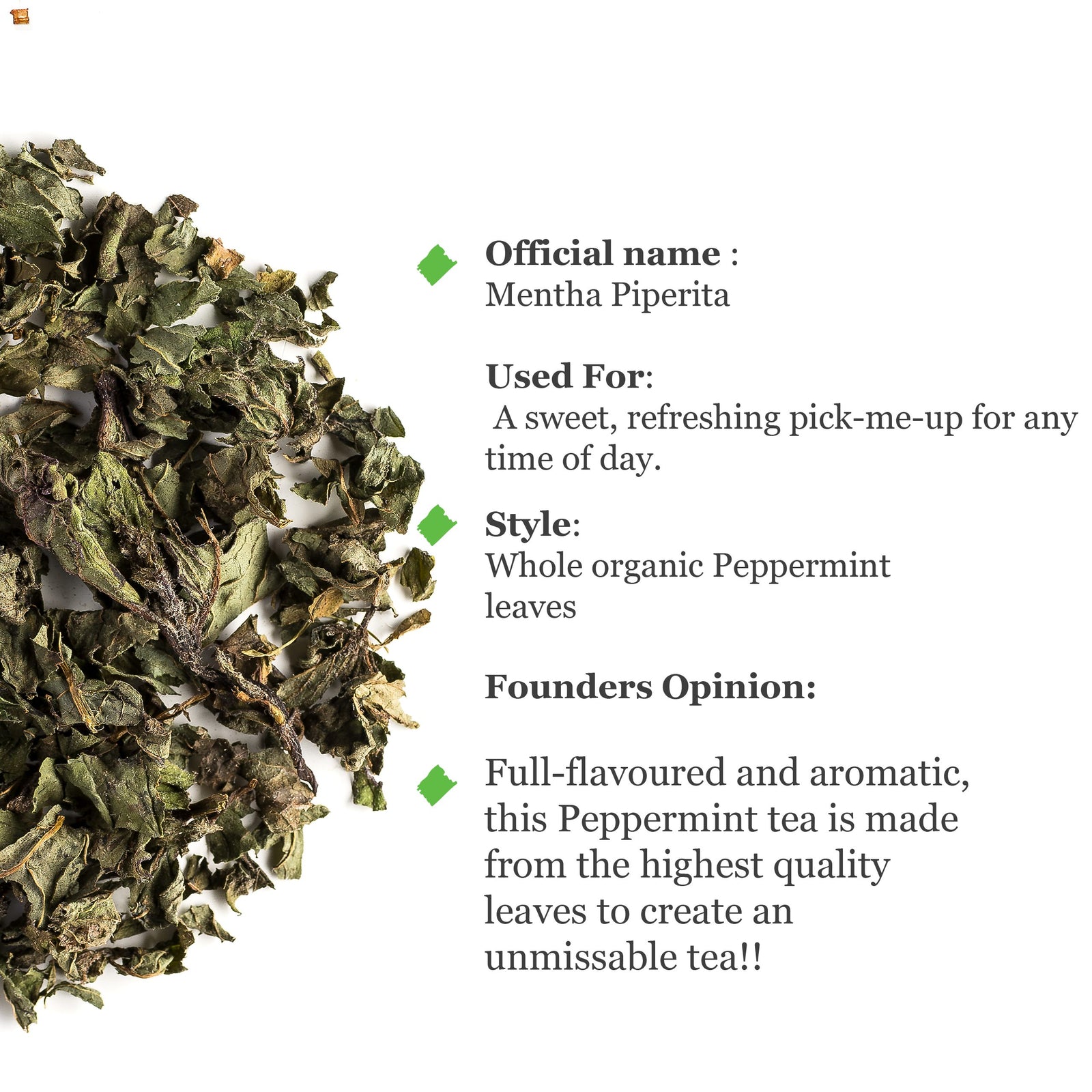
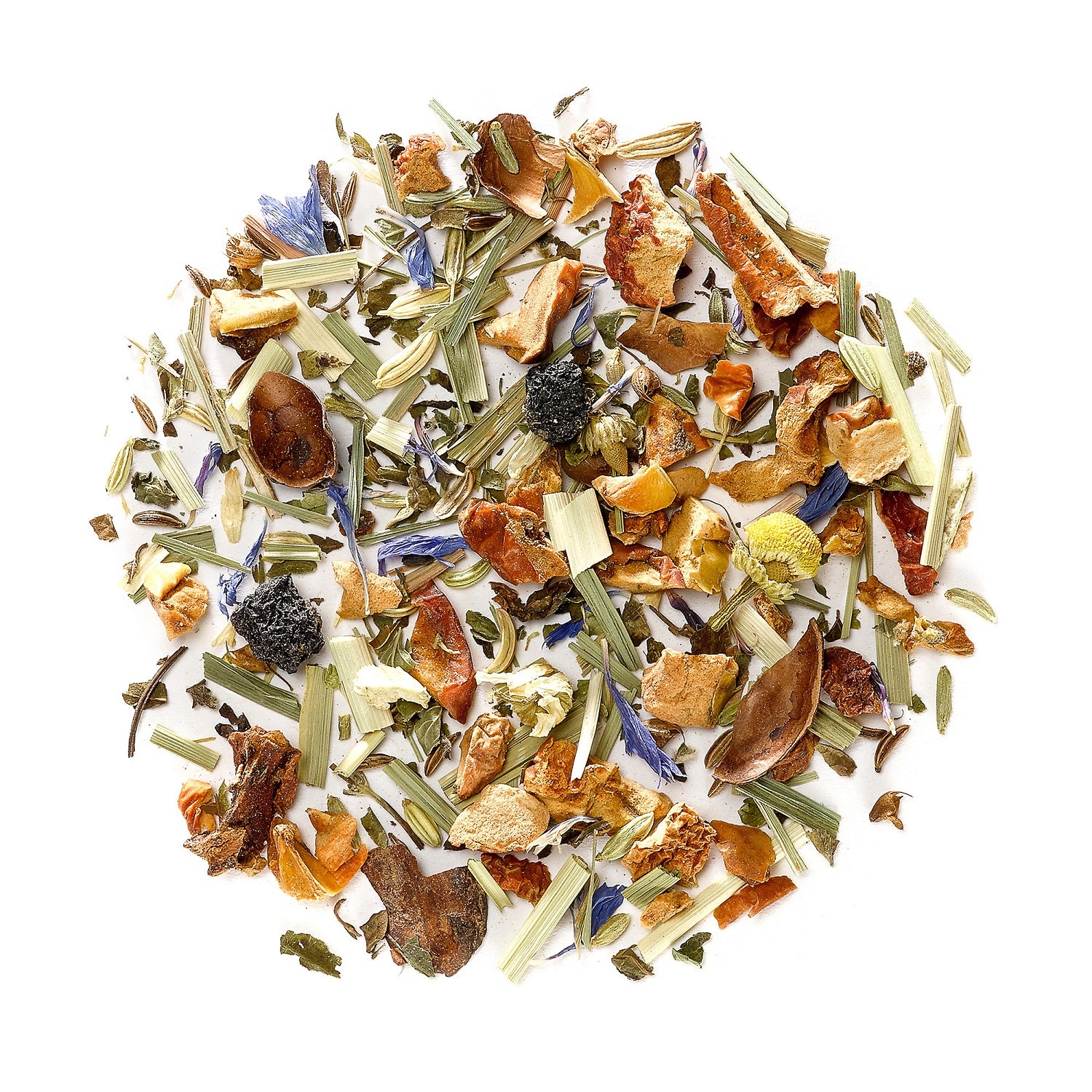
Les infusions aux plantes en vrac contiennent des matières végétales reconnaissables — fleurs de camomille entières, grandes feuilles de menthe poivrée, tranches de gingembre séché, pétales d'hibiscus. L'expérience visuelle et aromatique est incomparablement plus riche que le contenu anonyme d'un sachet d'infusion. Certaines plantes présentent un écart de qualité plus marqué que d'autres. Le thé de montagne grec, la verveine citronnelle et le honeybush font partie des infusions où la différence entre vrac et sachet est la plus spectaculaire. Les mélanges d'infusions en vrac ont aussi tendance à utiliser des plantes de meilleure qualité. Les thés aromatisés en vrac comprennent souvent des morceaux de fruits visibles, des pétales de fleurs et des éclats d'épices qui ajoutent à la fois saveur et attrait visuel. Méfiez-vous des mélanges qui contiennent des morceaux de bergamote séchée ou du zeste d'agrume utilisés comme matière de remplissage — c'est l'huile qui donne à l'Earl Grey son caractère, pas l'écorce séchée. La bergamote séchée ajoute du poids, pas de la saveur. Un Earl Grey en vrac de qualité utilise de la véritable huile de bergamote sur de bonnes feuilles de thé, et rien d'autre.Comment le thé en vrac est-il classé

Les systèmes de classement du thé décrivent la taille et la composition des feuilles — ils sont principalement utilisés pour les thés noirs d'Inde et du Sri Lanka. Comprendre les grades aide à prévoir comment un thé infusera.
Le classement du thé orthodoxe
L'alphabet des grades va de la feuille entière à la poussière :
Grades de feuille entière : OP (Orange Pekoe) est la référence de base — feuilles intactes sans pointes. FOP ajoute « Flowery » (quelques pointes). GFOP ajoute « Golden » (plus de pointes). TGFOP ajoute « Tippy ». FTGFOP ajoute « Fine » — le grade standard le plus élevé. SFTGFOP ajoute « Special Fine » — réservé aux thés exceptionnels. Grades brisés : BOP (Broken Orange Pekoe) et ses variantes utilisent des morceaux de feuilles plus petits. Ils infusent plus vite et plus fort. FBOP, GBOP et TGBOP suivent la même logique de modificateurs que les grades de feuille entière. Fannings et poussière : F (Fannings) et D (Dust) sont les particules les plus petites, utilisées presque exclusivement dans les sachets de thé. Elles s'extraient en quelques secondes et produisent une tasse forte mais plate.Ce que le grade vous indique (et ce qu'il n'indique pas)
Les grades indiquent la taille des feuilles, leur intégrité et la présence de pointes (bourgeons). Ils ne garantissent pas la qualité gustative. Un BOP bien fait provenant d'un bon domaine peut surpasser un FTGFOP médiocre. Le grade indique comment le thé infusera (plus vite pour les petits grades, plus progressivement pour la feuille entière) — pas s'il aura bon goût. Le savoir-faire de traitement, le terroir et la fraîcheur comptent davantage que le grade seul.
Les thés chinois et japonais n'utilisent pas ce système. Ils ont leurs propres conventions de nommage, basées sur l'origine, le cultivar, la norme de cueillette et le style de traitement.
L'équipement pour infuser le thé en vrac

Il ne faut pas grand-chose pour bien infuser le thé en vrac. Un infuseur panier et une bouilloire à contrôle de température couvrent 90 % des cas d'usage. Tout le reste relève du raffinement.
Infuseurs et passoires
Les infuseurs panier sont la meilleure option au quotidien. Ils se placent dans la tasse ou la théière, retenant les feuilles tout en laissant l'eau circuler librement. Choisissez un panier large avec une maille fine — plus le panier est large, plus les feuilles ont de la place pour se déployer. Évitez les petites boules à thé et les infuseurs en forme d'œuf — ils compriment les feuilles et donnent un thé faible, sous-extrait. Les infuseurs à poser sur la tasse (comme le Finum Brewing Basket) sont appréciés pour infuser une seule tasse à la fois, au bureau ou dans la cuisine. Ils se retirent proprement une fois l'infusion terminée. Les infuseurs à vidange par le bas (comme l'IngenuiTEA ou équivalent) permettent d'infuser dans l'appareil, puis de libérer le thé dans la tasse en le posant dessus. Simple, rapide et facile à nettoyer.Théières et gaiwans
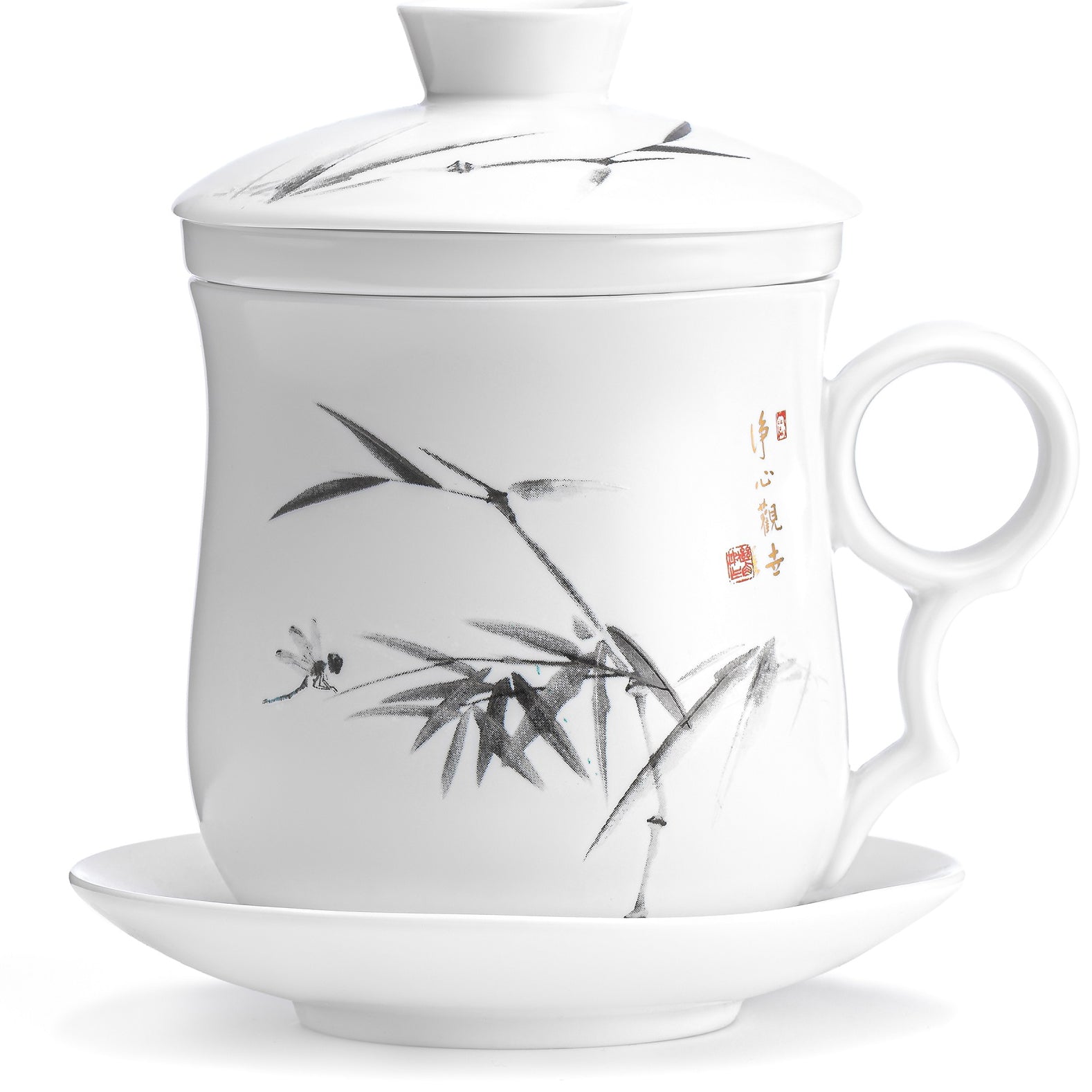
Les théières en verre permettent d'observer les feuilles se déployer — utile pour apprendre et joli pour servir. Les théières en céramique retiennent bien la chaleur et sont neutres en goût. Les théières en terre (Yixing, Jianshui) sont poreuses et absorbent la saveur au fil du temps — traditionnellement dédiées à un seul type de thé. Elles constituent un raffinement pour les buveurs expérimentés, pas un point de départ. Les gaiwans (bols avec couvercle) sont la référence chinoise pour l'infusion gongfu — d'une capacité de 100 à 150 ml, simples à utiliser, faciles à nettoyer et assez polyvalents pour tout type de thé. Un gaiwan et quelques petites tasses suffisent pour l'expérience du thé chinois.Bouilloires et accessoires
Une bouilloire électrique à température variable est, à elle seule, l'amélioration la plus utile pour un buveur de thé. Différents thés nécessitent différentes températures d'eau — 70 °C pour les thés verts délicats, 100 °C pour le thé noir et les infusions aux plantes. Une bouilloire avec des réglages préprogrammés élimine les approximations.
Une balance de cuisine (précision de 0,1 g) garantit des ratios feuilles/eau constants. Cela compte plus qu'on ne le pense — utiliser 2 g plutôt que 4 g du même thé donne des résultats radicalement différents. Un minuteur aide les débutants encore en train de calibrer leurs temps d'infusion.
Comment infuser le thé en vrac

Les trois variables qui déterminent votre tasse : la quantité de feuilles, la température de l'eau et le temps d'infusion. Maîtrisez-les et presque tous les thés en vrac auront bon goût.
L'infusion à l'occidentale
La méthode standard pour boire du thé au quotidien. Ma recommandation pour toute personne débutante : 2 grammes de thé, 250 ml d'eau faiblement minéralisée, 90 degrés, 5 minutes. Cela fonctionne pour la plupart des thés. Pour le thé vert, descendez à 80 degrés. Pour les thés verts japonais, descendez encore à 70 degrés. Versez l'eau sur les feuilles, laissez infuser le temps recommandé, puis retirez les feuilles.
Guide de température par type de thé :
-
- Thé vert : 70-80 °C, 2-3 minutes
- Thé blanc : 80-85 °C, 3-5 minutes
- Thé oolong : 85-95 °C, 3-4 minutes
- Thé noir : 95-100 °C, 3-5 minutes
- Infusion aux plantes : 100 °C, 5-10 minutes
L'infusion façon gongfu
La méthode chinoise utilise plus de feuilles (5 à 7 g pour 100 ml), moins d'eau et des temps d'infusion plus courts (10 à 30 secondes). Cela produit de nombreuses infusions courtes plutôt qu'une seule longue — chacune révélant un aspect différent du thé. L'infusion gongfu convient parfaitement à l'oolong, au pu-erh, et aux thés noirs et verts chinois de haute qualité.
Utilisez un gaiwan ou une petite théière (100-150 ml). Rincez les feuilles avec une première infusion rapide (que l'on jette), puis infusez en infusions courtes. Augmentez progressivement le temps d'infusion à chaque passage. De bons thés donnent ainsi 5 à 10 infusions, voire plus.
Température et temps d'infusion par type de thé
Ce sont des points de départ. Ajustez selon vos goûts — si un thé est amer, baissez la température ou raccourcissez le temps d'infusion. S'il est faible, utilisez plus de feuilles ou infusez plus longtemps. L'infusion du thé est assez simple pour s'apprendre en un jour, et assez nuancée pour se peaufiner pendant des années.
Comment conserver le thé en vrac

Le thé a cinq ennemis : la lumière, la chaleur, l'humidité, l'air et les odeurs fortes. Se protéger de ces cinq facteurs permet de conserver le thé frais pendant des mois, voire des années, selon le type.
Les cinq ennemis de la fraîcheur du thé
La lumière dégrade la chlorophylle et les composés volatils. Ne rangez jamais le thé dans un bocal en verre transparent sur une étagère. La chaleur accélère la dégradation chimique. La température ambiante d'un placard frais convient — évitez l'étagère au-dessus de la cuisinière ou près d'une fenêtre. L'humidité favorise les moisissures et le rassissement. Le thé doit être parfaitement sec (2-3 % d'humidité) lors du stockage. L'air apporte de l'oxygène qui oxyde les composés volatils restants. Les odeurs fortes sont facilement absorbées par le thé — tenez-le éloigné des épices, du café et des produits d'entretien.Les meilleurs contenants de conservation
Les boîtes en fer-blanc à couvercle bien ajusté sont le choix classique — opaques, hermétiques et abordables. Les bocaux en céramique à joint en caoutchouc fonctionnent bien également. Les sachets doublés de film aluminium avec fermeture zip sont pratiques pour de petites quantités. Évitez les bocaux en verre transparent (exposition à la lumière) et les contenants en plastique (peuvent transmettre des odeurs et ne sont pas totalement hermétiques).
Pour les thés délicats (vert, oolong léger), un double emballage est utile — un sachet en aluminium à l'intérieur d'une boîte. Certains oolongs taïwanais de haute montagne bénéficient d'une conservation au réfrigérateur dans un sachet parfaitement hermétique.
Durée de conservation par type de thé
Thé vert : 6 à 12 mois. Les thés verts japonais sont particulièrement périssables — achetez-en en petites quantités et consommez-les rapidement. Thé blanc : 1 à 2 ans, bien que le thé blanc vieilli (3 ans et plus) développe de la complexité et constitue une catégorie à part. Thé oolong : 1 à 2 ans pour les oolongs légers, 2 à 5 ans ou plus pour les oolongs torréfiés. Thé noir : 1 à 2 ans pour la plupart ; certains thés noirs du Yunnan vieillissent bien. Pu-erh : s'améliore avec l'âge — des décennies pour un bon sheng. Infusion aux plantes : 1 à 2 ans dans la plupart des cas.Thé en vrac contre sachets de thé : la comparaison complète

Coût par tasse
Le calcul favorise le vrac plus souvent qu'on ne le pense. Un thé en vrac de qualité à 8 € les 100 g, utilisé à raison de 3 g par tasse, coûte 0,24 € la tasse. Une boîte de 20 sachets de thé haut de gamme à 4 € coûte 0,20 € la tasse — apparemment moins cher. Mais le thé en vrac donne souvent 2 à 3 infusions avec les mêmes feuilles, ce qui fait tomber le coût réel à 0,08-0,12 € la tasse. En tenant compte des réinfusions, le thé en vrac revient moins cher que les sachets haut de gamme.
Les sachets de thé bas de gamme (2 € pour 40) coûtent 0,05 € la tasse — difficile à battre sur le seul critère du prix. Mais l'écart de saveur est proportionnel à l'écart de prix. On compare des produits fondamentalement différents.
Praticité et transportabilité
Les sachets de thé l'emportent pour les voyages, le bureau, et les situations où l'on ne maîtrise pas l'environnement d'infusion. On peut atténuer cela avec des infuseurs de voyage, des sachets vides à remplir soi-même en portions préétablies, ou des sachets pyramidaux haut de gamme utilisant des feuilles entières. L'écart de praticité est réel, mais réductible.
À la maison ou dans tout environnement maîtrisé, le vrac n'ajoute peut-être que 30 secondes au processus — verser les feuilles dans un infuseur plutôt que d'ouvrir un sachet. Le gain de saveur pour ces 30 secondes est considérable.
Comment se lancer dans le thé en vrac

Le kit de démarrage
Il faut trois choses : un infuseur, une bouilloire et du thé. Investissement total : moins de 25 €.
Infuseur : un infuseur panier en acier inoxydable adapté à votre tasse (5-10 €). Prenez-en un large — plus les feuilles ont de la place, meilleur sera le thé. Bouilloire : n'importe quelle bouilloire fait l'affaire au début. Une bouilloire à température variable (25-40 €) est la meilleure amélioration à envisager par la suite — elle élimine les approximations quand il s'agit de laisser refroidir l'eau bouillante pour les thés verts et blancs. Thé : commencez avec 2 à 3 thés qui vous intriguent. Si vous débutez, commencez par ce que vous buvez déjà — la version en vrac de votre thé habituel vous montrera immédiatement la différence.Premiers thés à essayer
Si vous buvez des sachets de thé English Breakfast, essayez un Assam en vrac ou un mélange English Breakfast orthodoxe. La profondeur maltée et le corps vous surprendront.
Si vous buvez des sachets de thé vert, essayez un Sencha (japonais) ou un Longjing (chinois) en vrac. La différence entre le thé vert en sachet et un thé vert en vrac de qualité est l'une des plus importantes du monde du thé.
Si vous buvez des sachets d'infusion, essayez des fleurs de camomille en vrac ou des feuilles de menthe poivrée entières. Voir la véritable matière végétale et sentir l'arôme des plantes entières est une expérience bien différente d'un sachet en papier de plantes moulues.
Si vous ne buvez pas encore de thé, commencez par un oolong taïwanais (Ali Shan ou Jin Xuan) — naturellement doux, tolérant à l'infusion, et impressionnant sans nécessiter d'expertise.
Erreurs courantes à éviter
Utiliser trop de feuilles donne une tasse amère et envahissante. Commencez avec 2 à 3 grammes pour 200 ml et ajustez à la hausse si nécessaire. Une balance de cuisine aide, en attendant de savoir doser à l'œil. Une eau trop chaude pour le thé vert est la principale raison pour laquelle les gens pensent ne pas aimer le thé vert. L'eau bouillante sur des feuilles de thé vert crée une amertume dure. Utilisez 70-80 °C — nettement en dessous de l'ébullition. Infuser trop longtemps aggrave toutes les autres erreurs. Réglez un minuteur jusqu'à connaître vos préférences. Deux minutes de trop transforment une tasse agréable en une tasse astringente. Utiliser une minuscule boule à thé empêche une bonne extraction. Les feuilles ne peuvent ni se déployer ni circuler, ce qui donne un thé faible quelles que soient les autres variables. Utilisez un infuseur panier ou infusez librement dans la théière.Questions fréquentes sur le thé en vrac
Combien de fois peut-on infuser le thé en vrac ? Cela dépend du type. Thé vert : 2 à 4 fois. Thé noir : 1 à 3 fois. Oolong : 5 à 10 fois, voire plus. Pu-erh : 10 à 15 fois, voire plus. Thé blanc : 3 à 5 fois. Infusion aux plantes : généralement 1 à 2 fois. Chaque infusion doit être un peu plus longue que la précédente. Le thé en vrac est-il plus cher ? Par tasse, souvent non — surtout en tenant compte des infusions multiples. Un paquet de 100 g de thé en vrac de qualité à 8-15 € donne 30 à 50 tasses, voire plus. Les sachets de thé haut de gamme à 0,20-0,30 € l'unité ne peuvent égaler ce rapport qualité-prix. Peut-on utiliser le thé en vrac sans infuseur ? Oui. Infusez dans n'importe quel récipient et filtrez à travers une passoire à maille fine. Ou utilisez le « style grand-père » — ajoutez les feuilles directement dans un grand verre, versez de l'eau chaude et buvez en évitant les feuilles flottantes. C'est ainsi que le thé est consommé au quotidien dans une grande partie de la Chine. Le thé en vrac se périme-t-il ? Il ne se gâte pas au sens de la sécurité alimentaire, mais il perd de sa saveur avec le temps. Bien conservés, la plupart des thés restent bons de 6 mois à 2 ans selon le type. Le pu-erh et certains oolongs torréfiés s'améliorent avec l'âge. Le thé en vrac est-il meilleur que les sachets de thé ? En matière de qualité gustative, presque toujours — la qualité des feuilles est supérieure en vrac, et la dynamique d'infusion produit une tasse plus nuancée. Les sachets l'emportent sur la praticité. La question est de savoir si 30 secondes de plus par tasse valent l'amélioration de saveur. Pour la plupart des gens qui essaient les deux côte à côte, la réponse est évidente.Passer le cap
Passer au thé en vrac est la plus grande amélioration qu'un buveur de thé puisse apporter — plus grande que d'essayer une nouvelle variété, plus grande que de changer de théière, plus grande que n'importe quelle technique d'infusion prise isolément. La différence entre la poussière des sachets et le thé en feuilles entières n'est pas progressive. Elle est catégorique.
Commencez avec un infuseur panier et un thé qui vous intrigue. Infusez-le en portant attention à la température et au temps. Si vous buvez déjà du thé au quotidien, ce changement demande un effort minime tout en transformant la tasse. Si le thé est entièrement nouveau pour vous, commencer par le vrac signifie que vous n'aurez jamais à désapprendre les habitudes que le sachet enseigne — car le vrac enseigne les bonnes habitudes dès le départ.
Articles associés
Laisser un commentaire
Les commentaires sont approuvés avant leur publication.
Voir l'article entier
The Complete Guide to Drinking Tea
What tea is, how the main types differ in the cup, and how to brew each one properly. Water temperature, steeping times, storage and how to get more than one cup from your leaves.
Voir l'article entier

Black Tea: Types, Processing, and How to Brew It
Black tea is fully oxidized Camellia sinensis. Compare Assam, Darjeeling, Keemun, and Ceylon varieties. Learn processing, brewing, and caffeine levels.
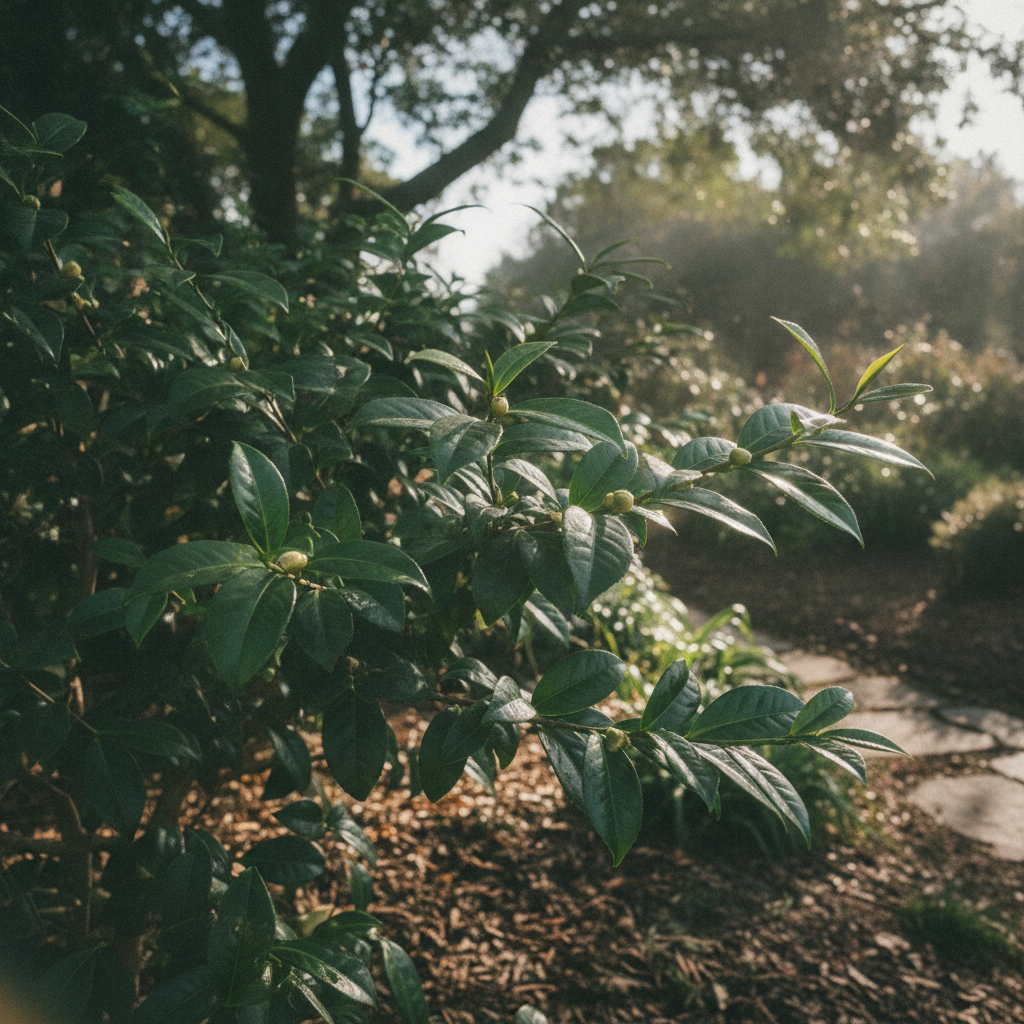

How To Grow Black Tea
Learn how to grow black tea at home: soil, climate, and the five processing steps from fresh leaf to a finished cup of black tea.

La sagesse est le chemin vers un meilleur thé.
Recevez notre guide d'infusion gratuit : la bonne eau, la bonne température et le bon temps d'infusion pour chaque thé de notre catalogue. Vous êtes aussi informé en premier des nouvelles récoltes.
Pas de spam. Désinscription à tout moment.
Consultez votre boîte mail.
Le guide est en route.