












How to Use a Gaiwan: The Traditional Chinese Brewing Method
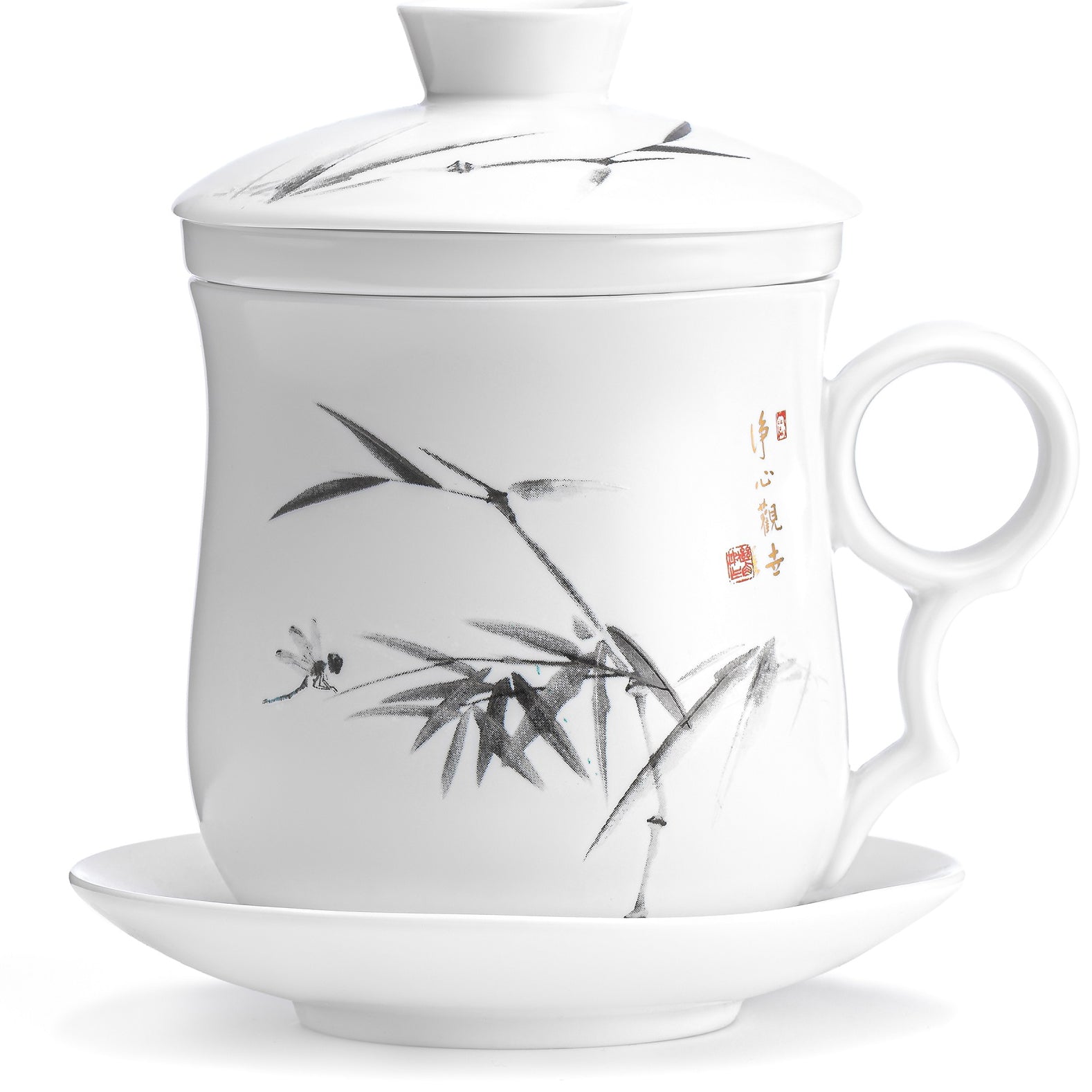
A gaiwan is a lidded bowl used for brewing tea. It consists of three parts: a saucer (to hold), a bowl (to brew in), and a lid (to strain and trap heat). It is the most versatile and widely used brewing vessel in Chinese tea culture, used in teahouses, competitions, and everyday drinking across China.
The gaiwan has no moving parts, no filter, and no mechanism. You control everything—water contact time, pouring speed, leaf-to-water ratio—with your hands and attention. This simplicity is its strength.
Why Use a Gaiwan
A gaiwan gives you more control than any teapot. You can adjust steep time by seconds, pour instantly when the flavor is right, and see the leaves directly as they unfurl. There is nothing between you and the tea.
It is also the most neutral brewing vessel. Unlike clay teapots (which absorb flavor over time), a porcelain or glass gaiwan adds nothing to the tea. This makes it well suited to comparing different teas or for teas where you want pure, uncolored flavor.
For Chinese tea—oolongs, pu-erh, white tea, and Chinese greens—a gaiwan is the traditional way to brew, and it usually works well.
History: Where the Gaiwan Comes From
The gaiwan as we know it emerged during the Ming dynasty (1368–1644). Before that, compressed tea cakes were the norm, ground and whisked in bowls following Tang and Song dynasty traditions. When the Ming court shifted to loose leaf tea, brewing methods had to change, and the gaiwan evolved to suit them.
The three-piece design—saucer, bowl, lid—is sometimes described symbolically in Chinese tea culture: earth, humanity, and heaven. Whether you take that literally or not, the design is functionally elegant. The saucer protects your fingers from the heat of the bowl. The lid keeps heat in and doubles as a strainer when you tilt it slightly during pouring. The bowl is wide enough to allow leaves to open fully.
By the Qing dynasty (1644–1912), the gaiwan had become the standard vessel for both personal brewing and formal tea service. Imperial teahouses used them. Scholars wrote about them. They appear in paintings and literature from that period as an everyday object, not a specialty tool.
That status has not changed. Walk into any serious teahouse in China today, and a gaiwan is what you will be served with. It is used in the national tea competitions as the standard brewing vessel precisely because it introduces no variables beyond the brewer's technique. After 500 years, the design has barely changed. That says a lot.
Materials: Porcelain, Clay, and Glass
Gaiwans are made from three main materials, and the choice matters more than most people expect.
Porcelain is the classic and, in my view, a dependable all-purpose option. It is non-porous, so it absorbs nothing and adds nothing to the flavor. It heats evenly, cleans easily, and works well with any tea. The smooth white surface also lets you see the color of the liquor before you pour, which is useful when you are learning to judge infusion strength by eye. High-fired porcelain from Jingdezhen is what most quality gaiwans are made from, and it is what I reach for by default.
Clay gaiwans exist, though they are less common than clay teapots. Yixing purple clay (zisha) is the most well-known material. Clay is porous and will absorb flavor over time—the same property that makes a dedicated Yixing teapot interesting for aged pu-erh becomes a liability in a gaiwan, where you want neutrality and flexibility. Unless you plan to use it exclusively for one type of tea, clay gaiwans are more of a collector's item than a practical brewing tool. I own a few but rarely use them for everyday brewing.
Glass gaiwans are excellent for visual teas—Silver Needle white tea, high-grade Longjing, or any tea where the appearance of the leaf in water is part of the experience. Glass is also non-porous and neutral. The main drawback is heat: glass conducts heat faster than porcelain, so it gets uncomfortable to hold more quickly and loses heat faster too. For teas that need near-boiling water, glass is less forgiving. For green and white teas brewed at lower temperatures, it works beautifully. Our gaiwan collection includes both materials.
Sizing: Why 100–150ml Is the Standard
Most gaiwans sold for gongfu brewing fall in the 100–150ml range, and that is not arbitrary. The size is calibrated to the gongfu method: a relatively high ratio of leaf to water, short steep times, and multiple infusions from the same leaves.
A 120ml gaiwan with 6-7 grams of oolong gives you roughly the right concentration for a 15–20 second first infusion. Scale up to a 200ml gaiwan with the same leaf amount, and the ratio is off—the tea comes out thin. Add more leaf to compensate, and you are wasting good tea. The math works best in the 100–150ml range.
There is also a practical angle: smaller gaiwans are easier to handle with one hand. A 150ml gaiwan full of water weighs around 200–250 grams. A 200ml gaiwan starts to feel unwieldy when you are pouring quickly to stop the infusion at exactly the right moment.
Larger gaiwans (200ml and up) do exist and have their place. They are useful when brewing for several people at once, pouring into a sharing pitcher rather than individual cups. Some traditional Chinese tea ceremonies use oversized gaiwans for group service. But for personal brewing or one-on-one tea sharing, I stick to 120–130ml.
If you are just getting started, 120ml is the size I would recommend. It is the most widely supported by brewing guidelines, and most leaf ratios you find in tea instructions are calibrated around it.
Choosing a Gaiwan
For everyday use, a porcelain gaiwan of 100–150ml is the standard. This size is designed for gongfu-style brewing: more leaf, less water, short steeps, multiple infusions.
Porcelain is the most popular material. It is non-porous (does not absorb flavor), easy to clean, and conducts heat evenly. Glass gaiwans let you watch the leaves, which is useful for green and white teas. Avoid gaiwans that are too large (200ml+) for gongfu brewing—the extra volume makes it harder to control steep time, and the tea cools too quickly. For Western-style brewing with less leaf and longer steeps, a regular teapot is more practical.
The Basic Technique
Step 1: Preheat. Fill the gaiwan with hot water, swirl it around to warm the bowl, then pour it out. This stabilizes the brewing temperature.
Step 2: Add tea. Place 5–7 grams of leaf into the warmed gaiwan. For tightly rolled oolongs, use the higher end. For fluffy white teas, adjust by volume rather than weight.
Step 3: Rinse (optional). Pour hot water over the leaves, wait 3–5 seconds, and discard. This wakes the leaves and washes surface dust.
Rinsing is standard practice for pu-erh and roasted oolongs. It is optional for green and white teas.
Step 4: First infusion. Pour hot water into the gaiwan. Start timing.
For most teas, the first gongfu infusion is 10–20 seconds. Tilt the lid slightly to create a gap, then pour the liquor out into a cup or pitcher in one smooth motion.
Step 5: Subsequent infusions. Add 5–10 seconds per round. A good oolong or pu-erh will give 5–10 infusions. Each one tastes different as the leaf opens progressively.
How to Hold a Gaiwan Without Burning Yourself
This is the part that intimidates beginners. The porcelain gets hot, and there is no handle.
The correct grip: place your thumb and middle finger on the rim of the saucer (or on opposite sides of the bowl's flared lip). Your index finger rests on top of the lid to hold it in place. The lid is tilted to create a gap for pouring while keeping the leaves inside.
The key is to grip the rim, not the body. The bowl's walls are hot, but the flared lip stays cooler. Pour decisively—do not hesitate with a full gaiwan of hot water in your hand.
If you burn yourself the first few times, that is normal. Everyone does. Within a few sessions, the grip becomes automatic.
Common Mistakes
Most problems beginners run into fall into a few predictable patterns.
Gripping the bowl walls. The instinct when something is hot is to grab it tighter, and that means fingers go to the widest part of the bowl where the heat is worst. The flared lip and saucer rim are the contact points that work. Retrain the instinct early, because the wrong grip just makes this harder.
Overfilling. A gaiwan filled to the brim with boiling water is a burn waiting to happen, and it gives you no room to tilt the lid for pouring. Fill to about 80% capacity. This leaves space for the lid and makes pouring manageable.
Wrong leaf ratio. Too little leaf and the tea tastes thin even with longer steeps. Too much and every infusion is overwhelming. For a 120ml gaiwan, 5–7 grams is the working range for most teas. Adjust from there based on the specific tea and your preference.
Steeping too long. The whole point of gongfu brewing is short infusions. Ten seconds sounds like nothing, but with a high leaf ratio it produces a full cup. Beginners often default to the 2–3 minute times used for Western-style brewing and end up with an intensely strong cup they cannot enjoy. Start short and adjust upward, not the other way around.
Skipping the preheat. Pouring boiling water into a cold gaiwan drops the temperature immediately and unevenly. For teas that need high heat—pu-erh, roasted oolongs—this matters. The 30-second preheat step is worth doing.
Pouring hesitantly. A slow pour lets the tea continue steeping as you pour. This is fine for the last drop, but dragging out the pour by 10–15 seconds adds meaningful infusion time that throws off your timing for subsequent rounds. Pour in one continuous motion.
Which Teas Work Best
Oolong tea: The classic gaiwan tea. Multiple short infusions reveal how the flavor evolves across 5–8 steeps. Tie Guan Yin and Da Hong Pao are both well suited to a gaiwan. Rolled oolongs open slowly and reward patience across many rounds. Strip-style oolongs like Dan Cong also perform very well, with distinct floral and fruit characters that shift noticeably between infusions.
Pu-erh tea: Gongfu brewing with a gaiwan gives you the most control over pu-erh's strong, layered flavors. Rinse first, then short steeps. Aged sheng pu-erh in particular can go 10–15 infusions and the gaiwan lets you track the evolution across all of them.
White tea: Silver Needle and White Peony both show well in a gaiwan, especially a glass one where you can watch the buds unfurl. White tea is more forgiving with temperature than greens, and the multiple-infusion approach works well because the flavor deepens and sweetens across rounds rather than fading.
Chinese green tea: Longjing and other Chinese greens work in a gaiwan, though the temperature needs more care (75–80°C). The gaiwan gives you the visual access to watch the leaves settle and check color, which is useful when brewing delicate greens where overheating is the main risk.
Less ideal: CTC black teas, herbal teas, and rooibos are better in a teapot or mug. They do not benefit from the short, multiple-infusion approach that a gaiwan is designed for. Whole-leaf orthodox black teas can work in a gaiwan if you enjoy that style, but they are not the traditional use case.
Gaiwan vs. Teapot
This comes up often, and the honest answer is that they serve different purposes rather than one being better than the other.
A gaiwan's main advantages: neutrality (no flavor absorption), versatility (works for any tea), visibility (you can see the leaves and the liquor color), and precision (the wide opening makes it easy to control pouring speed and angle). It is also easier to clean thoroughly, since the simple shape leaves nowhere for old flavor to hide.
A teapot's main advantages: it holds heat better for teas that need sustained high temperature, it is easier to handle (the handle stays cool), and a well-seasoned clay teapot can genuinely enhance certain teas over time. If you drink the same tea repeatedly—aged pu-erh or a specific roasted oolong—a dedicated Yixing pot develops character that a gaiwan never will.
In practice, I use a gaiwan when I want to taste a tea clearly or when I am trying something new. I reach for specific teapots for teas I know well and have been drinking for years. If you are building a collection and want one vessel that covers everything, start with the gaiwan. You can always add teapots later for the teas that earn them. The teapot guide covers the options if you want to compare methods.
Cleaning and Care
Gaiwans are straightforward to maintain, which is one of their practical advantages over teapots.
After each session, rinse with hot water and leave to air dry with the lid off. This is sufficient for daily use. The non-porous surface of porcelain or glass means there is no buildup to worry about if you rinse promptly.
Do not use soap regularly. It can leave a faint residue that affects the next brew, particularly for delicate white or green teas. Hot water is enough. If the gaiwan develops tea stains over time (common with dark oolongs and pu-erh), a gentle scrub with a soft brush and hot water removes them. For more stubborn discoloration, a short soak in water with a small amount of baking soda works without damaging the surface.
Handle the lid and bowl separately when cleaning—the lid can chip if it knocks against the bowl in a sink. The saucer is usually the sturdiest piece and the least likely to cause problems.
Porcelain and glass gaiwans are dishwasher safe in principle, but the heat cycling in dishwashers can cause fine cracking (crazing) in glazed porcelain over time. Hand rinsing takes 30 seconds and avoids that entirely. For a piece you use daily and want to last years, hand washing is the better habit.
Getting Started
A 120ml porcelain gaiwan, a fair cup (pitcher) to pour into, and a tea you enjoy are all you need. Start with an oolong—it is forgiving, re-steeps well, and shows a clear evolution across infusions. Within a few sessions the technique becomes second nature, and what seemed fiddly at first starts to feel like the most natural way to brew tea.
Lascia un commento
I commenti saranno approvati prima di presentarsi.
Anche in Valley of Tea Blog | Tea Guides, Origins & Brewing Tips
The Complete Guide to Drinking Tea
What tea is, how the main types differ in the cup, and how to brew each one properly. Water temperature, steeping times, storage and how to get more than one cup from your leaves.
Leggi di più

Black Tea: Types, Processing, and How to Brew It
Black tea is fully oxidized Camellia sinensis. Compare Assam, Darjeeling, Keemun, and Ceylon varieties. Learn processing, brewing, and caffeine levels.

How To Grow Black Tea
Learn how to grow black tea at home: soil, climate, and the five processing steps from fresh leaf to a finished cup of black tea.

La saggezza è la via per un tè migliore.
Riceva la nostra guida gratuita all'infusione: acqua, temperatura e tempi giusti per ogni tè che vendiamo. E saprà per primo quando arrivano i nuovi raccolti.
Niente spam. Disiscrizione in qualsiasi momento.
Controlla la posta.
La guida è in arrivo.