Uw winkelwagen is leeg

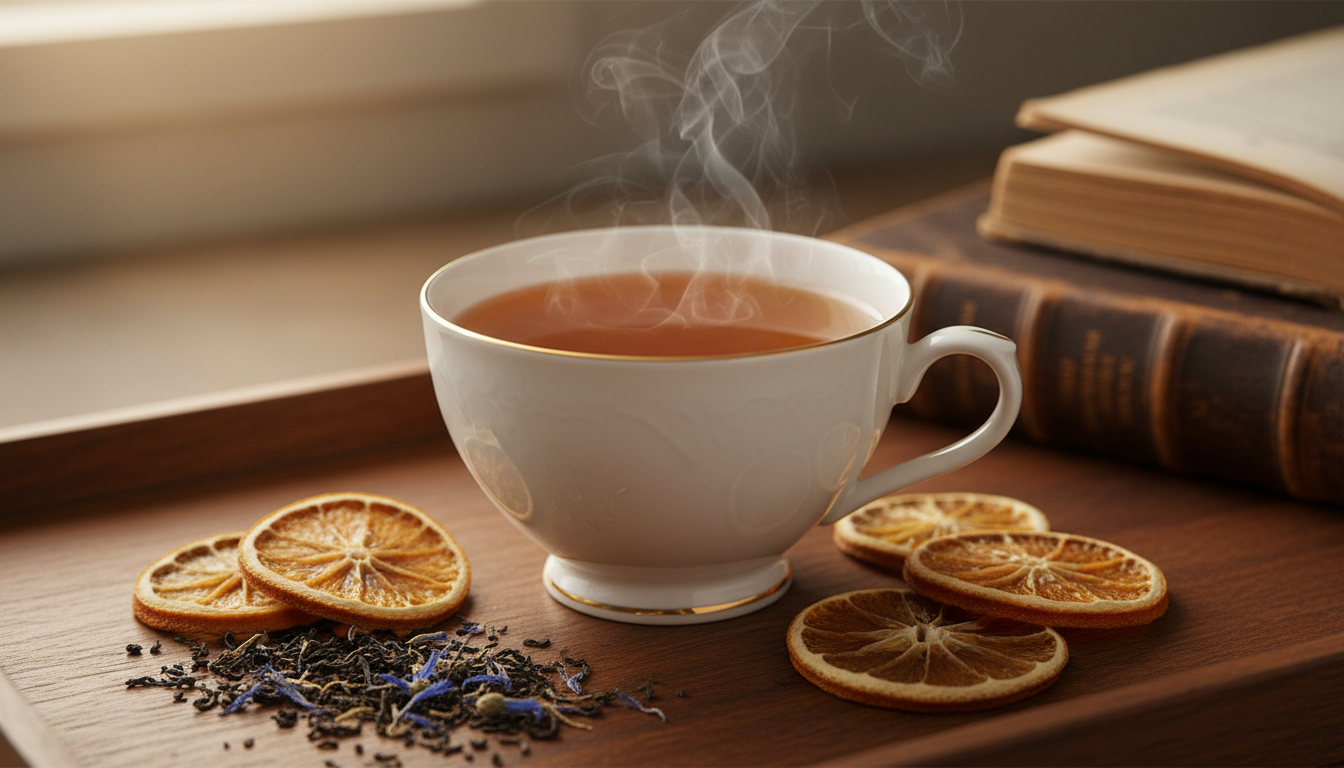

Few teas carry as much legend and tradition as Earl Grey. Named after a 19th-century British Prime Minister, this bergamot-scented black tea has become one of the most recognized blends in the world.


But the story behind Earl Grey tea is more complicated than most people realize. Part history, part myth, and part marketing genius, the origins of this tea say as much about British culture as they do about the drink itself. What we know for certain is that someone, at some point, decided to pair black tea with the oil of a small Italian citrus fruit — and the result became a classic.

Charles Grey, the 2nd Earl Grey, served as British Prime Minister from 1830 to 1834. He is best known for passing the Reform Act of 1832 and the Slavery Abolition Act of 1833. Somewhere along the way, his name became permanently attached to a tea blend.
The most popular origin story goes like this: a Chinese mandarin, grateful after one of Earl Grey's men saved his son from drowning, gifted the Earl a specially scented tea. Grey then asked his tea merchant to replicate it. The tale is appealing, but historians have found no evidence to support it. Grey himself never visited China, and the story did not appear in print until well after his death.
A more plausible explanation is that a London tea merchant created the blend and named it after the popular politician as a marketing strategy. Whatever the true origin, the name stuck.

What makes Earl Grey taste like Earl Grey is bergamot oil. Bergamot is a small, yellowish-green citrus fruit, roughly the size of an orange. It is not eaten fresh. Its value lies almost entirely in the essential oil extracted from its rind.
Around 80 percent of the world's bergamot comes from Calabria, a narrow region at the toe of Italy's boot. The climate there — hot summers, mild winters, and coastal humidity — creates ideal growing conditions. Calabrian bergamot oil has a distinctly floral, slightly bitter citrus aroma that synthetic alternatives struggle to match.
The amount of oil used in a blend matters. Too little, and the tea tastes like ordinary black tea.
Too much, and the bergamot overwhelms everything else. A well-made Earl Grey balances the malty depth of the tea base with the bright, fragrant lift of the oil. That balance is what we aim for in our Earl Grey.

Earl Grey's rise to dominance was gradual. In the 19th century, it was one blend among many in the catalogs of London tea merchants. Its citrus note helped mask the taste of lime-heavy water common in parts of England, which gave it a practical advantage over unscented teas.
By the early 20th century, Twinings and other major firms were selling Earl Grey as a named product. It became a fixture in hotels, offices, and households across Britain.
The blend also traveled well. Unlike milk-heavy preparations, Earl Grey was simple to prepare and tasted consistent regardless of water quality. That portability helped it spread across the British Empire and eventually into North America.

The original blend — black tea plus bergamot oil — has inspired a long list of variations. Lady Grey, created by Twinings in the 1990s, adds lemon peel and orange peel for a lighter, more delicate flavor. French Earl Grey folds in rose petals and sometimes lavender, giving it a floral character. Cream Earl Grey uses vanilla or cream flavoring to round out the bergamot's sharpness.

Some producers swap the black tea base entirely, using green tea, rooibos, or oolong instead. Each substitution changes the character of the blend significantly. A green tea Earl Grey tends to be grassier and more delicate. A rooibos version removes the caffeine entirely.

Earl Grey does best with water just off a full boil — around 90 to 96 degrees Celsius. Steeping time should be three to five minutes depending on how strong you like it. Going beyond five minutes often pulls too much tannin from the black tea base, creating bitterness that fights with the bergamot.
A splash of milk is traditional in Britain, though many drinkers prefer it black to let the citrus notes come through clearly. A thin slice of lemon works well too. Sugar is optional but can amplify the bergamot's floral qualities when used sparingly.
Use fresh, filtered water if your tap water is heavily treated. Chlorine and mineral buildup dull the bergamot aroma noticeably. Store your Earl Grey in an airtight container away from light and strong odors, as the essential oil is volatile and fades over time.
The story behind Earl Grey tea may never be fully settled. The historical record is thin, the legends are charming but unverified, and the man himself left no written account of the blend that bears his name.
None of that diminishes the tea. What endures is the combination itself — sturdy black tea lifted by the bright, slightly mysterious scent of Calabrian bergamot. It is a blend that has outlasted empires, survived every food trend of the last two centuries, and still tastes exactly right at three in the afternoon.
Reacties worden goedgekeurd voor ze verschijnen.