












Moringa Tea: Flavor, Brewing & How to Use It
Moringa tea is one of the most nutrient-dense herbal infusions you can brew, yet it remains surprisingly unfamiliar to many tea drinkers outside of South and Southeast Asia. Made from the dried leaves of Moringa oleifera, it produces a mild, earthy cup that has more in common with green tea than with the bold herbal teas most Westerners reach for first. It is not flashy. It is not trendy in the way matcha was five years ago. But among people who drink it regularly, it becomes a quiet staple — a tea that earns its place through consistency rather than spectacle.
I have been sourcing teas and herbal ingredients for over 15 years, and moringa is one of the plants where the gap between marketing and reality is widest. Online, you will find it called a "miracle tree" and a "superfood" with claims that stretch well beyond what any single leaf can deliver. What moringa actually is, without the hype, is a tropical tree with leaves that happen to contain a remarkably broad nutritional profile. That is interesting enough on its own. This guide covers the tree itself, what the tea tastes like, how to brew it properly, and what to look for when buying — all grounded in direct experience with the ingredient.

What Is Moringa Tea
Moringa tea is an herbal infusion — a tisane — made by steeping dried moringa leaves in hot water. Like rooibos and chamomile, it contains no Camellia sinensis and is not a "true tea" in the botanical sense. It is naturally caffeine-free. The leaves come from Moringa oleifera, a fast-growing tropical tree in the family Moringaceae.
The plant goes by several common names depending on the region: drumstick tree (a reference to its long, slender seed pods), horseradish tree (its root has a pungent, horseradish-like bite), and ben oil tree (the seeds produce ben oil, which has been used since antiquity).
Moringa tea is consumed in two primary forms. The first is whole dried leaves or crushed leaf, brewed loose or in sachets like any other herbal tea. The second is moringa powder stirred into hot water, which is technically not an infusion but a suspension — you drink the leaf material itself rather than an extract of it. Both are called "moringa tea" in common usage, though they produce quite different cups. The distinction matters for taste, texture, and nutrient delivery, and this guide addresses both.
The use of moringa leaves as food and medicine has a long documented history. Ayurvedic texts reference the plant, and it has been cultivated across the Indian subcontinent, the Philippines, and parts of Africa for centuries. In many of these regions, moringa leaves are eaten as a vegetable — cooked into curries, soups, and stews — as commonly as spinach or kale is used in European cooking. The transition to drinking it as tea is more recent and largely driven by export markets in North America and Europe.

The Moringa Tree
Moringa oleifera is native to the sub-Himalayan regions of northern India, specifically the areas around Rajasthan, Uttar Pradesh, and the foothills of the Himalayas. From there, it has spread across the tropics and subtropics. It is now cultivated extensively in India, the Philippines, Indonesia, parts of sub-Saharan Africa, Central America, and the Caribbean.
The tree grows fast. Under favourable conditions, it can reach 5 metres in its first year and eventually grow to 10–12 metres. It thrives in poor, sandy soil and tolerates drought well, which is one reason it has become important in arid regions where other food crops struggle. It begins producing leaves within months of planting and can be harvested multiple times per year. In tropical climates with year-round warmth, harvesting is essentially continuous.
Nearly every part of the moringa tree is used. The leaves are the primary food and tea crop. The seed pods (drumsticks) are a vegetable staple in South Indian cuisine. The seeds yield ben oil, a stable oil historically used in perfumery and watchmaking, now finding applications in cooking and cosmetics.
The roots have a pungent flavour and were historically used as a condiment, though root consumption has declined due to the presence of a compound called moringine in higher concentrations than the leaves. Even the flowers are edible and can be brewed as tea, though they produce a milder, less nutritionally interesting cup than the leaves.

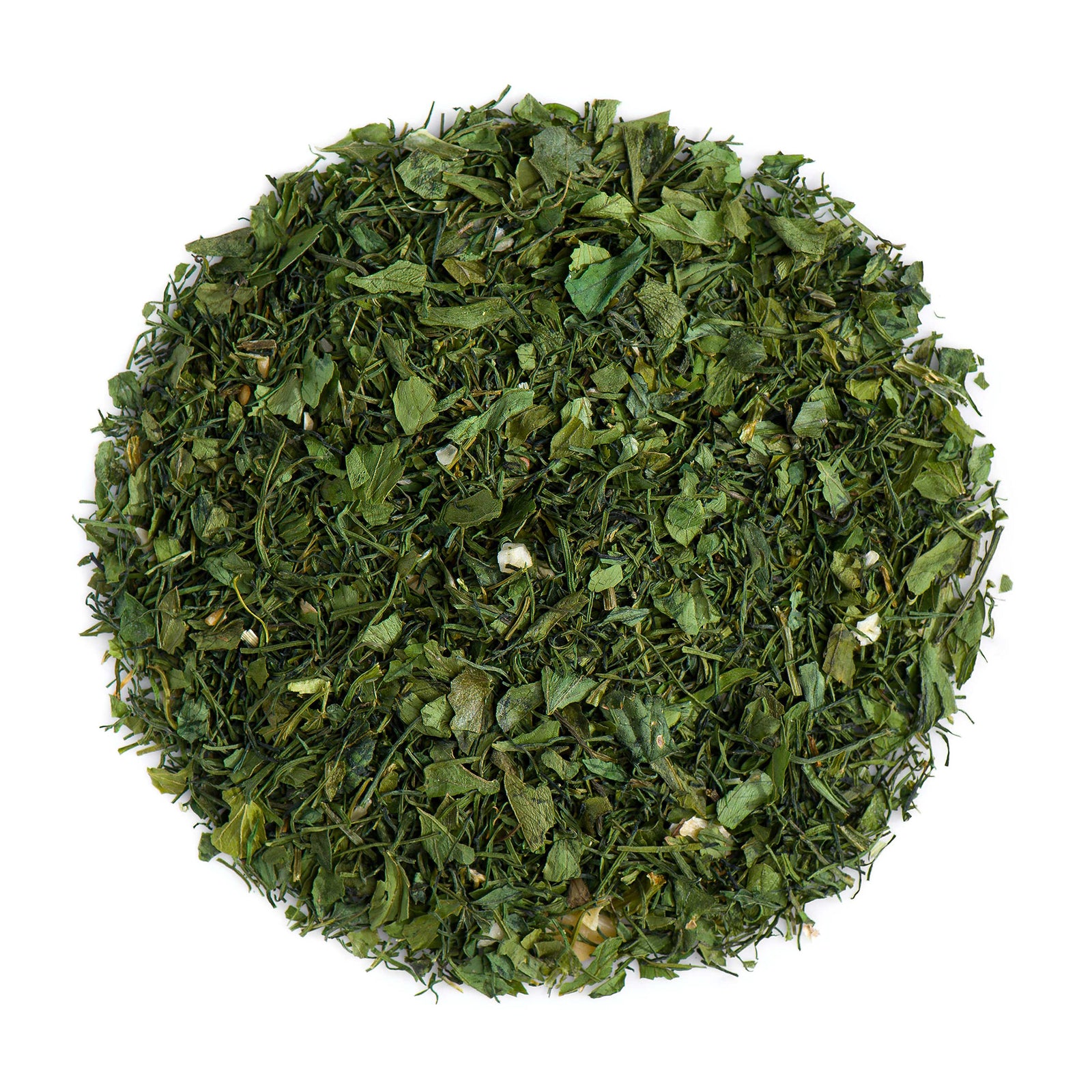
For tea production, moringa is typically harvested by hand. Young, mature leaves — not the oldest, toughest ones — are picked, washed, and dried. Drying method matters significantly. Shade drying at low temperatures preserves more of the leaf's nutritional content and produces a better colour and flavour than sun drying or high-heat mechanical drying, which can degrade sensitive compounds and turn the leaves brown. The best tea-grade moringa retains a vibrant green colour, which is a reliable visual indicator of careful processing.
Nutritional Profile
Moringa leaves have been analysed extensively, and the numbers are genuinely notable. Per 100 grams of dried moringa leaf powder, the nutritional content is substantial across multiple categories. A 2024 comprehensive phytochemical and nutritional review published in Nutrients (MDPI) identifies over 100 bioactive compounds in Moringa oleifera leaves, including quercetin and kaempferol glycosides, carotenoids, and a full spectrum of essential amino acids.
In terms of vitamins, dried moringa leaves contain significant amounts of vitamin A (as beta-carotene), vitamin C, vitamin E, and several B vitamins including B1 (thiamine), B2 (riboflavin), and B3 (niacin). The vitamin A content is particularly high — dried moringa leaves contain roughly 18.9 mg of beta-carotene per 100 grams, making them one of the richest plant sources of provitamin A.
The mineral content is equally broad. Moringa leaves provide calcium, potassium, iron, magnesium, phosphorus, and zinc. The calcium content in dried leaf — approximately 2,003 mg per 100 grams of dried leaf — is frequently cited as higher than that of milk on a weight-for-weight basis, which is technically accurate but requires context: nobody eats 100 grams of dried moringa leaf in a sitting. A typical serving of moringa tea uses 2–5 grams of dried leaf, so the actual calcium contribution per cup is modest.

The same principle applies to all the nutrient comparisons you will encounter in moringa marketing. The per-weight numbers are real, but the per-serving numbers need honest scaling.
Moringa leaves also contain all nine essential amino acids, which is uncommon among plant leaves. The protein content of dried moringa leaf runs roughly 25–30% by weight — impressive for a leaf, though again, the per-serving intake from tea is small compared to, say, eating the leaves as food.
An important distinction: brewing moringa leaf as a tea extracts water-soluble compounds into the cup. Fat-soluble vitamins like vitamin A and vitamin E do not transfer efficiently into an aqueous infusion. If you brew moringa as a traditional tea (steeping and straining), you get the water-soluble vitamins, minerals that leach into water, and the flavonoid compounds. If you consume moringa powder mixed into water — where you drink the suspended leaf material — you get the full nutritional profile, including the fat-soluble components. A 2023 review in RSC Advances (Royal Society of Chemistry) documents the bioavailability differences between aqueous infusion and whole-leaf powder consumption in detail. This is a meaningful difference and one reason some people prefer the powder format.
What Moringa Tea Tastes Like
Moringa tea has a mild, earthy flavour with a subtle green, vegetal quality. If you have tasted a mild Japanese green tea like kukicha or genmaicha, the general territory is similar, though moringa lacks the umami depth and has a slightly more "leafy" or "spinach-like" character. There is a faint bitterness in the finish, but it is gentle — nothing like the assertive bitterness of an over-brewed green tea or a dandelion root infusion.

The aroma is grassy and slightly hay-like when dry. Once brewed, it becomes earthier and more vegetal. The body is light to medium. There is no astringency to speak of, which makes moringa a forgiving tea to brew — it does not punish you for steep times that run slightly long.
Colour in the cup ranges from pale green to yellow-green when brewing whole leaf, and a deeper, opaque green when using powder. Powder produces a thicker, more soup-like texture and a stronger flavour because you are consuming the leaf itself.
The taste is clean but not exciting on its own, which is one reason moringa appears so often in blends. I would describe it as green and leafy — think mint without the menthol — with an earthy sweetness underneath. It plays well with stronger flavours — mint, ginger, lemongrass, citrus peel — that add aromatic interest without clashing with moringa's neutral-earthy base. On its own, it is a quiet, drinkable cup. Paired thoughtfully, it becomes the nutritional backbone of a more complex blend.
How to Brew Moringa Tea
Moringa is one of the easiest herbal teas to brew. It is tolerant of a range of temperatures and steep times, though there is an optimum window that produces the best flavour.

Whole Leaf or Crushed Leaf
Use 1–2 teaspoons (2–4 grams) per 250 ml cup. Water temperature should be 80–85 degrees Celsius — below a full boil. Boiling water will not ruin moringa the way it can scorch delicate green teas like gyokuro, but slightly cooler water preserves more of the subtle flavour notes and prevents any grassiness from turning harsh. Steep for 5–7 minutes. You can push to 10 minutes without the cup becoming unpleasant, which is unusual among teas and one of moringa's practical advantages.
Moringa Powder
Use half a teaspoon to one teaspoon (1–2 grams) per 250 ml. Stir or whisk the powder into water heated to 70–80 degrees Celsius. A small whisk or even a fork works — the goal is to break up any clumps and create an even suspension. The powder will not dissolve completely; it settles over time. Stir again before drinking or drink promptly. Some people add the powder to a small amount of warm water first to create a paste, then top up with more water. This method produces a smoother result.
Iced Moringa Tea
Brew a concentrated hot infusion using double the leaf quantity, steep for the full 7–10 minutes, then pour over ice. Alternatively, cold brew by steeping 2–3 teaspoons of leaf in 500 ml of room-temperature water in the refrigerator for 4–8 hours. Cold brewing produces a smoother, sweeter result with less of the earthy notes that hot water extracts. I do cold brew moringa occasionally — it is a good option in summer, and the flavour is genuinely softer than the hot version, though the colour goes quite pale.
Re-steeping
Whole moringa leaves can handle a second infusion. The second cup will be lighter but still flavourful. Powder, obviously, does not re-steep — it is consumed in the first cup.

Moringa Powder vs Whole Leaf
This is a practical distinction that affects taste, nutrition, convenience, and price.
Whole Leaf
Whole leaf produces a cleaner, lighter cup. It brews like any standard herbal tea — similar in ritual to how you would brew chamomile or green rooibos. It offers the water-soluble portion of the nutritional profile. It stores well, is easy to measure, and works in teapots, infusers, and filter bags. For people who enjoy the ritual of tea preparation and prefer a clear, light infusion, whole leaf is the better choice.
Powder
Powder delivers the complete nutritional package because you consume the leaf material. It produces a thicker, more opaque drink with a stronger flavour. It does not filter or strain — you drink it all. It is more versatile outside of tea: moringa powder can be added to smoothies, soups, or baked goods. However, it requires more attention to mixing and can taste unpleasantly gritty if the grind is coarse.
From a sourcing perspective, powder is easier to adulterate. Because you cannot visually inspect individual leaves, lower-quality producers sometimes mix in stem material, older leaves, or even leaves from other plants. With whole leaf, what you see is what you get. With powder, you rely more heavily on the supplier's integrity. This is a key reason to buy from reputable sources that provide batch testing or at minimum specify the origin and processing method.

Moringa in Blends
Moringa's mild, neutral flavour profile makes it an excellent base ingredient in herbal blends. It contributes nutritional depth without dominating or clashing with other ingredients.
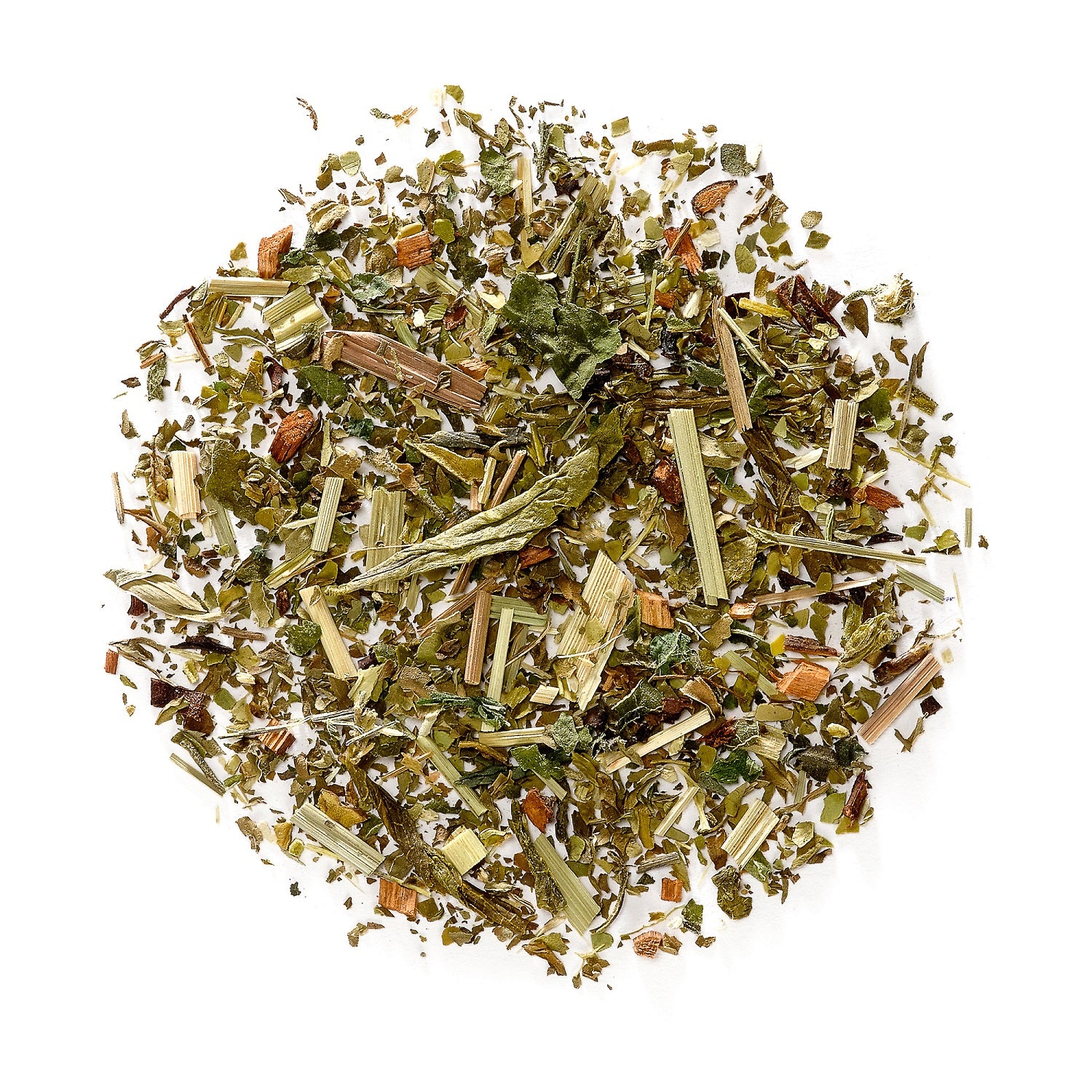
Common and effective pairings include moringa with peppermint (the mint lifts the earthy base and adds aromatic freshness), moringa with ginger (ginger provides warmth and a spicy counterpoint), moringa with lemongrass (bright, citrusy notes balance the vegetal quality), and moringa with green tea (the Camellia sinensis adds body and umami, though this combination is no longer caffeine-free). A light gunpowder green tea blends particularly well — its smoky, earthy notes pair cleanly with moringa's vegetal base.
In blending, moringa functions similarly to how green rooibos functions in fruit blends — as a smooth, neutral carrier that lets other ingredients shine while contributing its own background character. If you are designing a blend, moringa pairs best with ingredients that have clear aromatic top notes. It does not pair as well with other earthy, quiet herbs like nettle or oat straw, which produce a flat, muddy cup when combined.
Buying Quality Moringa Tea
The moringa market is crowded, and quality varies enormously. Here is what to look for.

Colour: Dried moringa leaves should be a vibrant medium green. Brown, yellow, or grey-green leaves indicate old stock, sun damage, or high-heat drying. Powder should be bright green, not olive or brownish.
Origin: India (particularly Rajasthan, Tamil Nadu, and Andhra Pradesh) and the Philippines are the largest producers and generally offer the best quality-to-price ratio. African moringa from countries like Ghana, Kenya, and Tanzania is increasingly available and often very good, particularly from small-farm operations. We currently source from small farmers in the Himalayan foothills — the elevation and cooler drying conditions there produce a consistently bright colour and a cleaner flavour than lower-altitude material I have compared it against.
Organic certification: Moringa trees are naturally pest-resistant and require minimal chemical input, so organic certification is achievable and common. Given the low cost differential, buying certified organic moringa is a reasonable default.
Processing: Look for shade-dried or low-temperature dried moringa. This information is not always on the label, but reputable suppliers mention it. Shade drying preserves the green colour and the more delicate nutritional components.

Packaging: Moringa should be packaged in opaque, airtight containers or resealable bags. Light exposure degrades both colour and nutrient content. If a product arrives in a clear bag or jar, transfer it immediately.
Freshness: Moringa does not age well. Unlike some teas that improve with time, moringa leaves lose colour, flavour, and nutritional value with age. Buy in quantities you will use within 3–6 months. Check for harvest dates or best-before dates on packaging.
Storage
Moringa tea is more sensitive to storage conditions than many other dried herbs. The compounds that give it its nutritional interest — particularly the carotenoids and vitamin C — degrade with exposure to light, heat, moisture, and oxygen.
Store moringa leaf or powder in an airtight container in a cool, dark place. A cupboard away from the stove or any heat source is sufficient. Do not refrigerate unless you live in a very hot, humid climate — the temperature fluctuations when opening and closing a refrigerated container can introduce condensation, which promotes degradation and mould.
Opaque containers are strongly preferred. Glass jars are fine only if stored inside a dark cupboard. If your moringa came in a clear bag, transfer it to a tin, ceramic canister, or opaque resealable bag.
Properly stored, whole moringa leaf retains good quality for 6–12 months. Powder, with its greater surface area exposed to air, degrades faster — aim to use it within 3–6 months of opening. If your moringa has shifted from bright green to dull olive or brown, it is past its best. It will not be harmful to drink, but the flavour will be flat and the nutritional content diminished.
The simplest quality check over time is colour. Fresh moringa is green. Old moringa is not. Trust your eyes, and when in doubt, buy fresh.
Teas Featured in This Article

Laat een reactie achter
Reacties worden goedgekeurd voor ze verschijnen.
I18n Error: Missing interpolation value "titel" for "Ook in {{ titel }}"
The Complete Guide to Drinking Tea
What tea is, how the main types differ in the cup, and how to brew each one properly. Water temperature, steeping times, storage and how to get more than one cup from your leaves.
Lees Meer

Black Tea: Types, Processing, and How to Brew It
Black tea is fully oxidized Camellia sinensis. Compare Assam, Darjeeling, Keemun, and Ceylon varieties. Learn processing, brewing, and caffeine levels.

How To Grow Black Tea
Learn how to grow black tea at home: soil, climate, and the five processing steps from fresh leaf to a finished cup of black tea.

Wijsheid is de weg naar betere thee.
Ontvang onze gratis zetgids: het juiste water, de juiste temperatuur en de juiste trektijd voor elke thee die we verkopen. U hoort ook als eerste wanneer nieuwe oogsten binnenkomen.
Geen spam. U kunt zich altijd uitschrijven.
Kijk in uw inbox.
De gids is onderweg.