Your Cart is Empty

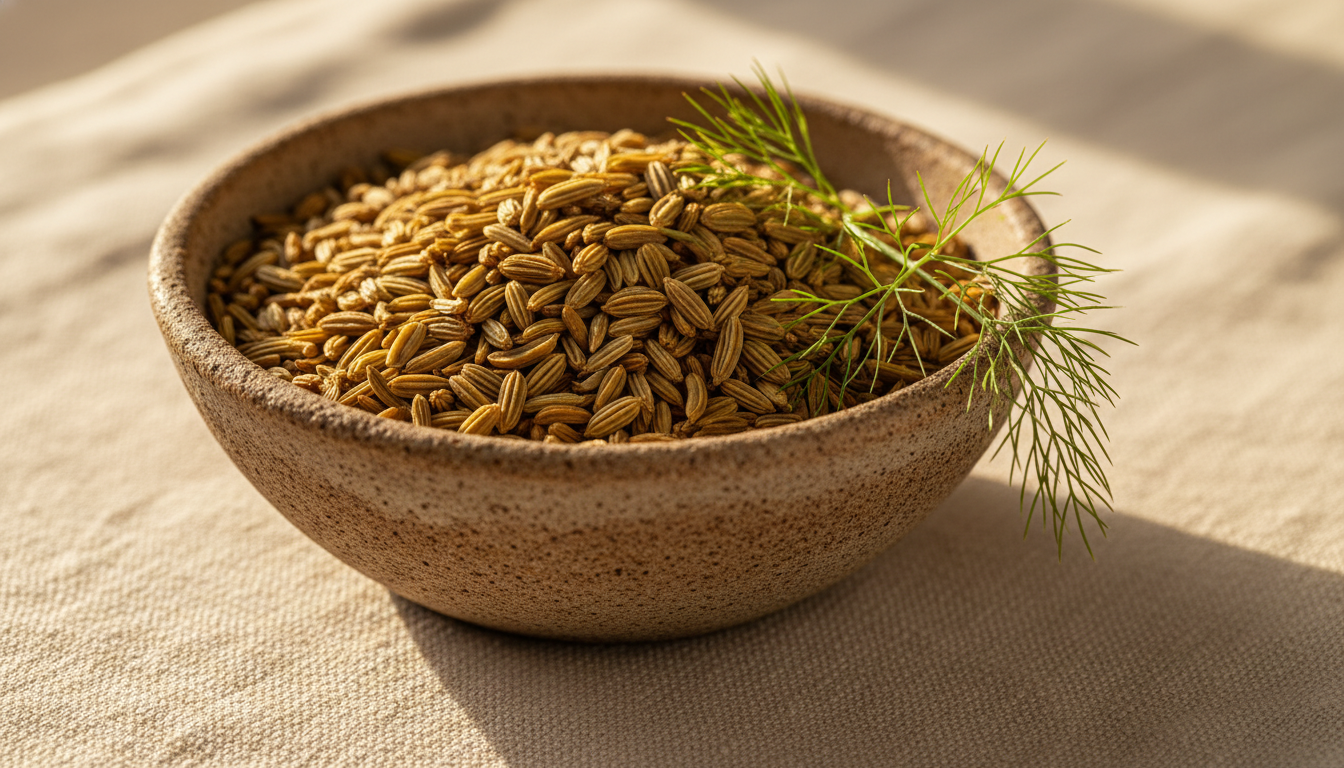

tea." Across the Mediterranean, the Middle East, and South Asia, fennel seed infusions are among the oldest and most common herbal preparations — brewed at home, served after meals, and sold in spice markets as a matter of daily routine. The practice is so embedded in certain food cultures that it barely registers as something special. It simply is what you do with fennel seeds.
At Valley of Tea, we have been sourcing and tasting teas for over fifteen years. This guide draws on that experience.

What makes seed-based tisanes interesting for tea drinkers is how different they are from leaf-based infusions. When you brew chamomile or peppermint, you are extracting volatile oils from dried plant tissue that releases its compounds relatively quickly. Seeds are different. They are dense, compact packages designed by nature to protect and nourish a future plant. Getting flavor out of them requires a slightly different approach — and rewards you with a different category of flavor entirely. Warm, aromatic, often sweet, sometimes savory, and almost always linked to the spice cabinet rather than the garden.
This guide covers fennel seed tea in depth, then expands into the broader world of seed and nut tisanes — what they taste like, how to brew them properly, and where they fit alongside more familiar herbal teas.
Fennel seed tea is an herbal infusion made by steeping the dried seeds (technically fruits) of Foeniculum vulgare in hot water. It is not tea in the strict sense — there is no Camellia sinensis involved — but like rooibos and chamomile, common usage has firmly attached the word "tea" to it.
Foeniculum vulgare is a hardy perennial plant in the Apiaceae family, the same botanical family as carrots, parsley, dill, and cumin. It grows up to two meters tall with feathery green fronds and clusters of small yellow flowers. The seeds form after flowering and are harvested when they turn from green to yellowish-brown. Each seed is an elongated oval, roughly 4–8 mm long, with visible ridges running lengthwise. These ridges are important — they contain the oil ducts where much of the flavor is concentrated.
The plant originated in the Mediterranean region and has been cultivated since antiquity. Ancient Romans chewed fennel seeds after meals. Greek athletes at Olympia associated fennel with strength and endurance — the Greek word for fennel, "marathon," gave its name to the famous battlefield and, eventually, to the long-distance race. Indian restaurants still serve sugar-coated fennel seeds (mukhwas) as an after-dinner digestive.
Today, the largest commercial producers of fennel seeds are India, Egypt, China, and Turkey. Indian fennel (often marketed as Lucknow fennel) tends to be smaller, greener, and more intensely sweet. Egyptian and Turkish fennel seeds are typically larger and more robustly aromatic. For tea purposes, both work well — the differences are noticeable but subtle.

The dominant flavor compound in fennel seeds is trans-anethole, the same molecule responsible for the characteristic taste of anise and star anise. This gives fennel tea its unmistakable sweet, licorice-like quality. If you have ever tasted pastis, ouzo, sambuca, or absinthe, you know the flavor family — though fennel tea delivers it in a far gentler, more rounded form.
Beyond the anise sweetness, fennel tea has layers that distinguish it from a simple licorice drink. There is a mild warmth, a faint peppery note from the compound estragole, and a subtle green herbaceousness that keeps the cup from becoming cloying. The aroma is warm, spicy-sweet, and immediately recognizable — crack a fennel seed between your teeth and you will smell it before you taste it.
The sweetness of fennel tea is one of its most practical qualities. It tastes sweet without any sugar, which makes it genuinely useful as an after-dinner drink or a late-evening cup when you want something that feels indulgent without actually adding calories. People who dislike bitter herbal teas — plain green tea, unsweetened yerba mate, pure dandelion root — often find fennel tea immediately approachable.
The flavor is moderate in intensity. It will not overwhelm a sensitive palate the way peppermint can, but it is more assertive than chamomile. Think of it as occupying a middle ground: distinctive enough to be interesting, mild enough to drink multiple cups without fatigue.
Brewing fennel seed tea properly starts before the kettle boils. The single most important step is to crush the seeds lightly before steeping. Whole fennel seeds are hard and dense. Their essential oils are locked inside the seed structure, behind the outer coat and within those longitudinal ridges. Dropping whole seeds into hot water will produce a weak, underwhelming cup because the water cannot penetrate the seed quickly enough.
Use a mortar and pestle, the flat side of a knife blade, or the back of a spoon to crack the seeds open. You are not grinding them to powder — just splitting them enough to expose the interior. A few firm presses are sufficient. You will smell the anethole release immediately, which tells you the oils are now accessible.

Covering the cup matters more than usual with fennel. The volatile oils that carry the flavor are exactly that — volatile. They evaporate readily. A saucer over the cup or a lidded mug keeps the aromatics in the liquid instead of dissipating into the air.
Seven minutes is the minimum for a properly extracted cup. Unlike delicate green teas that turn bitter with oversteeping, fennel seeds do not contain tannins in meaningful quantities. You can steep for 15 minutes without bitterness. Longer steeping produces a stronger, sweeter, more aromatic cup. Some people simmer fennel seeds gently for 5–10 minutes on the stovetop (a true decoction rather than an infusion), which extracts even more flavor and is the traditional preparation method in much of the Middle East and India.
Fennel seed tea can be consumed hot or cold. For iced fennel tea, brew at double strength and pour over ice. The sweetness carries well into cold preparations.
Fennel is the most popular seed tisane globally, but it is far from the only one. Several other seeds from the Apiaceae family and beyond make legitimate teas. According to a comprehensive review published in BioMed Research International (PMC/NIH), Foeniculum vulgare belongs to a rich pharmacological tradition of aromatic Apiaceae seeds used as digestive and carminative agents across cultures.
Closely related to fennel in flavor — both contain trans-anethole — but anise seed tea is slightly more pungent and less sweet. The seeds are smaller and more rounded than fennel. Anise seed tea is deeply traditional in the Middle East, particularly in Turkey, Syria, and Lebanon, where it is often served warm in winter. Brew at 100°C, 1–2 teaspoons crushed, 8–10 minutes. The two are sometimes confused in commerce; genuine anise seeds are smaller, grayer, and less ridged than fennel.
If fennel and anise lean sweet, caraway leans savory. The dominant compound is carvone (the same molecule found in spearmint, though caraway and spearmint contain different mirror-image forms of it). Caraway tea has an earthy, slightly bitter, bread-like quality — not surprising, given that caraway is the seed in rye bread. It is popular in Scandinavia and Central Europe. Brew at 100°C, 1–2 teaspoons crushed, 10 minutes. An acquired taste, but one that grows on you.

A different botanical family (Fabaceae, the legume family) and a very different flavor profile. Fenugreek tea has a distinctive maple-syrup sweetness combined with a bitter, slightly nutty base note. The seeds are small, hard, golden-brown, and angular. They benefit from a light toasting in a dry pan before brewing, which reduces bitterness and brings out the maple character. Brew at 100°C, 1 teaspoon per cup, 10–15 minutes. Fenugreek tea is widely consumed in Egypt, Ethiopia, and India.
Yes, the same cumin from your spice rack. Cumin tea is common in India (jeera water) and parts of the Middle East. It is warm, earthy, and distinctly savory — this is not a tea that will remind you of dessert. Lightly toast and crush the seeds before steeping. Brew at 100°C, 1 teaspoon, 5–8 minutes. Best consumed warm. It is an unusual choice for Western tea drinkers, but worth trying if you enjoy savory flavors.
All of these seeds share the same brewing principle: crush before steeping, use fully boiled water, and steep longer than you would a leaf tea.
Moving from seeds to nuts opens up a smaller but interesting category of caffeine-free infusions. True nut tisanes are less common than seed teas, partly because nuts contain fats and oils that do not extract cleanly into water the way volatile aromatic compounds do. The result is a different textural experience — often softer, rounder, and more subtle than seed teas.
Crushed or sliced almonds steeped in hot water produce a delicate, lightly sweet infusion. It is thin and nuanced rather than bold. More commonly, almond appears as a flavoring component in blended teas rather than as a standalone tisane. Almond pairs well with green rooibos and vanilla-based blends.
Roasted chestnut tisane is a niche product in parts of southern Europe, particularly Italy and Korea. Dried roasted chestnut pieces steeped in boiling water yield a warm, slightly sweet, toasty cup with a distinctive starchy body. Korean chestnut tea is worth seeking out if you enjoy grain-based teas like barley tea or genmaicha.

Dried coconut pieces or toasted coconut flakes contribute a creamy, tropical note to infusions. Like almond, coconut is more effective as a blending ingredient than a solo tisane. It adds body and a subtle richness to rooibos and fruit blends.
The practical reality is that nut-based tisanes work best as components of blends rather than as standalone drinks. They add texture, sweetness, and aroma but lack the concentrated volatile compounds that make seed teas and herbal leaf teas compelling on their own.
Fennel seeds are exceptionally versatile blending ingredients. Their natural sweetness and aromatic warmth complement a wide range of other herbs, spices, and even true teas.
The most traditional use. Fennel combined with peppermint, ginger, and sometimes chamomile or lemon balm is the classic European after-dinner tea formula. Fennel brings sweetness that balances peppermint's menthol sharpness and ginger's heat. Many commercial "stomach ease" or "digestion" blends follow this pattern. If you blend your own, a ratio of roughly equal parts fennel and peppermint with a smaller amount of ginger works well.
Fennel seeds add a distinctive anise note to chai. In parts of India, fennel is a standard chai spice alongside cardamom, cinnamon, cloves, ginger, and black pepper. It rounds out the blend and adds a sweet counterpoint to the sharper spices. Try adding half a teaspoon of crushed fennel seeds to your next pot of masala chai — the effect is immediate and additive rather than disruptive.
A natural pairing, since both share that sweet, anise-adjacent flavor. Together they produce an intensely sweet tisane without any added sugar. This combination is a staple in many European herbal tea ranges.

Fennel's warmth pairs surprisingly well with dried lemon peel, orange peel, or lemongrass. The citrus cuts through the sweetness and adds brightness. A simple blend of crushed fennel seeds and a strip of dried lemon peel makes an excellent after-meal cup.
Fennel seed tea contains zero caffeine. This is absolute, not a matter of degree. Caffeine is produced by specific plants — Camellia sinensis (tea), Coffea (coffee), Ilex paraguariensis (yerba mate), Theobroma cacao (chocolate), and a handful of others. Foeniculum vulgare is not among them. No amount of steeping, boiling, or concentrating will produce caffeine in fennel tea.
This makes fennel tea suitable for drinking at any time of day, including immediately before bed. It is safe for people who avoid caffeine for medical reasons, and it is one of the herbal infusions commonly given to children in cultures where fennel tea is traditional.
The same applies to all the seed and nut tisanes discussed in this guide. Anise, caraway, fenugreek, cumin, almond, chestnut, coconut — none contain caffeine. If you are building an evening or caffeine-free tea rotation, the entire seed and nut tisane category is available to you without restriction. Our green rooibos and German chamomile are popular caffeine-free companions to fennel in an evening ritual.
Not all fennel seeds are equal, and the difference between good and poor fennel seeds is larger than many people expect.
Whole seeds, always. Buy whole fennel seeds, not pre-ground. Ground fennel loses its volatile oils rapidly — within weeks, much of the anethole has evaporated, leaving you with a flat, stale-tasting powder. Whole seeds, stored properly, retain their flavor for one to two years.

Color and aroma. Good fennel seeds are pale green to yellowish-green. Seeds that have turned uniformly brown or gray are old. Pick up a few seeds and rub them between your fingers — you should get an immediate, strong anise aroma. If the smell is faint or dusty, move on.
Plumpness. Quality fennel seeds are plump and full. Thin, shriveled seeds were either harvested too early, dried too aggressively, or stored too long. Plump seeds contain more essential oil and produce a better cup. Research published in Frontiers in Pharmacology (PMC/NIH) confirms that active compounds like trans-anethole and fenchone are concentrated in the seed's essential oil — quality seeds with intact oil ducts produce the best extraction.
Organic certification. Fennel is a relatively low-pesticide crop in most production regions, but organic certification provides assurance that the seeds have not been treated with fumigants during storage — a real concern with imported spices.
Source. Indian fennel (especially from Lucknow) is prized for sweetness. Egyptian fennel is valued for its robust, well-rounded aroma. Both are excellent for tea. Turkish and Syrian fennel seeds are also high quality but less commonly available in Western retail markets.
Storage. Keep fennel seeds in an airtight container away from light and heat. A glass jar in a dark cupboard is ideal. Do not store them next to your stove or in a clear container on a sunlit countertop. Heat and UV light accelerate the breakdown of volatile oils.
If you are new to seed tisanes and coming from a background in leaf teas, a few comparisons help set expectations. Fennel seed tea sits in a completely different flavor register from, say, gyokuro or genmaicha — those are defined by umami, vegetal sweetness, and the terroir of Japanese cultivation. Fennel is defined by a single dominant aromatic compound. That narrower flavor profile is not a weakness; it is simply a different kind of drink.
A useful scientific framing comes from a randomized clinical study in Appetite (PMC/NIH) that found fennel tea reduced subjective appetite more than placebo, an effect attributed to trans-anethole's structural similarity to catecholamines. This type of functional effect differs from the theanine-driven calm associated with Camellia sinensis teas — different mechanisms, different experiences, both worth knowing.
Fennel seed tea occupies a unique position in the world of herbal infusions. It is ancient yet underappreciated in many Western markets, naturally sweet without sugar, caffeine-free without compromise on flavor, and remarkably easy to brew well once you learn to crush the seeds before steeping.
The broader category of seed and nut tisanes deserves more attention from tea drinkers. These are not obscure curiosities — they are daily drinks for hundreds of millions of people. Anise, caraway, fenugreek, and cumin each bring a distinct character to the cup, and all share the practical advantages of long shelf life, simple preparation, and zero caffeine.
If you have never brewed fennel seed tea, start with a good-quality whole seed, a mortar and pestle, and fully boiled water. Give it ten minutes. The cup that results — warm, aromatic, gently sweet, and deeply satisfying — will make the case better than any written description can.
Comments will be approved before showing up.