












Shop Valley of Tea Chinese, Red & Dragon Teas Online
China is where tea began. Every tea plant on every plantation in every tea-producing country traces its lineage back to the mountains of southern China, where Camellia sinensis has been cultivated for thousands of years. The Chinese did not just discover tea — they invented the categories, developed the processing techniques, and established the brewing traditions that the rest of the world eventually adopted and adapted.

At Valley of Tea, Chinese teas form the backbone of our collection. We source directly from producers across China's major tea regions, from the misty peaks of Fujian to the ancient forests of Yunnan. Over fifteen years of direct relationships with Chinese tea makers give us access to teas that most European retailers never see — single-origin, small-batch productions selected after extensive tasting. This guide covers the full scope of Chinese tea: the six categories, notable teas in our range, how they are processed, and how to brew them properly.
The Six Categories of Chinese Tea
All tea comes from the same plant, but Chinese tea masters long ago classified their output into six distinct categories based on processing method and oxidation level. Understanding these categories is the key to navigating Chinese tea. Research published on PubMed Central confirms that these six processing pathways produce measurably distinct flavour profiles and compound compositions, with total polyphenols and catechins decreasing as fermentation level increases.
Green Tea
Green tea is the oldest and most consumed category in China. The leaves are heated shortly after picking — either pan-fired in a wok or steamed — to halt oxidation entirely. This preserves the leaf's natural green colour and produces a tea that tastes fresh, vegetal, and often nutty or sweet. Chinese green teas are pan-fired rather than steamed, giving them a toasty, chestnut-like quality that distinguishes them from Japanese greens. Longjing (Dragon Well) from Zhejiang and Bi Luo Chun from Jiangsu are the benchmarks of this category.
White Tea
White tea undergoes the least processing of any category. The leaves — often just the bud and first leaf — are withered in open air and dried with minimal handling. There is no rolling, no shaping, and no deliberate oxidation. The result is a delicate tea with a soft, sweet flavour profile: honeydew melon, hay, white flowers, and a gentle sweetness that builds across infusions. Fujian Province, specifically the Fuding and Zhenghe areas, is the historical home of white tea production.
Our White Peony is a classic example of Fujian white tea craftsmanship — two leaves and a bud, slow-withered and naturally dried.
Oolong Tea
Oolong occupies the vast middle ground between green and black tea, with oxidation levels ranging from roughly 15% to 85%. This is the most technically demanding category to produce. The leaves are withered, bruised to initiate partial oxidation, then heated to stop the process at precisely the right moment. Many oolongs undergo additional roasting.
The range within this single category is staggering: a lightly oxidised Tie Guan Yin tastes nothing like a heavily roasted Da Hong Pao, yet both are oolong. Fujian and Guangdong provinces dominate Chinese oolong production.
Black Tea (Red Tea)
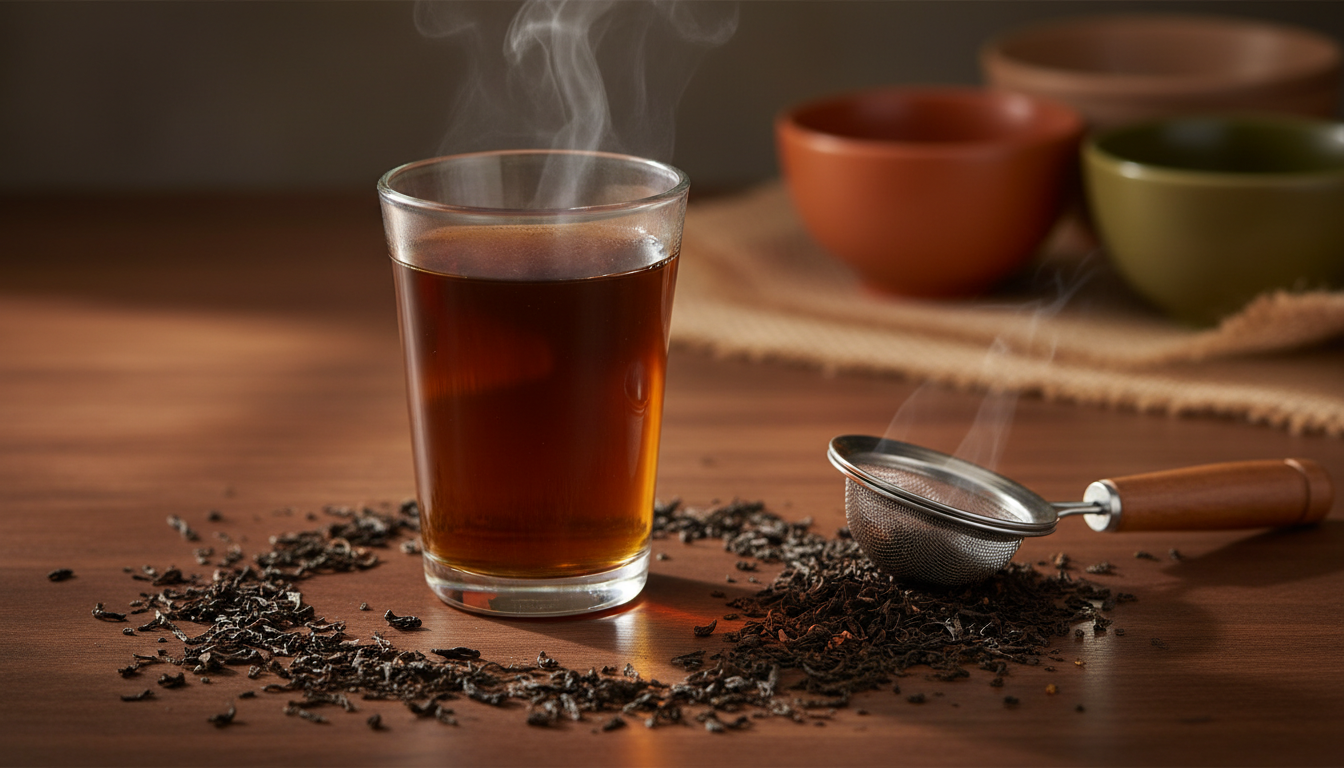
What the West calls black tea, China calls red tea (hong cha) — a reference to the reddish-copper colour of the liquor rather than the dark leaves. Chinese black teas are fully oxidised, producing rich, malty, and sometimes chocolatey flavours. Unlike the bold, astringent black teas produced for the Western market in India and Sri Lanka, traditional Chinese black teas are smoother and more nuanced.
Keemun from Anhui and Lapsang Souchong from Fujian's Wuyi Mountains are among the most recognised Chinese black teas globally.
Pu-erh Tea
Pu-erh is China's most distinctive tea category and the only one that improves with age. Produced exclusively in Yunnan Province from large-leaf varietal trees, pu-erh undergoes microbial fermentation — either gradually over years (sheng/raw pu-erh) or in an accelerated process developed in the 1970s (shou/ripe pu-erh). Raw pu-erh starts out bright and astringent and mellows into something complex and deeply satisfying over decades. Ripe pu-erh delivers earthy, smooth, woody flavours from the outset.
A landmark study in PLOS ONE used high-throughput sequencing to characterise the microbial communities in pu-erh fermentation, identifying 390 fungal and 629 bacterial species that collectively shape the tea's distinctive flavour and texture. Well-stored vintage pu-erh commands significant prices at auction, though excellent everyday examples are accessible.
Yellow Tea
Yellow tea is the rarest of the six categories and one that most Western tea drinkers have never encountered. The processing is similar to green tea but includes an additional step called men huan (sealed yellowing), where the leaves are wrapped and allowed to oxidise very gently under their own residual heat. This removes the grassy sharpness of green tea and produces a mellower, sweeter cup with a distinctive silky texture. Junshan Yinzhen from Hunan and Mengding Huangya from Sichuan are the most celebrated yellow teas.
Yellow tea is genuinely hard to source at the quality level we require. We have carried it in the past — our Yellow Tea is from Korea rather than China, which tells you something about how scarce quality yellow tea production is. Intensely sweet and soft, with hints of cereal, it is a different tea experience entirely. If you have only ever drunk green or white tea and want something that quiets the grassy edge without crossing into oolong, yellow tea is worth seeking out.
Notable Chinese Teas in Our Collection

Longjing (Dragon Well)
Longjing is China's most famous green tea and the standard by which all Chinese greens are measured. Produced in the hills around West Lake in Hangzhou, Zhejiang Province, authentic Longjing is pan-fired by hand in a hot wok, pressing and flattening the leaves into their characteristic smooth, flat shape. The process requires years of training to execute properly — temperature control and hand pressure determine whether the tea develops its prized chestnut sweetness or turns bitter and scorched.
Our Longjing delivers a clean, sweet cup with notes of roasted chestnut, fresh spring greens, and a lingering buttery finish. The liquor is a clear pale yellow-green. There is no bitterness when brewed at the correct temperature (around 80 degrees Celsius), just a smooth, rounded sweetness with enough complexity to reward repeated infusions. Dragon Well is my favourite Chinese green tea — the balance of nutty depth and clean sweetness is difficult to improve on.
Tie Guan Yin (Iron Goddess of Mercy)
Tie Guan Yin from Anxi, Fujian Province, is China's most celebrated oolong — and our number one selling Chinese tea. Our Tie Guan Yin is sourced from higher-elevation gardens in Anxi where cooler temperatures and slower growth concentrate flavour in the leaf. The partially oxidised, tightly rolled leaves unfurl during brewing to release an intensely floral aroma — orchid, gardenia, and a clean sweetness that persists through five or more infusions.
The body is full, the texture smooth, and the aftertaste remarkably long. If you are new to oolong, Tie Guan Yin is the place to start.
Da Hong Pao (Big Red Robe)
Da Hong Pao is a Wuyi rock oolong (yan cha) from the cliff-lined valleys of northern Fujian. Where Tie Guan Yin is floral and bright, Da Hong Pao is mineral, roasted, and deeply layered. Our Da Hong Pao is sourced from the Zhengyan core production area, where the rocky soil imparts a mineral backbone that tea drinkers call yan yun (rock rhyme). The charcoal roasting process — an art form in itself when done well — adds notes of dark caramel, roasted stone fruit, and wet granite. Full-bodied and warming, this is a tea for those who appreciate depth and complexity over delicacy.
Keemun (Qimen)
Keemun black tea, from Qimen County in Anhui Province, was historically China's most important export tea and a key component of traditional English Breakfast blends. But Keemun at its best is nothing like a commodity blend tea. Our Keemun is a single-origin production with a smooth, layered character: dark chocolate, dried fruit, a hint of smokiness, and a wine-like finish. The astringency is low, the body medium, and the aroma distinctly complex. Keemun demonstrates what Chinese black tea can be when it is not blended and diluted for mass-market teabags.
Silver Needle (Bai Hao Yinzhen)
Silver Needle is the pinnacle of white tea production. Made exclusively from plump, unopened buds covered in fine white down, this tea from Fuding, Fujian Province, is as minimal as tea processing gets. The buds are withered slowly in natural air and sunlight, then dried. That is all. The resulting tea is subtle but rewarding: melon, hay, honey, white flowers, and a sweetness that intensifies across multiple infusions. Silver Needle requires patience — both in brewing (use water around 85 degrees Celsius and give it time) and in drinking, as its character reveals itself gradually rather than immediately.
Pu-erh
Our aged pu-erh selection includes both raw (sheng) and ripe (shou) examples from Yunnan Province. Ripe pu-erh delivers a thick, earthy, smooth cup with notes of dark wood, mushroom, and damp forest floor — challenging for newcomers but deeply satisfying once you develop a taste for it. Raw pu-erh offers a brighter, more dynamic experience that evolves with age. Both styles are compressed into cakes or bricks for storage. Pu-erh is the one tea where vintage matters: properly stored cakes develop increasing complexity over years and decades.
Chinese Tea Processing Overview
The differences between the six tea categories come down to processing decisions made in the hours and days after the leaf is picked. Every Chinese tea follows a variation on this sequence: picking, withering, oxidation control, shaping, and drying.
Withering reduces moisture content and makes the leaf pliable for shaping. Green and yellow teas are heated early to prevent oxidation — either pan-fired in a wok (most Chinese greens) or steamed (rare in China, standard in Japan). White tea is simply withered and dried, with minimal intervention. Oolong undergoes controlled partial oxidation through repeated bruising and resting of the leaves before heating halts the process.
Black tea is fully oxidised before drying. Pu-erh follows its own path entirely, with microbial fermentation replacing simple oxidation.
Shaping varies by tea type. Longjing is pressed flat. Tie Guan Yin is rolled into tight pellets. Wuyi oolongs are twisted into long, dark strips. Pu-erh is compressed into cakes. Each shape affects how the tea brews and how it ages.
The critical insight is that the same fresh leaf can become any of the six tea types depending on how it is processed. A skilled tea maker in Fujian could, in theory, produce green, white, oolong, black, or yellow tea from the same harvest. In practice, certain cultivars and terroirs are better suited to particular styles, which is why specific regions specialise in specific tea types.
Gongfu Brewing for Chinese Tea

Gongfu brewing is China's traditional method for extracting the most flavour and complexity from quality loose-leaf tea. The word gongfu means "skill through practice," and the method is straightforward once you understand the principles.
Use a small vessel — a gaiwan (lidded bowl) or a small Yixing clay teapot, typically 100 to 150 millilitres. Use a high leaf-to-water ratio: roughly 5 to 7 grams of tea per 100 millilitres of water. Brew in short infusions — the first steep might be just 10 to 15 seconds, with subsequent steeps increasing by 5 to 10 seconds each. A good Chinese tea will yield six to ten or more infusions this way, each one revealing a different facet of the tea's character.
On vessel choice: the gaiwan is the number one tool if you are serious about tea. It reveals the truth about any tea without influencing the taste — neutral ceramic, no retained aroma, no memory of previous brews. If you want to know exactly what a tea is capable of, brew it in a gaiwan first.
That said, if you fall in love with pu-erh, black, or oolong, a Yixing clay teapot is worth considering. The clay absorbs the aroma of past infusions — Chinese tea drinkers call them memory teapots for this reason. One important rule: use a single Yixing for one tea type only. Cross-contaminating a Yixing with different teas defeats its purpose.
Water temperature matters. Green teas and white teas perform best around 80 to 85 degrees Celsius. Oolongs handle 90 to 95 degrees. Black teas and pu-erh take full boiling water at 100 degrees. Using water that is too hot on delicate teas creates bitterness; using water that is too cool on robust teas leaves flavour locked in the leaf.
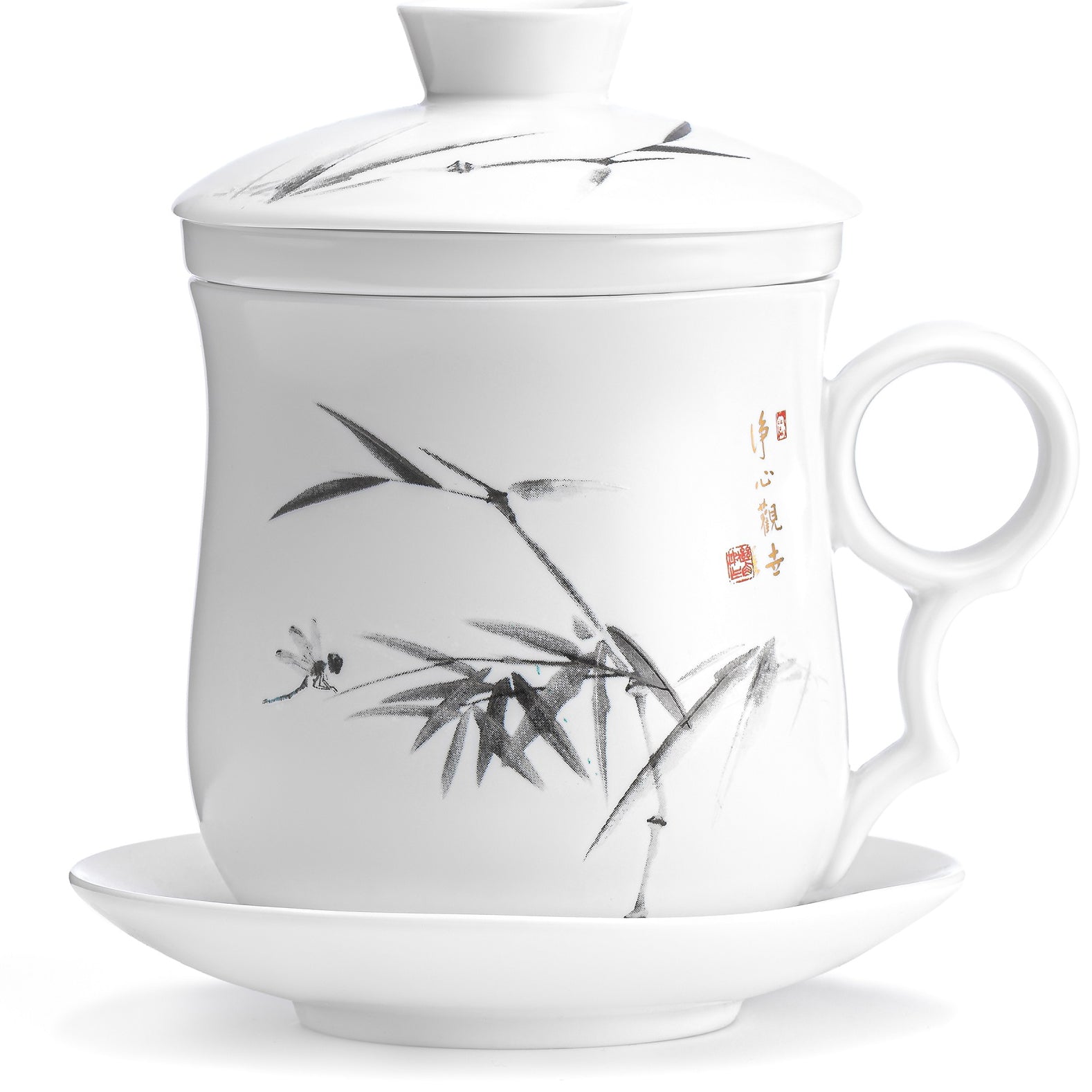
Gongfu brewing is not the only valid approach — a simple infuser mug works well for casual drinking. But if you want to experience the full depth of a quality Chinese tea, gongfu is the method that gets you there.
Chinese Tea Regions
Fujian Province
Fujian is the most important tea province in China for sheer variety. It produces white tea (Fuding, Zhenghe), oolong (Anxi for Tie Guan Yin, the Wuyi Mountains for rock oolongs), black tea (Lapsang Souchong and Jin Jun Mei from Wuyi), and jasmine tea (Fuzhou). The province's mountainous terrain, subtropical climate, and long tea-making tradition create conditions for a distinctive range of styles. A significant portion of our collection comes from Fujian.
Jin Jun Mei from Wuyi is worth singling out: it smells more chocolatey than chocolate itself, which sounds like a marketing line but is genuinely the most accurate description I have found for it. Our Jasmine Pearls, scented with fresh jasmine blossoms in Fuzhou, are a different kind of pleasure — light enough to drink all day without palate fatigue.
Yunnan Province
Yunnan is the ancestral home of tea. Ancient tea trees — some over a thousand years old — still grow in Yunnan's forests, and the province's large-leaf varietal (Camellia sinensis var. assamica) is the basis for all pu-erh production. Yunnan also produces distinctive black teas (Dian Hong), known for their golden buds, sweet malty flavour, and low astringency. The biodiversity of Yunnan's tea-growing areas — different mountains, different altitudes, different forest ecologies — means that even within a single category like pu-erh, the variation from one mountain to the next is enormous.
Zhejiang Province
Zhejiang is synonymous with Longjing. The area around West Lake in Hangzhou has been producing Dragon Well tea for centuries, and the province remains China's green tea heartland. The combination of mild climate, fertile soil, and generations of pan-firing expertise makes Zhejiang greens some of the most refined in China. Gunpowder green tea — tightly rolled pellets that unfurl in the cup — also originates here, and it is one of my favourite everyday teas: robust enough to hold up to a full-strength brew without turning harsh.
Anhui Province
Anhui is home to Keemun black tea and several renowned green teas, including Huangshan Maofeng (from the Yellow Mountain area) and Taiping Houkui. The mountainous geography, frequent mist cover, and rich soil create growing conditions that favour complex, aromatic teas. Keemun in particular benefits from the region's cool autumnal conditions during the harvest period.
Buying Quality Chinese Tea
The Chinese tea market is vast and the quality range is enormous. The same tea name can describe a product that ranges from exceptional to barely drinkable. A few principles will help you buy well.
Source matters more than name. A tea labelled "Longjing" could be authentic West Lake production or a mass-produced imitation from a completely different province. At Valley of Tea, we verify origin because we buy directly from the producers — not through intermediaries who aggregate and blend. When we say a tea comes from Anxi or Fuding or the Wuyi Mountains, it actually comes from there.
Freshness matters for green and white tea. These should be from the most recent spring harvest. Oolong and black tea are more forgiving, and pu-erh actively improves with age. Check harvest dates when buying green tea and be sceptical of steep discounts on teas that may be sitting in a warehouse.
Appearance tells you something. Whole, intact leaves indicate careful processing. Broken fragments and dust suggest machine processing or careless handling. Tea should smell clean and characteristic of its type — mustiness, flatness, or off-odours are warning signs.
Price reflects quality, up to a point. The cheapest Chinese teas are cheap for a reason. But the most expensive teas are often priced for prestige and scarcity rather than proportional improvement in flavour. The sweet spot is mid-range teas from reputable sources with transparent sourcing — which is exactly where we position our collection.
Conclusion
Chinese tea is not a single product but an entire world of flavours, techniques, and traditions. From the delicate sweetness of a Silver Needle to the earthy depth of aged pu-erh, from the floral complexity of Tie Guan Yin to the roasted intensity of Da Hong Pao, the range within Chinese tea is unmatched by any other origin.
Valley of Tea's Chinese collection reflects over fifteen years of direct relationships with producers across China's key tea regions. We select each tea on its individual merits, verify its origin, and offer it at a fair price without the markups that accumulate through intermediary trading. UNESCO has recognised traditional Chinese tea processing as an Intangible Cultural Heritage of Humanity — a designation that reflects the depth of craft behind every cup. Whether you are discovering Chinese tea for the first time or deepening an existing appreciation, our range gives you access to the real thing — sourced properly, stored correctly, and ready to brew.
Zostaw komentarz
Komentarze są zatwierdzane przed publikacją.
Więcej w Valley of Tea Blog | Tea Guides, Origins & Brewing Tips
The Complete Guide to Drinking Tea
What tea is, how the main types differ in the cup, and how to brew each one properly. Water temperature, steeping times, storage and how to get more than one cup from your leaves.
Czytaj dalej

Black Tea: Types, Processing, and How to Brew It
Black tea is fully oxidized Camellia sinensis. Compare Assam, Darjeeling, Keemun, and Ceylon varieties. Learn processing, brewing, and caffeine levels.

How To Grow Black Tea
Learn how to grow black tea at home: soil, climate, and the five processing steps from fresh leaf to a finished cup of black tea.

Mądrość to droga do lepszej herbaty.
Bezpłatny przewodnik parzenia: właściwa woda, temperatura i czas parzenia dla każdej herbaty z naszej oferty. Informacje o nowych zbiorach trafiają najpierw do subskrybentów.
Bez spamu. Rezygnacja w każdej chwili.
Prosimy sprawdzić skrzynkę.
Przewodnik jest w drodze.