













White Tea Story: Delicate Heritage
White tea is the least processed of all tea types. It is also the rarest and most expensive. Yet for centuries, it remained almost unknown outside of China's Fujian province. The story behind white tea begins on misty mountain slopes where tea farmers developed a tradition of careful restraint.


While green tea and black tea dominate global markets, white tea occupies a quieter space. Its production is small. Its flavor is subtle. The craft behind it has changed remarkably little over several hundred years.
Origins in Fujian Province
The earliest references to white tea appear during China's Song Dynasty, which ruled from 960 to 1279 CE. Emperor Huizong, who reigned from 1100 to 1126, wrote extensively about tea in his treatise. He described a rare tea made from the youngest buds, covered in fine white hairs, and praised it as superior to all others.
This tea was produced in the Fujian province of southeastern China, specifically in the mountainous regions around Fuding and Zhenghe. These areas sit between 600 and 1,000 meters above sea level, where cool temperatures and frequent fog create ideal growing conditions.
During the Song Dynasty, white tea was classified as a tribute tea, meaning it was reserved for the imperial court. Common people did not drink it.
Fuding and Zhenghe: Two Traditions, Two Characters
When people talk about Fujian white tea, they usually mean one of two regions, and the difference between them matters more than most introductions admit.
Fuding sits on the coast, with a maritime climate, high humidity, and relatively mild winters. The dominant cultivar here is Fuding Da Bai, called Big White, and it produces buds that are notably fat, well covered in silver down, and consistently fragrant. Fuding white teas tend toward the delicate and floral end of the spectrum. Silver Needle from Fuding has a clean, almost crystalline sweetness with a light vegetal freshness that makes it immediately approachable. This is where most of the internationally traded premium white tea originates, and if you have bought Silver Needle without knowing the origin, it was almost certainly Fuding.
Zhenghe is inland, at higher elevation, with a cooler and more continental climate. The Zhenghe Da Bai cultivar produces larger, less tightly packed leaves, and the resulting teas have a noticeably different character. Where Fuding tends toward light and floral, Zhenghe leans into something rounder, slightly woody, and sometimes described as having a gentle spice note. The flavor has more body and a deeper, earthier presence that some people find more satisfying for extended sessions. Zhenghe is less prominent on the export market but has a strong following among those who have spent time with both styles.
Neither is objectively better. They are different expressions of the same tradition, shaped by geography and cultivar. Trying both side by side is one of the better ways to understand how much terroir matters in a tea this minimally processed.
Why It Is Called White Tea

The name does not refer to the color of the brewed liquid, which ranges from pale yellow to light amber. White tea gets its name from the appearance of the raw buds themselves.

The Da Bai cultivar produces buds covered in fine, silver-white downy hairs called trichomes. When these buds are harvested in early spring, before they fully open, the white fuzz is clearly visible. After drying, the hairs remain intact, giving the finished tea a silvery, almost frost-covered appearance.
The Four Main Types: From Finest to Fullest
White tea is produced in several grades, and understanding the differences between them gives you a much clearer picture of what you are buying and what to expect in the cup.
Silver Needle, known in Chinese as Bai Hao Yin Zhen, sits at the top. It is made exclusively from the single unopened bud at the tip of the stem, harvested during a narrow window of just a few weeks in early spring. The bud must be plucked before it opens and before rain falls on it, which means harvest conditions are closely tied to weather. The flavor is sweet and honeyed, sometimes with a very light cucumber or melon note, and the finish is clean and long. There is no savoury edge, no bitterness, no roughness. A well-made Silver Needle is one of the most purely pleasurable teas to drink slowly. Our Silver Needle comes from the Fuding region where this style originated.
White Peony, or Bai Mu Dan, includes both the bud and the first one or two open leaves below it. This gives the tea a slightly fuller body and a more complex flavor profile. Where Silver Needle is all delicacy, White Peony adds light floral notes, a faint woodiness, and slightly more weight on the palate. It brews to a deeper golden color and holds up better to multiple infusions. For everyday drinking, this is often the more practical choice, with more flavor per gram and more forgiving brewing.
Gong Mei is made from a bud with more mature leaves, harvested later in the season. The tea has a noticeably warmer, more amber color in the cup and a fuller, rounder flavor with some honey sweetness and a mild earthiness. It does not have the refinement of Silver Needle or White Peony but has its own character, and it ages particularly well.
Shou Mei comes from the latest harvest, with larger open leaves and minimal bud content. It produces a robust, amber to orange liquor and a flavor that is the furthest from delicate in the white tea family, with more body, a slight fruity note, and sometimes a mild savoury depth. New Shou Mei can feel a little rough around the edges, but with a few years of aging it transforms into something genuinely interesting. Many aged white tea collectors actually favor Shou Mei as a base for long aging because its density and structure give it more to work with over time.
Minimal Processing: Harder Than It Sounds

The story behind white tea is largely a story of what is not done to the leaf. After harvesting, the buds and leaves are simply withered in natural air and sunlight, then dried. There is no rolling, no shaping, no pan-firing, and no deliberate oxidation.
This sounds simple. It is not.
In green tea and oolong production, the processor has active interventions available at every stage: heat application to stop oxidation, rolling to shape the leaf, controlled roasting to develop flavor. If something goes wrong, there are often ways to correct it. In white tea, you have almost no corrective options. The leaf goes in, the environment does the work, and you either get something exceptional or you do not.
The withering stage requires constant attention to temperature and humidity. If conditions are too hot, the leaves oxidize and darken too quickly. If too cool or damp, mold develops. Skilled producers monitor the process closely, sometimes over 48 to 72 hours, adjusting airflow and moving trays between indoor and outdoor spaces as the weather shifts. Traditional outdoor withering on bamboo trays is still used in Fuding and Zhenghe, and experienced producers can read the sky, the wind, and the leaves together to know when to move.
What makes it especially demanding is the total weather dependency. A run of overcast, humid days during peak harvest can destroy an entire batch. Spring weather in Fujian is unpredictable, and the best Silver Needle can only be harvested on clear mornings when the leaves are dry. Rain ruins it immediately. This is one reason why top-grade Silver Needle from a good harvest year in good conditions commands the price it does. The product of a few perfect weeks, and no intervention possible when those weeks do not arrive.
Why White Tea Costs More

Several factors drive white tea's position as the most expensive tea category. The harvest window is short, typically lasting only a few weeks per year. Only the youngest buds qualify for top grades like Silver Needle, and each bud must be hand-plucked individually. A single kilogram of finished Silver Needle requires over 10,000 individual buds.
Production volume is inherently limited. Fujian's white tea growing regions are not large, and the Da Bai cultivar produces relatively low yields. Combined with rising global demand, these constraints keep prices high.
Aged White Tea: The Third Dimension
Until about fifteen years ago, aged white tea was something you encountered almost by accident, stored tins that had been forgotten at the back of a Fujian merchant's shop. Now it has become a deliberate and growing category in its own right, and for good reason.
The Chinese saying on aged white tea is worth knowing: one year tea, three year medicine, seven year treasure. Whether or not you subscribe to the health claims embedded in the middle part, the flavor arc it describes is accurate. Fresh white tea is delicate, floral, and clean. At three years, something shifts. The fresh green top notes fade, and what emerges is warmer, rounder, and more complex, with honey, dried apricot, and sometimes a light woody depth. At seven years and beyond, particularly with cakes pressed from Gong Mei or Shou Mei, you get something that starts to develop a character more reminiscent of aged pu-erh, with earthy warmth, smooth body, and a long savoury finish.
Aged white tea needs to be stored carefully to develop well. It requires low humidity, away from strong odors, with some airflow. Pressed cakes age more consistently than loose leaf because the compressed form slows the process and evens out the transformation. Some collectors deliberately buy five kilograms of a good harvest year and open a portion each year to track how it is progressing.
This is a category worth paying attention to. The best aged white teas, particularly well-stored Fuding silver needle from strong harvest years, sell at prices comparable to aged pu-erh. The difference is they are still dramatically undervalued relative to how good they can be. If you are curious, start with a three to five year old White Peony or Gong Mei before investing in anything expensive. The shift in character from fresh to aged is immediately apparent and will tell you quickly whether this appeals to you.
White Tea Beyond Fujian
Fujian's dominance of the white tea category is real, but the processing method has traveled, and some of the results are genuinely interesting.
Yunnan Moonlight White, or Yue Guang Bai, is probably the most discussed alternative. It is made from large-leafed Yunnan cultivars, the same plants used for pu-erh, processed in the white tea style. The leaf structure is entirely different from Fuding Da Bai, and the resulting tea looks striking, with dark leaves and white-silver buds on the same material. In the cup it is fuller and more robust than Fujian white, with stone fruit notes, a slight earthiness, and considerably more body. It has aged white tea flavor profiles from day one compared to fresh Fujian white. It is interesting for what it shows about how cultivar influences the cup even when processing is held constant.
Darjeeling white tea exists but requires some skepticism. Most of what is sold as Darjeeling white is a first flush plucking processed minimally rather than through true white tea withering. The result can be pleasant and clearly Darjeeling in character, with muscatel lift and floral brightness, but it is as much about the terroir as the processing style. Worth trying if you encounter a specific estate offering, less worth seeking out as a category.
Nepal, Sri Lanka, and Kenya all produce small quantities of white tea, and quality varies enormously. The honest answer is that none have matched Fujian at the top end, partly because the cultivars are different, partly because the tradition and tacit knowledge built over centuries in Fuding and Zhenghe does not transfer automatically. That said, Nepal in particular has produced some genuinely good white teas from high elevation gardens, and the prices are considerably lower than comparable Fujian material.
Buying Quality White Tea: What to Look For
With Silver Needle specifically, the visual inspection tells you a lot before you brew anything. Good Silver Needle should be uniformly bud-only, with no open leaves mixed in. Each bud should be plump rather than thin, well covered in visible white down, and consistent in size. If you see a lot of thin, spindly buds or open leaf mixed through the material, the grade is lower than it is being presented as.
Aroma before brewing is another useful indicator. Dry Silver Needle from a good harvest should smell clean and slightly sweet, with a very faint floral or grassy note. If it smells flat, dusty, or has any off-note, either the storage has not been good or the original material was lower quality than claimed. There should be no mustiness at all in fresh white tea.
The infusion color should be pale yellow to light gold, almost transparent in the first steeping. If it comes out orange or amber immediately, you are either using too much leaf, too-hot water, or the tea has some age on it. White tea brews at lower temperatures than most other types, around 75 to 80 degrees Celsius, and is forgiving of multiple steepings. The third or fourth infusion often has a particularly good balance of sweetness and depth.
Price is a reasonable proxy for Silver Needle quality, but only up to a point. Above a certain level you are paying for story and origin prestige as much as cup quality. For everyday Silver Needle, mid-range Fuding material from a reliable source is hard to beat on value. The most important thing is buying from someone who can tell you the origin, the harvest year, and the cultivar. If those details are not available, the tea is probably not worth paying a premium for.
The story behind white tea is one of restraint and precision. From its origins as a Song Dynasty tribute reserved for emperors to its current status as a sought-after specialty across two continents, white tea has maintained its character by resisting the industrialization that transformed other tea categories.
The leaves are handled gently. The processing is minimal. And the result is a tea that tastes closer to the living plant than perhaps any other.
Related Articles
Lämna en kommentar
Kommentarer granskas innan de visas.
Mer i Valley of Tea Blog | Tea Guides, Origins & Brewing Tips
The Complete Guide to Drinking Tea
What tea is, how the main types differ in the cup, and how to brew each one properly. Water temperature, steeping times, storage and how to get more than one cup from your leaves.
Läs mer

Black Tea: Types, Processing, and How to Brew It
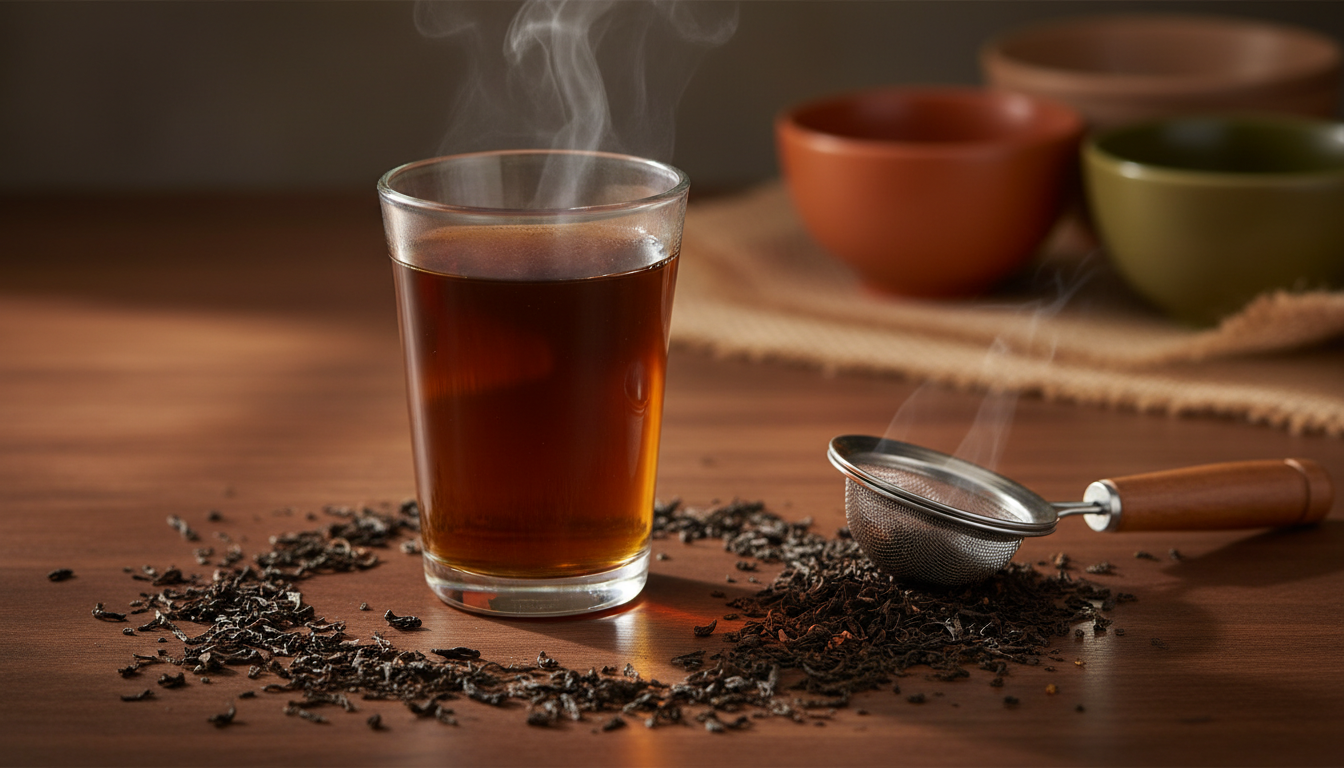
Black tea is fully oxidized Camellia sinensis. Compare Assam, Darjeeling, Keemun, and Ceylon varieties. Learn processing, brewing, and caffeine levels.

How To Grow Black Tea
Learn how to grow black tea at home: soil, climate, and the five processing steps from fresh leaf to a finished cup of black tea.

Visdom är vägen till bättre te.
Få vår kostnadsfria bryggguide: rätt vatten, temperatur och dragtid för varje te vi säljer. Du får också veta först när nya skördar kommer in.
Ingen skräppost. Avsluta när du vill.
Kolla din inkorg.
Guiden är på väg.