













Buttermint Tea
What Is Buttermint?
Buttermint is a cultivar within the Mentha x piperita (peppermint) family, selected for a lower menthol punch and a smoother, creamier mouthfeel than standard peppermint. The leaf delivers cooling mint character, just with less of the icy sharpness that makes ordinary peppermint tea feel almost harsh.

The difference comes down to essential oil chemistry. Standard peppermint leaf runs high in menthol, the compound responsible for that instant cooling, almost icy sensation at the back of the throat. Phytochemical studies of Mentha x piperita (documented in reference works like Lawrence's Mint: The Genus Mentha) show that menthol-to-menthone ratios vary considerably between chemotypes and growing conditions, which is the underlying mechanism behind cultivar-level flavour differences like this one.
Mint cultivars bred or selected for a milder profile carry a different ratio of menthol to the softer aromatic compounds, which is what gives buttermint its rounder, less aggressive character. It reads as "buttery" the same way a very smooth herbal blend reads as "creamy": there is no actual butterfat involved, it is a sensory shorthand for texture and intensity, not an ingredient.
That distinction matters more than it sounds. In the wider tea market, "buttermint" often shows up as a flavour name on peppermint-based blends built to evoke the taste of old-fashioned butter mint candy, using natural flavouring rather than leaf from an actual buttermint cultivar. Both are legitimate ways to reach a similar cup, but they are not the same product, and a buyer should know which one they are getting.
Buttermint is grown and sold as a distinct mint selection by specialty herb nurseries. One key point: any true mint tisane, buttermint included, is naturally caffeine-free, which is not true of every "tea" on a shelf labelled with the word.
Buttermint vs Regular Peppermint
Buttermint trades peppermint's sharp menthol bite for a milder, smoother finish with a soft, faintly sweet undertone. Regular peppermint tea hits fast and cool, almost icy; buttermint eases in and lingers without the same intensity, which makes it a gentler daily cup for people who find standard peppermint too aggressive.
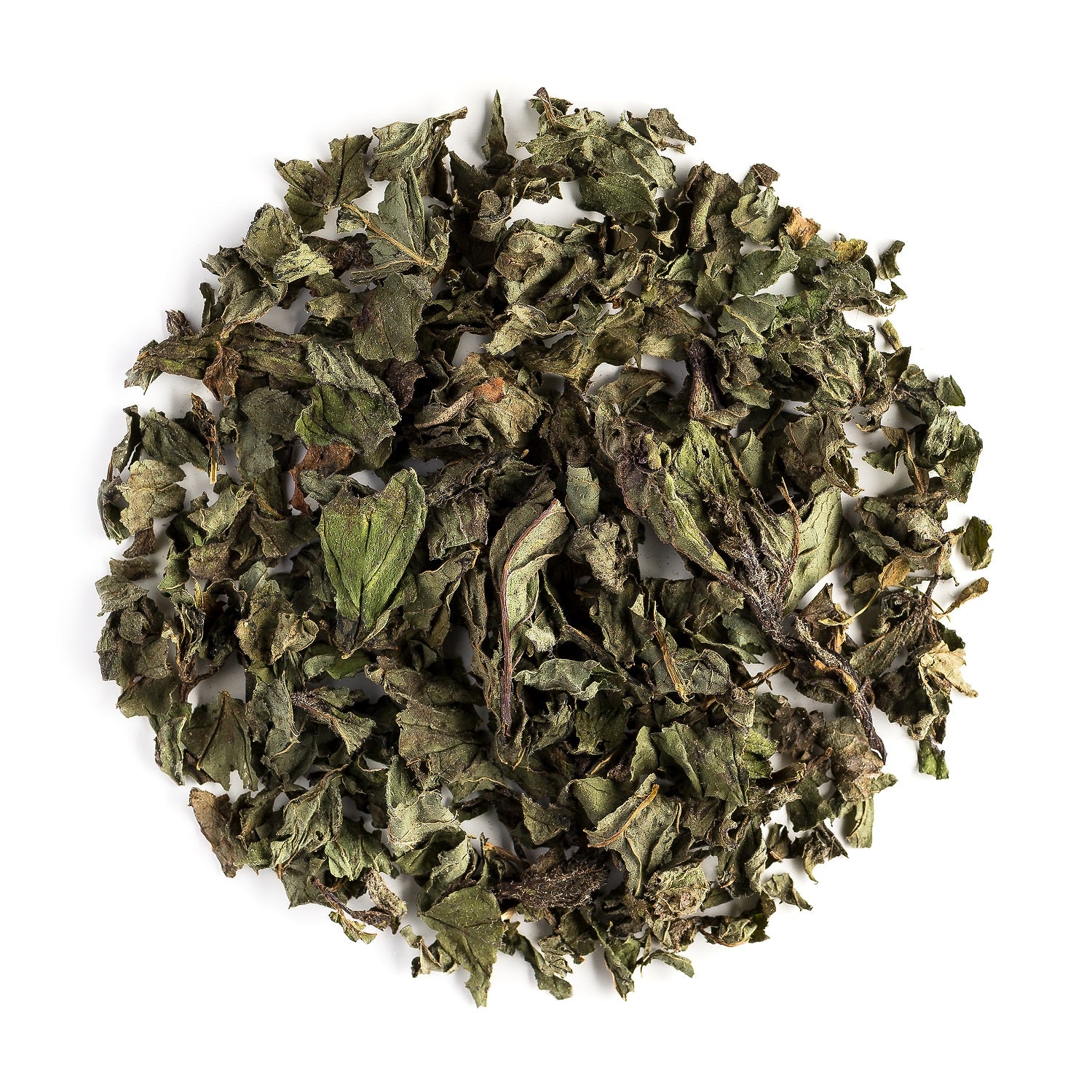
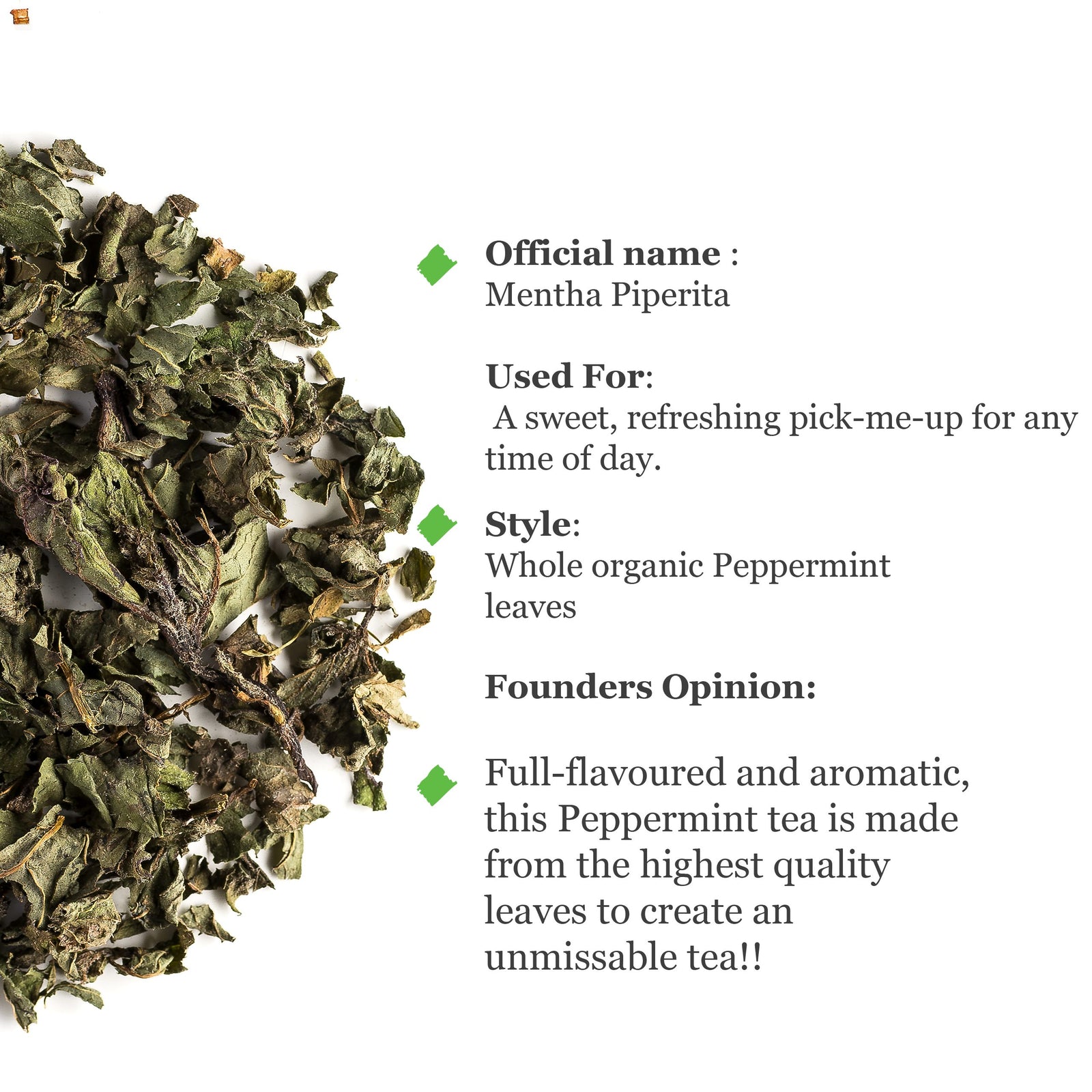
Side by side, the two are recognisably related but distinct. Standard peppermint tea, brewed from leaf that is intentionally high in menthol, delivers that unmistakable icy snap on the exhale. It is the mint most people picture when they think of mint tea, and it is what we use in our own peppermint blends because that intensity is exactly what most drinkers are looking for. Buttermint softens that same basic mint character rather than replacing it: same cooling sensation, dialled down, with a rounder finish instead of a sharp one.
Spearmint (Mentha spicata) is a different species entirely, built around carvone rather than menthol, which gives it a sweeter, less cooling profile. Buttermint sits between the two: still a peppermint at heart, just gentler than the standard version, and cooler than spearmint.
"Buttermint" on a tea label does not always mean leaf from a buttermint cultivar. As noted above, some blends use the name to describe a flavour profile, peppermint plus a natural creamy note, built to taste like butter mint candy rather than grown that way. Read the ingredient list, not just the product name, if the distinction matters to you.
How to Brew
Brew buttermint the same way you would any peppermint tea: 1 to 2 teaspoons of loose leaf per cup, water at 95°C, steeped for 5 to 7 minutes. Because the leaf is already milder than standard peppermint, there is less risk of oversteeping tipping it into bitterness, but the timing still matters for getting the full aromatic profile.
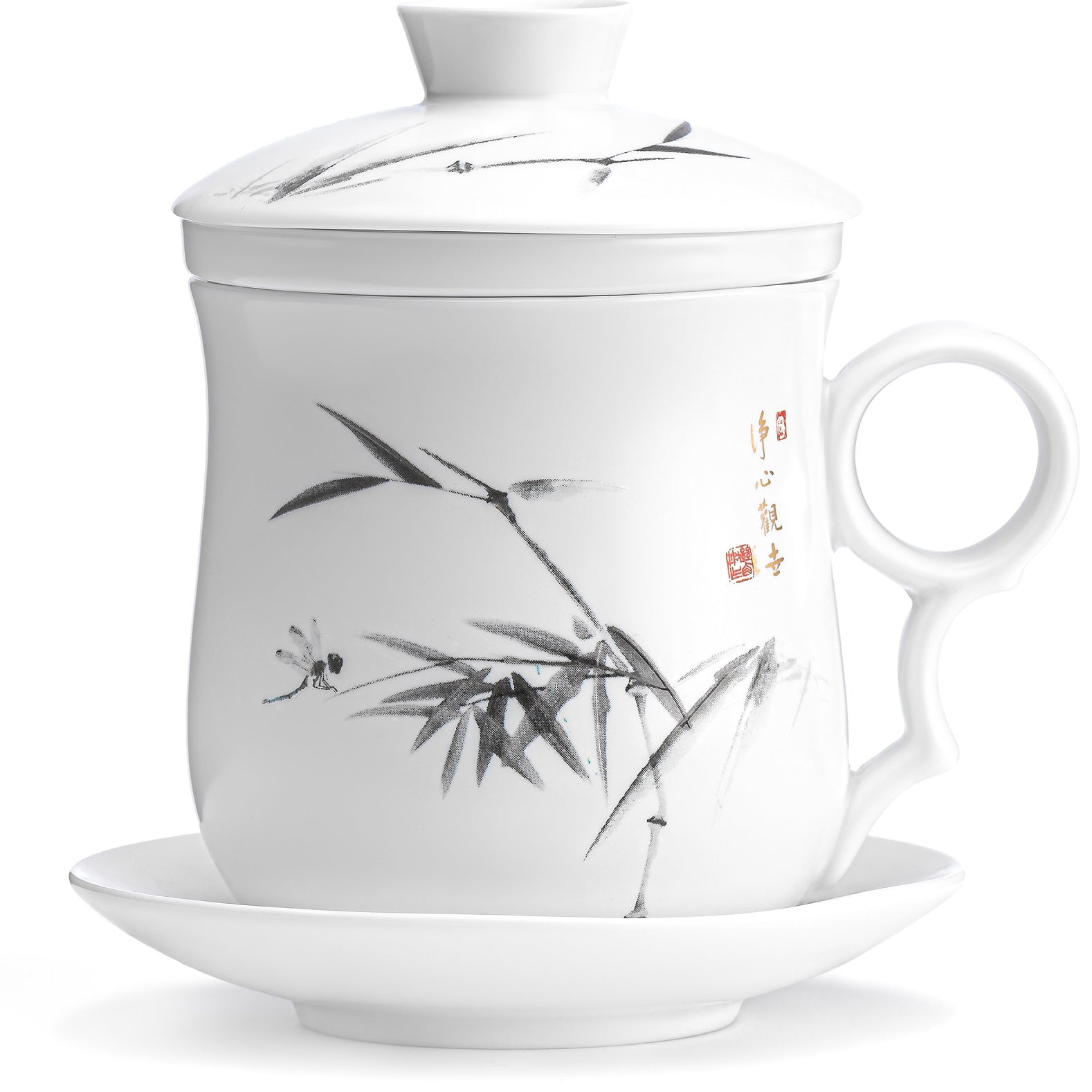
Use water just off the boil rather than a full rolling boil; near-boiling water extracts the volatile aromatic oils that carry buttermint's softer character without scorching the leaf. Cover the cup or pot while it steeps: those oils are exactly what gives the tea its distinctive smoothness, and an open cup lets a meaningful share of them escape as steam before they ever reach your palate. In my own brewing, that one habit, lid on for the full steep, makes a noticeably rounder cup than the same leaf brewed uncovered.
For iced buttermint tea, brew it double strength (double the leaf, same water volume) and pour over ice, the same approach that works for any herbal infusion destined to be chilled. No sweetener is really needed; the cultivar's natural mildness already reads as smoother than a sweetened cup of standard peppermint.
Where to Find Buttermint Tea
Buttermint is considerably less common than standard peppermint tea, which is grown and sold at industrial scale. True buttermint leaf, or live buttermint plants, surface more readily through specialty herb nurseries and smaller tea blenders than through a general grocery aisle.
Commercial peppermint for tea is grown at real scale in a handful of major producing regions. Our own peppermint comes from Morocco, and I've compared origins over the years: Moroccan leaf tends to be intensely menthol-forward, sometimes almost sharp, while Eastern European and Egyptian types run more balanced, and the classic Mitcham type from England has an excellent rounded menthol character but is harder to source at the volumes we need consistently. Moroccan is the right call for us, since that intensity is exactly what customers expect from standard peppermint, and it is part of why standard peppermint tea overall is cheap and everywhere.
Buttermint has never been grown at that scale; it is more of a specialty or heritage cultivar, propagated in smaller quantities by growers who care about cultivar-level differences in mint. That scarcity is also why so much of what gets marketed as "buttermint tea" leans on flavouring rather than the cultivar itself: it is far easier to flavour a large batch of standard peppermint than to source enough true buttermint leaf to blend at volume.
If you want to grow your own, some specialty garden centers and herb nurseries carry buttermint mint plants, usually alongside other peppermint and spearmint cultivars in their herb section. Mint spreads aggressively in open soil regardless of cultivar, so a container is worth the extra effort if you are planting it at home.
Final Thoughts
Buttermint tea is worth seeking out if standard peppermint feels too sharp: the same basic mint character, with the menthol bite turned down and a smoother, rounder finish in its place. It is a gentler option, not a different drink, which is exactly the appeal for people who love mint tea but find the usual version overwhelming.
Just be sure of what you are buying. A blend labelled "buttermint" is sometimes true cultivar leaf and sometimes standard peppermint dressed up with a creamy flavouring to chase the same butter-mint-candy association, and the two are worth knowing apart before you order. Either way, brewing rules stay the same: near-boiling water, a covered steep, five to seven minutes.
Leave a comment
Comments will be approved before showing up.
Also in Valley of Tea Blog | Tea Guides, Origins & Brewing Tips


Rooibos Iced Tea: Caffeine-Free Refresher
Learn to make rooibos iced tea two ways: hot-brewed over ice in 15 minutes, or a smoother overnight cold brew, plus flavour additions and storage tips.

Spice Cabinet Organization: A Practical System That Works
Learn how to organize your spice cabinet with a practical system that keeps every jar findable and fresh. Temperature, layout, and audit tips included.
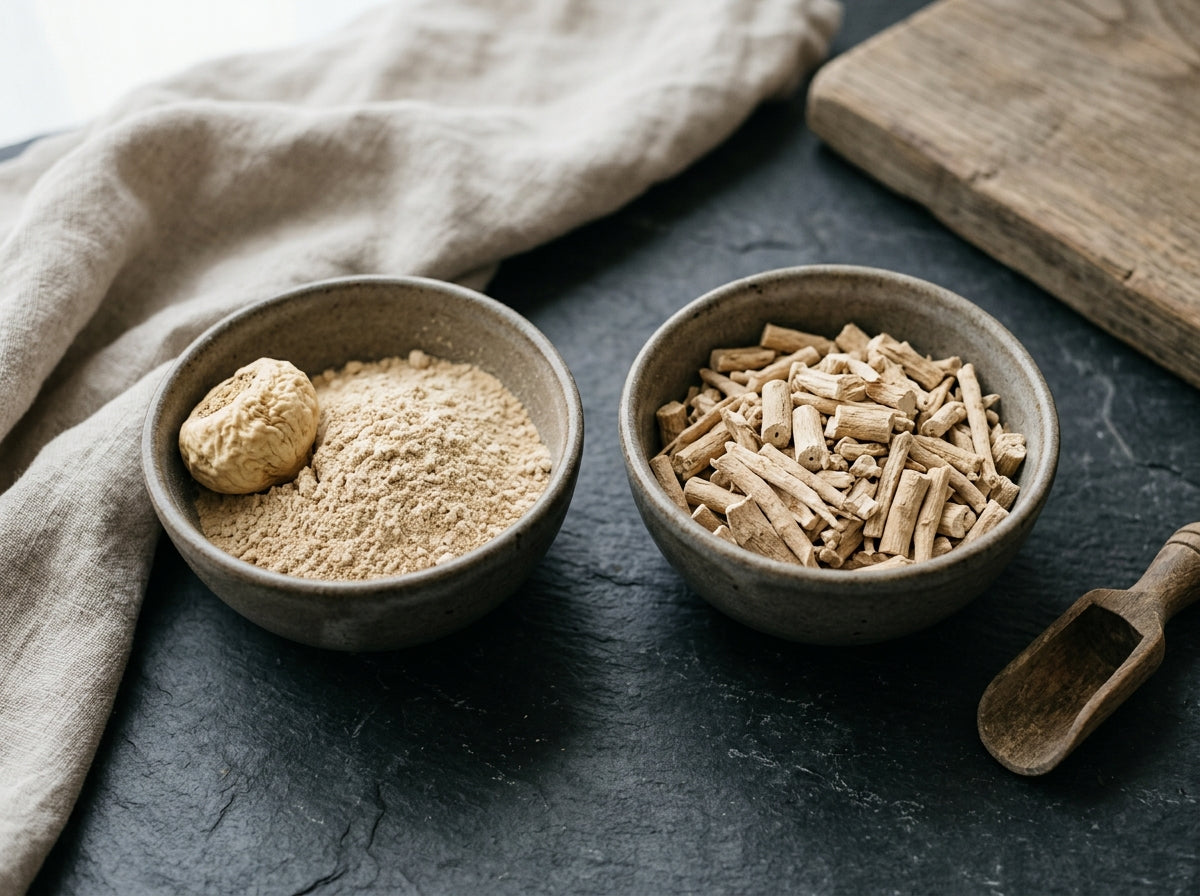

Maca or Ashwagandha for Your Daily Routine
Choosing between maca or ashwagandha? Learn how each root tastes, when to use them, and the best ways to prepare each in tea or drinks.

Wisdom is the path to better tea.
Get our free brewing guide: the right water, heat and timing for every tea we sell. You will also hear it first when new harvests arrive.
No spam. Unsubscribe any time.
Check your inbox.
The guide is on its way.