












Valley of Tea Loose Leaf – Lavender, Lemon & Passion Fruit Blends
Flavored loose tea is not all the same. The gap between a well-made blend and a mediocre one is enormous, and it starts with decisions most tea companies never explain to their customers: which botanicals to use, how much of each ingredient to include, and whether the flavor comes from real plant material or from added flavoring compounds.
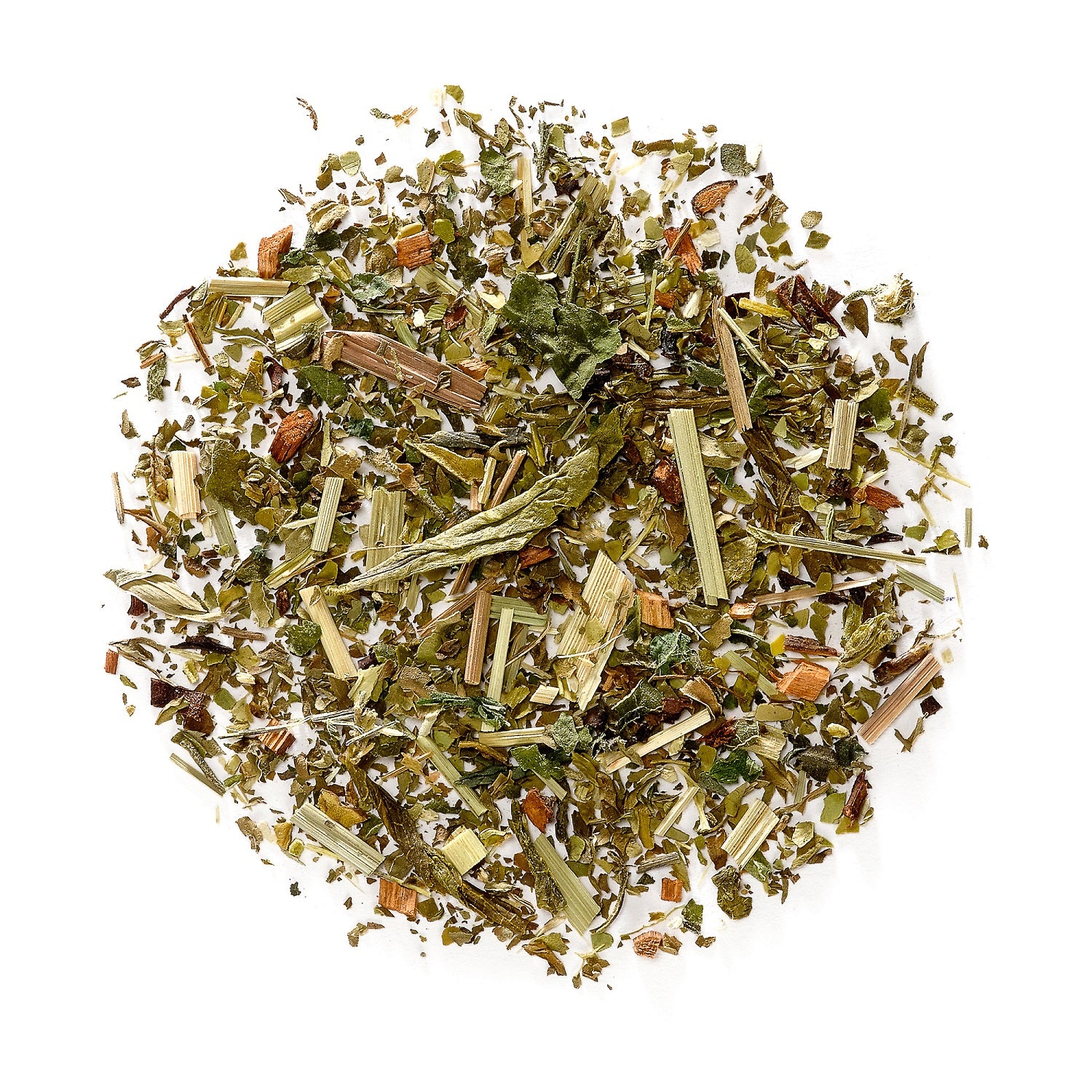
At Valley of Tea, we build our blends from whole dried ingredients. No artificial flavoring, no tea dust, no mystery powders. When you open a pouch of one of our flavored teas, you can see exactly what is inside. That transparency matters, and it shapes how the tea tastes in your cup.

This post walks through two of our core flavor directions — lavender and lemon — and explains what makes each one work as a loose leaf botanical. It also covers passion fruit, a flavor direction we have looked at closely and have a specific take on. If you have been buying flavored tea bags and wondering whether loose tea is worth the switch, the answer is yes.
Lavender: Getting the Balance Right
Lavender is one of the most misused ingredients in flavored tea. Too much and your cup tastes like soap or perfume. Too little and you wonder why it is listed on the label at all. The difference between a lavender tea that people love and one they pour down the sink comes down to dosage and variety selection.
Choosing the Right Lavender
Not all lavender is suitable for tea. Lavandula angustifolia, commonly called English lavender or true lavender, has a softer, sweeter profile that works well in beverages. The large-flower hybrid varieties grown for essential oil production — lavandin, or Lavandula x intermedia — contain far more camphor and can taste medicinal. A comprehensive review of Lavandula bioactive components confirms that L. angustifolia has a distinctly different chemical profile from hybrid lavandin varieties, with higher linalool content and lower camphor — exactly what makes it suitable for culinary and beverage use.
Our best-selling lavender product is whole dried lavender buds — not a blend, but the ingredient itself. We sell it as a single botanical for a reason: customers who discover quality culinary-grade lavender buds often want to experiment with their own ratios rather than have someone else decide for them. We use culinary-grade dried lavender buds, harvested before full bloom when the aromatic oils are concentrated but not overpowering. The buds should be a deep purple-blue color, not grey or brown, which indicates age and oxidation.
Dosage and Pairing
Lavender is potent. In a blend, it should typically make up no more than 5–10% of the total weight. A 3-gram serving of a lavender blend might contain just 0.2–0.3 grams of actual lavender buds. That sounds small, but lavender's volatile oils are highly aromatic, and they release quickly in hot water. In our formulation experience, erring toward the lower end of that range — around 5% — keeps the cup floral without tipping into soapy.
The best base teas for lavender are those with enough body to stand alongside its floral intensity without competing. Green tea works if it is a mellow variety — a Chinese green rather than a grassy Japanese Sencha. Green rooibos is an excellent caffeine-free option because its natural sweetness rounds out lavender's sharper edges. Black tea, particularly a lighter Ceylon, provides structure without bitterness.

Lavender also pairs well with other botanicals. Chamomile and lavender together create a deeply calming cup. A touch of vanilla softens the floral note. Dried rose petals add complexity without overpowering. Mint and lavender is a bold combination that works better cold-brewed.
Brewing Lavender
Water temperature is critical for lavender. Boiling water (100°C) extracts the aromatic compounds aggressively and can make the cup taste harsh. We recommend 85–90°C for most lavender blends. Steep for 4–5 minutes. Keep the vessel covered while steeping — the aromatic oils that make lavender special are volatile, and without a lid they escape into the air instead of staying in your tea.
Lemon Tea Blends: Real Citrus vs. Flavoring
Walk through any supermarket tea aisle and you will find dozens of "lemon" teas. Pick up the box and read the ingredients. Most contain "natural lemon flavoring" or "citrus flavor" rather than any actual lemon. There is a meaningful difference.
Real Lemon Peel
Dried lemon peel contributes a bright, zesty character that flavoring compounds cannot replicate. The peel contains limonene and other terpenes that create a complex citrus profile — not just sour, but aromatic, slightly bitter, and layered. When you steep real lemon peel, the flavor develops and changes over the course of the infusion. Synthetic lemon flavor hits the same note from start to finish.
We use sun-dried or carefully dehydrated lemon peel, cut into pieces large enough that you can see them in the blend. The peel should be a pale to medium yellow — not white, which means the pith was included and will add unwanted bitterness, and not dark brown, which indicates over-processing.
Lemongrass: The Tropical Alternative
Lemongrass (Cymbopogon citratus) is not a citrus fruit at all. It is a tall grass native to South and Southeast Asia, and its flavor profile overlaps with lemon but is distinctly its own thing. Where lemon peel is sharp and zesty, lemongrass is smoother, more herbaceous, with a gentle sweetness that works especially well in herbal and green tea blends. A peer-reviewed overview of Cymbopogon citratus documents its long history of use as a herbal tea across Southeast Asia and South America, noting a well-established safety profile for regular consumption.

Dried lemongrass stalks steep well and can handle higher water temperatures than delicate lemon peel. They also hold up better across multiple infusions. A lemongrass-forward blend can be steeped twice — the first cup is bright and forward, the second is mellower and sweeter.
Lemon Verbena: The Underappreciated Option
Lemon verbena (Aloysia citrodora) deserves more attention than it gets. The dried leaves produce a clean, intensely lemony infusion without any bitterness. In France, it is called "verveine" and is one of the most popular single-ingredient herbal teas. In blends, it adds a refined citrus note that sits between lemon peel's sharpness and lemongrass's softness. A phytochemistry and pharmacology review of Aloysia citrodora identifies verbascoside and citral as its primary active compounds — the same constituents responsible for its distinctive clean lemon character in the cup.
Lemon verbena is more expensive than either lemon peel or lemongrass, which is why you rarely see it in mass-market teas. We use it in blends where that cleaner citrus character matters.
Brewing Lemon Blends
For green tea bases with lemon components, use water at 75–80°C and steep for 2–3 minutes. For herbal blends built on lemongrass or lemon verbena, you can go hotter — 90–95°C — and steep for 5–7 minutes. The herbal ingredients are more forgiving than tea leaves and benefit from longer extraction.
Use 2–3 grams of blend per 200 ml of water. With lemon blends in particular, do not squeeze fresh lemon into the cup unless you have tasted it first. The blend is already calibrated for citrus intensity, and adding more can push it into sour territory.
A Note on Passion Fruit
Passion fruit comes up often as a requested flavor direction. Valley of Tea carries Passiflora incarnata — the medicinal herb, sold as dried leaf and powder — which is a completely different plant from the tropical fruit. Passiflora incarnata is valued for its calming properties and mild, slightly grassy flavor. It is not a flavoring ingredient and is not used to create passion fruit-flavored blends.

We have never sourced dried passion fruit pieces for blending. That is a deliberate choice: the dried tropical fruit widely used in commercial tea blends typically requires added natural flavoring to deliver the intensity people expect, which runs against how we build products. If passion fruit flavor is what you are after, the honest answer is that most of the products marketed as "passion fruit tea" are flavoring-forward rather than fruit-forward. We would rather not offer that than offer it badly.
Why Loose Leaf Blends Are Different
If you have only experienced flavored tea through tea bags, you are missing most of what a good blend has to offer. Here is why.
Visible Ingredients
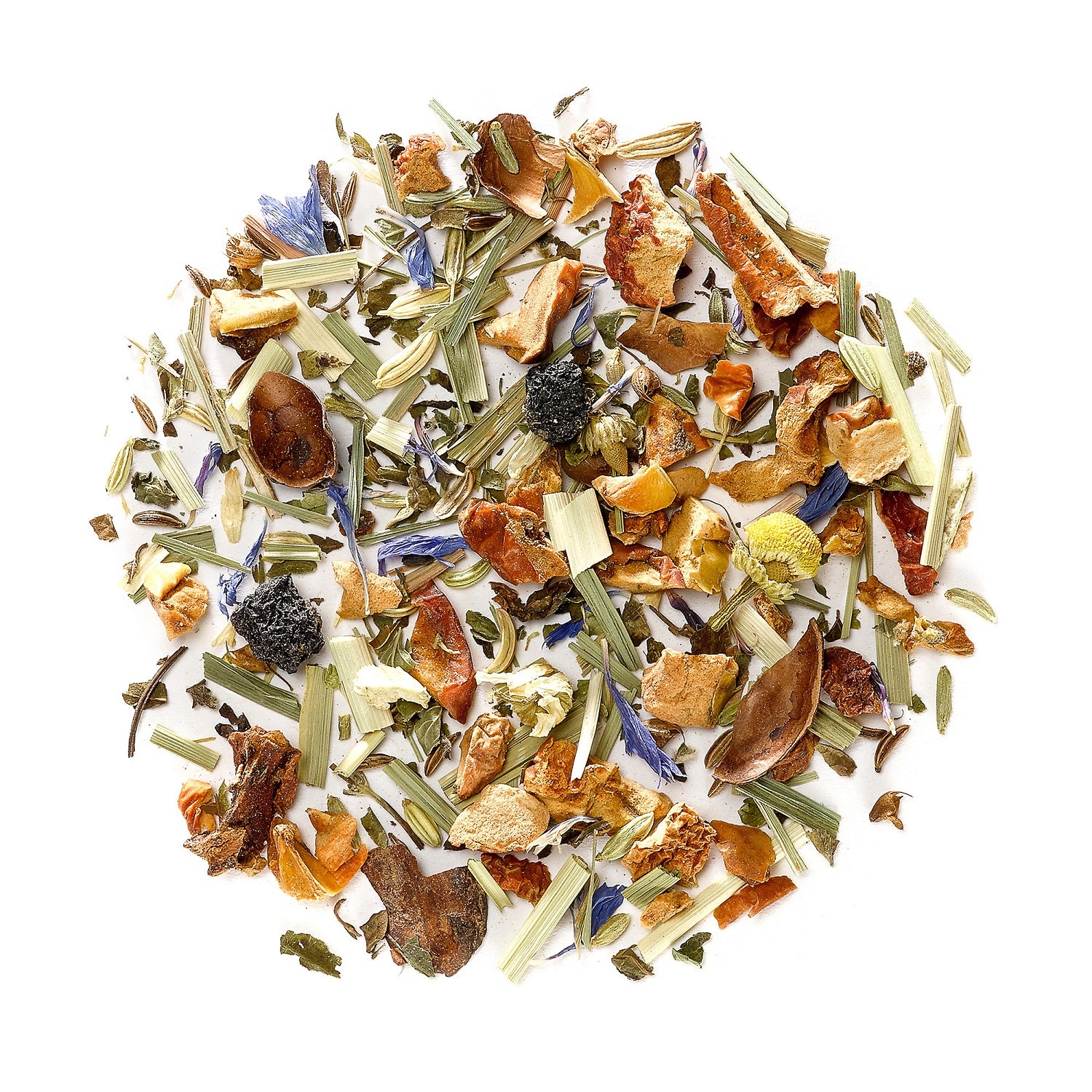
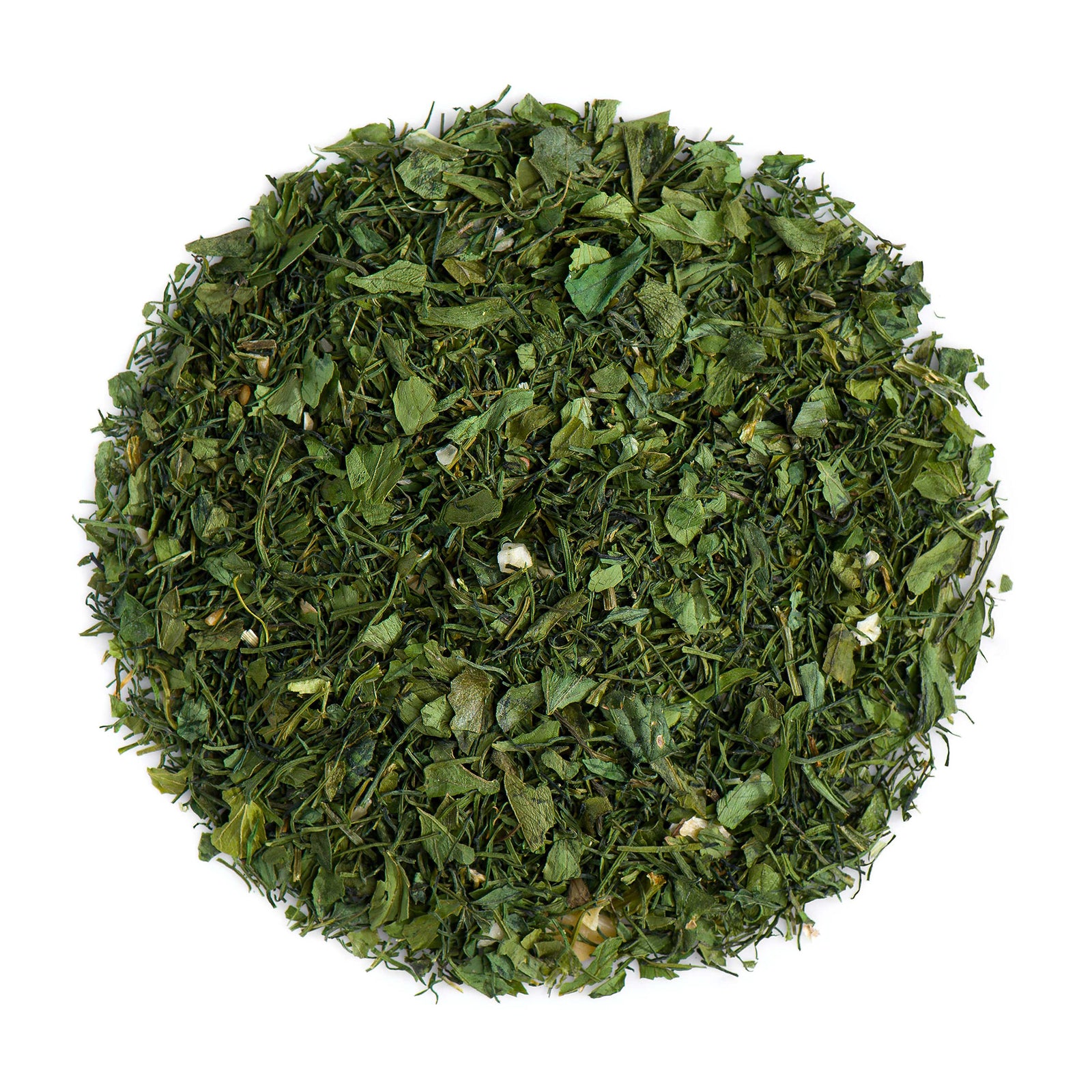
Open a pouch of loose tea and you can see what you are drinking. Lavender buds, lemon peel strips, whole tea leaves — they are all identifiable. This is not just aesthetic. Visible ingredients are a quality signal. A company that hides its blend inside a sealed bag or a paper tea bag filled with powder has less incentive to use premium ingredients.
When you can see the lavender buds, you can tell whether they are vibrant purple or stale grey. When you can see the lemon peel, you know it is real peel and not flavoring-coated filler. Transparency keeps everyone honest.
No Dust, No Fannings
Tea bags are typically filled with "fannings" or "dust" — the smallest particles left over after loose leaf tea production. These particles steep quickly but also release tannins and bitterness rapidly. They give you a strong first cup that turns harsh if you steep even 30 seconds too long.
Loose leaf tea uses whole or large-cut leaves that unfurl gradually in water. The flavor develops more slowly, the bitterness stays in check, and the tea is forgiving of minor timing variations. You can steep most loose leaf blends for an extra minute without disaster. Try that with a tea bag and you will taste the difference immediately.

Better Infusion Dynamics
Whole ingredients steep differently than ground ones. A dried lavender bud releases its oils gradually over a 4–5 minute steep. A ground lavender particle dumps everything in the first 30 seconds. The whole bud gives you a cup that evolves as you drink it — the first sip tastes different from the last, and both are good.
The ground particle gives you a flat, one-dimensional flavor. This is why loose tea blends reward attention. They are not just a different format. They produce a fundamentally different drinking experience.
Brewing Tips for Flavored Loose Leaf Teas
A few general principles apply across all flavored blends.
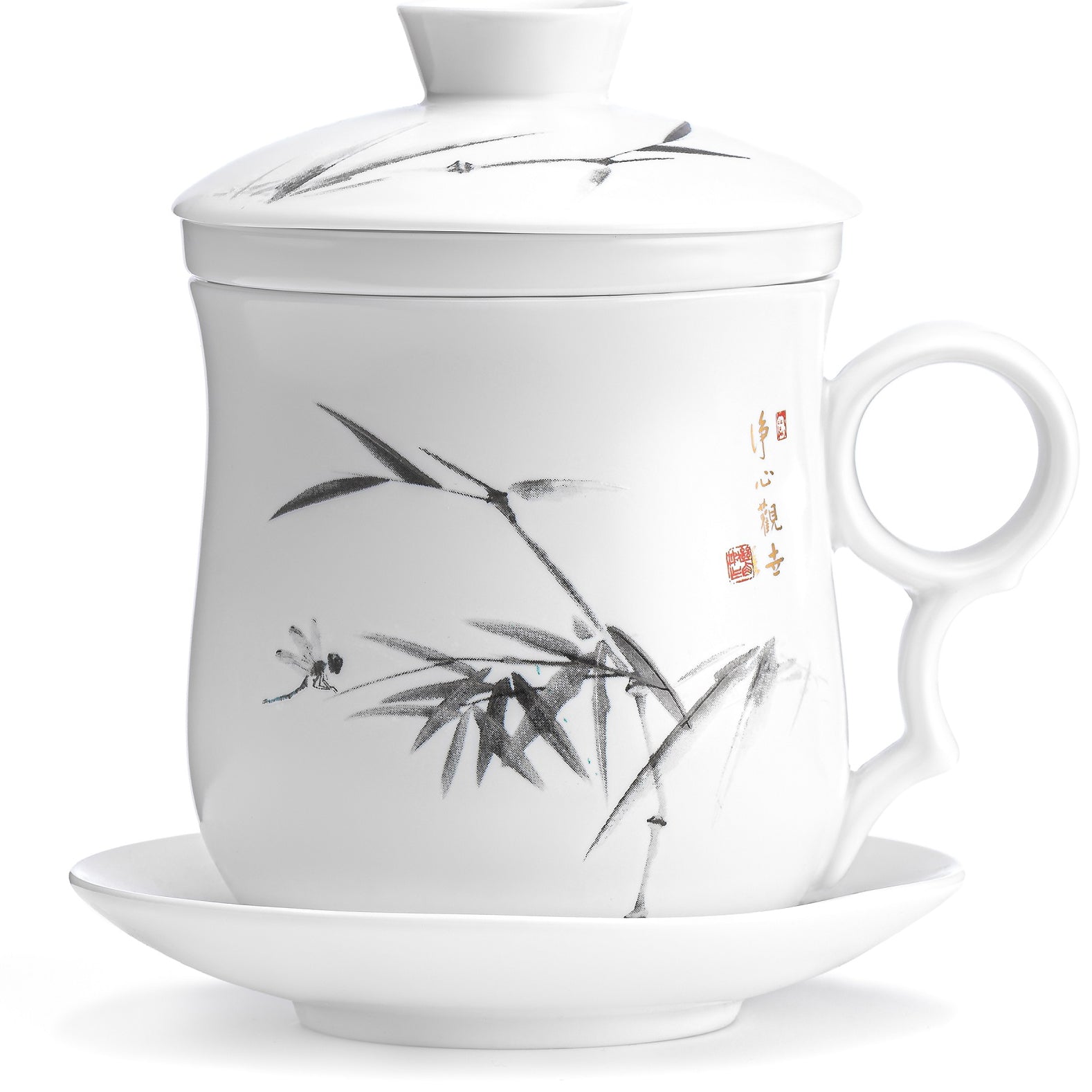
Cover while steeping. This is the single most important and most frequently ignored piece of advice for flavored teas. The aromatic compounds that give lavender and lemon their character are volatile. They evaporate. If you steep in an open mug, a significant portion of the flavor escapes as steam. Use a lid, a saucer, or a covered teapot.
The difference is dramatic.
Use enough leaf. Under-dosing is the most common mistake with loose tea. Most flavored blends need 2–3 grams per 200 ml cup. If you are eyeballing it, that is roughly one heaped teaspoon for most blends, though bulkier blends with large botanical pieces may need a slightly larger volume. When in doubt, weigh it.

A small kitchen scale accurate to 0.1 grams costs very little and makes a noticeable difference in consistency.
Mind the temperature. Not all blends want boiling water. As a general rule: green tea bases do best at 75–80°C, white tea and oolong bases at 80–85°C, black tea bases at 90–95°C, and purely herbal blends at 95–100°C. If your blend has a tea base, let the tea leaves guide the temperature.
Give it enough time. Flavored blends generally need longer than unflavored teas because the botanical ingredients release their compounds more slowly than tea leaves. Five minutes is a reasonable default for most flavored blends. Set a timer.
Try a second steep. Many loose leaf blends, especially those built on oolong or green tea, reward a second infusion. The second cup will be different — often softer and sweeter — but still enjoyable. Use slightly hotter water and add 1–2 minutes to the steep time.
Finding Your Blend

Flavor preferences are personal, and the best way to find blends you love is to try them. Start with a flavor direction you already enjoy — if you like floral scents, try a lavender botanical; if you reach for citrus, start with lemon.
Pay attention to the base. A lavender blend on green rooibos tastes completely different from lavender on green tea, even though the lavender component is identical. The base shapes the overall experience as much as the featured flavor does.
Valley of Tea builds blends to work without added sweetener. The ingredient ratios are calibrated so that the natural sweetness of the botanicals carries the cup. That said, a small amount of honey can complement lavender blends particularly well if you prefer a sweeter cup.
Browse our loose tea collection to see the full range of what we offer. Every blend lists its complete ingredients, and you can see exactly what goes into each one. That is how we think tea should be sold — nothing hidden, nothing artificial, just real ingredients in your cup.
Leave a comment
Comments will be approved before showing up.
Also in Valley of Tea Blog | Tea Guides, Origins & Brewing Tips
The Complete Guide to Drinking Tea
What tea is, how the main types differ in the cup, and how to brew each one properly. Water temperature, steeping times, storage and how to get more than one cup from your leaves.
Read More

Black Tea: Types, Processing, and How to Brew It
Black tea is fully oxidized Camellia sinensis. Compare Assam, Darjeeling, Keemun, and Ceylon varieties. Learn processing, brewing, and caffeine levels.

How To Grow Black Tea
Learn how to grow black tea at home: soil, climate, and the five processing steps from fresh leaf to a finished cup of black tea.

Wisdom is the path to better tea.
Get our free brewing guide: the right water, heat and timing for every tea we sell. You will also hear it first when new harvests arrive.
No spam. Unsubscribe any time.
Check your inbox.
The guide is on its way.