













Kombucha: What It Is and How It Is Made
Kombucha is fermented tea. Take sweetened tea, add a symbiotic culture of bacteria and yeast, wait one to four weeks, and you get a fizzy, tangy, slightly sour drink that has gone from hippie-commune curiosity to mainstream grocery staple in under two decades. The global kombucha market passed $3 billion in 2023 and continues to grow, but the drink itself is ancient — likely originating in Northeast China around 220 BCE before spreading along trade routes to Russia, Eastern Europe, and eventually the rest of the world.

This guide covers everything about kombucha: what it is, how fermentation works, what it tastes like, how much caffeine it contains, how to make it at home, which teas produce the best results, and how it compares to other fermented beverages. Valley of Tea's loose leaf teas make excellent kombucha bases, and by the end of this article you will know exactly which ones to use and why.
What Is Kombucha

Kombucha is a fermented beverage made from sweetened tea and a SCOBY — a Symbiotic Culture Of Bacteria and Yeast. The SCOBY consumes the sugar in the tea and produces organic acids (primarily acetic acid and gluconic acid), carbon dioxide, and trace amounts of alcohol. The result is a drink that is mildly acidic, lightly carbonated, and distinctly tart.
The finished product typically has a pH between 2.5 and 3.5 — comparable to vinegar, though far more palatable. Alcohol content in home-brewed kombucha usually falls between 0.5% and 2% ABV, while commercial brands keep it below 0.5% to avoid alcohol regulations.
Kombucha is not juice, not soda, and not quite vinegar. It occupies its own category. The flavor profile is closest to a dry, tart cider — though that comparison only captures part of the experience. The fermentation creates a complexity that sweetened tea on its own cannot achieve.
A Brief History
The earliest reliable references to kombucha trace to the Qin Dynasty in China, where it was called "the tea of immortality." It spread to Russia and Eastern Europe, likely through trade routes, where it became a household staple under names like "tea kvass" and "tea mushroom" (the SCOBY's flat, pancake-like appearance inspired the mushroom comparison). German and Russian prisoners of war may have brought the practice to Western Europe during the early 20th century.
The modern kombucha wave began in the 1990s in the United States, driven by small-batch producers in California. By the 2010s it had moved from health food stores to mainstream supermarkets. Today it is brewed commercially on every continent.
How Kombucha Is Made

Kombucha production is straightforward. The process has not changed fundamentally in centuries — you are working with tea, sugar, water, and a living culture.
The SCOBY
The SCOBY is the engine of kombucha fermentation. It is a rubbery, opaque disc that floats on the surface of the tea. Despite its unappealing appearance, it is a highly organized microbial community. The bacterial component (primarily Komagataeibacter xylinus) produces cellulose, forming the SCOBY's physical structure. The yeast component (typically Saccharomyces and Brettanomyces species) converts sugar into alcohol and carbon dioxide. The bacteria then convert some of that alcohol into acetic acid.
Each brew cycle produces a new SCOBY layer on top of the old one. A healthy SCOBY will reproduce indefinitely — many home brewers have cultures descended from a single original SCOBY passed along for years or decades.
A SCOBY needs three things to thrive: sugar as fuel, tea as a nutrient source (the nitrogen and minerals in tea are essential for the culture's health), and an acidic environment to suppress competing organisms.
The Fermentation Process
The basic method:
- \n1. Brew a batch of sweetened tea and let it cool to room temperature (below 30 degrees Celsius / 85 degrees Fahrenheit).
- Transfer the cooled tea to a wide-mouth glass jar.
- Add the SCOBY and a portion of starter liquid (previously fermented kombucha or distilled white vinegar).
- Cover with a tightly woven cloth secured with a rubber band — the culture needs air but not fruit flies.
- Place in a warm spot (22-28 degrees Celsius / 72-82 degrees Fahrenheit) away from direct sunlight.
- Wait 7-14 days, tasting periodically.
During fermentation, the pH drops steadily. The brew starts around pH 4.5 and finishes between 2.5 and 3.
- \n5. You can track this with pH strips, but tasting is the most practical method — when the sweetness has diminished and the tartness is where you want it, the first fermentation is done.
First vs Second Fermentation

Kombucha production happens in two distinct phases, and understanding the difference is key to making good kombucha at home.
First Fermentation (F1)
The first fermentation is the main event. This is where the SCOBY converts sweetened tea into kombucha. It happens in an open vessel (covered with cloth, not sealed) over 7-14 days. The result is flat or very lightly carbonated kombucha with a balanced sweet-tart flavor.
F1 produces the core kombucha character: the acidity, the slight funkiness, the tannic backbone from the tea. Without F1, you just have sweet tea.
Second Fermentation (F2)
The second fermentation is optional but common. After removing the SCOBY, you transfer the kombucha to sealed bottles — typically swing-top glass bottles — and leave them at room temperature for 2-4 days. The residual yeast and bacteria continue fermenting in the sealed environment, and since the CO2 cannot escape, the kombucha becomes carbonated.
F2 is also when most brewers add flavoring ingredients: fruit juice, ginger, herbs, or spices. The added sugars from fruit give the yeast more fuel, producing even more carbonation.
The critical safety note with F2: sealed bottles under pressure can explode. Burp your bottles daily by briefly opening the cap to release excess pressure, and never use bottles that are not designed for pressure (no thin glass, no mason jars). Swing-top bottles rated for carbonated beverages are the standard.
After 2-4 days of F2, transfer the bottles to the refrigerator. Cold temperatures slow fermentation dramatically, stabilizing the carbonation level.
What Kombucha Tastes Like

Kombucha tastes tart, slightly sweet, mildly vinegary, and effervescent. The flavor sits at the intersection of tea, cider, and sparkling water. Beyond that baseline, the taste varies enormously depending on the tea used, the fermentation duration, the temperature, and any added flavorings.
Short fermentation (7 days) produces sweeter, milder kombucha. Long fermentation (14+ days) produces drier, more acidic kombucha that approaches vinegar territory. Most people prefer something in the middle — noticeably tart with just enough residual sweetness to keep it drinkable.
The tea base matters more than most beginners expect. Black tea kombucha has a malty, robust backbone. Green tea kombucha is lighter and more delicate. White tea produces a subtle, almost floral kombucha. The character of the base tea carries through fermentation in a way that sugar and acid alone cannot replicate.
Commercial kombucha tends to be sweeter and more heavily flavored than home-brewed versions. Many brands add juice or sugar after fermentation to appeal to consumers accustomed to soft drinks. Home-brewed kombucha, made with quality loose leaf tea and allowed to ferment fully, has a drier and more complex flavor profile.
Kombucha and Caffeine
Kombucha contains caffeine because it is made from tea, and tea contains caffeine. However, the fermentation process reduces the caffeine content substantially.
A typical cup of black tea contains 40-70 mg of caffeine. Kombucha made from the same tea generally contains 10-25 mg of caffeine per 240 ml (8 oz) serving. The reduction is partly due to dilution (the tea is brewed strong but the final volume includes added water and starter liquid) and partly because the SCOBY metabolizes some of the caffeine during fermentation.
For context: a standard cup of coffee has 80-100 mg of caffeine, a cup of green tea has 25-45 mg, and a can of cola has about 35 mg. Kombucha sits at the low end of the caffeinated beverage spectrum.
If caffeine sensitivity is a concern, you can reduce it further by using green or white tea as your base instead of black tea, or by blending caffeinated tea with caffeine-free herbal ingredients. A 50/50 blend of black tea and rooibos, for example, will roughly halve the caffeine while still giving the SCOBY enough real tea to work with. The SCOBY needs actual Camellia sinensis tea (black, green, white, or oolong) for the nitrogen and nutrients it requires — a 100% herbal base will eventually weaken the culture.
Making Kombucha at Home

Home-brewed kombucha is simple, inexpensive, and produces better results than most commercial brands — provided you use good tea and follow basic fermentation principles.
Equipment
- \n- A large wide-mouth glass jar (3-4 litres / about 1 gallon). Do not use metal, ceramic with lead glazes, or plastic.
- A tightly woven cloth or coffee filter to cover the jar.
- A rubber band to secure the cloth.
- Swing-top glass bottles for second fermentation (500 ml or 750 ml are practical sizes).
- A fine-mesh strainer.
- pH strips (optional but useful for beginners).
Ingredients
For a 3-litre batch:
- \n- 3 litres of filtered water (chlorine kills the SCOBY — use filtered or dechlorinated water)
- 4-6 teaspoons of loose leaf tea (about 8-12 grams)
- 200 grams of white granulated sugar (roughly 1 cup)
- 1 SCOBY
- 240 ml (1 cup) of starter liquid from a previous batch or store-bought raw, unflavored kombucha
Step-by-Step Process
Step 1: Brew the sweet tea. Bring the water to the appropriate temperature for your tea — 100 degrees Celsius for black tea, 80 degrees for green, 85 degrees for white. Steep the tea for 5-7 minutes. You want a strong brew because the flavor will dilute during fermentation. Remove the leaves and stir in the sugar until fully dissolved. Step 2: Cool completely. Let the sweetened tea cool to room temperature. This is non-negotiable — adding a SCOBY to hot tea will kill the culture. You can speed cooling by placing the pot in an ice bath, but never add the SCOBY above 30 degrees Celsius. Step 3: Transfer and inoculate. Pour the cooled sweet tea into your glass jar. Add the starter liquid and stir briefly. Then gently place the SCOBY on the surface. It may sink — that is fine. It will float back up within a day or two, or a new SCOBY will form at the surface. Step 4: Cover and store. Cover the jar with cloth secured by a rubber band. Place it in a warm spot (22-28 degrees Celsius) away from direct sunlight. A kitchen counter or cupboard shelf works well. Avoid areas near trash bins, fruit bowls, or anything that attracts fruit flies. Step 5: Wait and taste. After 7 days, begin tasting daily. Use a straw or clean spoon to draw a sample from below the SCOBY. When the balance of sweet and tart matches your preference, the first fermentation is complete. Most batches are ready between 7 and 14 days. Step 6: Bottle for second fermentation. Remove the SCOBY and set it aside in a bowl with 240 ml of the finished kombucha (this is your starter liquid for the next batch). If adding flavoring, put your chosen ingredients into the swing-top bottles first. Pour the kombucha through a strainer into the bottles, leaving about 3 cm of headspace. Seal the bottles. Step 7: Carbonate. Leave the sealed bottles at room temperature for 2-4 days. Burp them daily by briefly opening the cap. After 2 days, chill one bottle in the fridge and test the carbonation level. When it is where you want it, refrigerate all bottles. Step 8: Start the next batch. Use the reserved SCOBY and starter liquid to begin the process again. A continuous cycle produces consistent results because the SCOBY stays healthy and active.Troubleshooting
Mold on the SCOBY: Actual mold (fuzzy, green, black, or white spots on top of the SCOBY) means the batch is contaminated. Discard everything — the liquid, the SCOBY, and sanitize the jar. Mold usually indicates insufficient starter liquid (the acidity was too low to suppress mold) or contamination from the environment. Brown spots, stringy yeast strands, or bubbles are normal and are not mold. Vinegar taste: You fermented too long. Reduce F1 time by a few days on your next batch. Extremely sour kombucha can be used as vinegar in cooking or as starter liquid for future batches. No carbonation after F2: The yeast may be depleted, the bottles may not be fully sealed, or the temperature may be too low. Try adding a pinch of sugar to each bottle before sealing and keeping them in a warmer spot. SCOBY sinks or looks odd: Normal. SCOBYs float, sink, grow unevenly, develop brown patches, and trail yeast strands. As long as there is no actual mold, the culture is fine.Best Teas for Kombucha

We work with several kombucha brewers who use our teas as their base. We tried making kombucha ourselves but decided it was better left to the experts — though the experience taught us which teas perform best as a brewing base. The tea you choose has a direct and significant impact on your kombucha's flavor, the SCOBY's health, and the overall fermentation quality. Not all teas are equal for this purpose.
Black Tea
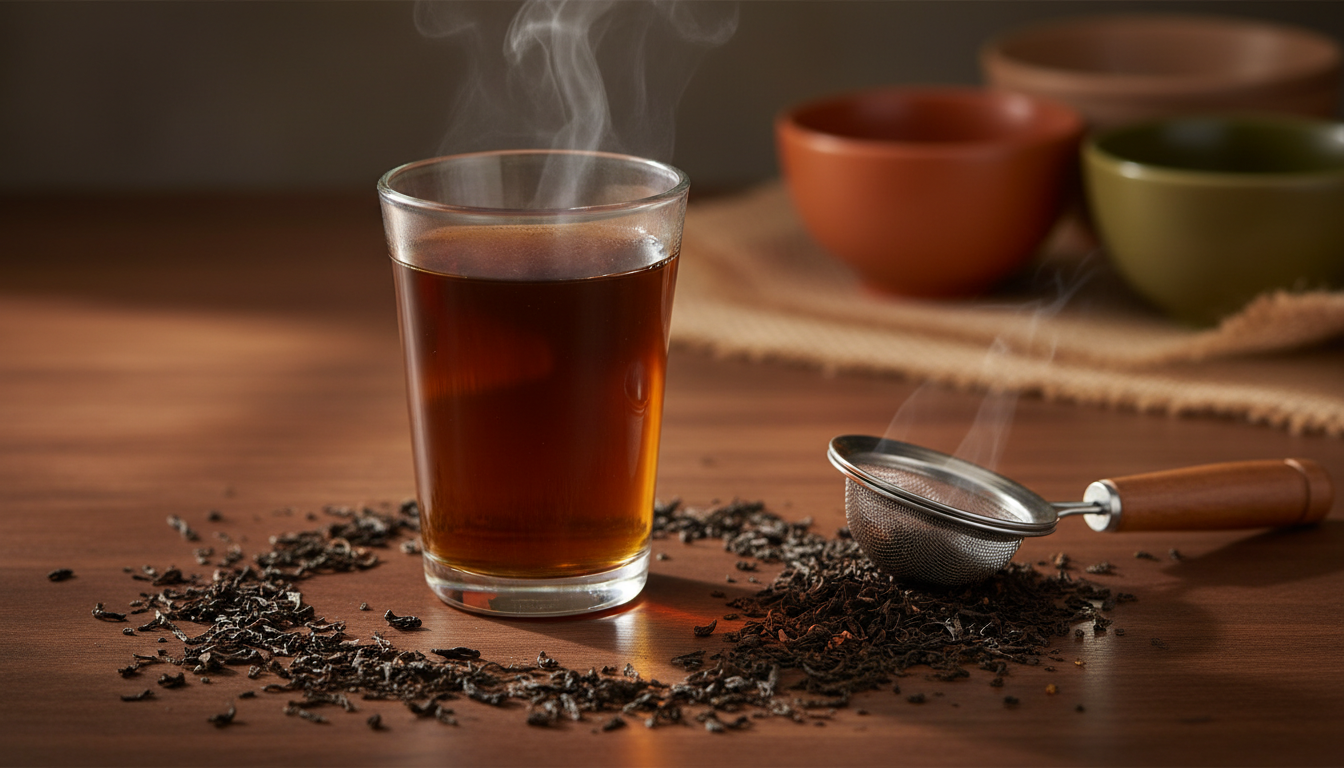
Black tea is the traditional and most reliable kombucha base. Its high tannin content, robust flavor, and ample nitrogen make it ideal for SCOBY health and fermentation vigor. Black tea kombucha has a deep, malty flavor with a rich amber color.
The best black teas for kombucha are unflavored, orthodox-processed whole leaf teas. Ceylon (Sri Lankan) black tea is a classic choice — clean, bright, and well-balanced. Assam produces a maltier, fuller-bodied kombucha. Darjeeling adds a muscatel complexity that carries through fermentation beautifully.
Avoid flavored black teas (Earl Grey's bergamot oil can inhibit the SCOBY) and smoky teas like Lapsang Souchong (the smoke compounds interfere with fermentation).
Valley of Tea's loose leaf Ceylon and Assam teas are sourced directly from producers and provide the clean, full-flavored base that makes exceptional kombucha.
Green Tea
Green tea produces a lighter, more delicate kombucha with a cleaner acidity and a pale gold color. The fermentation tends to be slightly slower than with black tea because green tea has lower tannin levels, but the SCOBY adapts well.
Chinese green teas — Gunpowder, Chun Mee, and Dragon Well — work particularly well. Japanese greens like Sencha can also produce excellent kombucha, though their grassier, more umami-heavy profile creates a different character entirely.
Green tea kombucha is a good option for brewers who find black tea kombucha too heavy or tannic. Many experienced brewers use a blend of 70% black and 30% green for a balanced result.
White Tea
White tea makes the most subtle kombucha. The flavor is delicate, floral, and light — almost ethereal compared to black tea kombucha. The lower caffeine and tannin content means fermentation is slower, and the SCOBY may not thrive as vigorously over many generations if white tea is the only base.
The practical approach is to use white tea as part of a blend: 50% white and 50% black, or rotate white tea batches with black tea batches to keep the SCOBY strong.
Silver Needle and White Peony both produce beautiful kombucha. The subtlety of white tea is best appreciated in unflavored kombucha — adding strong flavorings in F2 will overpower the delicate base.
Oolong Tea
Oolong sits between green and black tea in oxidation level, and it produces kombucha that is correspondingly intermediate — more complex than green tea kombucha but lighter than black. Lightly oxidized oolongs (like Tie Guan Yin) lean toward the green tea end, while heavily oxidized oolongs (like Da Hong Pao) lean toward black.
Oolong kombucha is something of a connoisseur's choice. The tea's natural complexity — fruity, floral, roasted, or creamy depending on the variety — adds layers of flavor that survive fermentation.
What to Avoid
Do not use herbal teas as your sole kombucha base. Rooibos, chamomile, peppermint, and other herbal infusions lack the nitrogen, caffeine, and polyphenols that the SCOBY needs. Over time, a SCOBY fed only herbal tea will weaken and eventually die.
You can blend herbal ingredients with true tea — a mix of 75% black tea and 25% rooibos, for example, works fine. But always ensure the majority of the base is Camellia sinensis tea.
Also avoid teas with added oils or artificial flavoring. Essential oils (as found in some flavored teas) can damage the SCOBY's microbial balance.
Kombucha Flavoring Ideas

Second fermentation is where creativity enters the process. The flavor combinations are nearly limitless, but some work better than others.
Fruit
Fresh or frozen fruit and fruit juice are the most popular F2 additions. Effective ratios: 10-15% fruit juice by volume, or 2-3 tablespoons of chopped fruit per 500 ml bottle.
Reliable choices:
- \n- Ginger and lemon: The classic. Use 2-3 thin slices of fresh ginger and a squeeze of lemon per bottle. Produces vigorous carbonation.
- Berry: Raspberry, blueberry, or blackberry. Mash slightly before adding. Produces deep color and strong flavor.
- Tropical: Mango, pineapple, or passion fruit. High sugar content means more carbonation — burp bottles carefully.
- Stone fruit: Peach and apricot work well in summer batches.
- Apple and cinnamon: Particularly good with black tea kombucha. Use apple juice and a small piece of cinnamon stick.
Herbs and Spices
- \n- Fresh ginger: The single most popular kombucha flavoring. Use 1-2 thin slices per bottle.
- Turmeric and black pepper: A warm, earthy combination. Use fresh turmeric root if possible.
- Lavender: A small pinch of dried culinary lavender adds a floral note that pairs well with green tea kombucha.
- Fresh mint: 2-3 leaves per bottle. Works well combined with lime.
- Whole spices: Cardamom pods, star anise, or cloves in small amounts. These are potent — start conservatively.
Dry Hopping
Brewers familiar with craft beer will appreciate this technique: add a small amount of whole dried hops to the F2 bottles. The result is a dry, bitter, floral note that transforms kombucha into something reminiscent of a sour ale. Use 1-2 grams of hops per 500 ml bottle and taste after 2 days.
Kombucha vs Other Fermented Drinks

Kombucha is one member of a large family of fermented beverages. Understanding where it sits helps clarify what makes it distinct.
Kombucha vs Kefir
Water kefir and milk kefir are both fermented with kefir grains (a different type of SCOBY). Water kefir is made from sugar water, not tea, and has a milder, less acidic flavor. Milk kefir is a fermented dairy product — entirely different in taste and composition. Kombucha is more acidic and tannic than water kefir and has the tea backbone that kefir lacks.
Kombucha vs Jun
Jun is sometimes called "the champagne of kombucha." It uses green tea and honey instead of sugar, and its own distinct SCOBY culture. Jun ferments faster (5-7 days) and produces a lighter, more delicate drink. It is less acidic than kombucha and has a subtle honey sweetness. Jun cultures are less widely available than kombucha SCOBYs.
Kombucha vs Tepache
Tepache is a Mexican fermented pineapple drink. It ferments quickly (2-3 days), uses no tea, and relies on wild yeast from the pineapple rind. Tepache is sweeter and fruitier than kombucha with minimal acidity.
Kombucha vs Kvass
Traditional kvass is a fermented bread drink from Eastern Europe — rye bread, sugar, and water. Beet kvass uses beets instead of bread. Both are mildly fermented (0.5-1% ABV) and have an earthy, slightly sour flavor. Kvass lacks the tea base and acidic tang that define kombucha.
Kombucha vs Apple Cider Vinegar Drinks
ACV drinks are sometimes marketed alongside kombucha, but they are not fermented tea. Apple cider vinegar is fully fermented apple juice — much more acidic than kombucha and typically diluted heavily before drinking. Kombucha is a more drinkable, more complex product that does not need dilution.
Buying Kombucha

If brewing at home is not practical, store-bought kombucha has improved dramatically in quality and variety. Here is what to look for.
What to Check on the Label
- \n- Raw and unpasteurized: Pasteurized kombucha has been heat-treated, which kills the living cultures. Raw kombucha retains the active bacteria and yeast. Look for "raw" or "unpasteurized" on the label.
- Sugar content: Check the nutrition label. Some commercial kombuchas contain as much sugar as soda — 15-20 grams per serving. Well-made kombucha should have 2-8 grams of sugar per 240 ml serving. The rest was consumed during fermentation.
- Short ingredient list: Tea, sugar, water, SCOBY culture, and any flavoring ingredients. Avoid brands that add artificial sweeteners, preservatives, or "natural flavors" without specificity.
- Refrigerated: Real kombucha is alive and must be refrigerated. Shelf-stable "kombucha" has been pasteurized or filtered to remove living cultures.
Glass vs Plastic vs Can
Kombucha's acidity can interact with some packaging materials. Glass is the gold standard — inert and non-reactive. Aluminum cans are widely used by commercial brands and are generally fine. Avoid kombucha stored in plastic for extended periods, as acids can leach compounds from certain plastics.
Cost
Commercial kombucha typically costs 3-5 euros per 330 ml bottle. Home-brewed kombucha costs a fraction of that — a batch using quality loose leaf tea runs roughly 0.30-0.50 euros per litre once you have the SCOBY and equipment. The savings are substantial for regular drinkers.
FAQ
Is kombucha alcoholic?
Kombucha contains small amounts of alcohol produced during fermentation. Home-brewed kombucha typically has 0.5-2% ABV. Commercial brands in most markets are required to stay below 0.5% ABV to be sold as non-alcoholic. Some "hard kombucha" products are intentionally fermented to higher alcohol levels (4-8% ABV).
How much kombucha should I drink?
There is no official guideline. Most regular drinkers consume 240-480 ml (1-2 cups) per day. If you are new to kombucha, start with a small amount and increase gradually — the acidity and live cultures can cause digestive discomfort in some people initially.
Can I make kombucha without sugar?
No. The sugar is food for the SCOBY, not for you. During fermentation, the yeast and bacteria consume most of the sugar, converting it into organic acids and CO
- \n2. A properly fermented kombucha has far less sugar than the amount you started with. Attempting to use artificial sweeteners or sugar substitutes will starve the SCOBY.
How long does kombucha last?
Bottled kombucha keeps in the refrigerator for 1-3 months. It will continue to ferment very slowly even under refrigeration, gradually becoming more sour and more carbonated. There is no hard expiration — kombucha is self-preserving due to its acidity. It will become unpleasantly sour long before it becomes unsafe.
Can I use tea bags instead of loose leaf?
You can, but loose leaf tea produces better kombucha for the same reasons it produces better brewed tea: more complete flavor, fewer off-notes from fannings and dust, and cleaner extraction. The difference is noticeable in the finished kombucha. If you already have quality loose leaf tea, use it.
Does kombucha need to be refrigerated?
After F2, yes. Refrigeration slows fermentation and stabilizes carbonation. Left at room temperature, bottled kombucha will continue fermenting, over-carbonating, and eventually becoming vinegar. Store-bought raw kombucha must also be refrigerated.
Can I use my SCOBY forever?
In theory, yes. A well-maintained SCOBY can produce kombucha indefinitely. In practice, SCOBYs accumulate yeast sediment and become less efficient over time. Peeling off the oldest layers periodically and keeping the newer growth keeps the culture healthy. If your SCOBY develops mold or consistently produces off-flavored kombucha, start fresh with a new culture.
Is kombucha safe during pregnancy?
This is a question for a healthcare provider, not a tea company. Kombucha contains small amounts of alcohol and caffeine, and is unpasteurized. Many health authorities advise caution with unpasteurized foods during pregnancy.
Conclusion
Kombucha is one of the simplest and most rewarding fermented foods you can make at home. The process requires minimal equipment, basic ingredients, and patience — the SCOBY does the actual work. The quality of the finished product, however, depends directly on the quality of the tea you start with. Mass-market tea bags will produce drinkable kombucha. Quality loose leaf tea will produce kombucha worth sharing.
Valley of Tea's loose leaf teas — Ceylon, Assam, Sencha, Silver Needle, and our Chinese green teas — are sourced directly from producers who prioritize leaf quality and clean processing. They are exactly the kind of teas that make kombucha exceptional: full-flavored, free of additives, and rich in the compounds that both you and the SCOBY need.
Whether you are brewing your first batch or your hundredth, the fundamentals do not change: good tea, clean water, white sugar, a healthy SCOBY, and time. Everything else — the flavoring, the carbonation, the experimentation — builds on that foundation. Start with the tea. The rest follows.
Laat een reactie achter
Reacties worden goedgekeurd voor ze verschijnen.
I18n Error: Missing interpolation value "titel" for "Ook in {{ titel }}"
The Complete Guide to Drinking Tea
What tea is, how the main types differ in the cup, and how to brew each one properly. Water temperature, steeping times, storage and how to get more than one cup from your leaves.
Lees Meer

Black Tea: Types, Processing, and How to Brew It
Black tea is fully oxidized Camellia sinensis. Compare Assam, Darjeeling, Keemun, and Ceylon varieties. Learn processing, brewing, and caffeine levels.

How To Grow Black Tea
Learn how to grow black tea at home: soil, climate, and the five processing steps from fresh leaf to a finished cup of black tea.

Wijsheid is de weg naar betere thee.
Ontvang onze gratis zetgids: het juiste water, de juiste temperatuur en de juiste trektijd voor elke thee die we verkopen. U hoort ook als eerste wanneer nieuwe oogsten binnenkomen.
Geen spam. U kunt zich altijd uitschrijven.
Kijk in uw inbox.
De gids is onderweg.