













How Tea Is Made: From Fresh Leaf to Your Cup
Every tea—green, black, white, oolong, pu-erh—starts as a fresh leaf from the same plant: Camellia sinensis. The differences between tea types are created entirely by what happens after picking. The sequence of withering, heating, rolling, oxidizing, and drying determines whether a batch of fresh leaves becomes a delicate white tea or a bold black tea. Once you understand the process, you start tasting those decisions in the cup.
The Tea Plant
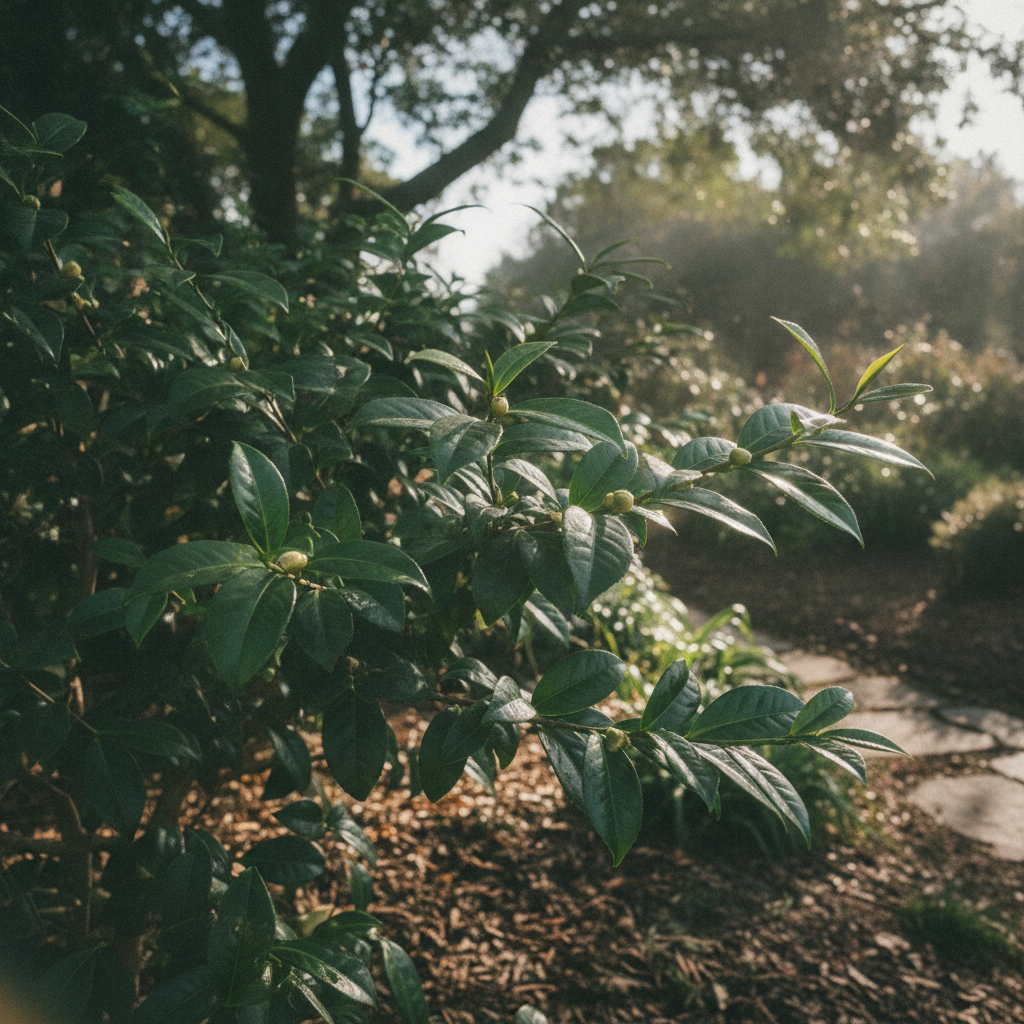
Camellia sinensis is an evergreen shrub native to East Asia. Two main varieties are cultivated worldwide.
Camellia sinensis var. sinensis is the Chinese variety. Its smaller leaves are more cold-hardy and better suited to producing green, white, and oolong teas. It is grown in China, Taiwan, Japan, and at higher elevations in countries like Nepal and Darjeeling India.
Camellia sinensis var. assamica is the Assam variety. Its larger leaves are more vigorous, and higher in tannins. It is predominantly used for black tea production and grown in Assam, Sri Lanka, Kenya, and other tropical regions.
Tea plants are kept as waist-height bushes through regular pruning, but left unpruned they can grow into trees 15 meters tall. The best tea comes from the youngest growth—the bud and first two leaves at the tip of each branch. These young leaves are bright green, slightly downy, and packed with the amino acids and volatile compounds that make great tea possible.
Step 1: Picking
Picking determines quality from the start. The "two leaves and a bud" standard is the benchmark for premium tea. The bud is covered in fine white hairs. The first leaf is tender, slightly rolled; the second slightly broader. Larger, coarser leaves produce rougher, less complex tea.
Hand-picking allows selective harvesting of only the youngest, most tender growth. Machine harvesting is faster but less discriminating—it collects everything at a uniform height, including older leaves and stems. For high-grade tea, there is no substitute for skilled hands.
Season matters too. Spring harvests (first flush) produce the most delicate, complex teas because the plant has stored energy through winter and pushes it into new growth. Summer harvests are bolder. Autumn harvests are mellower.
Step 2: Withering
Fresh tea leaves contain about 75% water. Withering reduces this to 55-65% by spreading the leaves on troughs or racks and allowing moisture to evaporate, either naturally (outdoors or in well-ventilated rooms) or with the aid of fans and warm air. As moisture leaves, the leaves go limp and lose their snap—you can bend a properly withered leaf without it breaking.
Physically, withering makes the leaves pliable enough to roll without shattering. Chemically, it does much more. As cells begin to dehydrate, chlorophyll starts breaking down and the grassy, raw scent gives way to something more floral, almost honey-like in some varieties. Proteins break down into free amino acids. Enzyme activity increases. Aromatic compounds that were locked in the cell structure begin to concentrate and transform.
The weight loss is significant and measurable. Leaves typically lose 30-45% of their fresh weight during withering. Producers monitor this carefully because the degree of wither influences everything that follows—how the leaf rolls, how quickly it oxidizes, and what flavor compounds survive into the final cup.
White tea may be withered for 24-72 hours, which is the majority of its processing. Black tea withering typically takes 12-18 hours, after which the leaves smell slightly sweet and feel like soft, damp cloth.
Step 3: Fixing (Kill-Green)
Fixing stops oxidation by deactivating the leaf enzymes with heat. This step defines green tea—it happens immediately after withering (or even instead of withering for some Japanese greens). The goal is simple: apply enough heat, fast enough, to denature the polyphenol oxidase enzyme before it converts catechins into the darker compounds that color black tea.
The method used here has a lasting effect on flavor. Three main approaches exist.
Pan-firing is the Chinese method. Leaves are tossed continuously in a hot wok or tumbling drum at 200-300°C. The dry heat creates toasty, roasted notes alongside the green base. Think of the characteristic nuttiness in a good Longjing—that is pan-firing. The leaves emerge slightly flat, with occasional small brown specks where they made contact with the metal.
Steaming is the Japanese method. Leaves pass through a chamber of steam at 100°C for 30-120 seconds. Steaming is gentler and preserves more chlorophyll, which gives Japanese greens their vivid color and intensely vegetal, seaweed-like character. A Sencha steamed for 40 seconds and one steamed for 90 seconds will taste noticeably different even before any other processing step.
Oven or hot-air drying is used less commonly, primarily for some Chinese teas and for white tea. Lower temperatures over longer periods create a softer fix, preserving delicate florals without adding roast character.
Black tea skips this step entirely, or delays it until after full oxidation. Oolong tea applies it partway through oxidation, stopping the process at a chosen point.
Step 4: Rolling
Rolling shapes the leaf and breaks cell walls, which releases the juices and enzymes that drive oxidation and flavor development. The degree of cell damage controls how fast oxidation proceeds—more damage means faster, more intense oxidation.
Traditional hand rolling is skilled, slow work. The processor rolls small batches of leaves against a bamboo mat or flat surface using the palms, applying steady pressure in a consistent direction. This creates the characteristic tight spirals you see in hand-rolled teas. The leaves feel warm from the friction, and the room fills with the sharp scent of broken cells releasing their contents.
Modern factories use rolling machines, which replicate the motion mechanically. A rotating pressure plate moves in an eccentric orbit over a ribbed base. The ribbed surface tears and twists the leaves while the pressure plate controls how hard they are pressed. Speed and pressure are adjustable—softer rolling for delicate teas, harder rolling for full-bodied black teas that need thorough cell disruption.
For green tea, rolling after fixing simply shapes the leaf—flat, curled, or pellet-shaped—without triggering further oxidation, since the enzymes are already deactivated. For black and oolong teas, rolling before or during oxidation is critical, because the cell damage is what enables the oxidation process to proceed.
CTC vs Orthodox Processing
Orthodox processing—the step-by-step sequence described above—produces the full-leaf and broken-leaf grades that most specialty tea buyers are familiar with. The leaves retain some structural integrity through rolling, and the result is a tea with complexity, layered flavor, and capacity for multiple infusions.
CTC stands for Cut, Tear, Curl. Developed in the 1930s and widely adopted in Assam and Kenya from the 1950s onwards, CTC uses a machine with two counter-rotating rollers covered in sharp teeth. The leaves pass between them and are simultaneously cut, torn, and curled into small, uniform pellets in a single pass. The cell structure is completely destroyed, not gently broken.
The result is a tea that oxidizes very rapidly (minutes rather than hours), produces a very strong, uniform liquor, and infuses almost immediately. CTC teas are designed for tea bags and for consumers who want a consistent, bold brew—strong enough to carry milk, predictable from cup to cup. There is nothing inferior about CTC as a product category; it serves its purpose well. But it is a fundamentally different manufacturing philosophy from orthodox. The teas are not interchangeable, and the flavor profiles have almost nothing in common.
The specialty black teas we source—whether a muscatel Darjeeling, an artisan Assam, or a Keemun from Qimen—are all orthodox processed. This is what gives them the structure and nuance that make them worth drinking without milk.
Step 5: Oxidation
Oxidation is the chemical reaction between the leaf's enzymes and oxygen in the air. It is the single most important process in determining tea type, and controlling it is the central skill of black tea production.
After rolling, the broken-leaf mass is spread in thin layers in the oxidation room. Temperature and humidity here are carefully managed. Ideal conditions are typically 22-26°C with humidity above 90%. Too warm, and oxidation races through—the tea turns harsh and thin. Too cool, and it stalls, producing uneven results. The leaves need to breathe but not dry out, so oxidation rooms are often misted, and the leaf is spread no more than 5-10 cm deep to allow air circulation.
The color change is visible in real time. Freshly rolled leaves are bright green and smell sharply vegetal. After 30 minutes they begin turning copper at the edges. After an hour the surface is reddish-brown. After two hours the mass is dark orange-brown throughout, and the smell has shifted from green and grassy to something deeper: malty, fruity, floral depending on the variety. The processor checks periodically, pressing a handful to the nose, judging by color and scent when to call the oxidation done.
White tea: 5-10% oxidation (natural, uncontrolled)
Green tea: 0-5% oxidation (prevented by fixing)
Oolong tea: 15-85% oxidation (carefully controlled and stopped at the desired level)
Black tea: 90-100% oxidation (fully oxidized)
During oxidation, catechins in the leaf convert into theaflavins and thearubigins—compounds that give black tea its dark color, malty flavor, and body. The longer and more complete the oxidation, the darker and bolder the tea.
Step 6: Drying and Grading
Drying fires the tea to reduce moisture to 2-3%, halting all chemical processes and stabilizing the leaf for storage and transport. This step needs to be done correctly—under-dried tea goes moldy in weeks; over-dried tea loses fragrance and tastes flat and papery.
Methods vary. Most modern factories use hot air driers: a conveyor belt carries the tea through a tunnel at 90-120°C for 20-30 minutes. Pan drying is used for premium Chinese teas, imparting a light roast character alongside the drying effect. Sun drying is used for pu-erh maocha—the low, slow heat preserves the microorganism-friendly environment that makes future fermentation possible.
Some oolongs undergo additional roasting after drying—a separate process, not part of the initial drying step. The leaves go back into a heated container or over charcoal at lower temperatures (80-120°C) for hours or days, which adds toasty, caramel, or charcoal character. A heavily roasted Dong Ding and an unroasted version of the same tea taste entirely different.
After drying comes grading. The dried tea is sifted and sorted by particle size using a series of mesh screens. Grades describe the physical form of the leaf: Whole Leaf, Broken, Fannings, Dust—from largest to smallest. In black teas, grading is often expressed with letter codes: OP (Orange Pekoe) for whole leaf, BOP (Broken Orange Pekoe) for broken, etc. These grades say nothing about flavor quality—they describe how the leaf is cut and sized. A Dust grade from a single-estate Darjeeling can outperform an OP grade from a factory blend.
Special Case: Pu-erh
Pu-erh tea adds a seventh step: microbial fermentation. After sun-drying to produce the base material (maocha), the leaves are either aged naturally over years (sheng) or pile-fermented in a controlled process over 45-60 days (shou). In the shou process, maocha is piled up to a meter deep, moistened, covered with cloth, and allowed to heat from microbial activity. The pile is turned periodically to manage temperature and prevent overheating. This is the only tea type where living microorganisms continue to transform the leaf after production.
From Leaf to Cup
Understanding how tea is made changes how you taste it. When you drink a green tea and notice its vegetal brightness, you are tasting the effect of steaming fix. When a pan-fired Chinese green has a light nuttiness, that is the wok doing its work. When a black tea has malty depth and a copper-red liquor, that is full oxidation running to completion in a well-managed fermentation room. When an oolong shifts from floral to creamy across multiple steeps, you are experiencing the complexity that partial oxidation creates.
Every cup of tea is the result of decisions made at each processing step—when to pick, how long to wither, whether to steam or pan-fire, how hard to roll, when to call oxidation done, how to dry and grade. The best teas are the ones where every step was handled with skill and intention, and where the person making the decisions had enough knowledge and enough respect for the leaf to know when to intervene and when to leave well enough alone.
Lämna en kommentar
Kommentarer granskas innan de visas.
Mer i Valley of Tea Blog | Tea Guides, Origins & Brewing Tips
The Complete Guide to Drinking Tea
What tea is, how the main types differ in the cup, and how to brew each one properly. Water temperature, steeping times, storage and how to get more than one cup from your leaves.
Läs mer
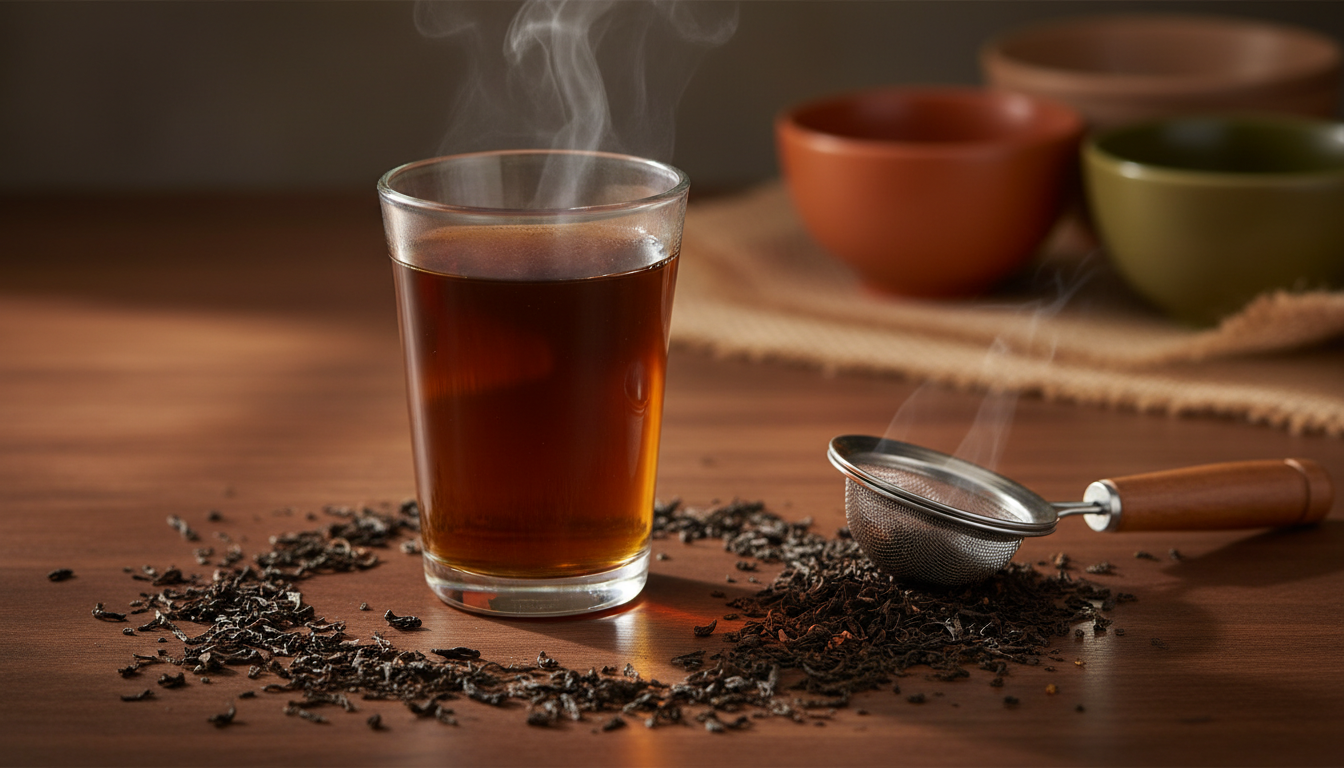

Black Tea: Types, Processing, and How to Brew It
Black tea is fully oxidized Camellia sinensis. Compare Assam, Darjeeling, Keemun, and Ceylon varieties. Learn processing, brewing, and caffeine levels.

How To Grow Black Tea
Learn how to grow black tea at home: soil, climate, and the five processing steps from fresh leaf to a finished cup of black tea.

Visdom är vägen till bättre te.
Få vår kostnadsfria bryggguide: rätt vatten, temperatur och dragtid för varje te vi säljer. Du får också veta först när nya skördar kommer in.
Ingen skräppost. Avsluta när du vill.
Kolla din inkorg.
Guiden är på väg.