













Cranberry: Origin, Flavour, Uses and How to Buy Quality
Cranberry (Vaccinium macrocarpon) is a small, fiercely tart red berry native to the bogs of North America, and it's one of the few fruits that is nearly inedible straight off the vine. Raw, the berry carries so much tannin and organic acid that a single bite puckers the whole mouth. I tasted a genuinely fresh cranberry for the first time on a sourcing trip, and it explained immediately why almost nobody eats them raw.

Most people meet cranberry in one of three commercial forms: dried, juiced, or as a concentrated extract. Dried cranberry is by far the most widely available format worldwide and the most practical for everyday use, which is why we work with it most at Valley of Tea, in tea blends and culinary mixes alike. This guide covers where cranberry comes from, what it actually tastes like in each form, how to brew it as a tisane, how to handle the cautions that come with concentrated forms, and how to spot a good bag of dried cranberry versus a mediocre one.
What Is a Cranberry? Botanical and Historical Background
A cranberry is the tart red fruit of Vaccinium macrocarpon, a low-growing plant in the heather family native to North American peat bogs. It's been part of Indigenous diets and culture for over 12,000 years, and commercial cultivation began in Massachusetts in 1816 using a flooding harvest technique still used today.
Vaccinium macrocarpon belongs to the heather family, Ericaceae, alongside blueberries, bilberries, and lingonberries. Cranberry sits at the tart extreme of that family: higher in tannins and organic acids than its relatives, which is why it needs sweetening or cooking before most people find it palatable.
Commercial cultivation is demanding. Cranberry vines need acidic, sandy, peat-bog soil with a pH between 4.0 and 5.5, a reliable water source for flooding the beds, and a climate with clearly defined seasons. Growers flood the bogs at harvest time; ripe berries contain small air pockets that make them float, so a flooded field turns into a carpet of red that workers simply skim off the surface. This wet-harvest method is the image most people picture when they think of cranberry farming.
The plant is indigenous to North America, and Native peoples used it for thousands of years before European contact. The Wampanoag of southeastern Massachusetts called wild cranberries sasumuneash and had harvested them for an estimated 12,000 years, eating some fresh and drying others into pemmican, a dense mix of dried meat, fat, and berries that kept for months. The Algonquin word ibimi, meaning bitter or sour berry, predates the Dutch settlers' "cranbeere," a name most historians trace to the flower's resemblance to a sandhill crane's head.
According to widely repeated cranberry-industry histories, commercial growing dates to 1816 in Dennis, Massachusetts, when farmer Henry Hall noticed wild cranberries grew better after windblown sand settled over the vines. He began transplanting vines and spreading sand deliberately, and the technique spread across Cape Cod within a generation. US growers now harvest roughly 40,000 acres of cranberry a year, still concentrated in the bog regions that made the crop possible two centuries ago.
Cranberry Flavour Profile: What to Expect
Fresh cranberry is intensely tart, astringent, and only mildly bitter, with almost no natural sweetness; virtually nobody eats it raw. Dried cranberry, sweetened with sugar or apple juice, keeps that characteristic sourness but makes it approachable. Commercial cranberry juice is usually diluted with apple or grape juice; pure cranberry juice is bracingly tart.
The tartness in fresh cranberry comes mainly from malic and citric acid, and the astringency comes from a high tannin content, the same compound family that makes an under-ripe persimmon or a strong black tea pucker the mouth. There's no meaningful sugar in the raw berry to balance any of it, which is why fresh cranberry sauce recipes almost always call for a full cup of sugar per pound of fruit.
Dried cranberry changes the balance without erasing the character. Producers typically sweeten with cane sugar, apple juice concentrate, or occasionally a blend, and the drying process concentrates both the sugar and the remaining acidity, so a good dried cranberry still snaps with tartness even though it's sweet enough to eat by the handful. We taste this contrast constantly when sourcing: a batch that's too sweet has lost the fruit's identity, and a batch that's too sour hasn't been processed with enough care.
Cranberry is often compared to its European relative, lingonberry (Vaccinium vitis-idaea), which shares the genus but not the species: lingonberry is milder, less astringent, and slightly more floral. If a recipe or blend calls for cranberry's specific sharpness, lingonberry is a close but not identical substitute.
Cranberry Tea: How to Make and What It Tastes Like
Steep 1 to 1.5 tablespoons of dried cranberries in 300ml water at 90°C for 12 to 15 minutes; don't boil, or the tannins turn the cup bitter. The result is a clear ruby-pink liquid with mild tartness, a subtle floral note, and a clean finish: less sweet than hibiscus, less sharp than pure cranberry juice.
Boiling is the single most common mistake. Cranberry skins hold most of the tannin, and once water hits a rolling boil, it strips that tannin out fast, turning a pleasant tisane into something closer to mouthwash. Ninety degrees and a patient 12 to 15 minute steep pull the colour and flavour out gradually without the harshness.
Cranberry blends well because its tartness is a workhorse flavour rather than a dominant one. Hibiscus deepens the berry character and adds colour; cinnamon brings warmth that rounds out the sharp edges; rose hip layers in a complementary, slightly different tartness; ginger cuts through the fruit with heat. I've described our Egyptian hibiscus in tasting notes as cranberry-tart: lemon-sour, berry-rich, a full sweet-sour profile, and that overlap is exactly why the two work so well side by side in a cup.
Cranberry also shows up as an accent in green tea (Camellia sinensis) blends, paired with fruit like mango, where it contributes a drying, slightly astringent finish against the sweeter fruit notes rather than carrying the cup on its own. Most commercial cranberry tisane recipes lean on added sugar to make the tartness palatable; getting the temperature and steep time right removes most of that need.
Cranberry Beyond the Cup: Extracts and Cautions
Cranberry is sold as dried fruit, juice and concentrated extract, and the three are very different products. Extracts are made to a set compound dose, which a cup of tea or a handful of dried fruit does not match, and cranberry in any form is not a treatment for any diagnosed condition.
Advice about concentrated extracts therefore doesn't translate directly to tea or dried fruit. In my experience judging supplier samples for tannin and acidity, that doesn't change how we buy: we're selecting for flavour, and nothing else.
Cranberry is also rich in tannins and other polyphenols, which is what gives it its pucker and its deep red colour. Read that as a description of flavour and colour, nothing more.
One caution: concentrated cranberry juice or extract has been linked to interactions with the blood-thinning drug warfarin, potentially affecting clotting measurements. Anyone on anticoagulants should check with their doctor before making concentrated cranberry products a regular habit, and anyone with a diagnosed urinary condition should talk to a healthcare provider. Cranberry is a food, not a substitute for medical care.
How to Buy Good Quality Dried Cranberry
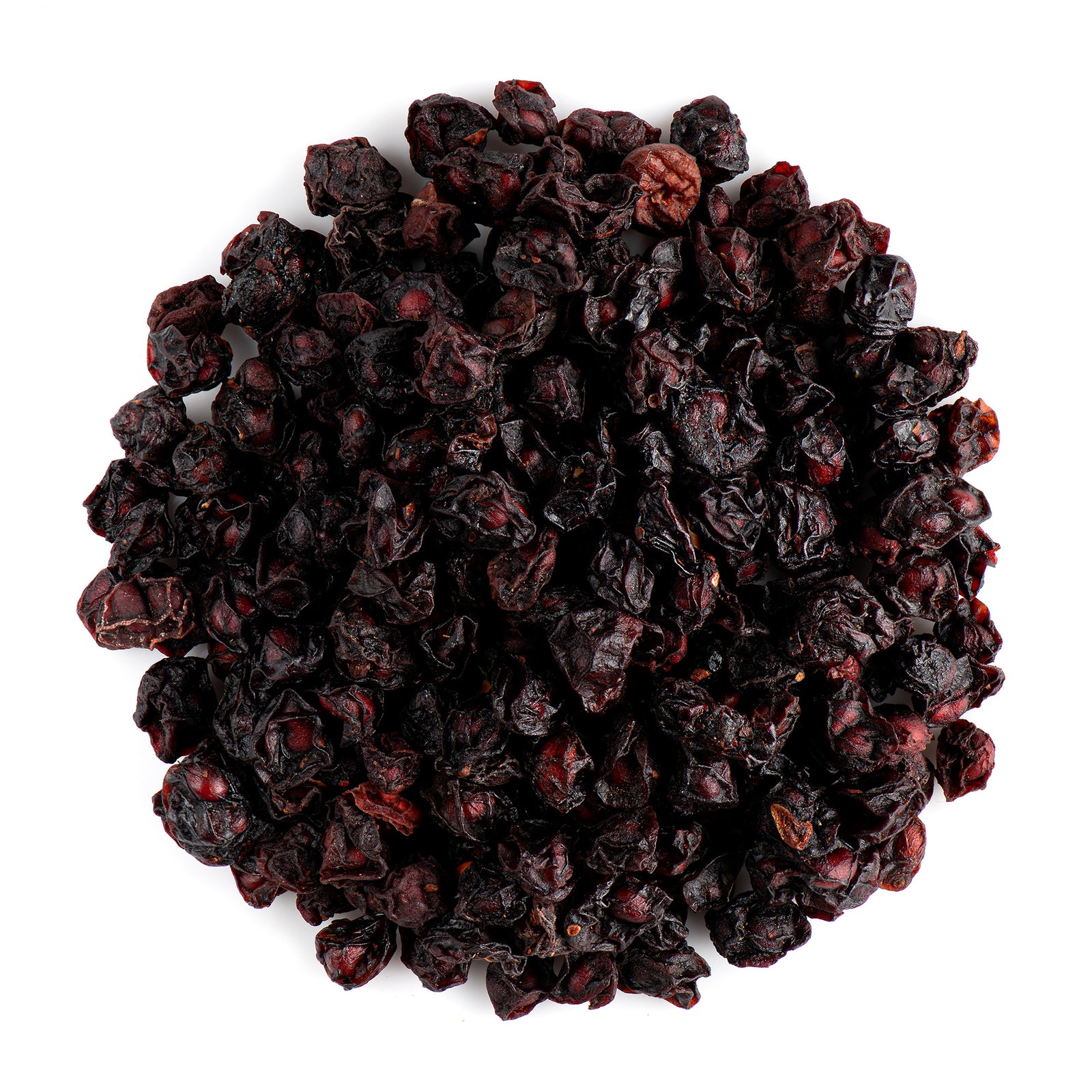
Check three things on a bag of dried cranberry: the sweetener (apple juice concentrate over corn syrup), the colour (deep, even red to dark red, not pale or brown), and the texture (plump and slightly chewy, not rock-hard or overly sticky). Any one of these off signals old stock or careless processing.
Sweetener matters more than most labels let on. High-fructose corn syrup and glucose-fructose syrup are cheaper and blunter, masking cranberry's natural tartness rather than balancing it. Apple juice or apple juice concentrate does the same job with a cleaner, less processed flavour, and it's what we look for first when we're vetting a new supplier.
Colour tells you about freshness and processing quality faster than anything else. A deep, even red to near-black red means the berries were harvested ripe and dried without excessive heat. Pale, brownish, or patchy colouring usually means the batch sat too long before processing, or was dried at too high a temperature, which also strips flavour.
Texture is the tiebreaker. Good dried cranberry is plump and slightly chewy, similar to a raisin but firmer. Rock-hard pieces were dried too aggressively and lose both moisture and flavour in the process; overly sticky, clumped berries usually mean too much added syrup was used to bulk up the weight. Most commercial supply, whether from the US or Canada, comes from wet-harvested berries: the flotation method used at harvest bruises the fruit slightly, which is exactly why the drying and sweetening process matters so much for the final texture and flavour.
Cranberry earns its place in a pantry for one reason: an intensely tart, polyphenol-dense flavour that nothing else quite replicates. Blueberries are sweeter, lingonberries are milder, and hibiscus gets you partway there with a different acid profile. If you want that specific cranberry snap, whether in a tisane, a trail mix, or a batch of muffins, you're buying a genuinely distinct ingredient, not swapping in a generic tart red berry. That distinctiveness is the real reason cranberry keeps showing up in kitchens and tea blends worldwide.
Drying concentrates more than flavour. Removing water raises the relative concentration of fibre and minerals compared with fresh fruit, which is part of why a small handful goes further than the equivalent amount of fresh cranberry would. That's a reason to treat dried cranberry as a genuine ingredient worth choosing carefully, not just a sweet snack that happens to be red.
The buying guidance is worth repeating because it catches most quality problems before you've even opened the bag. Check that the sweetener is apple juice rather than corn syrup or glucose-fructose syrup. Look for deep, even red to dark red colour rather than pale, brown, or patchy. Feel for a plump, slightly chewy texture rather than rock-hard or overly sticky. Any one of those three signals tells you more about a bag of dried cranberry than the marketing copy on the front usually does.
We stock dried cranberry at Valley of Tea because it earns its place across several uses at once: brewed alone as a ruby-pink tisane, blended into fruit and hibiscus infusions, folded into baking, or eaten straight from a trail mix. Whichever way you use it, dried cranberry rewards buying from someone who actually tastes their stock before it ships, rather than someone repackaging a commodity bag. My own rule when sourcing is simple: find a supplier who's straightforward about the sweetener, taste a sample before committing to a bag size, and store the finished product somewhere cool, dark, and dry.
If you're brewing cranberry tea for the first time, start with the ratio and steep time covered earlier in this guide, then adjust the strength to your own taste. It's a forgiving tisane to work with, and once you've had a properly brewed cup, the gap between a well-sourced cranberry and a mediocre one becomes obvious fast. That's the whole point of buying cranberry deliberately in the first place.
Teas Featured in This Article


Leave a comment
Comments will be approved before showing up.
Also in Valley of Tea Blog | Tea Guides, Origins & Brewing Tips

Rooibos Iced Tea: Caffeine-Free Refresher
Learn to make rooibos iced tea two ways: hot-brewed over ice in 15 minutes, or a smoother overnight cold brew, plus flavour additions and storage tips.

Spice Cabinet Organization: A Practical System That Works
Learn how to organize your spice cabinet with a practical system that keeps every jar findable and fresh. Temperature, layout, and audit tips included.

Maca or Ashwagandha for Your Daily Routine
Choosing between maca or ashwagandha? Learn how each root tastes, when to use them, and the best ways to prepare each in tea or drinks.

Wisdom is the path to better tea.
Get our free brewing guide: the right water, heat and timing for every tea we sell. You will also hear it first when new harvests arrive.
No spam. Unsubscribe any time.
Check your inbox.
The guide is on its way.