












Dandelion Herbal Tea From Root and Leaf
Dandelion herbal tea covers two distinct drinks made from the same plant: a roasted root that pours dark and tastes close to coffee, and a dried leaf that steeps pale green and grassy. Both come from Taraxacum officinale, the same yellow-flowered weed that colonises lawns across Europe every spring, and neither part carries any caffeine.

I've stocked dandelion root and leaf as separate products for years, not as one blend, because the two genuinely taste nothing alike. Customers who expect a single flavour from "dandelion tea" are often surprised the first time they try both side by side. The plant itself grows almost anywhere, but timing matters: leaves are picked young in spring before the plant flowers, when the bitterness is mildest, and roots are dug in autumn, once the plant has spent a full growing season storing inulin below ground.
This post covers what each part is, how they differ in the cup, how to brew them properly, and what to look for when you buy.
What Dandelion Herbal Tea Actually Is
Dandelion herbal tea, in the sense retailers use the term, is any infusion or decoction made from Taraxacum officinale, the yellow-flowered plant most people know as a lawn weed. It isn't tea in the strict sense: it contains no Camellia sinensis, so there's no botanical relation to green, black, or oolong beyond the shared word "tea" in English.
Dandelion sits in the Asteraceae family, the same family as chicory and burdock, and also ragweed and daisies. That matters for anyone with a known Asteraceae allergy: cross-reactivity between these plants is well recognised in allergy literature, and it's worth checking with a doctor before drinking dandelion tea regularly if ragweed or daisies have ever caused you a reaction.
The root and the leaf are processed differently, and that processing is most of what separates the two drinks. Root is dug, washed, and dried at a gentle 40–50°C to preserve its structure, then roasted to develop the bitter-sweet, toasted character that makes it a plausible coffee stand-in. Unroasted root exists too, and tastes closer to a soft herbal infusion: still earthy, but without the roast.
Leaf is simpler: picked before the plant flowers, when the leaves are at their mildest, then air-dried. Leaves picked later in the season, once the plant has flowered, turn noticeably sharper and more bitter, which is why quality suppliers harvest early.
Both parts are naturally caffeine-free, and a cup of roasted root carries 0 mg. Root is a source of inulin, a soluble fibre, along with potassium; leaf brings its own mineral content, though the profile differs from the root's.
Root Versus Leaf In the Cup
Roasted dandelion root brews a deep amber, almost mahogany liquor with a toasted, nutty character and a bitter edge that softens as it cools. It's the closest a caffeine-free plant gets to coffee, not because the flavours are identical, but because roasting produces the same class of browning compounds that give coffee its depth.
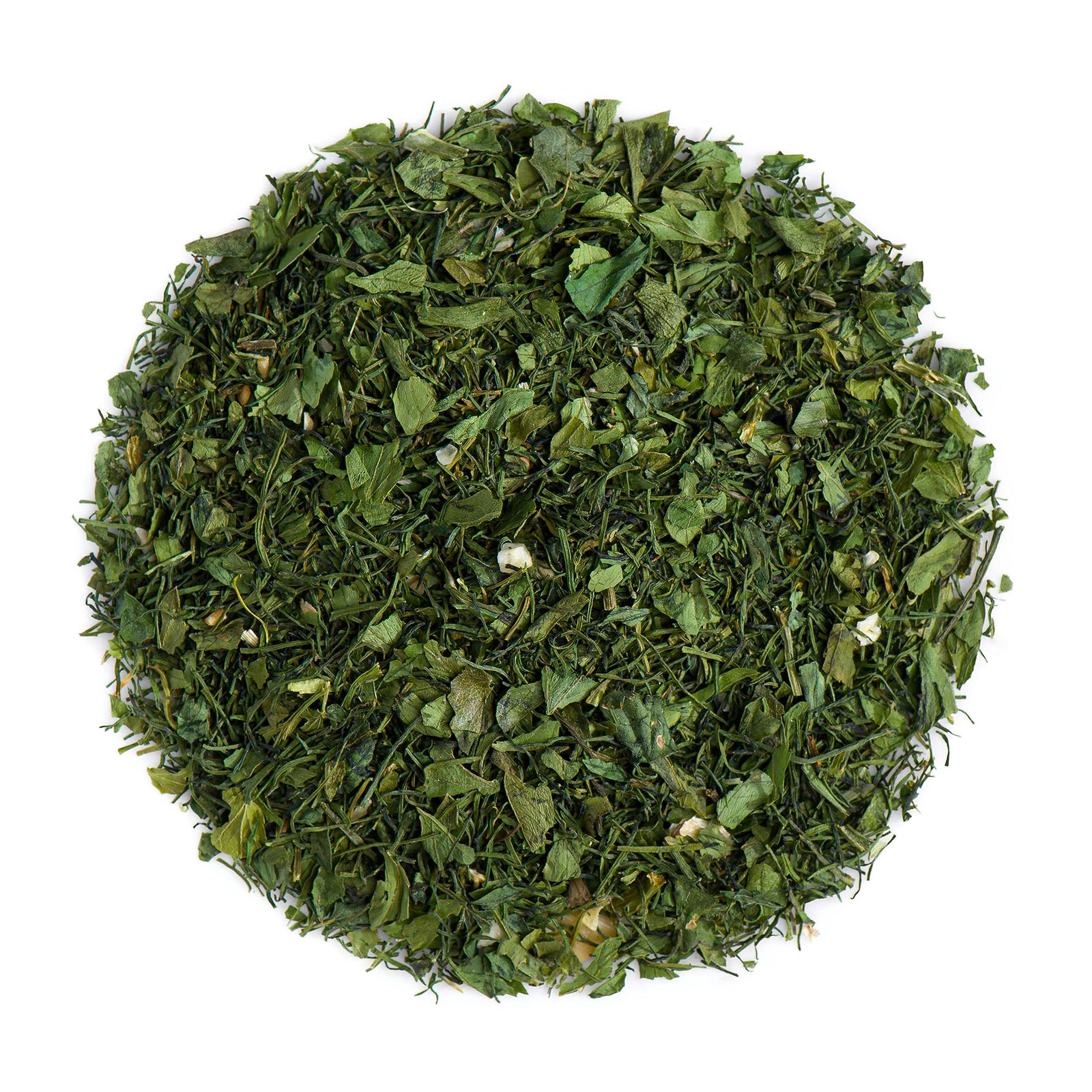
Dried leaf is a different drink entirely: pale yellow-green in the cup, vegetal and grassy, with a mild bitterness closer to a hearty green herb than to coffee.
In my own tasting, roasted root gives a whole, rounded flavour that stands in for coffee reasonably well, closer than anything else I've tasted from a caffeine-free plant. That's my genuine verdict, not marketing copy. Unroasted root is softer, more like a mild herbal infusion that reminds you of coffee without quite getting there. Leaf doesn't attempt the coffee comparison at all: it reads as a robust green herbal tea, closer in spirit to nettle than to anything roasted.
Blends of root and leaf exist, and they do split the difference, but at the cost of diluting the root's coffee-like body. Dandelion root and chicory root together are the classic pairing for a convincing caffeine-free coffee substitute: more chicory sharpens the cup, more dandelion smooths it out.
Root suits autumn and winter drinking, dark, warming, and substantial. Leaf works better as a lighter spring cup, particularly once fresh spring-picked stock is available. Which one is "better" comes down entirely to what you're replacing: a coffee habit, or a lighter grassy herbal tea.
How To Brew Dandelion Root and Leaf
Roasted dandelion root needs more than a quick steep. Because it's a dense root material rather than a leaf, it extracts better with a short simmer than a straight infusion. Use 1–2 tsp of roasted root per cup, cover with just-boiled water at 100°C, and simmer gently for 8–10 minutes to pull the full body and colour out of the root.
A root tea that's only steeped for four or five minutes tastes thin and misses the toasted depth that makes it worth drinking in the first place.
Dried leaf is the opposite: delicate, and it steeps fast. Use 1 tsp per cup, water at 90–95°C, just off the boil, and steep for 4–5 minutes. Push past that and the leaf turns harsh and noticeably more bitter; it doesn't reward long steeping the way root does.
As a starting ratio for either part, 2–3 g per 250 ml is a reasonable baseline; adjust to taste from there. Root drinkers who want something closer to a strong coffee tend to go toward the higher end. Whichever you're brewing, keep the cup or pot covered while it steeps or simmers. It holds the heat steady and keeps the aromatic compounds in the liquid instead of escaping with the steam, which matters more for leaf than for root, since leaf's flavour is more volatile.
The most common mistake is treating both parts the same way. Infusing root for five minutes the way you would a leaf produces a weak, flat cup, while simmering leaf for ten minutes the way you would root turns it bitter and grassy in an unpleasant direction. Treat them as two different brews from the start and the results are far more consistent.
Buying and Storing Loose Dandelion Tea
Buy loose root or loose leaf rather than teabags. Loose material lets you actually see and smell what you're getting: whole or coarsely cut root pieces, or whole dried leaf, rather than the fine, often powdered fannings that go into bags. Powdered material oxidises faster because more surface area is exposed to air, so it dulls in flavour and aroma sooner than coarser cuts.
I've passed on batches of dandelion root that smelled off or musty rather than that clean, slightly bitter root aroma you want. Colour is the other tell: a properly dried batch dries to a consistent brown tone, and if it's patchy, or the smell is flat instead of toasty, I don't take the lot. That's the standard every new batch gets checked against before it goes into stock.
Smell is the fastest quality check for roasted root. A good batch smells toasty and a little sweet, close to fresh-roasted coffee beans, even before you brew it. If a sample smells flat, dusty, or barely toasted at all, it's either stale stock that's lost its aromatics, or root that was under-roasted to begin with, and it will brew thin no matter how long you simmer it.
Dandelion root has a specific European history worth knowing if you're buying it for the coffee-substitute angle. We source our root from Poland; there are plenty of good farmers there, but that's the relationship we've built over time. That wartime tradition, roasted dandelion root used as a coffee stand-in during shortages, came through directly from those sourcing relationships rather than something we read afterward: suppliers explaining why dandelion root still has a following in parts of Europe, a reminder that a lot of what we now call herbal tea started as necessity rather than choice.
We carry the plant across four separate products, raw root, root powder, roasted root, and leaf, rather than one pre-made blend, because root and leaf serve such different purposes that bundling them would mean compromising both. Roasted root is consistently the one customers reach for as an actual coffee substitute; among our root teas generally, dandelion sits behind only ginger and turmeric in sales, ahead of ashwagandha and ginseng.
One more buying note: resist the cheapest powdered root you find online. It brews cloudy and bitter fast, with none of the graduated toasted notes you get from coarser pieces, and it's the format most likely to have been sitting in a warehouse for a long stretch before it reaches you. Coarse-cut or whole root costs a little more per gram, but it keeps its aroma longer and gives you far more control over strength, since you can simmer it briefly for a lighter cup or longer for something closer to strong coffee.
For storage, keep either root or leaf in an airtight tin, away from light and heat: a kitchen cupboard beats a shelf near the stove or a window. Dried leaf holds its colour and much of its aroma for about 12 months stored this way; after that it doesn't spoil so much as fade, turning duller in both look and flavour. Root, being denser, tends to hold up a little longer than leaf, but the same airtight, dark, cool storage rule applies to both.
Frequently Asked Questions About Dandelion Herbal Tea
Does dandelion herbal tea contain caffeine?
No. Neither roasted root nor dried leaf contains any caffeine; it comes from an entirely different plant to Camellia sinensis, the source of all true tea.
Who should check before drinking it?
Dandelion leaf has a long history in European herbal tea traditions. If you take prescription diuretics or other fluid-balance medication, talk to your doctor before drinking dandelion leaf tea regularly, since the combination hasn't been well studied. Anyone with gallstones or a bile-duct condition should check with a doctor before drinking dandelion root, for the same reason.
Can you forage your own dandelion?
Yes, in principle, since the plant is genuinely everywhere. But only forage from ground you're confident is free of pesticide spray, road runoff, and areas where pets are regularly walked. Roadside verges and treated lawns are common contamination sources. A few look-alike plants, cat's ear, hawkweed, sow thistle, can be mistaken for dandelion, so learn to identify the smooth, hairless, single-stemmed leaf rosette before picking anything to drink.
Root or leaf for a coffee alternative?
Roasted root, without much competition. Its dark colour, toasted aroma, and body get closer to a coffee replacement than leaf ever will.
Choosing Between Root and Leaf
Dandelion herbal tea isn't one drink, it's two, made from the same plant. Roasted root gives you a dark, toasted, genuinely convincing coffee substitute with zero caffeine. Dried leaf gives you a lighter, grassy, mildly bitter herbal cup that has nothing to do with coffee at all. Treating them as interchangeable is the fastest way to be disappointed by either one.
The choice comes down to what you actually want from the cup. If you're cutting back on coffee and want something with real body and toasted depth to replace your morning habit, roasted root, simmered properly rather than just steeped, is the closer match. If you want a light, caffeine-free herbal tea in the vegetal, grassy direction, dried leaf, harvested young and brewed briefly, is the better fit. Season plays a role too: root suits the colder months, leaf suits spring, though that's a preference rather than a rule.
Whichever part you choose, brew it at its own temperature and time rather than borrowing the other's method, and buy loose, coarsely cut material over powder so you can see and smell what you're getting. I keep both root and leaf on hand for exactly this reason: they're not substitutes for each other, they're two different answers to two different questions. If you're new to dandelion herbal tea, buy a small quantity of each rather than committing to a large bag of one; the two are different enough that most people end up with a clear favourite once they've tried both side by side, and that small test costs far less than guessing wrong on a full bag.
Leave a comment
Comments will be approved before showing up.
Also in Valley of Tea Blog | Tea Guides, Origins & Brewing Tips

Rooibos Iced Tea: Caffeine-Free Refresher
Learn to make rooibos iced tea two ways: hot-brewed over ice in 15 minutes, or a smoother overnight cold brew, plus flavour additions and storage tips.

Spice Cabinet Organization: A Practical System That Works
Learn how to organize your spice cabinet with a practical system that keeps every jar findable and fresh. Temperature, layout, and audit tips included.

Maca or Ashwagandha for Your Daily Routine
Choosing between maca or ashwagandha? Learn how each root tastes, when to use them, and the best ways to prepare each in tea or drinks.

Wisdom is the path to better tea.
Get our free brewing guide: the right water, heat and timing for every tea we sell. You will also hear it first when new harvests arrive.
No spam. Unsubscribe any time.
Check your inbox.
The guide is on its way.