













Red Rooibos Tea
Red rooibos tea is the form of rooibos most people know: the oxidized, fermented version of the Aspalathus linearis shrub that grows exclusively in the Cederberg mountains of South Africa. It accounts for the vast majority of global rooibos production and is one of the most widely consumed herbal infusions globally. That scale is not accidental: red rooibos is caffeine free, naturally sweet, and nearly impossible to brew badly.

If you are trying to understand what you are buying when you pick up a pack labeled "rooibos" or "red bush tea," this is where to start.
What Makes Rooibos 'Red'? The Oxidation Process
Red rooibos gets its colour from a controlled oxidation process applied after harvesting. The freshly cut Aspalathus linearis needles start green; the red colour develops entirely through processing, not genetics.

After harvest, the plant material is bruised by rolling or cutting, then formed into heaps and left to oxidize for 8 to 12 hours. During this window, polyphenol oxidase enzymes convert aspalathin (rooibos's signature compound) into browned, polymeric compounds. The same class of reactions browns cut apples and, more relevantly, oxidizes tea leaves in black tea production. The mechanism is analogous: enzymatic browning triggered by cell wall damage and oxygen exposure.
Temperature and moisture in the oxidation heap are the key process variables. Higher temperatures accelerate the reaction and produce a deeper red colour; lower moisture slows it. The result directly shapes the cup: more complete oxidation means sweeter, fuller flavour with a richer mahogany brew colour. Less complete oxidation produces a lighter, more grassy profile, the starting point for what becomes green rooibos.
One practical implication: the depth of red in dry rooibos leaf is a rough indicator of oxidation level and expected sweetness. Well oxidized lots tend toward dark, even reddish brown colour throughout the needle cuts. Uneven lots may show mixed green and red coloration, a sign of inconsistent heap conditions during processing.
Flavour Profile: What Does Red Rooibos Taste Like?
Red rooibos has a naturally sweet flavour with vanilla caramel undertones, a mild earthiness, and no bitterness at any steep time.

The sweetness is not added: it is a direct product of oxidation. The browning reactions that create the red colour also produce sweet aromatic compounds, the same chemistry that gives roasted foods their characteristic warmth. You get a gentle caramel note, sometimes a faint vanilla quality, and in certain well oxidized lots a hint of dried fruit. The earthy, slightly woody base note is characteristic of the plant itself and remains consistent across origins.
What sets red rooibos apart from most common hot beverages is the complete absence of bitterness. Black tea, green tea, coffee, and even many herbal infusions contain compounds that turn sharp if you steep too long. Red rooibos does not: tannin levels are low, and the oxidation products are not astringent.
This makes it genuinely forgiving. Five minutes or twenty minutes in the pot, the cup remains smooth and approachable.
The "slightly nutty" descriptor that appears on many rooibos product pages is accurate for some batches, particularly those from older, established bushes where the woody character of the stem material is more pronounced.
In my experience selling herbal teas, red rooibos generates fewer complaints than almost any other category. The absence of bitterness and harshness means the gap between a good cup and a mediocre cup is narrow compared to, say, green tea or white tea.
Red Rooibos vs Green Rooibos: Which Is Better?
Green rooibos skips the oxidation step entirely: the harvested material is immediately steamed or dried to halt enzymatic activity. Red and green rooibos come from the same plant; only the processing differs.

The practical differences in cup are significant. Green rooibos has a lighter, grassier, more vegetal flavour profile, closer to certain green teas than to the sweet warmth of red. It is less immediately approachable for most drinkers. Red rooibos is rounder, sweeter, and more familiar as an evening or caffeine free everyday drink.
From a compound perspective, green rooibos retains considerably more aspalathin, the dihydrochalcone that is largely converted to brown polymers during oxidation of red rooibos. Aspalathin is a compound unique to rooibos, not found in significant amounts in any other plant. That difference is one of the things that separates the two in the cup.
Green rooibos also costs more, because the rapid post harvest processing is more technically demanding and the product is more sensitive to quality deterioration if storage conditions are poor. For buyers who prefer the greener, grassier style, that additional cost is justified. For everyday drinking, most people reach for red rooibos.
The short answer: red rooibos for a forgiving, sweet daily drinker that suits almost anyone; green rooibos if you want the lighter, grassier style and do not mind a higher price point.
What Is in Red Rooibos
Red rooibos contains a range of polyphenolic compounds, and we describe them here as plant chemistry rather than as anything the tea does for you.
Quercetin and luteolin are both present in red rooibos. They also occur in many other plants, and their presence says nothing about the cup beyond its plant chemistry. We make no claims about what rooibos does in the body.
One practical point about the plant itself: red rooibos has a very low oxalic acid content. It also does not contain the tannin compounds found in black tea.
At Valley of Tea, we do not make health claims about our teas. What we can say is that rooibos is a polyphenol rich, caffeine free infusion drunk by millions of people for decades. Its plant chemistry is still being studied.
How to Get the Most from Red Rooibos Tea
Red rooibos is the simplest herbal tea to brew: use boiling water (100C), steep for 5 to 10 minutes, and do not worry about over steeping. No timer is truly necessary.
This is a deliberate starting point for anyone who finds brewing parameters confusing. Unlike green tea, where water at 75 to 80C and steep times of 2 to 3 minutes matter significantly, or black tea, where 3 to 4 minutes is a sensible limit before astringency builds, red rooibos does not punish inattentive brewing. Boiling water extracts the full flavour, and an extended steep deepens colour and intensity without adding bitterness.
Additions: Red rooibos is often consumed plain, which is where you taste the natural vanilla caramel sweetness most clearly. Some drinkers add cinnamon, vanilla, or dried orange peel, all of which complement the existing flavour profile rather than masking it. The natural sweetness means you need less added sugar than you would in a comparable cup of black tea.
Food pairings: The caramel base makes red rooibos a natural match for vanilla based desserts, rice pudding, and stone fruits. It is less successful alongside intensely tart or citrus forward foods, where the contrast becomes too wide.
Storage: Rooibos absorbs odours readily. Keep it in a sealed, airtight container away from spices, coffee, and anything strongly aromatic. A sealed tin or a tightly closed kraft bag works well. Unlike green tea, which deteriorates quickly even under good conditions, red rooibos stored correctly holds quality for 18 to 24 months.
Conclusion
Red rooibos earns its popularity honestly. No caffeine, no bitterness, a genuinely sweet flavour without any additives, and a polyphenol rich leaf that suits almost any drinker's daily cup. It comes from one specific corner of South Africa and nowhere else, a geographic exclusivity enforced by ecology rather than tradition.
If you are new to rooibos, start with a pure red rooibos rather than a flavoured blend: the base character is worth knowing before adding anything to it. In winter, it is a drink I reach for regularly in the evenings, warming and substantial, and caffeine free. Once you know what pure red rooibos tastes like, comparing it with green rooibos becomes the natural next step.
Teas Featured in This Article

Leave a comment
Comments will be approved before showing up.
Also in Valley of Tea Blog | Tea Guides, Origins & Brewing Tips
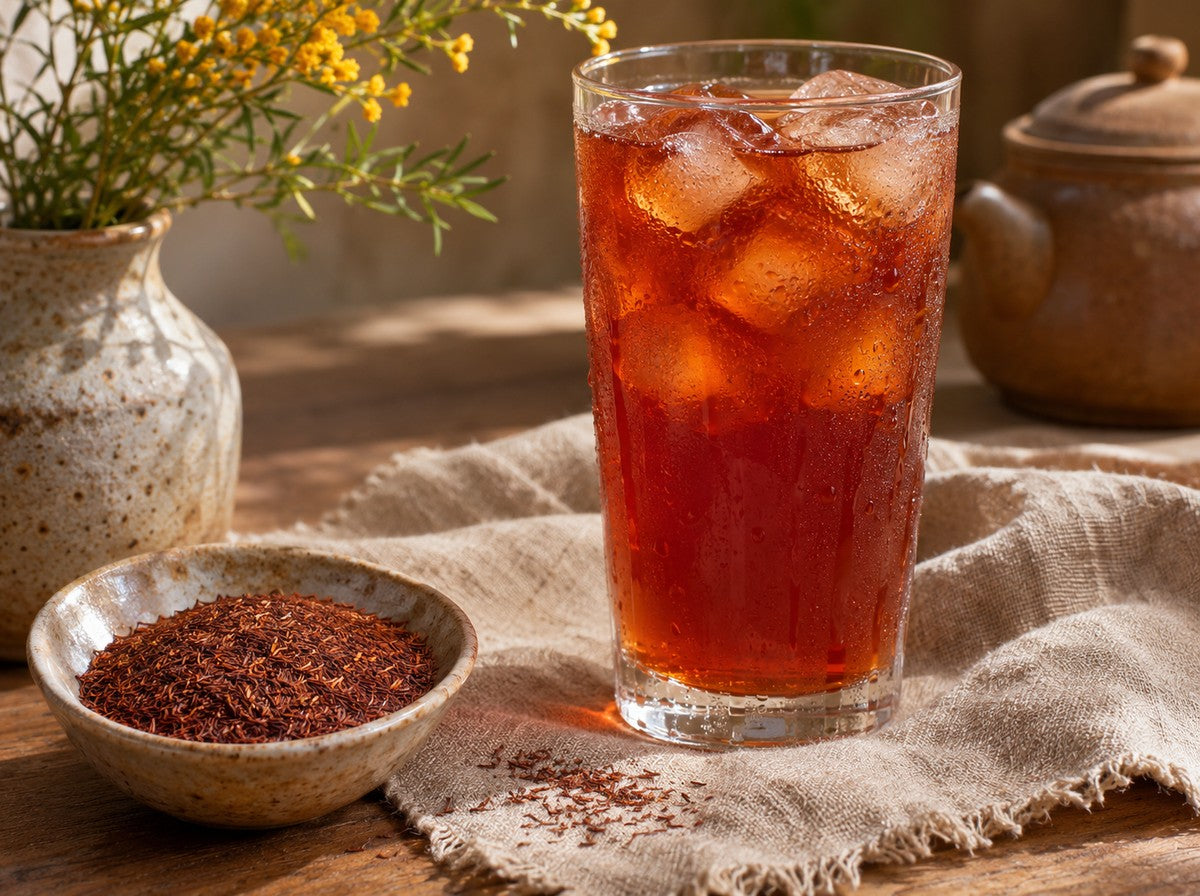

Rooibos Iced Tea: Caffeine-Free Refresher
Learn to make rooibos iced tea two ways: hot-brewed over ice in 15 minutes, or a smoother overnight cold brew, plus flavour additions and storage tips.
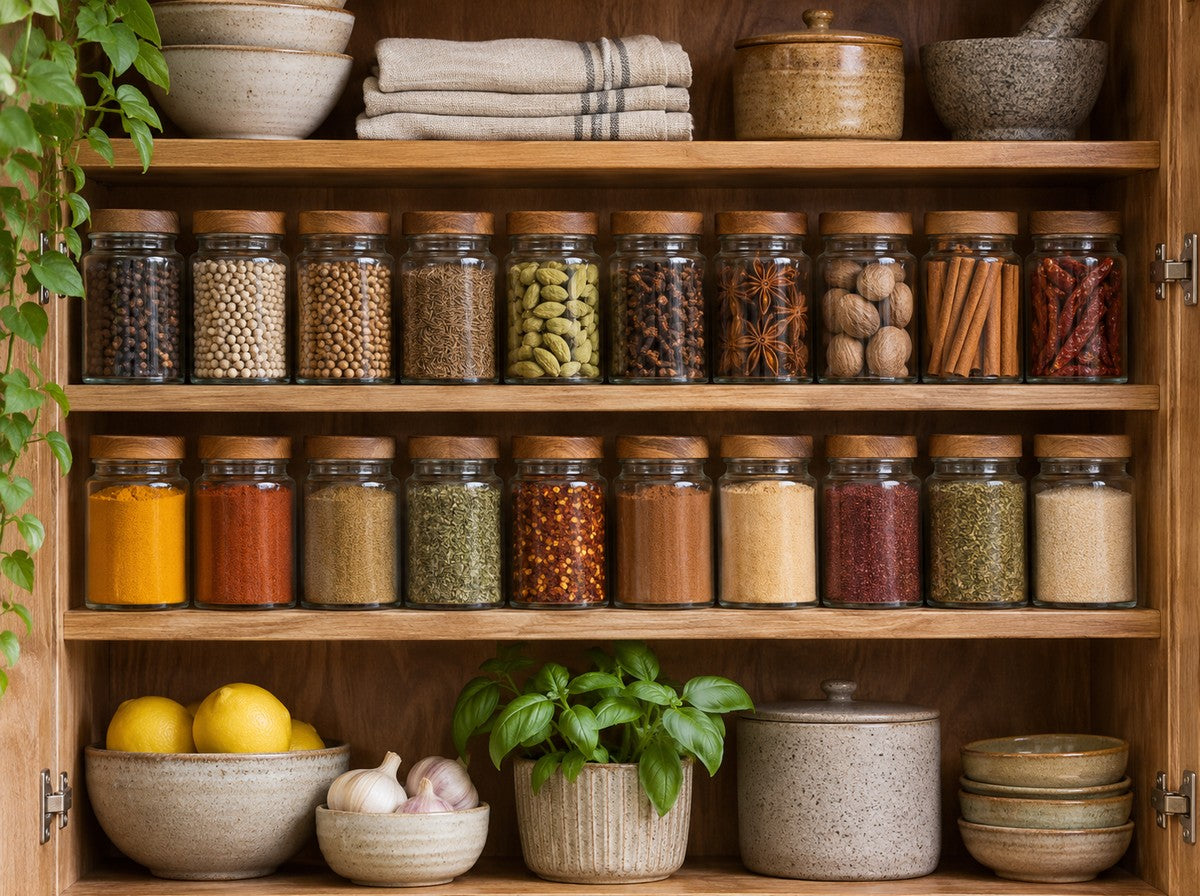

Spice Cabinet Organization: A Practical System That Works
Learn how to organize your spice cabinet with a practical system that keeps every jar findable and fresh. Temperature, layout, and audit tips included.
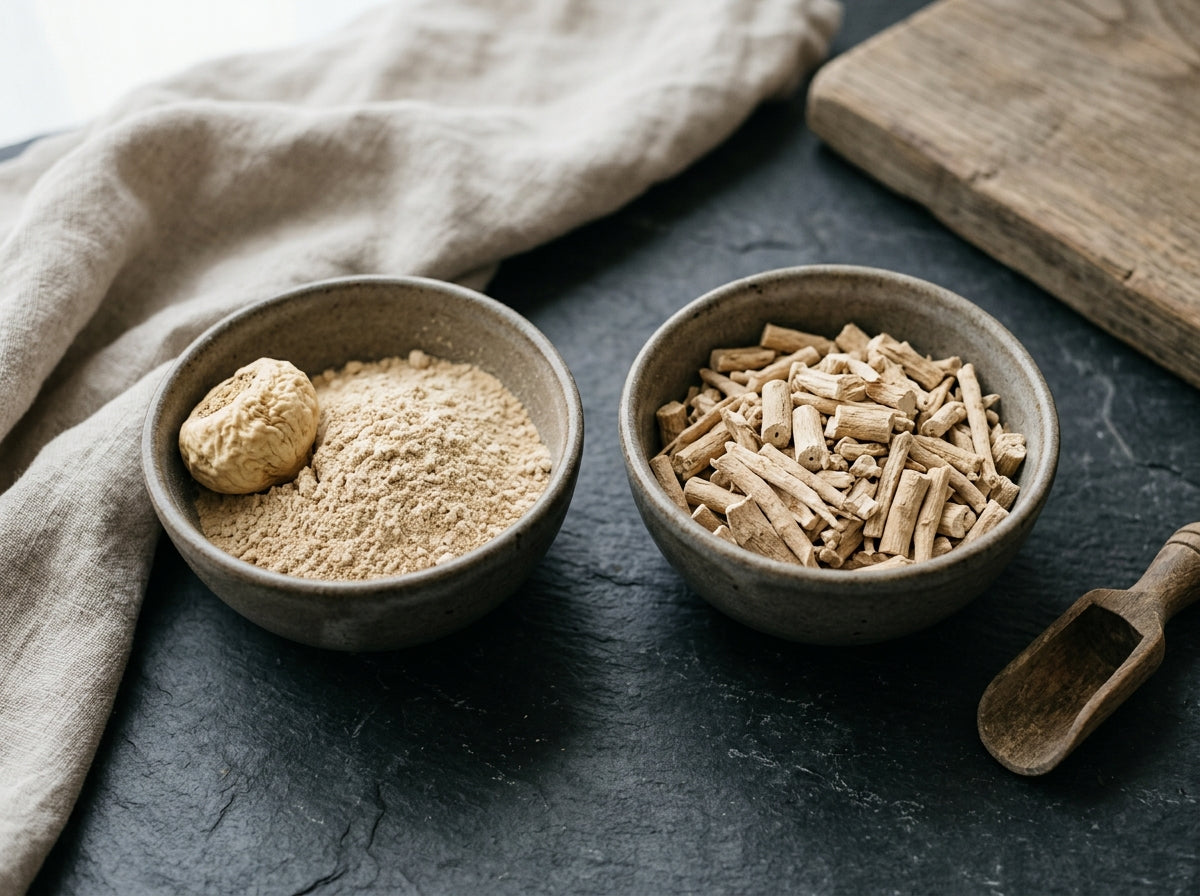

Maca or Ashwagandha for Your Daily Routine
Choosing between maca or ashwagandha? Learn how each root tastes, when to use them, and the best ways to prepare each in tea or drinks.

Wisdom is the path to better tea.
Get our free brewing guide: the right water, heat and timing for every tea we sell. You will also hear it first when new harvests arrive.
No spam. Unsubscribe any time.
Check your inbox.
The guide is on its way.