













Ilex Paraguariensis and the Yerba Mate Plant
The Ilex paraguariensis yerba mate plant grows wild across the subtropical borderlands of Argentina, Paraguay, southern Brazil, and Uruguay, and it has nothing to do with true tea. It belongs to the holly family, not to Camellia sinensis, the single species behind green, black, white, and oolong tea. We stock the dried leaf at Valley of Tea in four styles: organic, green, aged, and roasted, and I still get asked at least once a week whether it's "a type of green tea." It isn't.

The confusion is understandable. Mate is prepared, sipped, and talked about the same way tea is: leaf, hot water, a vessel, a ritualised pause in the day. But the botany, the brewing vessel, and the caffeine profile are all different enough that treating mate as tea's South American cousin misses what makes it interesting. This guide covers the plant itself: what it is, where it grows, how it's traditionally brewed in a gourd with a bombilla, and how its flavour and caffeine actually compare to tea.
The Plant and Its Botany
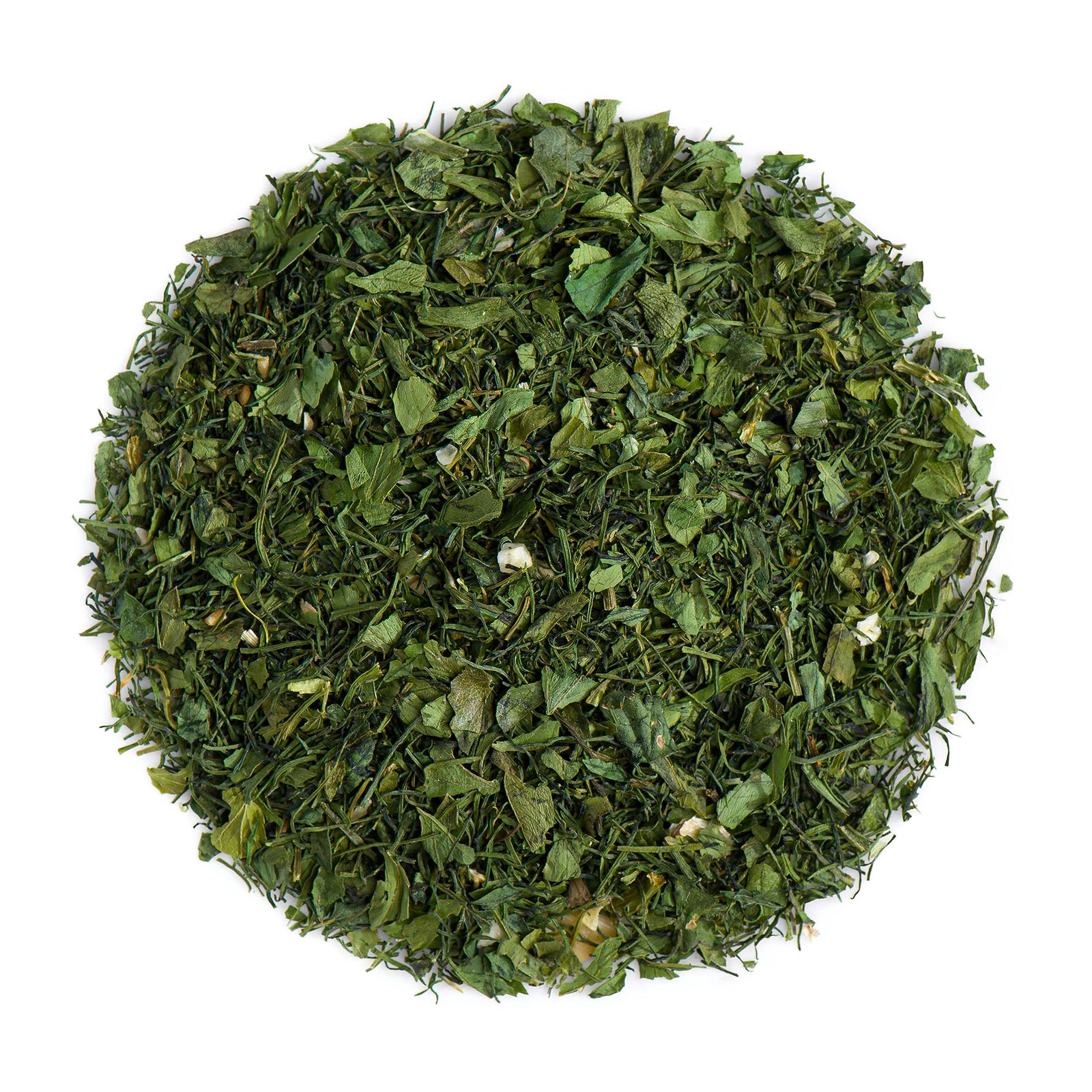
Ilex paraguariensis is an evergreen holly native to the subtropical forests of South America, growing as a tree up to about 12 metres tall in the wild, though cultivated plants are usually kept much shorter for easier harvest. The leaves and young twigs are picked, dried, and milled into the coarse green-brown material sold as yerba mate.
The leaf contains a natural mix of xanthine compounds: caffeine, theobromine (the same stimulant found in cocoa), and theophylline in smaller amounts. Mate carries this mix of compounds alongside its caffeine, which is one way it differs chemically from tea. A prepared cup typically delivers somewhere in the wide range of 65 to 150mg of caffeine, depending on leaf quantity, cut, and how many refills you count as one "cup": broadly similar to a cup of coffee at the low end, and well above it at the high end, with either figure comfortably above a typical cup of green tea.
One honesty point worth clearing up: you'll sometimes see mate's caffeine called "mateine," described as a different molecule from regular caffeine. It isn't a separate compound. "Mateine" is an old marketing term, chemically identical to caffeine. What differs is the pace: mate is sipped through a bombilla over an hour rather than knocked back like a coffee in five minutes, and the molecule is the same.
Origins and Growing Regions
Ilex paraguariensis is native to, and still mostly grown in, the border region shared by Argentina, Paraguay, and southern Brazil, with smaller production in Uruguay. Indigenous Guaraní communities were drinking mate from gourds long before European contact, drinking it through long days of work and travel, and sharing one gourd among a group was already a social custom by the time Spanish colonists arrived in the 1500s and 1600s.
Processing varies significantly by country, and that variation is the single biggest driver of flavour. Argentine and Paraguayan yerba is typically dried over wood smoke and aged for months, which rounds out the bitterness and adds a mineral, sometimes smoky note. Brazilian erva-mate for chimarrão, by contrast, is usually left unaged, keeping more chlorophyll and a brighter green colour with a fresher, grassier, less bitter cup. Neither style is "correct." They're simply different regional traditions, the way a Chinese green tea and a Japanese sencha are processed to entirely different ends from the same starting point.
Most commercial yerba mate today comes from cultivated plantations rather than wild-harvested trees, grown under a partial forest canopy that mimics the light-dappled conditions the species prefers in the wild: plantings often called yerbales. Harvest typically happens every one to two years per plant, with leaves and young stems cut back hard enough to keep the tree at a manageable height for picking. That shade-grown, rotational approach is a big part of why the plant has stayed commercially viable for centuries rather than depleting the wild stands Guaraní communities originally relied on.
How Yerba Mate Is Traditionally Brewed
Fill a gourd about two-thirds full with dried yerba, tilt it, and pour hot water at 70 to 80°C, never boiling, onto the lower side first. Insert a bombilla, a metal straw with a built-in filter at the tip, and sip. A good gourd can be refilled ten to twenty times before the leaf is spent.
I fill the gourd about two-thirds with yerba, tilt it, and add cool water to the lower side first to protect the leaves, then insert the bombilla. Only after that do I add hot water, and I keep it around 70 to 80°C. Boiling water scorches the leaf and pulls out a flat, overly bitter edge that ruins the whole session. As the leaf keeps giving up flavour across refills, the first few pours tend to be lighter and the later ones deeper and more mineral.
There's a real reason to respect that temperature ceiling beyond taste. The International Agency for Research on Cancer's 2016 monograph on very hot beverages, drinks consumed above roughly 65°C, found an association with higher risk of oesophageal cancer, and mate-drinking populations in South America were part of the evidence base, largely because mate is traditionally served scalding in some regions. That's one more reason to treat 70 to 80°C as a ceiling, not a target to push past. If you're brewing at home, a simple kitchen thermometer removes the guesswork entirely.
Flavour, Caffeine, and Comparison to Tea
Yerba mate tastes grassy and herbaceous, often with a smoky or toasted edge depending on how it was processed, and a bitterness that mellows across a session rather than hitting all at once in the first sip. It's closer in character to a robust green tea crossed with a lightly smoked black tea than to anything else in the tea world, though calling it "tea" still misses the point given it comes from a holly, not Camellia sinensis.
A gourd session is a slow drink: it gets sipped over an hour rather than downed in five minutes, and that pace shapes the whole ritual. The theobromine and theophylline riding alongside the caffeine may play a role too, but the honest answer is nobody has fully separated pace from chemistry here. Where green tea is usually good for two or three steeps before it fades, one gourd fill of mate keeps producing flavour across ten or more refills in a single sitting, which changes the whole rhythm of drinking it. Whether to sweeten it is entirely personal; plenty of drinkers, myself included, prefer it unsweetened so the grassy bitterness stays intact.
We carry four yerba mate styles at Valley of Tea: organic, green, aged, and roasted, covering the fresher grassy end of the spectrum through to the deeper, smokier aged and roasted leaf. We sell just the dried leaf itself; we don't stock gourds or bombillas alongside it, so pick whichever traditional vessel suits you and bring your own. Newcomers usually do best starting with the green or organic styles before working up to the more assertive aged and roasted leaf, since the smokier notes take some getting used to.
Frequently Asked Questions
What is Ilex paraguariensis yerba mate?
It's the South American holly species whose dried, milled leaves make the traditional mate drink. It's unrelated to Camellia sinensis, the plant behind all true tea.
Does yerba mate have caffeine?
Yes. A prepared cup typically contains somewhere between 65 and 150mg of caffeine, depending on leaf quantity and how many refills you count as one cup, alongside smaller amounts of theobromine and theophylline. How strong a session tastes depends mostly on how much yerba goes into the gourd and how often it is refilled.
Is yerba mate the same as green tea?
No. It comes from an evergreen holly, not from Camellia sinensis. The flavour, the plant family, and the traditional gourd-and-bombilla brewing method are all distinct from tea.
Why brew below boiling?
Water above 80°C scorches the leaf and pulls out excess bitterness, and drinking any beverage extremely hot, including mate, has been linked by IARC's 2016 review to a higher risk of oesophageal cancer. Keeping the water at 70 to 80°C protects both the flavour and the drinker.
Conclusion
Ilex paraguariensis yerba mate is its own plant with its own history: a South American holly, not a tea, brewed traditionally in a shared gourd with a bombilla rather than a teapot. Its leaf carries a natural mix of caffeine, theobromine, and theophylline, and its grassy, sometimes smoky flavour rewards the slower rhythm of a gourd session over ten or more refills rather than one quick cup.
That slower rhythm is arguably the whole point. The Guaraní tradition of passing one gourd around a group, refilling it as it goes, turns mate into something closer to a shared ritual than a quick caffeine fix: and that's still how it's drunk across Argentina, Paraguay, Uruguay, and southern Brazil today, whether at a family table or on a work break with a thermos of hot water close at hand.
The one parameter worth remembering if you try it: water at 70 to 80°C, never boiling. It protects the leaf's flavour and, per IARC's own findings on very hot beverages, it's simply the more sensible way to drink anything hot. If you want to taste the difference processing makes, start with one aged and one green style side by side; the contrast between them says more about Ilex paraguariensis than any single description can.
Leave a comment
Comments will be approved before showing up.
Also in Valley of Tea Blog | Tea Guides, Origins & Brewing Tips

Rooibos Iced Tea: Caffeine-Free Refresher
Learn to make rooibos iced tea two ways: hot-brewed over ice in 15 minutes, or a smoother overnight cold brew, plus flavour additions and storage tips.

Spice Cabinet Organization: A Practical System That Works
Learn how to organize your spice cabinet with a practical system that keeps every jar findable and fresh. Temperature, layout, and audit tips included.

Maca or Ashwagandha for Your Daily Routine
Choosing between maca or ashwagandha? Learn how each root tastes, when to use them, and the best ways to prepare each in tea or drinks.

Wisdom is the path to better tea.
Get our free brewing guide: the right water, heat and timing for every tea we sell. You will also hear it first when new harvests arrive.
No spam. Unsubscribe any time.
Check your inbox.
The guide is on its way.